
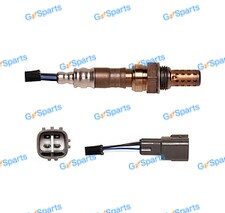
Ultimate Mitsubishi Oxygen O2 Sensor MR507385/MR985102/MD354850/MD357284 – Cleaner Emissions, Sharper Response
O₂ sensor for Pajero/Montero, Triton/L200, Outlander, Lancer (2000s–2010s) – Upstream or downstream (engine dependent). Specs: Upstream commonly 4‑wire heated; older legacy engines may be 1–2 wire non‑heated.
Did you like this product? Add to favorites now and follow the product.

(+86) 180 07 12 47 38 WhatsApp, Telegram, WeChat
Description
OE‑style oxygen (lambda) sensor listing for Mitsubishi applications. Models: Pajero/Montero, Triton/L200, Outlander, Lancer (2000s–2010s). OEM/reference(s): MR507385 / MR985102 / MD354850 / MD357284 (examples). Position: Upstream or downstream (engine dependent). Typical specification: Upstream commonly 4‑wire heated; older legacy engines may be 1–2 wire non‑heated. Brands/cross‑refs: Bosch / NTK / Walker aftermarket crosses. Fitment guidance: Provide VIN/engine code to match the MR/MD OEM number. Source: SixityAuto.com.
Introduction: Restore Factory Precision and Confidence
When mixture control feels inconsistent—hesitation off the line, wavering idle, or inspection anxiety—the upstream oxygen sensor is a prime suspect. A crisp signal lets the ECU hold stoichiometry, protect the catalyst, and translate your right foot into smooth, predictable thrust. That is the value of Mitsubishi Oxygen O2 Sensor MR507385/MR985102/MD354850/MD357284: an OEM-mapped unit that aligns voltage dynamics, heater behavior, and connector geometry with factory expectations. By returning feedback integrity, you recover quiet drivability, centered fuel trims, and readiness monitors that complete without drama. Whether you manage a fleet or wrench at home, choosing Mitsubishi Oxygen O2 Sensor MR507385/MR985102/MD354850/MD357284 eliminates guesswork and anchors a first-time-right repair built on dependable data instead of compensating for a tired, noisy element.
What an Upstream O2 Sensor Actually Does
Your engine management continually seeks the sweet spot—stoichiometric combustion for clean emissions and strong efficiency. The upstream cell reports oxygen in the exhaust relative to ambient air, allowing injector pulse width and spark timing to adjust within milliseconds. A fast-switching, low-noise waveform keeps short-term and long-term trims centered, prevents over-enrichment that overheats catalysts, and maintains crisp throttle transitions in traffic. Install Mitsubishi Oxygen O2 Sensor MR507385/MR985102/MD354850/MD357284 and you give the ECU a reliable truth source; instead of fighting noise, it optimizes combustion. On short trips, where cold behavior dominates, a correct heater profile shortens open-loop time and stabilizes idle as accessories cycle, translating engineering intent into everyday refinement you can feel.
Fitment Matters: Geometry, Connector, and Harness Length
Two sensors may share a thread size yet differ critically in heater wattage, internal calibration, connector keying, or lead length. Those deviations trigger nuisance codes, awkward routing, or stressed harnesses that fail after heat cycles. Mitsubishi Oxygen O2 Sensor MR507385/MR985102/MD354850/MD357284 is specified for platforms expecting its electrical and mechanical profile. It seats cleanly, latches with an unmistakable click, and places the tip precisely in the exhaust stream for accurate sampling. Before ordering, confirm upstream location (Bank 1 Sensor 1 for most inline engines), verify engine code, and snap a photo of the original connector and clocking. That simple diligence ensures a zero-surprise install and a feedback loop that behaves like new.
Upstream vs Downstream: Different Jobs, Different Expectations
Upstream elements steer fueling; downstream elements audit catalyst efficiency. Swapping roles or using a universal part with mismatched heater current and switching profile confuses readiness monitors and can produce false catalyst codes. Mitsubishi Oxygen O2 Sensor MR507385/MR985102/MD354850/MD357284 belongs in the upstream role, where brisk cross-counts and crisp transitions around lambda = 1 are essential. Keep downstream monitoring steady and calm; that’s how a healthy converter looks on live data. With the correct parts in their intended positions—including Mitsubishi Oxygen O2 Sensor MR507385/MR985102/MD354850/MD357284—your ECU follows the strategy its calibration expects, maintaining drivability and shortening the path to a clean inspection sticker.
Heater Circuit: Faster Light-Off, Cleaner Starts
Cold starts decide both emissions and drivability. The heater brings the zirconia element to temperature quickly, shrinking open-loop duration and stabilizing mixture before you reach the end of the street. Under-powered heaters prolong roughness; over-powered ones can stress ceramics and shorten life. Mitsubishi Oxygen O2 Sensor MR507385/MR985102/MD354850/MD357284 matches ECU heater mapping, promoting fast light-off and dependable switching even on short, errand-length trips. Expect fewer rich spikes, less plug sooting, and a catalyst that reaches its operating window consistently. For winter mornings and stop-and-go commutes, those quiet improvements add up to smoother feel and lower tailpipe output without sacrificing response.
Recognizing a Failing Sensor in Daily Driving
Tell-tales include stubborn fuel trims, reduced mileage, sulfur odor after heavy throttle, or a check-engine light for slow response or heater faults. Live data may show lazy oscillations, stuck-rich/lean behavior, or cross-counts lagging load changes. Before condemning injectors or MAF readings, verify there are no upstream exhaust leaks that admit fresh air and fake a lean signal. If plumbing and wiring pass inspection yet the waveform remains dull, Mitsubishi Oxygen O2 Sensor MR507385/MR985102/MD354850/MD357284 is the upstream fix that restores crisp feedback and lets the ECU re-center trims, smoothing idle and sharpening tip-in for confidence in traffic.
Diagnostics First: Replace Once, Not Twice
A disciplined workflow beats parts-cannon guesswork. Smoke-test the intake and pre-cat exhaust for leaks, confirm ground integrity and reference voltages, and check the connector for corrosion or bent pins. Compare throttle angle, MAF grams/second, and short-term trims across steady cruise and gentle accelerations. If the trace is inconsistent despite good mechanics, replacement is warranted. Install Mitsubishi Oxygen O2 Sensor MR507385/MR985102/MD354850/MD357284, repeat the same captures, and look for sharpened switching with trims hovering near zero. That closed-loop proof-point validates both the root cause and your repair quality, saving time now and on any future visits.
Materials, Sealing, and Contamination Resistance
Exhaust chemistry is unforgiving: thermal shock, condensate splash, silicone vapor, and oil mist conspire to poison cells and flatten response. Long-life designs use robust ceramics, platinum electrodes, gas-tight crimps, and high-temp insulation to keep signals stable. Poor sealing admits contaminants that mimic sensor aging. Mitsubishi Oxygen O2 Sensor MR507385/MR985102/MD354850/MD357284 is built for these realities, holding calibration through hot soaks, winter starts, and rough pavement. The payoff is a controller that doesn’t retreat into conservative, fuel-heavy fallbacks and a vehicle that retains its composed, “OEM-new” character over years of daily use.
Installation Prep: Tools, Safety, and Access Planning
Work on a cool exhaust to prevent burns and thread galling. Essentials include penetrant, a quality O2 socket, torque wrench, and a nylon brush for the bung. Trace the harness path and note clip positions before removal; a quick phone photo simplifies reassembly. Lay out Mitsubishi Oxygen O2 Sensor MR507385/MR985102/MD354850/MD357284 on the bench and verify connector latch feel so you recognize the click in tight spaces. Thoughtful prep avoids stripped threads, damaged pins, and misrouted leads—small mistakes that become intermittent headaches months later.
Removal Technique: Threads, Tip, and Harness Care
Support the exhaust if needed so tension doesn’t fight you. Break the old sensor free without twisting the harness, clean the bung lightly, and inspect the gasket seat. Apply anti-seize only if the service procedure specifies it, and keep it away from the first threads and sensing tip. Hand-start Mitsubishi Oxygen O2 Sensor MR507385/MR985102/MD354850/MD357284 to avoid cross-threading, then snug with the proper socket. Good technique preserves shell flatness, yields a gas-tight seal, and keeps stray oxygen from diluting the sample, which would otherwise trick the ECU into chasing phantom lean conditions.
Torque, Sealing, and Leak Verification
Under-torque invites leaks; over-torque risks shell distortion or cracked ceramics. Tighten to specification, then run the engine and listen for tick-like leaks at the bung. A smoke check upstream of the catalyst provides quick confirmation. Once Mitsubishi Oxygen O2 Sensor MR507385/MR985102/MD354850/MD357284 is seated and the harness clipped along factory paths, your voltage swing will reflect combustion reality, not fresh-air intrusion. That integrity is the foundation for stable trims, clean idle with accessories, and an ECU that trusts its feedback.
Post-Install Routine: ECU Reset, Drive Cycle, and Readiness
Some platforms relearn almost immediately; others prefer a specific sequence—warm idle, steady cruise, and engine-braking decels—to set monitors. If trims were far off, clearing codes may speed adaptation. After installing Mitsubishi Oxygen O2 Sensor MR507385/MR985102/MD354850/MD357284, perform a short mixed drive while watching upstream switching and downstream calmness. Expect brisk cross-counts at light load, trims re-centering, and a downstream trace that stabilizes as the catalyst reaches temperature. When readiness completes without drama, you’ve validated both installation quality and feedback loop health.
Live-Data Confirmation: What “Good” Looks Like
A healthy upstream waveform switches rapidly near stoichiometric at cruise, short-term trims oscillate modestly around zero, and long-term trims remain near center. If the upstream signal is sharp after fitting Mitsubishi Oxygen O2 Sensor MR507385/MR985102/MD354850/MD357284 yet trims stay skewed, look for intake leaks, misreported airflow, or fuel pressure deviations—the sensor is telling the truth, revealing the real constraint. Save screenshots to the job record; future diagnostics begin faster with a known-good baseline captured right after the repair.
Efficiency Gains and Catalyst Protection
Small control-loop improvements compound into quieter operation, better mileage, and longer catalyst life. Accurate feedback reduces unnecessary enrichment on hills and in traffic, keeping substrate temperatures within design limits. Drivers often report smoother throttle take-up and steadier speeds at light load after installing Mitsubishi Oxygen O2 Sensor MR507385/MR985102/MD354850/MD357284. For jurisdictions with stringent testing, this fidelity also lowers inspection stress—monitors set predictably and numbers land where they should without blunt, fuel-heavy workarounds that cost money and age hardware.
Compatibility Checks: VIN, Engine Code, and Emissions Package
Model-year splits, engine codes, and regional emissions packages change connector keys, lead protection, and sometimes sensor placement. Confirm upstream/downstream position and bank, then match connector indexing, harness length, and heat shielding to the original. A quick VIN decode plus a photo of your old unit’s clocking prevents mismatches. With Mitsubishi Oxygen O2 Sensor MR507385/MR985102/MD354850/MD357284 matched to your configuration, installation is straightforward and the ECU encounters exactly the behavior its strategy expects.
Avoiding Universal Splices and Other Pitfalls
Millivolt-level circuits dislike added resistance and noise. Universal splices, tired grounds, or routing near high-current wiring can corrupt signals and force the ECU into defensive fueling. Exhaust leaks ahead of the sensor introduce fresh air and fake a lean reading. Choosing a direct-fit component such as Mitsubishi Oxygen O2 Sensor MR507385/MR985102/MD354850/MD357284, protecting the harness from heat and abrasion, and verifying sealing are the basics that prevent “mystery” drivability complaints returning a week after service.
Light Mods, Heat Management, and Tuning Consistency
Headers, intakes, or turbo heat can shift local temperatures and flow. Shielding, correct bung placement, and leak-free joints keep the cell in its sweet spot so switching remains crisp. With Mitsubishi Oxygen O2 Sensor MR507385/MR985102/MD354850/MD357284 providing a stable baseline, tuners can refine maps around real signals instead of compensating for lag or contamination. The result is repeatable street manners, reliable readiness before inspections, and fewer surprises after hot-soak restarts on summer days.
Cold Weather, Seasonal Fuels, and Altitude
Winter oxygenates, dense air, and elevation changes challenge mixture control. A fast-lighting, correctly heated upstream element shortens open-loop and stabilizes idle during the first minute of operation. Mitsubishi Oxygen O2 Sensor MR507385/MR985102/MD354850/MD357284 maintains crisp switching through these variables, helping the ECU adapt smoothly while protecting plugs, converters, and fuel economy. Whether your driving is coastal, mountainous, or a seasonal blend, accurate feedback keeps drivability consistent and monitors on track.
Authenticity and Supply Chain Discipline
Copycat parts often skimp on heater calibration, sealing quality, and electrode loading—shortcuts that appear later as early drift. Source from vendors who document batch codes, show real connector close-ups, and pack tips with moisture control. Genuine Mitsubishi Oxygen O2 Sensor MR507385/MR985102/MD354850/MD357284 arrives with consistent markings and a precise latch feel. That provenance translates into predictable monitor behavior, fewer comebacks tied to out-of-box variability, and confidence that what you bought matches what the ECU expects.
Warranty, Returns, and Documentation
Even excellent components can be undermined by installation errors or upstream leaks. Protect yourself with clear photos of routing, torque application, and live-data screenshots captured before and after service. If troubleshooting later reveals a different root cause, clean paperwork and serializable packaging make returns painless. Pair Mitsubishi Oxygen O2 Sensor MR507385/MR985102/MD354850/MD357284 with a checklist—bung condition, torque spec, harness clips, drive-cycle proof—and you elevate quality control while shortening future diagnostic sessions.
Fleet Uptime and Total Cost of Ownership
For fleets, variance is the enemy: unpredictable warm-up, skewed trims, and delayed monitors sap uptime and raise fuel spend. Standardizing on a dependable upstream element cuts diagnostic spread and improves pass rates at inspection time. Mitsubishi Oxygen O2 Sensor MR507385/MR985102/MD354850/MD357284 delivers the repeatable waveform technicians expect, reducing retests and saving fuel across thousands of kilometers. That small component becomes a budget-friendly insurance policy that keeps vehicles earning instead of idling in a bay.
Post-Repair Documentation, Customer Education, and Long-Term Confidence
Close the loop with clear documentation and a simple education plan. Attach before/after live-data screenshots (upstream waveform, STFT/LTFT at idle and light cruise), note torque spec, bung condition, and harness routing photos, and record the short drive-cycle route used to set readiness. Provide the owner a one-page guide covering early signs of exhaust leaks, why catalyst health depends on accurate lambda, and how seasonal fuels or altitude can shift trims briefly. Invite a 2-week courtesy check to re-inspect connectors and verify centered trims. When a shop consistently follows this playbook—and specifies Mitsubishi Oxygen O2 Sensor MR507385/MR985102/MD354850/MD357284—repairs become measurable, repeatable, and easy to explain, turning vague drivability complaints into lasting, data-proven satisfaction.
If Issues Persist: A Logical Troubleshooting Tree
When trims remain unreasonable after installation, re-smoke the intake and pre-cat exhaust, validate fuel pressure, and scope ignition for random misfires. Confirm ground integrity and reference voltage under accessory loads. With a known-good upstream element such as Mitsubishi Oxygen O2 Sensor MR507385/MR985102/MD354850/MD357284, you can isolate root causes with confidence, avoiding wasteful part swaps and keeping attention on genuine mechanical or electrical constraints that actually deserve repair time.
Owner FAQs: Straight Answers, No Jargon
How long should an upstream sensor last? Duty cycle and engine health matter; upstream units see harsher thermal cycles and may age sooner than downstream. Will premium fuel fix a weak sensor? Cleaner combustion can reduce deposits, but it won’t revive a poisoned element. Is proactive replacement sensible? If data shows lagging cross-counts and stubborn trims, yes. Installing Mitsubishi Oxygen O2 Sensor MR507385/MR985102/MD354850/MD357284 restores feedback integrity so the ECU can optimize timing and injection, turning vague complaints into measurable improvements.
Shop-Floor Proof: Telemetry That Confirms the Fix
After installation, validate with a quick data session: warm idle and 2,000–2,500 rpm steady cruise. Watch upstream switching frequency, STFT/LTFT centering, and downstream calmness. Healthy loops show lively cross-counts and trims near zero with modest oscillation. Add a few gentle accel/decel events to confirm transient fueling is crisp and that decel fuel-cut behaves. Save screenshots for the service record. With Mitsubishi Oxygen O2 Sensor MR507385/MR985102/MD354850/MD357284 in place, you should see a crisp, repeatable waveform that gives the ECU confidence to run optimal strategies rather than conservative fallbacks.
The Confident Finish: Back to Factory Rhythm
Great repairs pair disciplined diagnostics with the right part and a clean install. By selecting Mitsubishi Oxygen O2 Sensor MR507385/MR985102/MD354850/MD357284, you align heater behavior, voltage dynamics, and connector geometry with ECU expectations. Tighten to spec, verify with live data, complete a short drive cycle, and enjoy the outcome: smoother idle, cleaner transitions, stable trims, and readiness that sets without drama. It’s the quiet satisfaction of OEM-grade feedback—performance, efficiency, and compliance returning to the calm, predictable rhythm your Mitsubishi was engineered to deliver with Mitsubishi Oxygen O2 Sensor MR507385/MR985102/MD354850/MD357284.
External Resources (Standards & Technical References)
- SAE J1979 — OBD-II Diagnostic Test Modes
- ISO 15031 — Road Vehicles/Scan Tool Communication
- US EPA — Basic Information on OBD-II
- NGK/NTK — Oxygen (Lambda) Sensors Overview
- Bosch Mobility — Oxygen Sensor Technology
Related Internal Links
Additional information
| OEM / Reference | MR507385 / MR985102 / MD354850 / MD357284 (examples) |
|---|---|
| Brands / Cross | Bosch / NTK / Walker aftermarket crosses |
| Models | Lancer (2000s–2010s), Outlander, Pajero/Montero, Triton/L200 |
| Position | Upstream or downstream (engine dependent) |
| Specifications | Upstream commonly 4‑wire heated; older legacy engines may be 1–2 wire non‑heated |
| Fitment note | Provide VIN/engine code to match the MR/MD OEM number. |
| Source | SixityAuto.com |
Related products


Recently Viewed Products



G-SPARTS – Leading Auto Parts Supplier Since 2009
Trusted by 1000+ Clients Worldwide | Chinese (BYD, Geely, Chery, …), Japanese (Toyota, Honda, Nissan, …), European (BMW, Mercedes, VW, …) & American (Ford, Chevrolet, Tesla, …) Car Spares | Best Prices & OEM Quality | 15+ Years Expertise | Professional Team, Fast Global Shipping
Copyright 2025 © G-Sparts All Rights Reserved. | Premium Chinese Auto Parts Supplier – Worldwide Shipping | Best Prices on OEM & Aftermarket Spares

Reviews
There are no reviews yet.