
The Ultimate Guide to Crash Repair Parts for
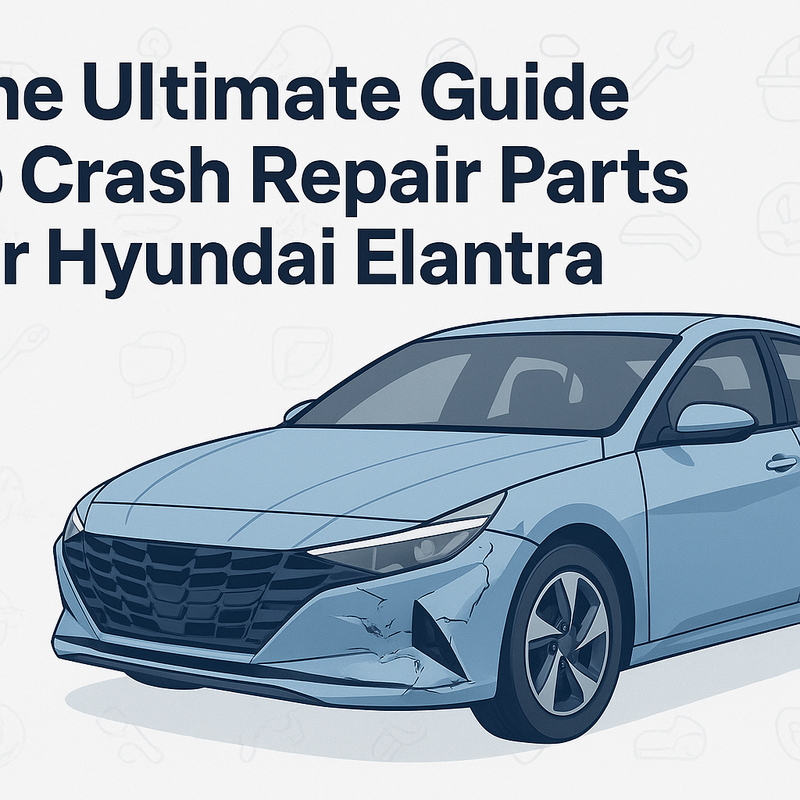
The Ultimate Guide to Crash Repair Parts for Hyundai Elantra (Because Life Happens)
Imagine this: you step out to your Hyundai Elantra, ready for the day, and bam!—a careless parker has left you with a dent that looks more like abstract art than a car scratch. Now what?
Welcome to the world of crash repair parts. It’s not the most thrilling topic, but stick with me—this guide will help you turn that fender bender into a smooth recovery. We’ll cover safety, savings, and how to keep your Hyundai Elantra looking good as new. Think of it as assembling your own car repair Avengers. Ready to dive in? Let’s go.
Why Using Correct Crash Repair Parts Matters (Safety First—No DIY Experiments)
Your Hyundai Elantra isn’t a Transformer—you can’t just slap on any part and call it a day. Using the right crash repair parts is crucial not just for your car’s appearance but for your safety. Here’s why it matters:
- Safety Compliance: OEM parts undergo rigorous testing to keep you protected.
- Perfect Fit and Function: Genuine parts are made specifically for your Hyundai Elantra, ensuring flawless compatibility.
- Warranty Protection: Using certified parts keeps your vehicle warranty intact.
- Resale Value: Proper repairs with OEM parts maintain your car’s value for the future.
- Durability: High-quality parts last longer and prevent repeat repairs.
Bottom line? When it comes to crash repair parts, quality equals peace of mind.
Types of Crash Repair Parts for Hyundai Elantra (It’s More Than Just Bumpers)
When you think crash repair, bumpers likely come to mind first—but there’s a lot more your Hyundai Elantra might need:
1. Body Panels and Exterior Parts
- Bumpers
- Fenders (front and rear)
- Hood
- Doors, quarter panels, grilles, headlights, taillights, mirrors
2. Structural Components
- Frame rails (your car’s skeleton)
- Radiator supports
- Crumple zones designed to absorb impact and keep you safe
3. Mechanical Parts
- Suspension parts
- Steering components
- Brakes (never skip brake repairs!)
- Engine covers
4. Interior Safety Parts
- Airbags (your inflatable lifesavers)
- Seatbelt assemblies
- Impact sensors
OEM vs. Aftermarket vs. Used Parts — Which Should You Choose?
Not all car parts are created equal—you’ve got options, each with pros and cons:
OEM Parts (Original Equipment Manufacturer)
- Quality: Top-notch, designed for your Hyundai Elantra.
- Fit: Perfect every time.
- Cost: Higher price, but worth it.
- Best for: Safety-critical repairs like airbags and structural components.
Aftermarket Parts
- Quality: Varies widely.
- Fit: May require adjustments.
- Cost: More affordable.
- Best for: Cosmetic fixes and non-critical parts.
Used or Salvage Parts
- Quality: Depends on history.
- Fit: Usually exact, but check condition.
- Cost: Budget-friendly.
- Best for: Older vehicles or less visible components.
Always ask questions and compare options before making your choice.
Where to Find Crash Repair Parts for Your Hyundai Elantra
Hyundai Dealerships
- Pros: Guaranteed OEM parts and warranty coverage.
- Cons: Pricier and limited to official parts only.
Auto Parts Stores
- Pros: Convenient with a variety of parts.
- Cons: Varying quality; sometimes multiple trips needed.
Online Retailers (e.g., RockAuto, PartsGeek, AutoZone)
- Pros: Huge selection and competitive pricing.
- Cons: Make sure to verify compatibility carefully.
Salvage Yards and Used Parts Dealers
- Pros: Cost-effective original parts.
- Cons: Condition and history can be a mystery.
Specialty Hyundai Parts Suppliers
- Pros: Experts familiar with Hyundai Elantra.
- Cons: Might be more specialized and less accessible.
What’s the Cost of Crash Repair Parts for Hyundai Elantra?
- OEM parts typically cost 20-50% more than aftermarket alternatives.
- Body panels range from about $100 to $800+, depending on the part.
- Safety components like airbags and sensors can cost several hundred dollars each.
- Labor and painting often add thousands to the total.
- Insurance may cover some costs, but check your policy and communicate with your agent.
Pro Tips for Installing and Repairing Crash Parts
Having the right parts is only half the battle—proper installation is key:
- Professional Installation: Especially crucial for airbags and structural components.
- Alignments and Calibrations: Essential to ensure proper driving and sensor function.
- Paint Matching: Avoid mismatched panels to keep your Elantra looking sharp.
- Verify Compatibility: Make sure parts fit your vehicle’s year and trim.
- Safety Checks: Double-check everything before hitting the road.
Real-Life Win: How Quality Repairs Made a Difference
A 2019 Hyundai Elantra owner faced a front-end collision and chose OEM crash repair parts from a certified dealer. Though pricier, the seamless installation restored the vehicle’s factory safety and resale value, providing peace of mind about airbags and structural integrity. This is a clear example of why investing in the right parts pays off.
Final Thoughts: Get Back on the Road with Confidence
Crash repairs are about more than aesthetics—they protect your safety, maintain your Hyundai Elantra’s value, and save you from headaches down the line. Use the right crash repair parts, prioritize proper installation, and consult professionals when needed. If budget is tight, aftermarket or used parts can work for non-essential components—but for safety-critical ones, never compromise.
Remember:
- Safety comes first.
- Know your options and choose wisely.
- Trust the experts.
- Your Hyundai Elantra will thank you.
Thanks for sticking with me! Now you’re equipped to navigate crash repair parts like a pro. Drive safe—and maybe steer clear of questionable parkers!
🚗💥✨ Safe travels!
Posts Widget
-
1

-
2

-
3
-
4


G-SPARTS – Leading Auto Parts Supplier Since 2009
Trusted by 1000+ Clients Worldwide | Chinese (BYD, Geely, Chery, …), Japanese (Toyota, Honda, Nissan, …), European (BMW, Mercedes, VW, …) & American (Ford, Chevrolet, Tesla, …) Car Spares | Best Prices & OEM Quality | 15+ Years Expertise | Professional Team, Fast Global Shipping
Copyright 2025 © G-Sparts All Rights Reserved. | Premium Chinese Auto Parts Supplier – Worldwide Shipping | Best Prices on OEM & Aftermarket Spares
