
Car Body Parts Diagram: Your Ultimate Guide to
Car Body Parts Diagram: Your Ultimate Guide to Vehicle Exterior Components 🚗
Strap in—this is the automotive cheat sheet you never knew you needed.
Let’s be honest: car body parts might not headline viral TikToks or Netflix hits. But if you’ve ever found yourself telling a mechanic, “It’s the thingy next to the wheel… you know, the shiny bit!” only to wish you knew the real terms, this guide is here to help. Whether you’re a self-declared gearhead, a weekend garage warrior, or just a driver tired of feeling clueless, understanding your car’s exterior parts is like knowing the Avengers by name—totally optional, but undeniably cool.
My 7-year-old asked if I was done talking about car bumps. I said, “Never. Let’s dive in.”
Why Knowing Car Body Parts Matters
Understanding your car’s body parts can:
- Save you from sounding like a confused robot when talking to mechanics
- Help you spot damage early like a savvy car body detective
- Earn you instant bragging rights at your next BBQ car talk
- Make insurance claims less stressful (yes, this will be on the test)
Still with me? You’re officially my favorite reader.
The Key Players of Your Car’s Exterior
Here’s a quick rundown of the star players forming your car’s outer shell—a crash course in essential car body parts vocabulary.
1. Bonnet (or Hood in the US)
The grand cover protecting your engine—think of it as your car’s stylish top hat. It keeps dirt, rain, and curious critters out of the engine bay. Plus, it usually includes crumple zones designed to absorb impacts.
2. Roof
More than just shelter from sunburn—it provides structure, keeps you dry, and sometimes flaunts a sleek sunroof.
3. Windshield (Windscreen for UK fans)
Your front-row window to the world. Laminated safety glass shields you from flying bugs, rocks, or that rogue tennis ball from next door.
4. Headlights
Your nighttime superheroes that light up the road—helping you dodge becoming part of any real-life Fast & Furious fiasco.
5. Bumper
Your car’s “ouch” absorber. It cushions minor impacts so the rest of your vehicle stays pain-free.
6. Grille
Think of it as your car’s nose: letting the engine breathe without getting choked on bugs.
7. Fenders (aka Wings)
The unsung heroes protecting your wheels from road debris and muddy puddles—while adding style points.
8. Side-view Mirrors
Your automotive side-eyes, ensuring you don’t accidentally side-swipe the car next door.
9. Doors
Because climbing through a window looks cool only in spy movies.
10. Windows
Let in visibility and fresh air, perfect for that classic splash-your-hand-through-the-raindrops moment.
11. Trunk (aka Boot)
The designated spot for groceries, luggage, and all the essentials. Sometimes, it doubles as your car’s secret lair.
12. Tail Lights
Your car’s way to flash “Slowing down!” or “Turning here!” in universally understood red signals.
13. Hubcaps (Wheel Covers)
Adding a touch of glam to your wheels while protecting lug nuts from the elements—stylish and practical.
14. Radiator Support
The strong frame that holds your car’s cooler and front-end parts in place. A true structural MVP.
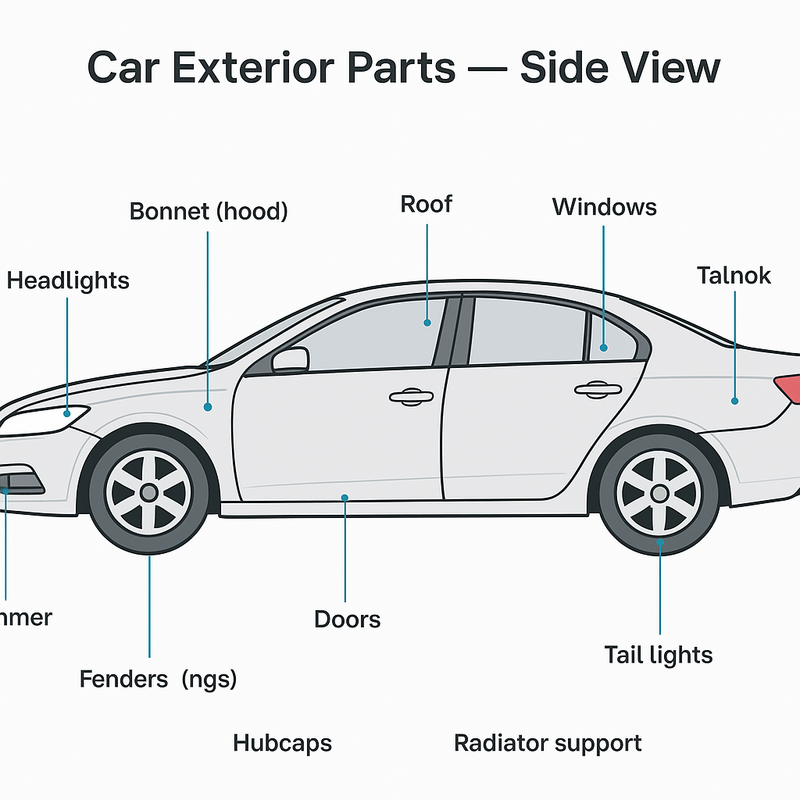
The Classic Car Body Parts Diagram
Imagine a clean side shot of your car with lines pointing to each part like a labeled museum exhibit. These diagrams are your best friends when you want to stop guessing and start knowing.
Front View:
[Headlight]—[Grille]—[Bumper]
       |
    [Bonnet]

Side View:
[Side-view mirror]—[Door]—[Fender]—[Wheel & Hubcap]—[Trunk]—[Tail light]
For an even deeper dive, check out sites like Eurospares for exploded diagrams that’ll make you feel like a pro mechanic.
Why These Parts Matter
Bonnet: More Than Just a Fancy Cover
Featuring crumple zones and secure locks, it’s your engine’s bodyguard, taking hits to protect the vital parts inside.
Bumpers: The Unsung Impact Soakers
Beneath their plastic shell lie foam or metal bars designed to absorb shocks—bumpers are airbags’ best friends.
Fenders: Armor with Style
Part shield, part style statement—they also influence your car’s aerodynamics and fuel efficiency.
Doors & Windows: Complex and Crucial
Packed with locks, electric controls, and sometimes side airbags. Opening a door can be riskier than it seems!
Windshield: Safeguarding Your View
Made from laminated safety glass, it won’t shatter into sharp shards. Some even feature heads-up displays—spacecraft vibes, anyone?
Materials Behind Your Ride
- Steel: The classic heavyweight champ—strong and reliable.
- Aluminum: Light and nimble, boosting fuel efficiency.
- Fiberglass: Lightweight, pliable, and popular in custom or sports parts.
- Plastic/Composites: Cost-effective and light, perfect for bumpers and trims.
Repairs and Parts Replacement: Speak the Language
Nothing says “I’ve got this” like telling your repair guy, “I need a new radiator support.”
- Minor ding? Paintless dent repair or touch-ups save money and hassle.
- Big damage? Structural parts might need a full swap—knowing exact names is crucial.
- Insurance claims? Clear part knowledge prevents costly mix-ups.
Restoration & Customization: For the Passionate
Restorers, listen up: without accurate parts diagrams, restoring a classic is like assembling IKEA furniture blindfolded. For modders rocking spoilers, side skirts, or lowered suspensions, knowing base panels keeps your upgrades safe and legit.
Where to Find Car Body Parts Diagrams
Start your search here:
- Manufacturer websites with detailed manuals
- Auto parts retailers like Raybuck and Eurospares
- Auto enthusiast forums packed with insider tips
- Repair manuals like Haynes or Chilton—DIY gold mines
- Pinterest boards for visually appealing and educational diagrams
Final Lap: Car Body Parts Knowledge is Your Secret Superpower 🚘
Knowing your wheel from your fender won’t land you a spot on Top Gear overnight, but it will make mechanic visits less daunting, repairs smoother, and car chats infinitely more impressive. Next time you explain damage or plan a restoration, you’ll sound like a pro—because you are.
Key Takeaways:
- Car body parts cover everything from bonnet to tail lights
- Diagrams are your roadmap to mastering these parts
- Knowing parts helps with maintenance, repair, insurance, and customization
- Use reliable sources for precise, model-specific info
Pro Tip:
Print your car’s parts diagram and stick it on your fridge, garage wall, or share on Instagram for instant bragging rights.
Inspired? Explore Raybuck’s Car & Truck Body Diagram Collection or dive into Eurospares exploded diagrams for an expert-level deep dive.
There it is—your go-to crash course on car body parts. Next time someone asks, you won’t mumble—you’ll dazzle. And remember: this will be on the test. 😉
Posts Widget
-
1

-
2

-
3

-
4


G-SPARTS – Leading Auto Parts Supplier Since 2009
Trusted by 1000+ Clients Worldwide | Chinese (BYD, Geely, Chery, …), Japanese (Toyota, Honda, Nissan, …), European (BMW, Mercedes, VW, …) & American (Ford, Chevrolet, Tesla, …) Car Spares | Best Prices & OEM Quality | 15+ Years Expertise | Professional Team, Fast Global Shipping
Copyright 2025 © G-Sparts All Rights Reserved. | Premium Chinese Auto Parts Supplier – Worldwide Shipping | Best Prices on OEM & Aftermarket Spares
