
OEM vs Aftermarket Body Parts: The Ultimate Showdown
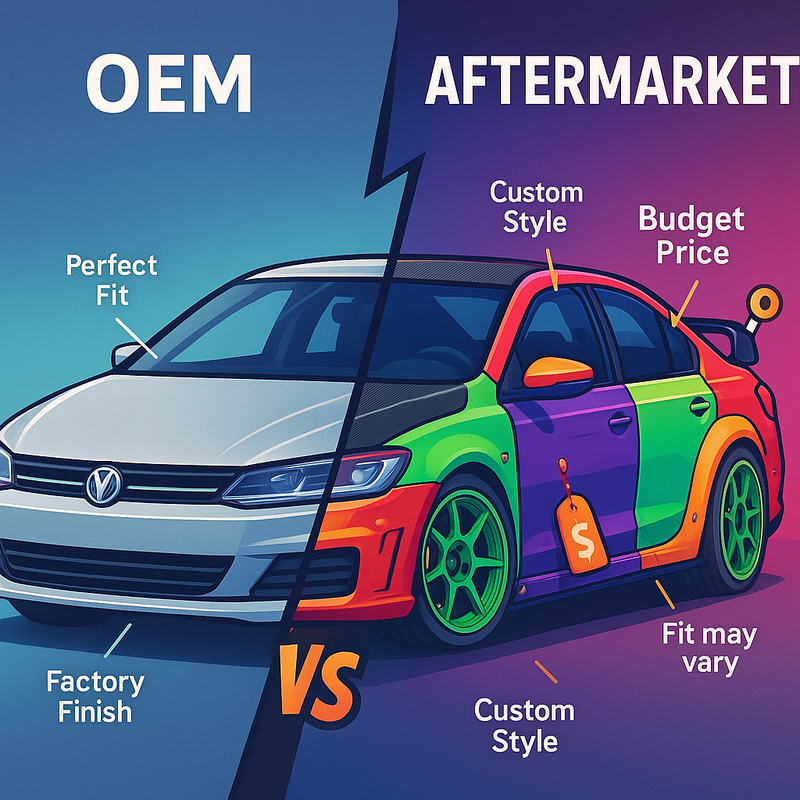
OEM vs Aftermarket Body Parts: The Ultimate Showdown
Let’s be real—choosing between OEM and aftermarket body parts isn’t exactly dinner party gold. Unless your grandma’s suddenly obsessed with fender flares—hey, stranger things happen. But when you’re staring at that hefty car repair bill after a run-in with a parking lot pole, these choices can seriously change the game.
So buckle up (yes, pun intended), because we’re diving headfirst into the thrilling world of OEM vs aftermarket body parts—a decision more complex than your last Wi-Fi password and just as frustrating if you don’t know what you’re doing. Still with me? You’re officially my favorite.
What Are OEM Body Parts? AKA The “Factory-Fresh” Feel
Imagine OEM parts as the exact sneakers your favorite basketball player rocks—made by the same company, tested and approved by the pros (aka the car manufacturer). OEM (Original Equipment Manufacturer) body parts are identical to what rolled off the assembly line when your car was brand spanking new.
Why OEM Rocks (and Sometimes Rocks the Bank)
- Perfect Fit: Like your favorite jeans after Thanksgiving—just right.
- Top-Notch Quality: Because they built your car’s original look and performance.
- Warranty Included: Your safety net for those pricier splurges.
- Seamless Compatibility: No awkward “why does this panel not fit?” surprises.
- Price? Premium—but you get what you pay for.
Mom was right—quality counts.
Aftermarket Body Parts: The Wild West of Car Repairs
Aftermarket parts are like indie sneakers you spot at a flea market—sometimes they look just right, sometimes better (hello, custom styles), and sometimes… well, they fall apart before lunch. These are made by third-party companies who weren’t on the manufacturer’s guest list but want in on the car repair game.
The Good, The Bad, and The Funky About Aftermarket Parts
- Quality Varies Wildly: From “Wow, solid!” to “Did they melt this in the sun?”
- Budget-Friendly: Great news for your wallet.
- Endless Options: Custom finishes, different materials, and unique styles.
- Fit: Could take patience, skill, or a little creativity.
My kid asked if I was done talking car parts. I said—never.
The Head-to-Head: OEM vs Aftermarket Body Parts
1. Quality & Durability
OEM parts are that reliable friend—always on time, built to last. Aftermarket? Sometimes the life of the party, sometimes the first to bail. Some aftermarket brands shine, others… not so much.
Bottom line: you generally get what you pay for.
2. Fit and Finish
OEM fits perfectly, like a choreographed dance. Aftermarket? Sometimes a jazz improv session. Want tranquility and precision? Go OEM. Love a DIY challenge? Aftermarket might be your new jam.
3. Safety and Crashworthiness
This isn’t a drill. OEM parts are crash-tested champs designed to protect you like a bubble-wrapped egg. Some aftermarket parts don’t always meet that mark—know what you’re putting your trust in.
4. Price
OEM parts tend to crunch your wallet, aftermarket parts give it a break. But if you pick the wrong aftermarket part, you might pay twice—the worst kind of double dip.
5. Warranty and Support
OEM parts usually come with solid warranties. Aftermarket? It varies—some companies are reliable, others less so.
Real Talk From the Trenches
- Insurance companies often push for aftermarket parts to keep costs down.
- Body shops sometimes dread aftermarket installs because of fit issues.
- OEM parts typically come rust-prepped; aftermarket defenses vary.
- Skimping on safety-critical parts could mean less protection in a crash.
When to Choose OEM Body Parts
- Your car is new or valuable, and you want to keep it original.
- Safety is your top priority.
- Your warranty or insurer requires it.
- You hate surprises like parts that don’t fit without a wrestling match.
When Aftermarket Parts Make Sense
- Restoring an older or classic car where OEM parts are hard to find.
- Saving money without compromising safety-critical areas.
- Customizing your vehicle with options OEM doesn’t offer.
- You (or your mechanic) don’t mind a bit of extra work during installation.
Bonus Round: Used and Recycled Parts
Why buy new when you can adopt? Used OEM parts can be gems—perfect fit and original quality. Just remember, there’s always a bit of “mystery wear and tear,” kind of like vintage jeans with an unexplained stain.
Quick Cheat Sheet: OEM vs Aftermarket Body Parts
| Factor | OEM | Aftermarket |
|---|---|---|
| Quality | Consistently high | Highly variable |
| Fit | Perfect | Sometimes “creative” |
| Price | Premium | Budget-friendly |
| Warranty | Usually included | Varies widely |
| Safety | Crash-tested, certified | May vary, buyer beware |
| Availability | Sometimes limited | Often plentiful |
Trust me, this will be on the test.
The Final Lap: What’s Your Move?
If your car’s your pride and joy, OEM parts are your crown jewel. If you’re a savvy saver or restoration pro, aftermarket parts can be your trusty sidekick. Whichever you choose, drive confidently—because knowledge is the best upgrade your car can get.
Want to Geek Out More on Auto Parts?
- Edmunds on Aftermarket vs Manufacturer Car Parts
- Autobody of Newark: OEM vs. Aftermarket Parts
- Conestoga Collision: Pros & Cons of OEM, Aftermarket, and Used Parts
- DRiVParts: Aftermarket vs OEM Car Parts
Final thought: Cars don’t judge your choices (at least, not out loud). OEM or aftermarket, it’s your ride, your rules. Choose wisely, and hit the road like the legend you are. 🚗💨
Posts Widget
-
1

-
2

-
3

-
4


G-SPARTS – Leading Auto Parts Supplier Since 2009
Trusted by 1000+ Clients Worldwide | Chinese (BYD, Geely, Chery, …), Japanese (Toyota, Honda, Nissan, …), European (BMW, Mercedes, VW, …) & American (Ford, Chevrolet, Tesla, …) Car Spares | Best Prices & OEM Quality | 15+ Years Expertise | Professional Team, Fast Global Shipping
Copyright 2025 © G-Sparts All Rights Reserved. | Premium Chinese Auto Parts Supplier – Worldwide Shipping | Best Prices on OEM & Aftermarket Spares
