
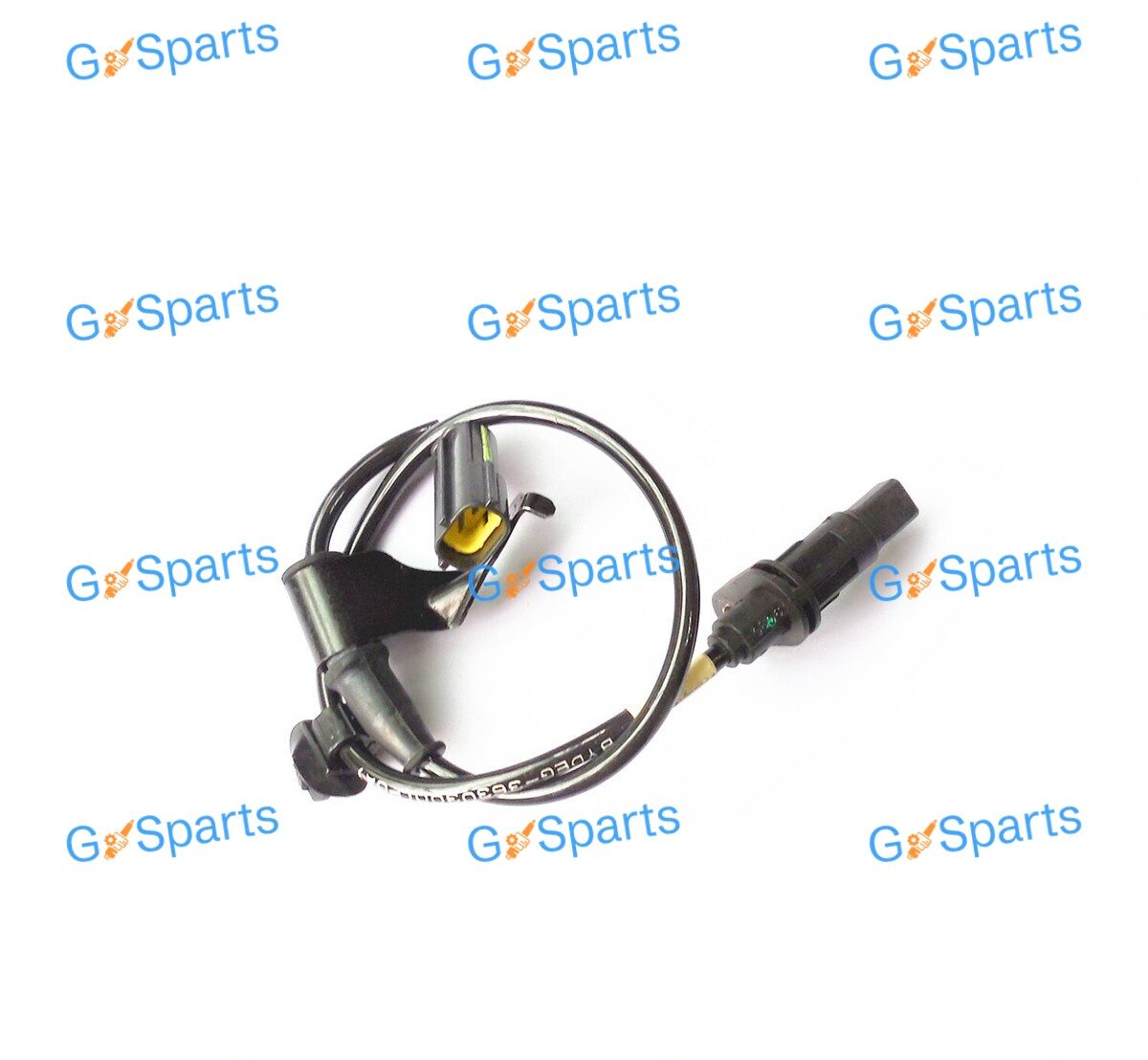
Genuine BYD ABS Sensor BYDEG-3630300 – F3, F6, G3, L3 (2010–2025)
BYD ABS Sensor BYDEG-3630300 for BYD F3, F6, G3, L3 (2010–2025). Reliable 2-wire magnetic sensor for accurate braking.
Did you like this product? Add to favorites now and follow the product.

(+86) 180 07 12 47 38 WhatsApp, Telegram, WeChat
Description
This ABS Sensor (OEM BYDEG-3630300) is designed for BYD F3, F6, G3, and L3 models from 2010 through 2025. Manufactured by leading brands such as Bosch, Denso, and Standard Motor Products, this 2-wire magnetic sensor provides precise wheel speed detection, ensuring optimal ABS braking performance. It is widely used across multiple BYD models, but compatibility should be verified with the vehicle’s VIN before purchase.
Confident Braking Starts with Trustworthy Wheel Speed Data
Modern vehicles depend on accurate wheel speed information to modulate hydraulic pressure and keep stops straight, even when surfaces are unpredictable or grip changes quickly. When a corner reports unreliable data, the control unit disables assistance features and your pedal feel becomes inconsistent, especially on wet paint, gravel, or polished concrete. Selecting a replacement that matches factory expectations restores calm and keeps safety systems ready to help without calling attention to themselves. For owners who value predictable results and technicians who want a first-time fix, the BYD ABS Sensor BYDEG-3630300 provides a calibrated signal that the controller recognizes immediately, making the road test feel uneventful—in the best possible way.
How Wheel Speed Signals Guide ABS, Traction, and Stability
The brake controller compares four rotating signals and decides, millisecond by millisecond, when to ease pressure and when to reapply it so the tire continues to roll while still generating deceleration. If those signals arrive cleanly, traction and stability software act like teammates, timing interventions so the driver barely notices. With a crisp waveform in place, stopping distances shorten, steering authority remains intact, and the car tracks straight through puddles and patchy asphalt. Installing the BYD ABS Sensor BYDEG-3630300 reestablishes that clarity, allowing the system to perform as engineered rather than guessing, which keeps everyday drives calm and emergency responses decisive.
Inside the Technology: Hall Elements, Encoders, and Air Gaps
Beneath the dust shield, a solid-state element reads a magnetic encoder pattern and turns microscopic transitions into a voltage pulse train the controller can interpret from parking-lot crawl to motorway speeds. That elegance only works if the housing geometry, shielding, and air gap sit exactly where the design intends. Look-alike parts may share the connector yet miss the curve the module expects, creating jitter at specific speeds or after heat soak. The BYD ABS Sensor BYDEG-3630300 is engineered to preserve this relationship, and specifying the BYD ABS Sensor BYDEG-3630300 means the waveform remains stable across temperature swings and vibration so slow-speed modulation stays smooth.
Early Warning Signs Drivers Notice Before a Lamp Appears
Before a dashboard light turns on, small clues often surface. You might feel faint pulsing at the end of a gentle stop, traction control chiming in on dry tarmac, or a brief ABS buzz over rough patches even though the wheels still roll evenly. These hints can trace to contamination at the tip, a harness that has chafed at a clip, or moisture wicking past a tired grommet. Cleaning helps when debris alone is to blame, but drift inside the electronics rarely reverses. Replacing the suspect unit with the BYD ABS Sensor BYDEG-3630300 restores a clean baseline so the software settles down and braking confidence returns.
Fitment Integrity: Geometry, Sealing, and Electrical Signature
A correct replacement isn’t only about bolt holes; the controller anticipates a very specific amplitude and edge timing while the housing must seat flat to preserve the air gap. If corrosion lifts the mounting face, slow-speed readability fades right when finesse is needed. If terminals fret, resistance rises and the waveform grows noisy. An application-true component avoids these pitfalls by aligning mechanical and electrical realities in one step. That is why technicians reach for the BYD ABS Sensor BYDEG-3630300—because it seats squarely, seals properly, and produces the signature the module expects, reducing validation miles and preventing nuisance returns.
Quality Versus Look-Alike: How Construction Affects Longevity
Wheel wells are harsh: salt spray, road grit, heat cycles, and relentless vibration test plastics, potting, and terminals. A part that resembles the original can pass a bench test yet drift when real roads apply shock and moisture. Durable polymers resist cracking, thoughtful potting blocks capillary water ingress, and robust terminal plating keeps connections stable through seasons. These details protect the waveform that the control unit relies on to coordinate ABS, traction, and stability. Choosing the BYD ABS Sensor BYDEG-3630300 is a practical way to secure this durability and avoid the hidden costs of intermittent faults that sabotage driver confidence.
Preparation That Makes Installation Smooth and Predictable
Before loosening a fastener, verify the hub spins quietly and without wobble, because bearing play can mimic an electrical fault by moving the encoder relative to the element. Inspect the encoder face for missing or demagnetized segments, and brush rust bloom from the seat so the body sits flat. Map harness routing to avoid pinch points and heat sources, then confirm clips are ready to anchor the new lead. With groundwork done, the BYD ABS Sensor BYDEG-3630300 drops in cleanly, and fitting the BYD ABS Sensor BYDEG-3630300 means your road test validates software performance rather than masking a mechanical issue.
Clean Mounting Technique to Preserve the Air Gap
Withdraw the old unit straight back to avoid gouging the bore, then clean the seat with a non-marring brush. Confirm any O-ring sits unpinched so the housing anchors squarely, torque fasteners evenly, and align locator features before final tightening. Route the harness through original clips with enough slack for steering lock and suspension travel, keeping it away from edges that could chafe under motion. These small habits protect slow-speed readability, prevent intermittent dropouts, and shorten post-install diagnosis. A tidy mounting process lets the BYD ABS Sensor BYDEG-3630300 produce a strong, consistent signal from the first wheel rotation.
Post-Install Validation: Data and Road Feel You Can Trust
Once installed, clear stored codes and observe live values while creeping in a safe area. Healthy channels climb smoothly from standstill, mirror their mates across the axle, and show no sudden dips at steering lock. Follow with a short loop that mixes gentle stops, rougher surfaces, and steady cruising to confirm correlation under varied conditions. If any irregularity remains, re-inspect grounds, routing, and the seat rather than assuming a software quirk. When the graph looks even, the repair is complete—and your pedal feel confirms it.
Data-Led Diagnostics That Beat Guesswork Every Time
Intermittent warnings demand evidence, not hunches. Compare channels at walking pace, weave gently to load each corner, and note whether a single trace flickers under suspension movement. Freeze-frame snapshots reveal speed and temperature at the moment of failure. If one wheel shows spikes while others stay calm, focus on the gap, encoder integrity, and continuity before condemning modules. Establishing a known-good baseline with the BYD ABS Sensor BYDEG-3630300 simplifies each decision, and relying on the BYD ABS Sensor BYDEG-3630300 turns a frustrating mystery into a tidy, documented fix.
Built for the Elements: Salt, Splash, Heat, and Shock
Wheel wells bring every environmental challenge at once. Winter salt seeks crevices, summer heat softens plastics, standing water tests seals, and potholes deliver sharp impacts. A resilient sensor anticipates these conditions with sealing that resists capillary moisture, strain relief that survives repeated flex, and potting that stabilizes delicate circuitry. The dividend is a stable waveform across seasons, which keeps ABS interventions proportional and quiet. Selecting a component validated for such realities protects the driver’s experience long after the invoice is filed.
Mechanical Interactions That Can Mimic an Electrical Fault
Not every strange reading is electronic. A failing bearing can wobble the hub and move the encoder in an uneven path past the element. Rust expansion can lift the sensor, widening the air gap until the signal weakens at crawl speed. Metal-rich brake dust can collect at the tip and distort the waveform during slow stops. A quick mechanical survey distinguishes these causes from genuine sensor drift and protects you from unnecessary parts roulette. Once the foundation proves solid, a new unit restores the clarity the controller depends on.
Safety Systems Work Better Together with Clear Inputs
ABS does not act alone; wheel speed data also guides traction and stability corrections that keep the car poised during split-grip launches or sudden lane changes. Late or noisy inputs force hesitation or over-correction, which lengthens stops and muddies steering feel. With a clean signal feeding the network, torque requests and hydraulic modulation cooperate seamlessly. That is the everyday value of a specification-true component like the BYD ABS Sensor BYDEG-3630300—quiet confidence that shows up as calm behavior when conditions are least forgiving.
Preventive Habits That Keep the Signal Clean for Years
Small routines prevent big headaches. Rinse salt from wheel arches in harsh weather, avoid blasting connectors with pressure washers, and verify clip retention after suspension work so the harness isn’t stretched at full lock. Replace distorted dust shields that fling debris toward the encoder, and check the seat for rust during brake services. A minute with live data at parking-lot pace can reveal a lazy trace before it triggers a lamp. Protecting these basics ensures the BYD ABS Sensor BYDEG-3630300 remains a set-and-forget component, and routine attention around the BYD ABS Sensor BYDEG-3630300 preserves confidence through seasons.
Workshop SOPs That Turn Complex Jobs into Routine Wins
Shops thrive on repeatable outcomes. A checklist—seat cleaning, gap verification, continuity checks, routing photos, correct torque, and a brief validation loop—transforms intermittent complaints into predictable repairs. Documented steps help new techs succeed and keep quality high when schedules are tight. Parts that behave the same way every time remove variables from the process, reduce comebacks, and protect margins. BYD ABS Sensor BYDEG-3630300 This is where application-true components shine, allowing service bays to focus on higher-value work instead of retracing the same issue.
Fleet Operations: Uptime, Uniformity, and Clear Records
For fleets, calm dashboards and consistent inspection results drive profitability. Standardizing on a proven sensor stabilizes maintenance intervals, reduces nuisance lights, and simplifies training so new staff reach proficiency quickly. Drivers report smooth brake feel across routes and weather, while managers see predictable costs and cleaner compliance audits. Using a dependable, specification-true unit like the BYD ABS Sensor BYDEG-3630300 aligns with that mission by delivering reliable inputs that keep vehicles earning instead of idling in the service lane.
Product Page Practices That Inform and Convert Buyers
Clarity on the product page prevents returns and inspires confidence. Sharp photos of the connector indexing and mounting features help buyers verify fitment immediately. Plain-language notes explain position, harness length, and routing considerations, while practical guidance—inspect the seat, confirm encoder integrity, avoid pinched wiring—adds genuine value. BYD ABS Sensor BYDEG-3630300 When a listing reads like a concise service note, both professionals and DIY owners move from uncertainty to action faster, and first-try success rates rise.
Packaging and Handling That Protect Precision Components
Sensitive electronics deserve thoughtful logistics. Anti-static pouches shield circuitry, molded inserts keep the body from bruising in transit, and desiccant protects the terminals and seals from moisture. Orientation labels and quick-start cards reduce errors in busy bays where minutes matter. On the shelf, avoid tight bends that give the harness memory kinks and store away from heat sources. Arriving in ideal condition ensures the BYD ABS Sensor BYDEG-3630300 seats cleanly, and handling the BYD ABS Sensor BYDEG-3630300 carefully preserves the reliability it was built to deliver.
Straight Answers to Practical Ownership Questions
Owners often ask whether cleaning can solve the problem, how long a validation drive should be, and whether the lamp will clear on its own. Cleaning helps if debris alone caused confusion, but water ingress or internal drift requires replacement. A short loop with low-speed crawls, mixed stops, and steady cruising usually confirms success. BYD ABS Sensor BYDEG-3630300 Some modules self-test at key-on, yet clearing stored history after a verified repair keeps records tidy and reduces future diagnostic noise. Addressing concerns directly builds trust and reduces comebacks.
Compliance and Operating Environments Across Regions
Vehicles face coastal humidity, dusty inland roads, monsoon downpours, and freezing mornings. Assistance features must remain ready through all of it while meeting inspection standards that demand consistent behavior. A sensor that maintains signal clarity across these extremes keeps torque management and brake modulation inside their comfort zones. Choosing validated, application-correct hardware BYD ABS Sensor BYDEG-3630300 reduces risk at inspection time and preserves confidence on unfamiliar roads.
Sustainability Through Fewer Replacements and Cleaner Operation
Durable electronics cut packaging waste and transport emissions by avoiding repeat shipments, while accurate wheel speed data prevents excessive tire scrub during interventions. BYD ABS Sensor BYDEG-3630300 When braking assistance acts early and proportionally, components downstream live longer and the vehicle’s environmental footprint shrinks in subtle, practical ways. Reliability becomes sustainability when a part simply does its job for years without calling attention to itself—precisely the outcome drivers and operators prefer.
Communication Habits That Build Long-Term Customer Trust
Sharing a simple graph of live values before and after the repair, a photo of the cleaned seat, and a short note on harness routing transforms a mysterious lamp into a story with clear cause and effect. Explaining how small choices—like preserving the air gap—shape slow-speed behavior helps owners appreciate the craft. This transparency pairs naturally with specification-true components and turns one repair into an enduring relationship centered on confidence rather than surprise.
Advanced Troubleshooting for Intermittent, Movement-Dependent Faults
Some warnings appear only on certain corners or at very low speeds. Recreate the issue by performing slow figure-eights in an empty lot while monitoring live wheel speeds, then gently flex suspect harness sections to see whether the trace blips. If a channel drops to zero briefly during suspension travel, look for internal conductor breaks near clips or at bracket transitions. Confirm clean grounds and check for fretting in terminals. With mechanics verified, installing the BYD ABS Sensor BYDEG-3630300 closes the loop decisively, and validating the BYD ABS Sensor BYDEG-3630300 with a brief mixed-surface drive confirms the fix without drama.
Bringing It All Together: Reliable Inputs, Predictable Stops
Great braking behavior is the visible outcome of invisible cooperation between hardware and software. When the controller receives a clean, specification-true signal, it acts early and quietly so you feel straight, steady stops and calm steering on changing surfaces. The simplest path to that result is to respect fundamentals, choose an application-correct component, and verify with data rather than hunches. Do that, and everyday drives become pleasantly uneventful, which is the best compliment any safety system can earn—with the BYD ABS Sensor BYDEG-3630300 anchoring that dependable experience.
External Links (ABS Sensor Education & References)
Internal Links (Keep Users on G-Sparts)
Related products



G-SPARTS – Leading Auto Parts Supplier Since 2009
Trusted by 1000+ Clients Worldwide | Chinese (BYD, Geely, Chery, …), Japanese (Toyota, Honda, Nissan, …), European (BMW, Mercedes, VW, …) & American (Ford, Chevrolet, Tesla, …) Car Spares | Best Prices & OEM Quality | 15+ Years Expertise | Professional Team, Fast Global Shipping
Copyright 2025 © G-Sparts All Rights Reserved. | Premium Chinese Auto Parts Supplier – Worldwide Shipping | Best Prices on OEM & Aftermarket Spares

Reviews
There are no reviews yet.