
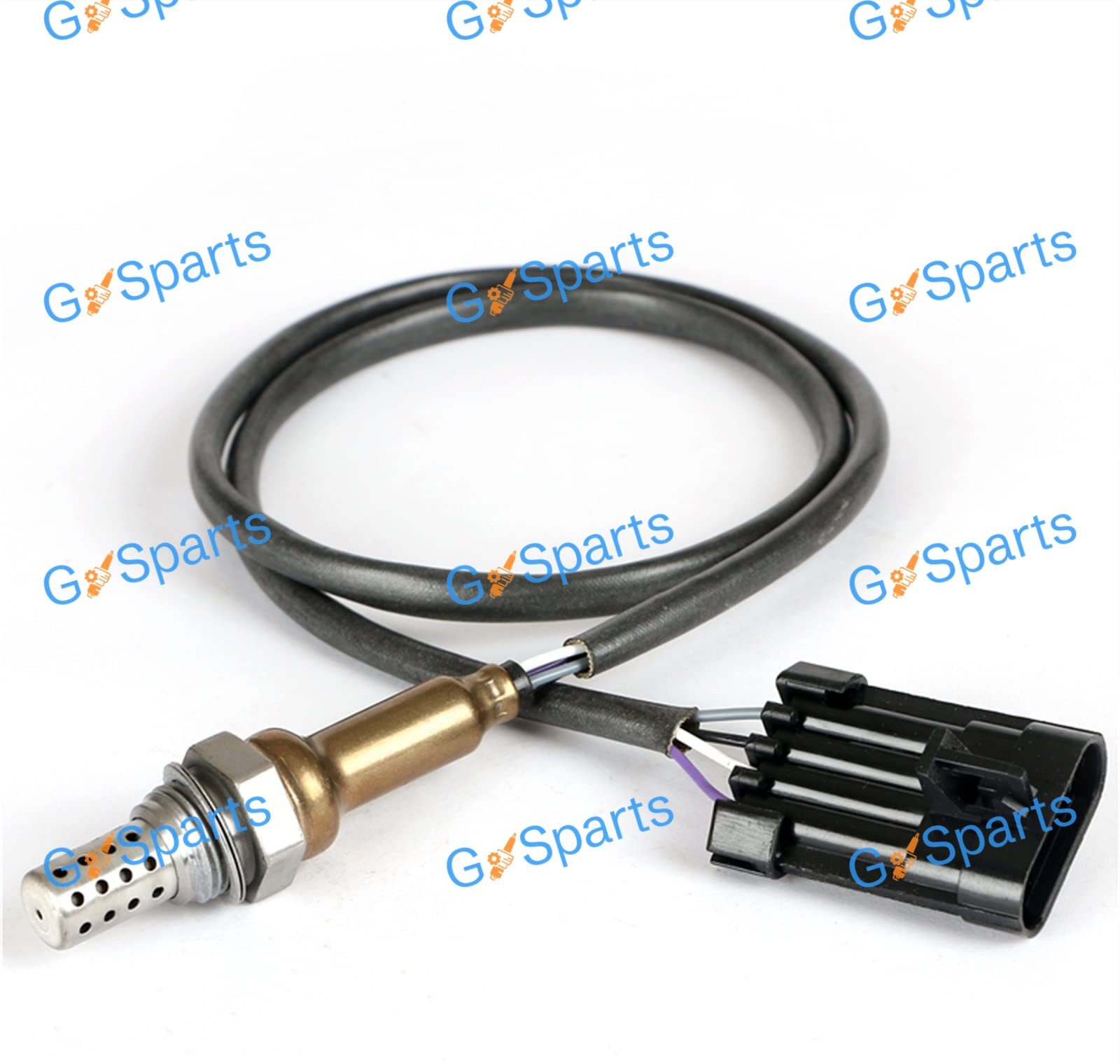
Genuine BYD F3 Oxygen Sensor 476Q-1D-1207804/25324175/28130529 (2008–2015) – OEM Precision, Smoother Idle & Cleaner Emissions
Oxygen Sensor for BYD F3 (2008–2015). OEM cross refs 476Q-1D-1207804 / 25324175 / 28130529. Ensures efficient fuel combustion and reduced emissions.
Did you like this product? Add to favorites now and follow the product.

(+86) 180 07 12 47 38 WhatsApp, Telegram, WeChat
Description
The BYD F3 Oxygen Sensor with cross references 476Q-1D-1207804, 25324175, and 28130529 is a direct-fit upstream replacement for BYD F3 vehicles (2008–2015). Designed with a 4-wire heated configuration, this sensor ensures precise monitoring of oxygen levels, maintaining optimal fuel-to-air ratios. Frequently sold across Amazon, Walmart, and eBay, this replacement part improves performance and reduces emissions.
Introduction to Efficient Exhaust Feedback
A modern ECU keeps your engine calm by reading exhaust oxygen and trimming fuel with precision. When that feedback is fuzzy or slow, you feel it as wandering idle, hesitant tip-in, and fuel economy that never quite matches expectations. Restoring a crisp signal brings balance back across the powertrain, making cold starts cleaner and traffic driving less tiring. For BYD F3 owners and workshops who want first-time accuracy, the direct-fit component discussed here is engineered to match factory geometry and switching behavior, minimizing guesswork during installation and verification. That’s why many techs standardize on BYD F3 Oxygen Sensor 476Q-1D-1207804/25324175/28130529 for predictable results on day one with BYD F3 Oxygen Sensor 476Q-1D-1207804/25324175/28130529 supporting smooth closed-loop operation.
How Oxygen Sensing Shapes Fuel, Spark, and Catalyst Health
At the core of stable drivability is real-time oxygen data. The controller compares rich/lean tendencies and adjusts injector pulse width to hold stoichiometry near the catalyst’s sweet spot. With a healthy upstream signal, torque arrives linearly and idle air control feels composed; with a tired sensor, you get micro-surges, odor after short trips, and marginal readiness. A fresh, application-correct unit delivers fast switching and consistent heater performance so closed loop begins promptly. That steadiness lets spark strategies stay assertive without flirting with knock, protecting both efficiency and refinement. In everyday terms, the vehicle returns to a relaxed rhythm instead of constantly correcting itself for stale feedback from BYD F3 Oxygen Sensor 476Q-1D-1207804/25324175/28130529 replacement scenarios.
Upstream vs. Downstream: Picking the Right Position
Not all oxygen sensors do the same job. Upstream directs mixture control and strongly influences drivability, while downstream monitors catalyst efficiency and readiness. Mixing those roles causes confusion because the symptoms differ: rough manners generally trace to the front position; clean manners but efficiency codes often implicate the rear. Confirm bank and location visually, then match the correct connector and harness length before wrenching. A clear position strategy avoids parts roulette, shortens diagnosis, and ensures the ECU interprets the signal you install exactly as intended when choosing BYD F3 Oxygen Sensor 476Q-1D-1207804/25324175/28130529 for the appropriate spot in the exhaust stream.
Fitment Confidence Through Connector and Harness Matching
Great installs begin with fitment discipline. Compare the connector face, latch style, keying, and boot, then verify harness length and sleeve orientation to preserve factory routing. A direct-fit sensor should thread by hand, seat squarely, and leave strain relief relaxed—no stretching across hot shields or sharp edges. Proper indexing protects signal integrity and heater function, reducing the chances of intermittent faults that appear only after heat-soaked traffic. This meticulous approach eliminates surprises on the first test drive and prevents needless returns, especially when the vehicle is equipped with BYD F3 Oxygen Sensor 476Q-1D-1207804/25324175/28130529 in an OE-equivalent configuration for long-term stability.
Materials, Heaters, and Shields that Survive Real Roads
Under-car components endure salt, spray, vibration, and thermal shock. Quality housings use stainless bodies, gas-permeable shields, and sealed connectors to keep condensation out of the element. Heaters must warm decisively without stressing circuits, reaching temperature fast yet maintaining it under stop-and-go load. These choices keep switching crisp and prevent rich spikes that fatigue the catalyst. The result is consistent drivability through seasons—cold starts that settle quickly and summer traffic that doesn’t cook wiring. That’s the practical expectation when servicing a vehicle with BYD F3 Oxygen Sensor 476Q-1D-1207804/25324175/28130529 and verifying its heater circuit is behaving to spec with BYD F3 Oxygen Sensor 476Q-1D-1207804/25324175/28130529 powering reliable closed-loop entry.
Symptom Patterns that Point to Oxygen Feedback Drift
Before hard failure, drivers notice subtle shifts: a faint fuel smell after errands, idle dipping as accessories cycle, sluggish response on damp mornings, or a light that reappears after clearing. Scan tools might show slow switching or a heater fault, yet the car still “runs.” Those are classic clues that feedback precision is fading. After ruling out upstream leaks and harness damage, a direct-fit replacement becomes the smart move. The reward is immediate: steadier cruise on mild grades, cleaner tip-in, and fewer scent events at the tailpipe thanks to a renewed signal from BYD F3 Oxygen Sensor 476Q-1D-1207804/25324175/28130529 that the ECU can finally trust under every load and temperature.
Preparation: Small Steps that Prevent Big Headaches
Start with safety and cleanliness. Let the exhaust cool fully, mist the bung with penetrant, and brush away grit so nothing contaminates threads or connectors. Stage the O2 socket, torque wrench, and heat-rated ties; compare old and new connector faces before removing protective caps. Dry-fit routing to confirm slack and clip positions, then protect the plug from dust until you’re ready to latch. This preparation transforms a common repair into a controlled sequence, reducing the chance of cross-threading or pin damage and ensuring a clean install when fitting BYD F3 Oxygen Sensor 476Q-1D-1207804/25324175/28130529 for predictable, long-term results.
Installation Technique: Threading, Torque, and Routing
Thread the sensor by hand first to guarantee engagement and avoid galling. Bring it to specification—firm, not excessive—so the crush washer or seat seals without distorting the bung. Align the harness to relieve connector strain and keep the lead off hot skins. Use existing clips or heat-rated ties to maintain distance from moving parts and sharp edges. After plugging in, a gentle tug test confirms terminal seating without stressing pins. Executed well, the very first warm-up tells the story: fast closed-loop, settled idle, and a calmer exhaust note that validates the quality of BYD F3 Oxygen Sensor 476Q-1D-1207804/25324175/28130529 in everyday driving.
Post-Install Verification with Live Data and Ears
Clear codes, start the engine, and let it reach temperature without heavy electrical loads. Listen for a steady note and feel the idle stop wandering. If you have a reader, upstream switching should look brisk and regular, downstream steadier as the catalyst stores oxygen. Take a short loop mixing light cruise and gentle accelerations; trims should tighten as conditions repeat. This simple confirmation routine is usually all it takes to declare success after installing BYD F3 Oxygen Sensor 476Q-1D-1207804/25324175/28130529, especially when the route includes a brief hill or ramp to exercise transitions that were previously rough.
Efficiency Wins that Compound Over Time
Accurate feedback reduces unnecessary enrichment, maintains catalyst temperature control, and allows more confident spark without knock risk. Each small improvement adds up: fewer fuel stops, less odor after short trips, and smoother holding on mild grades. The catalyst’s life is protected because it spends more time in its efficiency window rather than being shocked by rich spikes. That’s the quiet, cumulative value owners experience after refreshing the exhaust feedback loop with BYD F3 Oxygen Sensor 476Q-1D-1207804/25324175/28130529, turning routine commutes into predictable, low-stress miles that feel kinder to both driver and hardware.
Urban Driving: Short-Trip Advantages You’ll Notice
City cycles keep engines cooler and in open loop longer if a heater is weak. A robust element reaches operating temperature quickly, shrinking that fuel-heavy limbo and stabilizing idle as accessories cycle. The improvement shows up right where you live—parking garages, school runs, curbside stops. Replacing a drifting unit with BYD F3 Oxygen Sensor 476Q-1D-1207804/25324175/28130529 makes the car feel “awake” sooner each morning, with tighter trims and fewer lurches as lights change, even on damp, chilly days that once magnified hesitation and exhaust odor at low speed.
Practical Diagnostics that End Parts Roulette
Follow a clear path: check for upstream leaks pulling in air, inspect harness runs near shields for rub marks, confirm bright-metal grounds, and rule out misfires or vacuum leaks that distort readings. Once the environment is sound, the sensor becomes the decisive next step. Documenting trims and readiness before and after fitting BYD F3 Oxygen Sensor 476Q-1D-1207804/25324175/28130529 provides a baseline for future service and a clean story for customers. This discipline reduces returns and transforms a vague complaint into a solved problem backed by measurable, repeatable data.
Electrical Hygiene: Grounds, Shielding, and Terminal Tension
A perfect element can’t overcome poor wiring. Solid grounds stabilize references, intact shielding keeps interference away from the signal, and firm terminal tension ensures the ECU hears truth rather than static. Include quick inspections during routine service so nothing rubs, wicks moisture, or loosens unnoticed. Pairing tidy electrical practice with BYD F3 Oxygen Sensor 476Q-1D-1207804/25324175/28130529 maintains the crisp response you feel after the first drive, limiting seasonal quirks and keeping long-term trims narrow for consistent behavior in every weather pattern.
Maintenance Habits that Protect Sensor and Converter
Address misfires quickly so raw fuel doesn’t overheat the catalyst. Keep intake plumbing sealed to prevent false lean, and be cautious with silicone-heavy products that can poison elements. During nearby cleaning, cover connectors to prevent solvent intrusion and re-secure any clips guiding harness paths. In this healthy environment, BYD F3 Oxygen Sensor 476Q-1D-1207804/25324175/28130529 delivers honest feedback for the long haul, keeping the control loop transparent so the vehicle simply behaves—no rituals, no guesswork, just consistent performance you can rely on.
Counterfeit Awareness and Sourcing with Confidence
Imitation parts can hide shortcuts in heater durability, sealing, or calibration stability. The result is early drift, intermittent codes, and repeat labor that erodes trust. Buy from reputable suppliers who provide clear connector photos, traceable packaging, and protected terminals. Standardizing on a known-good reference such as BYD F3 Oxygen Sensor 476Q-1D-1207804/25324175/28130529 reduces risk and preserves outcomes, ensuring diagnostics remain straightforward and the post-install drive confirms success rather than introducing a new mystery caused by bargain-bin variability.
Packaging and Handling: Protecting Precision to the Bung
Sensitive electronics deserve careful transit. Immobilizing trays prevent pin deformation, moisture barriers shield the element, and clear labels speed receiving and shelf selection. On your bench, keep caps in place until threading begins, compare connectors side-by-side, and avoid gritty surfaces. This quiet discipline ensures BYD F3 Oxygen Sensor 476Q-1D-1207804/25324175/28130529 reaches the bung in perfect condition so your first warm-up validates the repair instead of creating doubt from handling damage that could mimic real faults.
Workshop Value: Predictable Outcomes for Busy Bays
Professional operations thrive on first-time fixes and components that behave consistently across compatible cars. A sensor that installs cleanly, warms decisively, and holds calibration reduces comebacks, simplifies training, and keeps bays productive. Drivers feel calmer vehicles that demand less attention in traffic, while parts managers appreciate simplified stocking. As a dependable standard, BYD F3 Oxygen Sensor 476Q-1D-1207804/25324175/28130529 becomes more than a line item—it’s a way to make results repeatable so teams can refine process instead of firefighting variability.
Product Page Clarity: Content that Mirrors the Real Part
Shoppers decide faster when pages answer silent questions: connector face, harness length context, thread description, and clear position guidance. High-resolution photos and normalized attributes reduce returns because expectations match reality. Align visible copy with structured data to improve visibility for the people already describing their problem. Listings centered on BYD F3 Oxygen Sensor 476Q-1D-1207804/25324175/28130529 should follow this model so owners and technicians can act decisively, confident the part in the box will match the photos and the attributes they used to make the decision.
FAQs that Remove Pre-Purchase Doubt
Common questions deserve direct answers: follow the coating on the threads rather than adding random anti-seize; prefer direct-fit over spliced universals for signal integrity; clear codes after installation and allow a mixed driving loop for monitors to set; double-check bank and position with photos if a code returns. Anchoring your advice in practical steps keeps the focus on outcomes. Using BYD F3 Oxygen Sensor 476Q-1D-1207804/25324175/28130529 removes guesswork by matching expected loads and curves so the ECU settles quickly and the result feels right without elaborate test rituals involving BYD F3 Oxygen Sensor 476Q-1D-1207804/25324175/28130529 conditions.
Seasonal Performance from Frost to Heat
Winter mornings test heaters and seals with condensation and contraction; summer traffic tests routing and shielding with sustained temperatures. A design built for these extremes maintains calibration instead of drifting with the weather. Owners notice fewer rough first miles in cold weather and steadier idle when the air-conditioner cycles in July after installing BYD F3 Oxygen Sensor 476Q-1D-1207804/25324175/28130529, confirming that seasonal quirks can be turned into non-events by anchoring the loop with a reliable, application-correct sensor.
Driving Impressions that Confirm a Repair Done Right
The best proof is a familiar route. Tip-in becomes clean and repeatable, creep in traffic feels smooth, and idle holds steady as accessories engage. On rolling terrain, holding speed requires less pedal because trims stop fighting stale data. Downshifts align with intent instead of arriving late. These improvements feel subtle yet unmistakable—signs that the control loop is back in tune thanks to BYD F3 Oxygen Sensor 476Q-1D-1207804/25324175/28130529, turning a nagging complaint into a quiet win that fades into the background of everyday reliability.
Technology Direction and Best-Practice Fundamentals
New coatings, element designs, and heater strategies continue to improve resistance to contamination and wear. Yet fundamentals remain unchanged: protect wiring, install cleanly, and verify with simple checks. Aligning today’s best practices with an application-correct unit like BYD F3 Oxygen Sensor 476Q-1D-1207804/25324175/28130529 gives you nearly all the benefit available on this platform. A solid baseline now also simplifies future diagnostics because you can trust the core signal rather than chasing ghosts introduced by marginal feedback or careless routing decisions.
Short-Trip Owners: Why You’ll Feel the Difference Fast
Stop-and-go cycles hold engines near the threshold of closed loop; weak heaters delay it and exaggerate odor and hesitation. A component that reaches temperature decisively reduces that limbo, smoothing early throttle and calming idle even with accessories running. That’s where many drivers feel the biggest day-to-day improvement. With BYD F3 Oxygen Sensor 476Q-1D-1207804/25324175/28130529 in place, the car behaves fully awake sooner, trims stay tighter on errands, and the cabin simply feels calmer as you glide through neighborhoods and ramps without fuss.
B2B Perspective: Communication, Documentation, and Support
Shops and fleets value clarity as much as hardware. Compatibility notes, connector imagery, torque guidance, and routing reminders reduce questions at the counter and delays in the bay. When documentation mirrors the part in the box, technicians finish confidently and move on. Sourcing aligned with BYD F3 Oxygen Sensor 476Q-1D-1207804/25324175/28130529 and presenting it with clean data strengthens trust because expectations were set accurately and met precisely, which is good for schedules, customer satisfaction, and profitability.
Environmental Angle: Small Changes, Scaled Benefits
Efficient combustion lowers fuel use and protects after-treatment hardware. Across households and fleets, accurate sensing translates into fewer pollutants and lower operating costs. Choosing BYD F3 Oxygen Sensor 476Q-1D-1207804/25324175/28130529 supports those outcomes by stabilizing the control loop so each vehicle contributes its small share to cleaner air while delivering the private benefit of smoother operation and steadier mileage that feels kinder to your budget.
Closing Summary: Restore Clarity, Enjoy the Drive Again
Great ownership is a chain of small wins—starts that settle, traffic that feels manageable, and a dashboard that stays dark. Those wins depend on honest data delivered consistently. Installing BYD F3 Oxygen Sensor 476Q-1D-1207804/25324175/28130529 restores that honesty with direct-fit geometry and stable switching the ECU can trust. Verify with a short drive, enjoy the immediate refinement, and move on with confidence. When the core signal is right, everything else feels right too—proof you’ll experience every day with BYD F3 Oxygen Sensor 476Q-1D-1207804/25324175/28130529 quietly keeping the loop in tune.
External Resources (Standards & Technical References)
- SAE J1979 — OBD-II Diagnostic Test Modes
- ISO 15031 — Road Vehicles/Scan Tool Communication
- US EPA — Basic Information on OBD-II
- NGK/NTK — Oxygen (Lambda) Sensors Overview
- Bosch Mobility — Oxygen Sensor Technology
Related Internal Links
Additional information
| OEM Part Number | 25324175, 28130529, 476Q-1D-1207804 |
|---|
Related products




High-Performance Brembo 09.6752.20 / Maxgear 19-1324 Vented Front Rotor for BYD F6 Petrol (2010–2014) – Superior Braking & Reliability
Original price was: $86.00.$70.00Current price is: $70.00.
G-SPARTS – Leading Auto Parts Supplier Since 2009
Trusted by 1000+ Clients Worldwide | Chinese (BYD, Geely, Chery, …), Japanese (Toyota, Honda, Nissan, …), European (BMW, Mercedes, VW, …) & American (Ford, Chevrolet, Tesla, …) Car Spares | Best Prices & OEM Quality | 15+ Years Expertise | Professional Team, Fast Global Shipping
Copyright 2025 © G-Sparts All Rights Reserved. | Premium Chinese Auto Parts Supplier – Worldwide Shipping | Best Prices on OEM & Aftermarket Spares

Reviews
There are no reviews yet.