
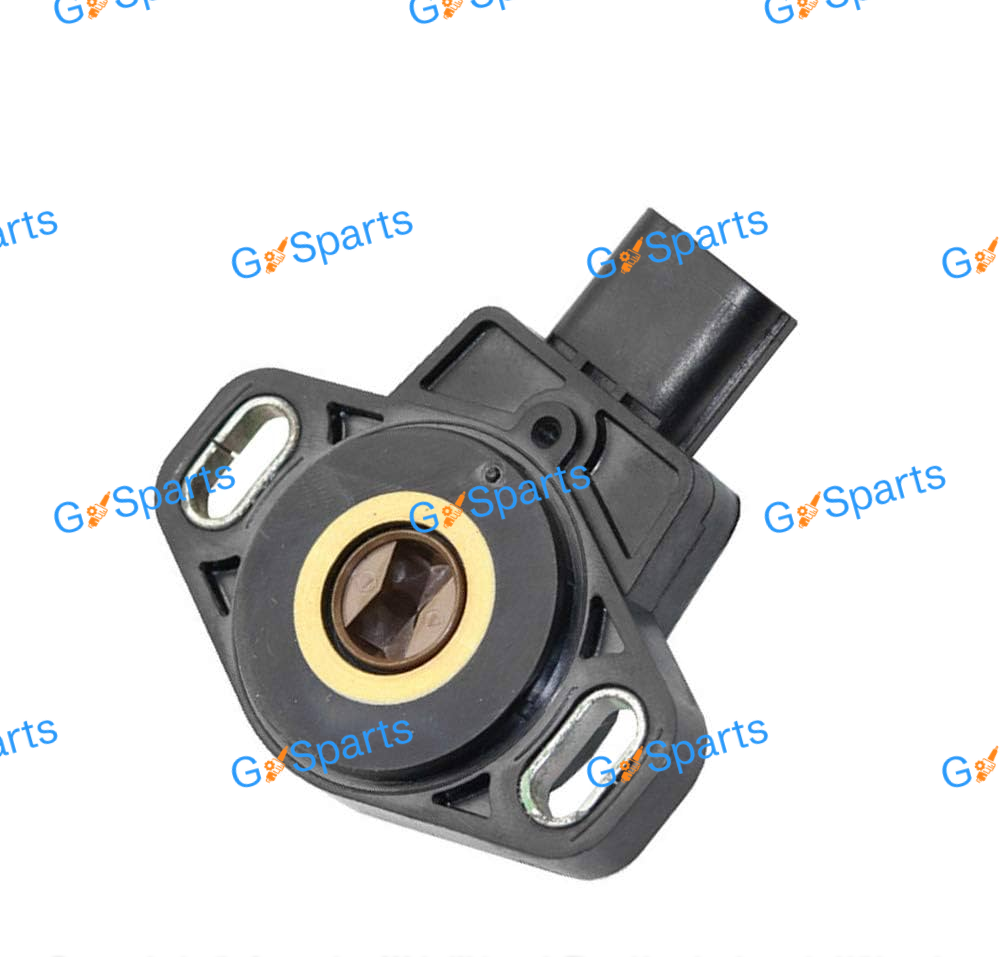
Reliable Honda TPS Sensor 16022-P2A-A01 – Fits Civic, CRX, Integra (1992–1995) – Ultimate Guide, Pro Tips & Trusted Fit | G-Sparts
OEM Honda TPS Sensor 16022-P2A-A01 fits Civic, CRX, and Integra (1992–1995).
Did you like this product? Add to favorites now and follow the product.

(+86) 180 07 12 47 38 WhatsApp, Telegram, WeChat
Description
The Honda TPS Sensor 16022-P2A-A01 is a genuine throttle position sensor designed for Civic, CRX, and Integra models from 1992 to 1995. Its 3-wire configuration ensures accurate throttle signal transmission for stable fuel control and smooth acceleration. Cross-referenced with OEM and Standard Motor Products replacements, it provides reliable performance for older Honda vehicles. Always confirm VIN fitment before purchasing.
Introduction to Throttle Precision and Why It Matters
A smooth, predictable throttle is the heart of enjoyable driving, and few components influence it as directly as the throttle position sensor. This compact device translates the movement of the throttle shaft into a voltage signal your engine control unit can use to meter fuel and adjust ignition timing. When it drifts out of spec, you’ll feel hesitation, surging, or a stubborn idle that refuses to stabilize. This guide demystifies selection, testing, installation, and calibration so you can return your Honda to crisp response with real confidence. Throughout this article, we’ll focus specifically on the part known as Honda TPS Sensor 16022-P2A-A01 to ensure clarity and parts accuracy for your build.
Understanding the Role of the TPS in Modern Engine Management
In an electronically managed engine, the throttle position signal is a primary input that works with airflow, rpm, and manifold pressure to control fueling and spark. A healthy sensor ensures linear pedal feel and predictable torque under all loads. The ECU compares this data against learned trims and temperature to correct for altitude, wear, or fuel quality. If the signal becomes noisy or inconsistent, the ECU may enter protective strategies that blunt power or alter shifting logic in automatic transmissions. To keep your system healthy and responsive, replacing a worn unit with the correct Honda TPS Sensor 16022-P2A-A01 ensures the ECU receives a clean, reliable signal across the entire sweep.
Decoding the Part Number and Recognizing Genuine Packaging
Part numbers help you separate look-alike components from the exact unit your throttle body expects. This identifier maps to a specific connector shape, mounting pattern, voltage curve, and sweep range. Genuine pieces typically arrive in tamper-evident packaging with clear labels, uniform printing, and consistent molding marks on the housing. Small deviations in letter spacing or plastic finish can indicate a counterfeit or superseded variant that may not calibrate properly. For the most reliable outcome, insist that the listing explicitly states Honda TPS Sensor 16022-P2A-A01, and confirm that the seller’s photos also show Honda TPS Sensor 16022-P2A-A01 on the box or label to avoid returns.
Typical Vehicle Fitment and Model Considerations
Honda platforms share many components, but throttle bodies and their sensors can vary by engine family, transmission, and market emissions package. Always verify by VIN or engine code when possible, then confirm connector indexing and mounting screw orientation. Some models use a sealed throttle unit while others allow the sensor to be serviced separately, which changes your installation plan. When shopping, compare the clocking of the mounting ears and the D-shaped drive tang to your current unit. With the correct match in hand, you’re ready to install a part engineered to the expected signal curve: Honda TPS Sensor 16022-P2A-A01, ensuring your ECU sees the right values from closed to wide open.
Common Symptoms of a Failing TPS You Shouldn’t Ignore
Drivers often notice a sag in throttle response, intermittent surges, or a lumpy idle that smooths only when the pedal is nudged. Automatic transmission shift points can feel odd, and cruise control may hunt. On scan tools, you might see jitter in the percent-open PID while your foot is steady. Check-engine lights can appear for correlation or range issues, and traction systems may intervene unexpectedly as the ECU second-guesses torque requests. Left unaddressed, these issues can cascade into poor fuel economy and premature catalyst wear. Replacing a worn unit with a properly specified Honda TPS Sensor 16022-P2A-A01 restores a clean signal path so the ECU can deliver consistent drivability without band-aid trims or protective strategies.
How to Diagnose the Sensor with a Multimeter and Scan Data
Begin with a visual inspection for broken tabs, moisture ingress, or loose terminals. Back-probe the signal wire and observe output as you gently sweep the throttle from closed to open; you’re looking for a stable, linear rise without dropouts. On a scan tool, graph throttle angle alongside engine rpm during small pedal inputs—oscillation or flat spots suggest internal wear. Remember to verify the five-volt reference and a solid ground; a weak feed can mimic a bad sensor. If you confirm noisy output despite good power and ground, replacement is the most efficient path. Choosing an exact-fit Honda TPS Sensor 16022-P2A-A01 ensures the signal curve meets the ECU’s expectations and eases the calibration step that follows.
Preparation, Tools, and Safety Before You Start the Job
Every successful replacement begins with the right tools and a steady plan. Gather a precision screwdriver set, torque driver, angle gauge, contact cleaner, dielectric grease, and a reliable digital multimeter. Protect the intake tract from dropped screws by covering openings, and disconnect the battery when working near harnesses. Photograph connector routing so you can recreate the factory strain relief. If your throttle body uses tamper-proof fasteners, have the correct security bits on hand. Avoid twisting the internal wiper by forcing alignment; gently preload it per the service spec and confirm free movement on the replacement Honda TPS Sensor 16022-P2A-A01 before tightening.
Removing the Old Sensor Without Damaging the Throttle Body
A little patience protects soft aluminum. Soak fasteners with a small amount of penetrating oil if corrosion is present, then support the throttle body so torque doesn’t stress the shaft. Mark the original orientation to compare with the new unit’s resting position. As you withdraw the sensor, observe the shape of the drive tang and the return spring feel; this will help you seat the replacement smoothly. Clean the mating surface with lint-free swabs and avoid aggressive abrasives that could introduce leaks. Inspect the harness for chafing and confirm the connector retains positive lock. With the area prepared and your new Honda TPS Sensor 16022-P2A-A01 staged, you’ll be ready for a precise, drama-free installation.
Mounting the New Unit and Achieving a True Mechanical Fit
Before seating the new unit, rotate it gently to feel for engagement with the throttle shaft. You want slight preload at the closed stop, not a forced twist that strains the wiper track. Start both screws by hand to prevent cross-threading, then torque them evenly while confirming the sensor stays flush to the body. A thin film of dielectric grease on the connector seal wards off moisture without insulating the contacts. Once mounted, cycle the throttle by hand to ensure there’s no binding or rubbing. A correctly installed Honda TPS Sensor 16022-P2A-A01 will return to its closed value consistently, which sets the stage for calibration and an ECU relearn that delivers crisp, predictable throttle behavior.
Baseline Calibration and Initial Key-On Checks
With the battery reconnected, turn the ignition to the run position without starting the engine. Listen for the throttle motor or idle air strategy to initialize, and watch your scan tool for a plausible closed-throttle reading. Small adjustments may be possible by loosening the screws and nudging the sensor within the slot range to dial in the base value. Aim for a stable reading that doesn’t flicker when you gently tap the housing. If your platform includes a specific learning procedure, follow it now, then confirm that the voltage changes smoothly as you press the pedal. Once the Honda TPS Sensor 16022-P2A-A01 is delivering clean baseline data, you can proceed to the ECU relearn drive cycle to finalize trims.
ECU Relearn, Drive Cycle, and Verifying Road Manners
After initial checks, start the engine and let it idle until coolant reaches normal temperature. Perform a controlled drive with light throttle roll-on, steady cruise, and a few clean accelerations to help the ECU refine its maps. Observe throttle percentage, short-term fuel trim, and spark advance as you vary load; smooth traces indicate the sensor is communicating perfectly. Should a small hesitation linger, revisit baseline alignment and verify grounds. When a new Honda TPS Sensor 16022-P2A-A01 is matched to the throttle body and relearned correctly, the ECU quickly restores confident tip-in and steady idle. For comparison, graph a second pass to confirm repeatable behavior with the Honda TPS Sensor 16022-P2A-A01 under similar conditions.
Avoiding Common Installation Mistakes That Create False Faults
Many comebacks trace to rushed preparation: dirty mating surfaces, over-tightened screws that distort the housing, or connectors that aren’t fully seated. Another frequent issue is misrouting the harness so it rubs on the throttle linkage, creating intermittent shorts that masquerade as sensor failure. Be mindful of aftermarket intake components that can tug at wiring or transmit vibration. Finally, always clear old codes after repair; stale faults can obscure fresh data. By taking an extra moment to verify each detail, you protect both the component and the throttle body. A properly installed Honda TPS Sensor 16022-P2A-A01 should deliver stable readings without periodic dropouts, allowing the ECU to trust the signal and optimize fuel and spark.
Choosing Between OEM, Remanufactured, and Aftermarket Options
Price, warranty, and quality consistency are the key trade-offs. OEM parts are engineered to the original voltage curve and typically include robust seals. Remanufactured units can provide value if they’re sourced from reputable suppliers who replace wear surfaces and test sweep linearity. Aftermarket options range widely; look for published test procedures, clear return policies, and documented compatibility with your specific throttle body. When evaluating listings, scrutinize connector indexing and the presence of slotted mounts that allow proper baseline alignment. If you prefer maximum predictability in calibration and longevity, the OEM-spec Honda TPS Sensor 16022-P2A-A01 stands out as a dependable choice that mirrors the factory signal tolerances and mechanical profile.
Performance and Tuning Considerations for Enthusiasts
Engine modifications that alter airflow—intakes, headers, cams, or ECU tunes—still depend on an accurate throttle position signal. A clean, linear sensor enables the tuner to refine transient fueling and dial in throttle mapping for better response without tip-in spikes. If you use a data logger, compare accelerator pedal position to throttle angle and note any latency or mismatch under quick blips; a drifting sensor adds noise that complicates tuning. Replace questionable components before dyno sessions so the calibration work sticks. Installing a trustworthy Honda TPS Sensor 16022-P2A-A01 is a simple step that protects your investment in software and hardware by ensuring the ECU reads throttle intent precisely across the entire operating range.
Fuel Economy, Emissions, and Long-Term Catalyst Health
Small errors in throttle position can drive big changes in mixture, especially during transient events like passing or climbing grades. The ECU may overshoot enrichment or lean too far, creating the jerky feel many associate with a failing sensor. Over time, that inconsistency stresses the catalytic converter and can trigger readiness failures during inspections. Restoring a correct baseline and sweep helps keep trims centered and combustion stable, which in turn supports better mileage and cleaner tailpipe results. When you replace a tired unit with a calibrated Honda TPS Sensor 16022-P2A-A01, you’re not only fixing a drivability annoyance—you’re also protecting downstream components and maintaining compliance with emissions standards that rely on accurate throttle data.
Preventive Care and Practices That Extend Service Life
Even reliable sensors benefit from a healthy environment. Keep the throttle body free of carbon buildup that can affect the closed-throttle stop and upset baseline readings. Ensure engine grounds are clean and tight so the reference and signal circuits remain noise-free. During maintenance, inspect harness sheathing and connector seals for cracks that could admit moisture. If you frequently wash the engine bay, avoid direct high-pressure streams at electrical components. Planning ahead with these habits reduces the likelihood of future faults and makes every startup feel the same. Should replacement eventually be required, the direct-fit Honda TPS Sensor 16022-P2A-A01 slides into a clean, prepared system and returns immediate, stable operation.
What to Do If Problems Persist After Replacement
If the vehicle still hesitates or idles unpredictably after a new sensor and relearn, widen your diagnostic net. Verify that the throttle plate isn’t sticking due to deposits and that the idle control strategy is functioning. Check for vacuum leaks at hoses and gaskets that can mimic throttle signal issues by skewing airflow. Validate the integrity of the five-volt reference shared by other sensors; a short elsewhere can pull down the circuit. Finally, use a scope if available to watch signal smoothness in real time under small pedal inputs. When those checks pass and the Honda TPS Sensor 16022-P2A-A01 is aligned correctly, you can be confident the remaining issue lies outside the throttle position system.
Buying Smart: Seller Vetting and Listing Red Flags
Quality parts start with quality vendors. Look for detailed listings with high-resolution photos of the actual item, not just a catalog rendering. Descriptions should identify connector style, mounting slots, and compatibility notes that match your vehicle specifics. Beware of vague claims like “fits many models” without precise application data. Study customer feedback for mentions of stable idle and successful relearns; these indicate correct curves and proper packaging. Confirm that returns are straightforward if compatibility turns out to be different for your build. A reputable seller will explicitly state the exact part you’re after, such as Honda TPS Sensor 16022-P2A-A01, and provide clear documentation that helps you install with confidence the first time.
Spotting Counterfeits and Protecting Your Investment
Counterfeit sensors often emulate the look but not the internal precision of the original. Telltale signs include inconsistent font weight on labels, rough edges on the housing, and connectors that feel loose or gritty. If the price is dramatically lower than the market, investigate why before committing. After installation, an unstable idle or scan traces with tiny sawtooth patterns can reveal a poor-quality resistive track. Returning such parts wastes time and shakes confidence in the repair. Choosing a verified listing for Honda TPS Sensor 16022-P2A-A01 reduces those risks, and comparing the new piece side by side with your original increases certainty that Honda TPS Sensor 16022-P2A-A01 matches the intended spec.
Returns, Warranty, and Environmental Considerations
Keep your receipts and packaging until the job is complete and the vehicle has passed a few drive cycles without issues. Register any extended warranty if provided, and store the documentation with your maintenance records. If the original sensor is serviceable as a core, follow the seller’s instructions to recover value; otherwise, recycle electronics responsibly to keep metals and resins out of landfills. While many components are small, responsible disposal makes a difference across countless repairs. By treating the process with care from purchase to post-install, you safeguard your investment and ensure your upgraded Honda TPS Sensor 16022-P2A-A01 delivers hassle-free performance for the long haul.
Workshop-Level Tips for Smooth Installs Every Time
A few professional habits separate a routine job from an exceptional one. Test the new part on the bench with a gentle manual sweep to confirm smooth output before mounting. Use thread prep appropriate for aluminum to prevent galling, and tighten hardware in small increments while monitoring alignment. Always route the harness with a service loop to accommodate engine movement without tugging the connector. After the install, log a brief data capture of throttle angle versus pedal input for your records; it’s invaluable if questions arise later. With these steps, every installation of a Honda TPS Sensor 16022-P2A-A01 becomes predictable, efficient, and repeatable, giving you the same satisfying result across different vehicles and conditions.
Clear Answers to Frequently Asked Questions
Owners often ask whether a TPS can be cleaned instead of replaced. Light external cleaning may restore connector contact, but internal wear on the resistive track cannot be repaired reliably. Others wonder about alignment without a factory jig; careful baseline adjustment using live data and small nudges within the mounting slots works well. Some platforms require a specific idle learn sequence—consult the service guide and follow it closely. Finally, intermittent faults that vanish when the weather changes usually point to moisture ingress at the connector. When in doubt, replacing with the correct Honda TPS Sensor 16022-P2A-A01 and sealing the connector properly solves both immediate drivability concerns and long-term reliability questions.
Fitment Across Regions and Emissions Packages
Global platforms complicate parts selection because regional calibrations may differ in connector keyways or sweep ranges. Vehicles imported from another market can carry mixed components that confuse generic catalog lookups. Whenever possible, decode the VIN and verify the throttle body casting number before ordering. Pay attention to emissions labels under the hood, as they hint at which ECU strategy your car uses. If your vehicle straddles a model-year change, compare physical features, not just date ranges. These checks prevent surprises during installation and calibration. With correct identification completed, installing the precise Honda TPS Sensor 16022-P2A-A01 ensures the signal matches the expected curve, and your relearn finishes quickly without hunting or idle drift.
Shipping, Handling, and Storage Best Practices
Sensitive electronics deserve mindful handling from checkout to workbench. Choose shipping methods that include protective packaging, and avoid exposing the Honda TPS Sensor 16022-P2A-A01 to extremes of heat or moisture before installation. Resist opening the antistatic pouch until you’ve prepared the throttle body and laid out your tools. If you’re staging parts for a future build, temperature-stable place away from solvents. Label the box with the vehicle and planned job date to keep projects organized. When you finally open the package, verify that the label matches your order and that the connector seal is supple. A properly cared-for Honda TPS Sensor 16022-P2A-A01 will be ready to deliver accurate readings the moment it’s mounted and keyed on.
When Professional Help Makes Sense for Your Project
Most enthusiasts can replace a TPS with patience and the right tools, but certain scenarios justify calling in a pro. If your vehicle shows multiple sensor correlation codes, you may be facing a shared reference issue that requires deeper circuit testing. Drive-by-wire systems with integrated throttle bodies sometimes need advanced adaptations that only dealership-level tools can perform. Additionally, some performance calibrations interact tightly with throttle mapping, making expert data analysis valuable. There’s no shame in partnering with a specialist to protect your time and ensure a clean outcome. Bringing the correct Honda TPS Sensor 16022-P2A-A01 to an experienced technician accelerates the process and helps you leave the shop with confidence in both parts and procedure.
Budget Planning and Total Cost of Ownership
Beyond the sensor itself, factor in consumables like cleaner, dielectric grease, and replacement screws if the originals are corroded. A basic scan tool or logging software pays dividends by confirming success and documenting baseline values. Downtime has a cost, too, especially if this is your daily driver, so schedule the job when you can complete the relearn without rushing. Consider the long-term benefit of restored fuel economy and reduced strain on emissions components. While it’s tempting to chase the lowest price, the best value often comes from a part that installs once and stays stable for years. Selecting a vetted Honda TPS Sensor 16022-P2A-A01 aligns cost with reliability and guards against repeat labor.
Keeping Records and Building a Reliable Service History
Documenting your work turns a good repair into a lasting asset. Record the initial symptoms, any diagnostic data you captured, the installation steps you followed, and the post-install readings at idle and light cruise. Note environmental conditions and fuel type, as these can explain small variations in trims. Save receipts and photos in a dedicated folder so you can reference part numbers quickly. A thorough history makes future troubleshooting faster and helps maintain resale value by demonstrating professional stewardship. The centerpiece of that record for this repair is the specific component you installed: Honda TPS Sensor 16022-P2A-A01, noted alongside mileage and date so any future owner or technician knows exactly what’s in the car.
Global Ordering, Customs, and Ensuring the Right Variant Arrives
Enthusiasts often source parts internationally to secure genuine stock or better pricing. When importing, verify the seller’s declared part designation and request a packing slip that repeats your exact identifier. Keep an eye on customs classifications that might delay delivery or require additional documentation. Upon arrival, photograph the box before opening in case you need to file a claim. Compare the molding, indexing, and label against your original to confirm correct versioning. If anything looks off, pause and contact the seller before attempting installation. This diligence prevents the frustration of forced fitment. When the package clearly matches Honda TPS Sensor 16022-P2A-A01, proceed confidently, knowing the component aligns with the throttle body and the ECU’s expected calibration for your car.
Final Verification, Road Test, and Long-Term Confidence
With installation Honda TPS Sensor 16022-P2A-A01 complete, perform a calm shakedown drive that includes neighborhood speeds, gentle acceleration onto a main road, and a few steady-state stretches. Listen for new noises, watch for warning lamps, and keep an eye on throttle percentage to ensure it tracks pedal input smoothly. If everything feels consistent and your idle remains steady after a warm soak, you’ve restored the direct connection between your foot and the engine. Completing the job with the correct Honda TPS Sensor 16022-P2A-A01 returns your Honda to the crisp, confident behavior you expect and sets you up for many miles of reliable performance.
External Resources (Standards & Technical References)
- ISO 26262 — Road Vehicles Functional Safety
- ISO 11898 — Controller Area Network (CAN)
- ISO 14229 — Unified Diagnostic Services (UDS)
- SAE J1979 — OBD-II Diagnostic Test Modes
- AEC-Q100 — Stress Test for Automotive ICs
Related Internal Links
Related products



G-SPARTS – Leading Auto Parts Supplier Since 2009
Trusted by 1000+ Clients Worldwide | Chinese (BYD, Geely, Chery, …), Japanese (Toyota, Honda, Nissan, …), European (BMW, Mercedes, VW, …) & American (Ford, Chevrolet, Tesla, …) Car Spares | Best Prices & OEM Quality | 15+ Years Expertise | Professional Team, Fast Global Shipping
Copyright 2025 © G-Sparts All Rights Reserved. | Premium Chinese Auto Parts Supplier – Worldwide Shipping | Best Prices on OEM & Aftermarket Spares

Reviews
There are no reviews yet.