
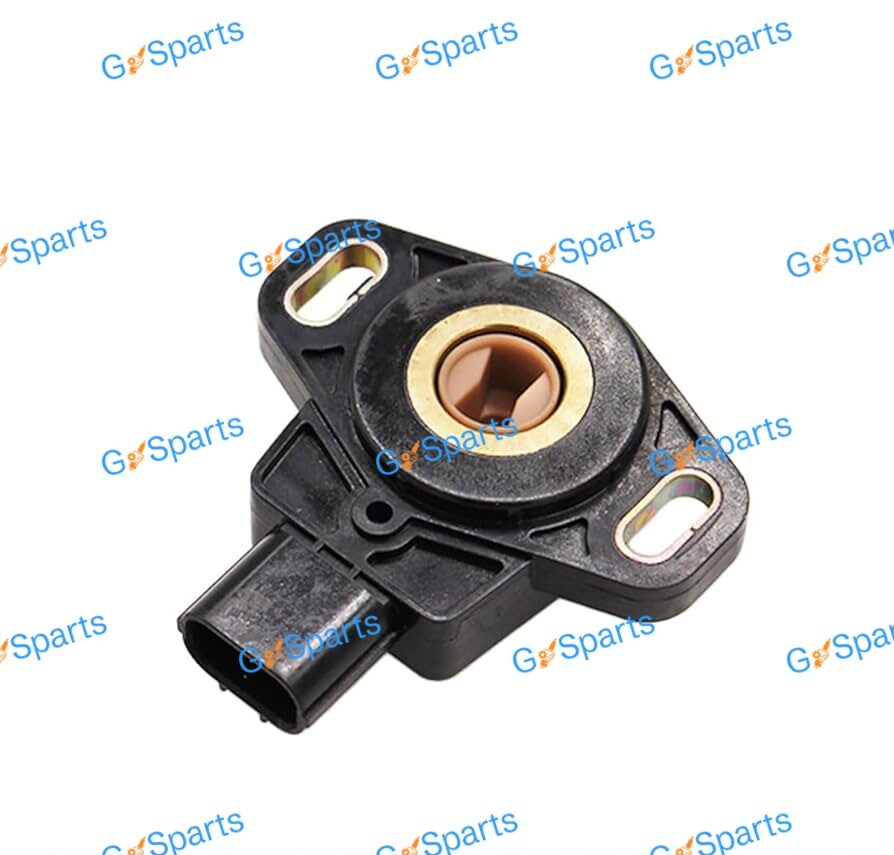
Genuine Honda TPS Sensor JT6H – Fits Accord, Civic, CR-V, Element, Odyssey (2003–2005)
OEM Honda TPS Sensor JT6H fits Accord, Civic, CR-V, Element, and Odyssey (2003–2005).
Did you like this product? Add to favorites now and follow the product.

(+86) 180 07 12 47 38 WhatsApp, Telegram, WeChat
Description
The Honda TPS Sensor JT6H offers direct OEM compatibility for Accord, Civic, CR-V, Element, and Odyssey vehicles from 2003 to 2005. As a 3-wire electric sensor, it ensures stable engine performance, reliable throttle input, and efficient acceleration response. Compatible with OEM and Standard Motor Products replacements, this TPS sensor is essential for restoring throttle precision in older Hondas. Verify compatibility using your VIN before purchase.
Overview: Why TPS Accuracy Rules Drivability
Precise throttle-angle feedback anchors fueling, spark, idle control, and transmission logic. When the trace jitters, the ECU guesses; trims wander, timing goes defensive, and shifts dither. Replacing a tired unit with the Honda TPS Sensor JT6H restores the smooth angle-to-voltage curve your calibration expects at tiny blade movements. The payoffs show up immediately: cleaner tip-ins, steadier suburban cruising, predictable downshifts on rolling terrain, and calmer A/C-on idle. Because the controller trusts the signal again, enrichment becomes brief and proportional, and torque-converter behavior stops “breathing.” You’ll feel refinement in parking lots and on grades alike—the quiet, factory-correct response that turns vague drivability into crisp, repeatable control.
Fitment & ID: Getting the Right Part the First Time
Visual twins can bolt up yet read differently at low angles, flattening sensitivity where manners matter most. Confirm connector keying, shaft-tang profile, indexing slot range, and harness length before purchase so the Honda TPS Sensor JT6H seats without strain and matches your throttle-body geometry. Verify the throttle bore and blade close cleanly against an honest stop; a sticky plate forces adaptation to chase hardware, masking a good sensor. If your platform uses different throttle bodies by trim or year, cross-check the VIN and throttle casting code. With the correct Honda TPS Sensor JT6H in hand, installation becomes straightforward and post-install learning converges quickly.
What the ECU Does With Angle Data
Your controller triangulates driver intent from throttle angle, airflow, and oxygen feedback. A clean ramp from the Honda TPS Sensor JT6H lets injector pulse and spark advance settle fast during transitions—the exact moments owners notice hiccups. Correlation with MAF keeps trims centered, reduces timing jitter, and stabilizes converter lockup. When angle jitters, the ECU defends with enrichment and conservative timing, felt as hesitation, flare, or bog. Restoring believable angle doesn’t change maps; it removes noise so existing calibration shines. That’s why a correct Honda TPS Sensor JT6H often fixes “mystery” drivability complaints without touching fuel pressure, coils, or injectors.
Symptoms That Point to Sensor Drift
Drivers describe feelings before codes: a soft stumble when easing away, cruise “breathing” on mild hills, late downshifts, or idle that wobbles when the A/C kicks on. Logs reveal stair-steps, dropouts, or mismatch between MAF and angle at a fixed pedal. The Honda TPS Sensor JT6H replaces that ambiguity with a monotonic voltage ramp that tracks tiny plate movements cleanly. Expect calmer hill climbs and predictable pedal response once mechanicals are tidy. If issues persist after install, suspect intake leaks or harness corrosion; a healthy Honda TPS Sensor JT6H exposes the environment instead of hiding it, letting you fix causes in minutes.
Common DTCs & First-Pass Triage
P0121 (range/performance), P0122 (low input), P0123 (high input), and intermittent spikes often implicate wiring, indexing, or the element. Start with freeze-frame: TPS%, RPM, load, and MAF. Closed throttle should sit stably in low single digits; WOT should approach the platform’s expected upper band without stair-steps. After fitting the Honda TPS Sensor JT6H, verify 5-V reference integrity and sensor-ground cleanliness under accessory loads. If the sweep is crisp yet trims wander, smoke-test for vacuum leaks and confirm idle-air passages are clean. Most “new sensor” complaints vanish when plumbing is sealed and the Honda TPS Sensor JT6H reports an honest slope.
Mechanical Baseline Before Electronics
Electronics can’t rescue sticky mechanics. Clean blade edges, verify return-spring snap, and set cable free-play so the plate closes fully without bind. Seat intake-boot clamps past ribs and inspect for micro-splits that admit unmetered air. Only then install the Honda TPS Sensor JT6H so it captures a believable zero and shortens relearn. A predictable stop and smooth plate motion let the ECU trust idle position, preventing false driver-demand inference. With the basics right, the Honda TPS Sensor JT6H translates micromovements into a stable, low-noise signal that steadies idle and makes light tip-ins feel natural again.
Tools, Access & Safety
Plan the job on a cool engine. Gather JIS/Phillips drivers, a small torque screwdriver, a mirror for connector access, contact-safe cleaner, and a paint marker to index position. Practice the latch feel on the bench so the on-car click is unmistakable. Do not pry against the throttle shaft—housing warp creates mid-range chatter later. Pre-stage loom clips so the Honda TPS Sensor JT6H wiring clears hot shields and moving linkages. Ten careful minutes here pay back hours by preventing intermittent drops that only appear after heat-soak, rain, or a bumpy road test.
Removal & Installation Habits That Prevent Comebacks
Loosen fasteners in alternating turns, keep solvents away from seals and PCB cavities, and never twist the shaft to “help” removal. When seating the Honda TPS Sensor JT6H, feel gentle tang engagement—resistance signals misalignment. Hand-start screws, torque lightly in a cross pattern, and route the loom in factory clips with proper strain relief. These quiet habits keep the Honda TPS Sensor JT6H stable through vibration and temperature swings, preserving a calm voltage ramp. After reassembly, verify no harness rub near brackets; most “intermittent” faults are simply half-latched connectors or pinched wiring.
Indexing: Setting a Believable Zero
If your throttle body allows rotational adjustment, mark the original index before removal. Install the Honda TPS Sensor JT6H flush against the stop, then tweak within the slot only enough to achieve a steady, low single-digit TPS% at closed throttle without creep. A believable zero stabilizes idle control, prevents false driver-demand flags, and shortens the ECU’s long-term trim migration. Recheck after heat-soak; a consistent baseline proves seating and stop integrity. Done right, the Honda TPS Sensor JT6H becomes a trusted anchor for airflow, spark, and converter logic.
Electrical Baseline & Sweep Test
Key-on, engine-off: verify a steady 5-V reference, a clean sensor ground, and a smooth, monotonic sweep as you rotate the blade by hand. Record the trace; any flat spots or dropouts require attention now, not after reassembly. Gently wiggle the connector during the sweep—flicker hints at pin tension or crimp fatigue. With wiring proven, correlate throttle with MAF at warm idle and light cruise. When the Honda TPS Sensor JT6H and airflow agree, the controller stops filtering noise and simply controls fuel and spark, shrinking timing jitter and smoothing neighborhood launches.
Idle Relearn Without Drama
Some ECUs relearn instantly; others prefer a short ritual. After installing the Honda TPS Sensor JT6H: warm to fan-on with A/C off, idle undisturbed for a couple of minutes, then drive a steady suburban loop, add three gentle tip-ins, and perform one clean engine-brake decel to a stop. Short-term trims should oscillate modestly around zero; long-term trims drift toward center; return-to-idle becomes uneventful even as fans or steering loads engage. With a correct baseline, the Honda TPS Sensor JT6H makes this process quick, predictable, and repeatable.
Live-Data: What “Good” Looks Like
Graph TPS% with MAF and ignition timing at warm idle and light cruise. A healthy Honda TPS Sensor JT6H produces a smooth ramp that rises proportionally with airflow while timing steadies as load stabilizes. Add small tip-ins; enrichment should be brief and proportional, without flare or bog. Save screenshots tied to the VIN. Two weeks later, repeat the script; tidy overlays confirm durable health. If drift appears, smoke-test the intake and verify fuel pressure before suspecting the Honda TPS Sensor JT6H—the new signal often reveals context faults that the old, lazy trace hid.
Transmission Logic & Shift Quality
Automatic schedules infer load heavily from throttle trend, so angle stability matters. A jittery signal causes early kick-downs, delayed upshifts, and dithering lockup that feels indecisive on rolling terrain. With a clean slope from the Honda TPS Sensor JT6H, requested torque is clear, shifts land where expected, and converter behavior calms. Manuals benefit too: heel-toe blips become precise, and low-speed modulation regains finesse. The Honda TPS Sensor JT6H doesn’t add power; it restores trust—so the transmission executes confidently instead of second-guessing noisy inputs.
Idle Stability With Accessory Loads
Fans, A/C, lighting, and steering apply load steps right where marginal loops stumble. Believable angle from the Honda TPS Sensor JT6H lets the ECU nudge airflow and spark preemptively so RPM doesn’t sag or surge. Expect fewer steering-wheel vibrations at lights, quieter A/C-on behavior, and less pedal babysitting. Pair the Honda TPS Sensor JT6H with a clean throttle bore and healthy idle-air control, and you lock in that composed, factory-like idle owners expect in summer heat and winter commutes.
Cold Starts, Heat-Soak & Seasonal Fuels
Dense winter air and oxygenated blends stress compensation; hot-soaks test connectors and tracks. The Honda TPS Sensor JT6H shortens adaptation so cold tip-ins avoid flare/dip and post-soak wander disappears. If behavior changes only with ambient swings, scrutinize grounds, battery reserve, and loom routing near hot shields. A stable reference and clean signal keep mixture, spark, and gear logic aligned across seasons, proving the Honda TPS Sensor JT6H is the quiet anchor for predictable manners in all weather.
Harness Care, Connector Hygiene & Noise Immunity
Millivolt-scale signals are unforgiving. Inspect the loom for past splices, tight bends, and abrasion at brackets; clean pins with contact-safe spray; avoid dielectric grease on low-voltage pins unless service data specifies it. After fitting the Honda TPS Sensor JT6H, tug-test the latch, sleeve near hot panels, and leave slack for engine rock. These simple disciplines prevent fretted pins, intermittent dropouts, and “only after heat-soak” complaints—allowing the Honda TPS Sensor JT6H to deliver a calm trace long after the first perfect test drive.
Avoiding Pitfalls That Waste Hours
Most comebacks trace to basics: over-tightened screws warping housings, half-latched connectors, misrouted looms rubbing a bracket, or solvent-swollen seals. Slow down for torque, alignment, and clip engagement. Don’t chase idle with throttle-stop tweaks; fix the cause, then let the Honda TPS Sensor JT6H report reality. A five-minute validation loop after install prevents intermittent gremlins, turning “feels better” into evidence and saving you from unnecessary parts swaps.
Bench QA Before the Car Sees It
Small pre-install checks prevent big headaches. On the bench, confirm the Honda TPS Sensor JT6H’s housing flatness, smooth tang engagement, and latch tension. With a regulated 5-V supply, sweep the signal slowly; expect a clean, monotonic rise. Lightly wiggle the connector—any flicker hints at pin or crimp issues to address now. Label install date and mileage, then photograph routing after fitment. This simple QA routine turns a commodity component into a predictable win.
Validation Road-Test Script
Use a repeatable script to prove success: warm idle 60 s, steady 2,200–2,500 rpm 90 s, three gentle tip-ins, and one engine-brake decel to idle. Capture TPS%, MAF g/s, RPM, spark, and STFT. With the Honda TPS Sensor JT6H installed, you should see a linear ramp, proportional airflow, modest STFT oscillation, and reduced timing jitter as load steadies. Save screenshots under the VIN; re-run at oil changes. Consistent overlays confirm the Honda TPS Sensor JT6H continues anchoring a calm loop as other components age.
Emissions, Economy & Catalyst Health
Accurate load inference prevents defensive enrichment that wastes fuel and overheats catalysts. With crisp angle from the Honda TPS Sensor JT6H, closed-loop control remains centered, NOx spikes from lean blips shrink, and HC from rich excursions drops. Over months, the quiet wins compound: steadier cruise, smoother launches, fewer sulfur odors after grades, and inspections that feel routine. The Honda TPS Sensor JT6H doesn’t chase numbers—it lets the calibration maintain its targets without fighting noise.
Parts Authenticity & Receiving Inspection
Counterfeits cut corners on track metallurgy, sealing, and QA. On arrival, photograph batch codes, inspect the housing, and confirm connector fit before the car hits the lift. Any cosmetic red flags or odd sweep behavior? Swap now. A verified Honda TPS Sensor JT6H plus documented pre-install checks keep warranty short and comebacks rare. Good receiving habits protect outcomes the driver will feel immediately at the pedal.
E-Commerce Details That Prevent Misorders
Great listings reduce friction: show connector macros, shaft-tang style, indexing range, harness length, throttle-body compatibility, and a concise idle-relearn primer. Include torque targets and a one-page validation checklist so buyers move from checkout to confirmation the same day. Clear, photo-rich content for the Honda TPS Sensor JT6H transforms nervous DIYers into successful installers and lowers support load for shops.
DIY vs. Shop: Choosing the Right Path
Most installs are driveway-friendly with patience and light tools. Escalate to a shop if fasteners are seized, access is tight, or indexing is unfamiliar. A good bay will fit, index, and validate the Honda TPS Sensor JT6H quickly with scope-grade traces. Ask for before/after screenshots—angle, MAF, trims—so you leave with proof, not just impressions. Either way, the goal is the same: a believable signal documented with data.
Manual-Transmission Precision & Pedal Feel
Rev-matching and low-speed modulation depend on linear pedal-to-torque mapping. Choppy angle makes blips miss and creeps jerky. Installing the Honda TPS Sensor JT6H restores that linearity: blips land predictably, clutch take-up feels natural, and parking maneuvers regain finesse. Pair the Honda TPS Sensor JT6H with sound engine mounts and a tidy idle-air path to amplify the effect—precision you’ll notice every day.
Accessory-Load Testing & Return-to-Idle Grace
Electrical loads expose weak control loops. After fitting the Honda TPS Sensor JT6H, test headlights, blower, and rear defogger at idle. The controller should preempt sag with airflow and spark nudges, then settle smoothly without oscillation. If creep appears, revisit indexing and verify closed-throttle stability. A clean baseline plus the Honda TPS Sensor JT6H yields a dignified idle—even in traffic with A/C cycling.
Fleet SOP: Beat Variance, Not Just Price
Variance is the real cost for fleets. Standardize on the Honda TPS Sensor JT6H where applicable and adopt a one-page SOP: mechanical baseline, electrical checks, indexing notes, and validation screenshots attached to the work order. Predictable inputs shrink monitor-set time, reduce comebacks, and make warranty data-driven. The Honda TPS Sensor JT6H then becomes a reliable building block—not another variable every tech must relearn.
Troubleshooting If Results Aren’t Perfect Yet
If trims won’t center despite a clean sweep from the Honda TPS Sensor JT6H, suspect context: tiny intake leaks, marginal fuel pressure, tired coils, or ground corrosion. Compare freeze-frame to live data at similar load and ECT; fix air and power first. When the upstream truth is honest, the loop calms. The Honda TPS Sensor JT6H isn’t hiding problems; it’s revealing them so you can close the case fast.
Long-Term Habits That Preserve the Win
Keep filters fresh, fix misfires quickly, avoid aggressive solvents near seals and PCBs, and re-run your logging script a couple of times a year. If overlays drift, re-smoke the intake and check battery/ground health before suspecting the Honda TPS Sensor JT6H. Good habits plus honest data keep manners intact—linear pedal mapping, quiet shifts, and a dash that stays dark season after season.
The Confident Finish
Great repairs are mostly invisible: diagnose first, install cleanly, validate with a five-minute loop, and document the result. Do that with the Honda TPS Sensor JT6H and you’ll get centered trims, predictable shifts, a composed idle, and crisp yet gentle response everywhere you drive. No theatrics—just a control loop anchored by a clean, believable signal that behaves exactly as Honda’s engineers intended, day after day.
External Resources (Standards & Technical References)
- ISO 26262 — Road Vehicles Functional Safety
- ISO 11898 — Controller Area Network (CAN)
- ISO 14229 — Unified Diagnostic Services (UDS)
- SAE J1979 — OBD-II Diagnostic Test Modes
- AEC-Q100 — Stress Test for Automotive ICs
Related Internal Links
Related products




G-SPARTS – Leading Auto Parts Supplier Since 2009
Trusted by 1000+ Clients Worldwide | Chinese (BYD, Geely, Chery, …), Japanese (Toyota, Honda, Nissan, …), European (BMW, Mercedes, VW, …) & American (Ford, Chevrolet, Tesla, …) Car Spares | Best Prices & OEM Quality | 15+ Years Expertise | Professional Team, Fast Global Shipping
Copyright 2025 © G-Sparts All Rights Reserved. | Premium Chinese Auto Parts Supplier – Worldwide Shipping | Best Prices on OEM & Aftermarket Spares

Reviews
There are no reviews yet.