
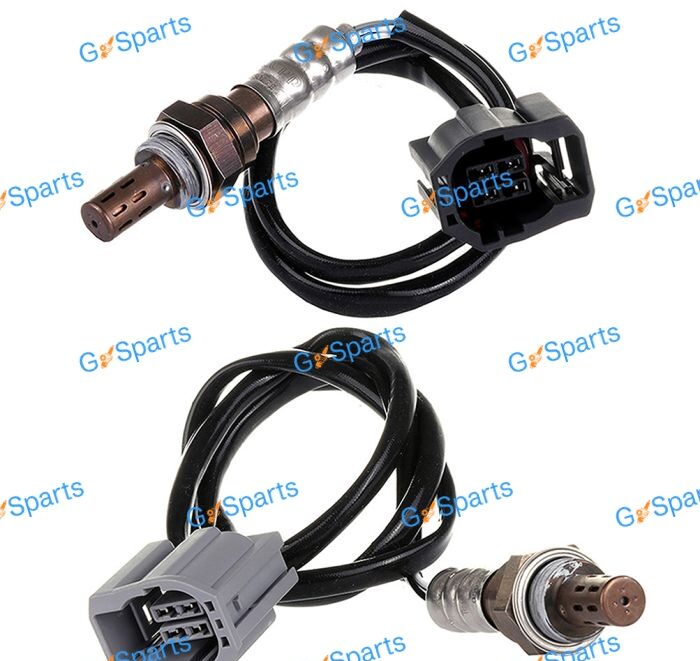
Genuine Mazda Oxygen O2 Sensor Universal aftermarket (various SKUs) – Clean Emissions, Stable Trims, Lower Cost
O₂ sensor for Older/common Mazda petrol models marketed as ‘fits Mazda’ – Replacement (may require adapter). Specs: May be 1–4 wire; probe length/thread may not match OE.
Did you like this product? Add to favorites now and follow the product.

(+86) 180 07 12 47 38 WhatsApp, Telegram, WeChat
Description
OE‑style oxygen (lambda) sensor listing covering: Older/common Mazda petrol models marketed as ‘fits Mazda’. OEM/reference(s): Universal aftermarket (various SKUs). Position: Replacement (may require adapter). Typical specification: May be 1–4 wire; probe length/thread may not match OE. Brands/cross‑refs: Bosch Exact‑Fit, Walker, NTK, Delphi. Fitment: Avoid universal unless you verify connector, thread (often M18×1.5) & probe length via VIN. Source: Advance Auto Parts.
What “Universal” Really Means for Mazda Owners
A Mazda Oxygen O2 Sensor Universal aftermarket (various SKUs) is designed to fit many vehicles with the same thread and sensing style, usually supplied with bare leads and crimp sleeves instead of a Mazda-specific connector. The upside is availability and price; the tradeoff is that you must match heater wattage, wire count, and signal ground style precisely. When you do, closed-loop control behaves normally and readiness monitors set on schedule. When you don’t, you invite nuisance codes, delayed light-off, and trims that wander. In this guide, we’ll show how to select, wire, install, and verify a universal unit so your Mazda drives with OEM calm—without paying OEM prices.
Upstream vs. Downstream: Don’t Mix Their Jobs
On Mazdas, the upstream sensor steers mixture in real time while the downstream sensor audits catalyst efficiency. A Mazda Oxygen O2 Sensor Universal aftermarket (various SKUs) can be used in either role only if the element type, heater mapping, and harness routing match the original position’s demands. Upstream needs fast switching at light load; downstream should read comparatively calm when the converter stores oxygen correctly. Swapping roles or using a slow-response universal upstream will delay closed loop, inflate fuel use, and may trigger catalyst codes. Always identify bank and position first—then choose the universal SKU mapped for that location.
Fitment Variables Beyond Thread Size
Threads are the easy part; success depends on heater characteristics, response curve, connector keying, lead length, and tip depth in the stream. A Mazda Oxygen O2 Sensor Universal aftermarket (various SKUs) must place the ceramic at a similar sample point to avoid dilution from eddies that fake lean. Electrical equivalence matters just as much: ECUs test heater current and switching thresholds. If your universal’s heater draw or ramp timing is off, you’ll chase P0135/P0141-family codes and stubborn monitors. Match wire count, confirm polarity, and choose lead length that reaches factory clips without tension or contact with hot shields.
When Universal Makes Sense—and When It Doesn’t
Use a Mazda Oxygen O2 Sensor Universal aftermarket (various SKUs) when supply is tight, the connector is discontinued, or budget is constrained but you can wire carefully and verify with data. Choose direct-fit when the vehicle is still under emissions warranty, when you need CARB-listed parts in strict regions, or when bay time is more valuable than parts savings. Universals shine in fleets and older cars where uptime and cost control matter. They stumble when heater mapping, wiring discipline, or sample depth are guessed. Decide based on risk tolerance, regulatory context, and your ability to validate outcomes with live data.
Heater Mapping and Cold-Start Behavior You Can Feel
Cold starts define emissions and driver feel. An under-powered heater prolongs open-loop; an over-powered one overheats ceramics. A Mazda Oxygen O2 Sensor Universal aftermarket (various SKUs) with the correct heater ramp reaches temperature quickly and begins crisp switching at idle, shrinking that first minute of wobble. The result is shorter enrichment, faster catalyst light-off, and fewer sulfur odors. Choose universals whose datasheets specify heater resistance/current matching Mazda’s expectations. After install, confirm quick upstream oscillation at warm idle and light cruise; if switching lags, you likely mismatched heater behavior or created excess harness resistance during splicing.
Selecting the Right Universal by Wire Count
Mazdas typically use four-wire zirconia sensors upstream: signal, signal ground, and two heater wires. A Mazda Oxygen O2 Sensor Universal aftermarket (various SKUs) labeled “4-wire zirconia, narrowband” is the usual match. Two-wire and three-wire units lack dedicated grounds or heaters—unsuitable for most modern platforms. Wideband/AFR sensors (different technology) are not interchangeable with narrowband universals. Count your wires, note connector pin colors, and consult the universal’s cross-reference. If your platform uses an air-fuel ratio sensor, do not substitute a narrowband universal; choose a direct-fit wideband or an application-correct equivalent.
Wiring Discipline: Solder vs. Crimp, Grounding, and Strain Relief
Signal voltage is millivolts, so connections matter. For a Mazda Oxygen O2 Sensor Universal aftermarket (various SKUs), stagger splices, use non-insulated butt connectors or solder with rosin core, and finish with adhesive heat-shrink. Avoid bulky vinyl crimps that wick moisture and add resistance. Don’t tie signal ground to chassis unless the original design did; follow the OEM schematic—most Mazda upstream sensors use a dedicated return. Route the loom in factory clips, add heat sleeve near shields, and leave slack for engine rock. These small habits prevent intermittent faults that appear only after heat-soak or on bumpy roads.
Tools and Safety for a Clean Install
Work on a cool exhaust to prevent burns and thread galling. For any Mazda Oxygen O2 Sensor Universal aftermarket (various SKUs) install, you’ll want penetrant, a quality O2 socket, torque wrench, nylon brush for the bung, rosin-core solder or proper crimps, adhesive heat-shrink, and loom sleeve. Keep anti-seize away from the sensing tip, and never touch ceramics with oily gloves—contamination slows response. Support the exhaust if leverage is needed, hand-start threads to avoid cross-threading, and torque to spec so the crush washer seals without distorting the shell.
Bung Health, Thread Integrity, and Leak Checks
A perfect sensor in a leaky bung yields bad data. Clean threads lightly, inspect the seat, and repair damaged bungs with a weld-in nut if needed. After fitting your Mazda Oxygen O2 Sensor Universal aftermarket (various SKUs), run the engine and listen for a tick at the bung; a five-minute smoke test upstream of the catalyst confirms a gas-tight joint. Micro-leaks draw in fresh air and fake lean, driving trims up and confusing diagnosis. Fix sealing first—then judge the sensor’s behavior.
Upstream Verification: What “Good” Looks Like
Post-install, validate the Mazda Oxygen O2 Sensor Universal aftermarket (various SKUs) with live data. At warm idle and light cruise, upstream voltage should switch briskly around stoichiometric with short-term trims oscillating modestly near zero and long-term trims hovering close to center. Add three gentle tip-ins: enrichment should be brief and proportional, timing steadying as load stabilizes. Save screenshots under your VIN; repeat in six months. Neat overlays signal long-term health; drift flags issues early—often leaks, fuel pressure variance, or splice resistance rather than sensor failure.
Downstream Behavior and Catalyst Auditing
A healthy converter makes downstream traces comparatively calm, not mirror-image of upstream. After installing a Mazda Oxygen O2 Sensor Universal aftermarket (various SKUs) upstream, confirm that downstream transitions slow during steady cruise and smooth out after the catalyst lights. If downstream mirrors upstream rapidly, suspect converter efficiency, exhaust leaks, or mixture control outside spec. Your universal upstream may be revealing a weak catalyst rather than causing the code; rely on data patterns rather than assumptions.
Common Codes and Smart Triage
Slow-response (P0133/P0153) suggests switching latency; heater faults (P0135/P0141) implicate circuit, fuse, relay, or splice resistance; stuck rich/lean (P2195/P2197) often points to leaks or fuel/ignition imbalance. With a Mazda Oxygen O2 Sensor Universal aftermarket (various SKUs), compare freeze-frame load, RPM, ECT, trims, and sensor voltage to live data while reproducing conditions. If the upstream waveform is crisp yet trims skew, re-smoke intake/pre-cat, verify fuel pressure under load, and check misfire counters. Fix the environment first; only then blame the sensor.
Drive-Cycle Tips for Predictable Readiness
Readiness often needs a warm idle, steady suburban cruise, and one or two engine-brake decels. After a Mazda Oxygen O2 Sensor Universal aftermarket (various SKUs) install, aim for ¼–¾ fuel level, coolant at full temperature, and steady 60–80 km/h for several minutes. If EVAP lags, it’s likely because ambient and tank conditions weren’t met. Catalyst monitors will set once upstream switching is crisp and downstream shows appropriate smoothing. Clear codes after repair, complete the loop, then verify monitors to avoid retest fees.
Case Study: Mazda3 Commuter with Budget Constraints
A Mazda3 owner needed an upstream sensor quickly and opted for a Mazda Oxygen O2 Sensor Universal aftermarket (various SKUs). We matched a four-wire zirconia unit, verified heater resistance, stagger-soldered the splices, and routed the loom in factory clips with heat sleeve. Before/after logs showed sluggish pre-install switching and pinned trims. Post-install, oscillation became brisk, STFT centered near zero, and LTFT drifted back toward center over two days. The driver reported smoother tip-in and steadier cruise—proof that a correctly selected and wired universal can deliver OEM-like behavior when validated with data.
Modified Vehicles: Heat, Routing, and Repeatability
Intakes, headers, or turbo hardware alter local temperatures and flow. To keep a Mazda Oxygen O2 Sensor Universal aftermarket (various SKUs) happy, shield nearby looms, maintain sample depth, and avoid placing the bung in turbulent zones. Tuners benefit from a stable upstream truth source; maps target reality rather than compensate for lag. Validate with a quick loop and save screenshots. If the upstream trace is lively and trims are centered, your universal is providing the baseline a calibration can trust—even in hotter, modified bays.
Fleet and Shop Policy: Variance Is the Enemy
For fleets, standardize on a short list of Mazda Oxygen O2 Sensor Universal aftermarket (various SKUs) that match wire count, heater spec, and lead length for your models. Build a one-page SOP: confirm VIN and position, document heater resistance, photograph splices and routing, then capture idle/cruise screenshots for the work order. This discipline slashes comebacks, shortens monitor-set times, and turns small sensor jobs into KPI-positive wins. Variance—not price—is what kills uptime.
Total Cost of Ownership: Parts vs. Bay Time
A cheap universal isn’t cheap if it triggers retests, comebacks, or early catalyst wear. A Mazda Oxygen O2 Sensor Universal aftermarket (various SKUs) saves money when selection and wiring are correct and validation is baked into the process. Add five minutes for leak checks and screenshots; that documentation repays hours later. When in doubt, cost out the risk: if shop time is scarce or regulatory pressure is high, a direct-fit may be wiser. If you can validate calmly, a universal offers real savings without sacrificing drivability.
Product Page Clarity That Prevents Misorders
Great listings reduce friction: connector color map, wire-to-wire pinout, lead length, heater resistance, seat depth, and upstream/downstream callouts. For a Mazda Oxygen O2 Sensor Universal aftermarket (various SKUs), include a splice guide (stagger, adhesive heat-shrink), torque spec, and a three-step drive-cycle checklist. Clear imagery of the tip and harness sleeve helps DIY buyers and shops move from checkout to proof. Good information cuts returns and makes first-try success routine.
Authenticity, Packaging, and Receiving Inspection
Copycat sensors often skimp on electrode loading, sealing, or heater calibration. When your Mazda Oxygen O2 Sensor Universal aftermarket (various SKUs) arrives, check batch codes, housing flatness, tip protection, and latch feel (if a pigtail is included). Measure heater resistance before install. Photograph the parts, splices, and routed loom; save live-data screenshots with the invoice. Five minutes at receiving protects hours later by catching out-of-box variability before it masquerades as “weird drivability.”
Owner Baseline Logging Without Shop Tools
A Bluetooth OBD adapter plus a quality app is enough to prove your Mazda Oxygen O2 Sensor Universal aftermarket (various SKUs) works. Warm idle snapshot, steady 2,300 rpm cruise, three gentle tip-ins, one clean decel—save upstream/downstream, STFT/LTFT, and timing. Re-run the script at each oil change; tidy overlays show stability. If switching slows or trims drift, re-smoke the intake, confirm splice integrity, and check fuel pressure before suspecting the element.
Troubleshooting If Trims Still Wander
If trims won’t center after installing a Mazda Oxygen O2 Sensor Universal aftermarket (various SKUs), verify no pre-cat leaks, confirm heater circuit voltage under load, and inspect splices for resistance or cold solder. Compare signal ground continuity to OEM specs. If the waveform is crisp yet trims skew, look for unmetered air downstream of the MAF, injector imbalance, or marginal fuel pressure. Universals often expose existing problems by telling the truth; fix the environment, not the symptom.
Start-Stop Behavior and Short Heat-Soaks
Frequent restarts test marginal feedback loops. A correctly mapped Mazda Oxygen O2 Sensor Universal aftermarket (various SKUs) helps the ECU re-enter closed loop quickly, preventing rich puffs and idle shudder when A/C or fans engage. Pair the sensor with a healthy thermostat and sealed intake so coolant and airflow stay in the monitor window. If restarts feel rough, log upstream timing to closed loop; slow switching points to heater/spec mismatch or splice resistance—both fixable without replacing the entire exhaust.
Pre-Inspection Fast-Track Checklist
Before the lane, aim for ¼–¾ tank, confirm ECT at full temperature, and ensure no pending heater or misfire codes after fitting a Mazda Oxygen O2 Sensor Universal aftermarket (various SKUs). Drive 5–7 minutes at a steady 60–80 km/h, then perform one engine-brake decel from ~3000 to ~1500 rpm. Look for brisk upstream switching, centered short-term trims, long-term trims near zero, and a calm downstream as the catalyst lights. If EVAP lingers, it’s likely conditions—not the sensor—so repeat with ambient and tank levels in range.
Sustainability and Catalyst Health Over Time
Accurate lambda control reduces raw hydrocarbons, keeps substrates within design temperature, and avoids fuel-heavy fallbacks. A well-matched Mazda Oxygen O2 Sensor Universal aftermarket (various SKUs) stabilizes transitions, protects converters on long grades, and saves fuel in daily traffic. Cleaner exhaust, fewer parts tossed early, and less diagnostic thrash are real environmental wins. The payoff is quiet: a Mazda that passes inspections, holds speed calmly, and stops asking for attention—because the feedback loop finally trusts its upstream truth source again.
Regulatory Compliance & Emissions-Legal Choices
If you live in a strict emissions region (e.g., CARB states) or plan to sell the vehicle there, confirm that the Mazda Oxygen O2 Sensor Universal aftermarket (various SKUs) you choose is emissions-legal for your application. Look for an Executive Order (EO) number on the packaging and cross-check the vehicles and engine families it covers; inspectors often verify this during visual checks. Keep the invoice, EO sheet, installation date, and a brief live-data baseline (idle and light cruise) in your records—this documentation defuses retest disputes. When no EO-listed universal exists for your platform, use a direct-fit, application-specific sensor to avoid readiness delays, catalyst efficiency flags, and potential compliance issues during routine or resale inspections.
The Confident Finish
Universal doesn’t have to mean compromise. With careful selection, disciplined wiring, airtight plumbing, and simple live-data verification, a Mazda Oxygen O2 Sensor Universal aftermarket (various SKUs) can deliver OEM-like behavior at a friendlier price. Document heater resistance, splice quality, torque, routing, and before/after screenshots; save them under the VIN. That playbook turns a small sensor into a durable improvement in drivability, compliance, and cost control—exactly the outcome Mazda owners expect when precision meets process.
External Resources (Standards & Technical References)
- SAE J1979 — OBD-II Diagnostic Test Modes
- ISO 15031 — Road Vehicles/Scan Tool Communication
- US EPA — Basic Information on OBD-II
- NGK/NTK — Oxygen (Lambda) Sensors Overview
- Bosch Mobility — Oxygen Sensor Technology
Related Internal Links
Additional information
| OEM / Reference | Universal aftermarket (various SKUs) |
|---|---|
| Brands / Cross | Bosch Exact‑Fit, Delphi, NTK, Walker |
| Models | Older/common Mazda petrol models marketed as 'fits Mazda' |
| Position | Replacement (may require adapter) |
| Specifications | May be 1–4 wire; probe length/thread may not match OE |
| Fitment note | Avoid universal unless you verify connector, thread (often M18×1.5) & probe length via VIN. |
| Source | Advance Auto Parts |
Related products


Recently Viewed Products


G-SPARTS – Leading Auto Parts Supplier Since 2009
Trusted by 1000+ Clients Worldwide | Chinese (BYD, Geely, Chery, …), Japanese (Toyota, Honda, Nissan, …), European (BMW, Mercedes, VW, …) & American (Ford, Chevrolet, Tesla, …) Car Spares | Best Prices & OEM Quality | 15+ Years Expertise | Professional Team, Fast Global Shipping
Copyright 2025 © G-Sparts All Rights Reserved. | Premium Chinese Auto Parts Supplier – Worldwide Shipping | Best Prices on OEM & Aftermarket Spares

Reviews
There are no reviews yet.