
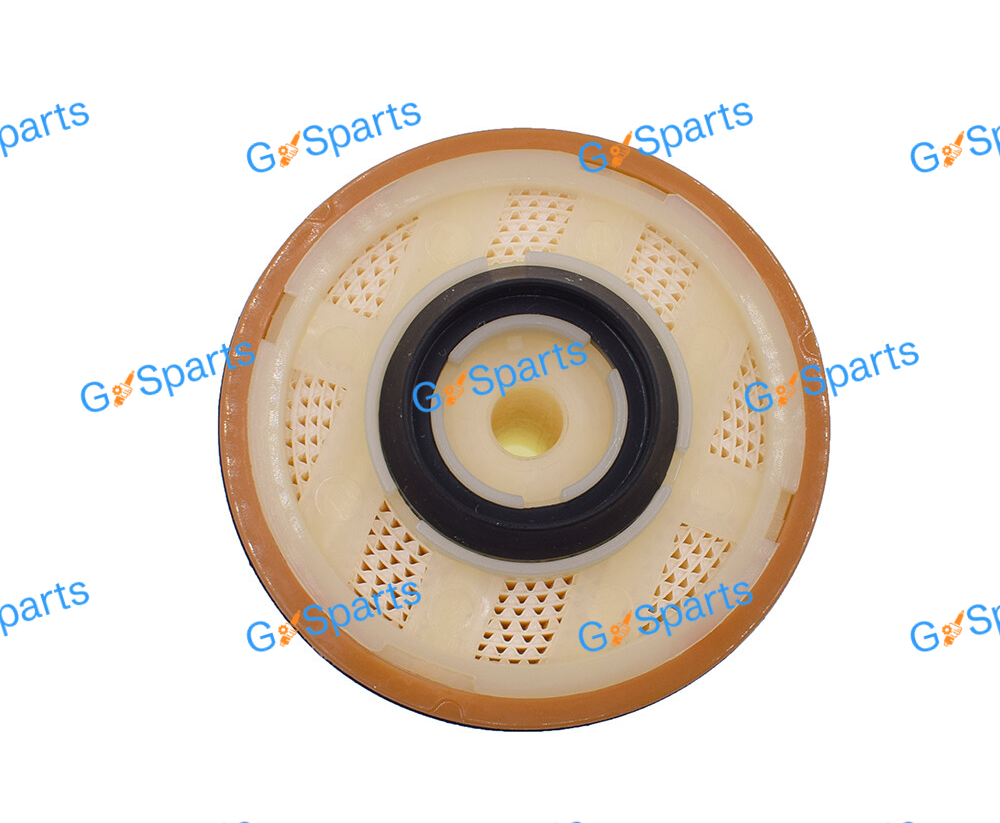
Protective, High-Performance Defense — Ultimate Mitsubishi Fuel Filter 1770A338
Mitsubishi Fuel Filter 1770A338 – Mitsubishi L200 / Triton / Strada / Pajero Montero Sport (2016–2020, 2.5L diesel) is tuned for demanding duty cycles, pairing high-efficiency water/particulate capture with a low-restriction path that supports strong low-end torque. The rugged shell and OE-grade seal geometry lock in a secure fit to withstand vibration, heat, and off-road shock loads. By filtering finer contaminants, it protects injectors and high-pressure pumps, reduces power loss, and extends component life. Ideal for fleets and overlanders, especially in dusty or variable-quality diesel markets. Replace at severe-service intervals to prevent hesitation, hard starts, and premature pump wear—keeping your 2.5L diesel pulling hard.
Did you like this product? Add to favorites now and follow the product.

(+86) 180 07 12 47 38 WhatsApp, Telegram, WeChat
Description
The Mitsubishi Fuel Filter 1770A338 delivers OEM-grade protection for Mitsubishi L200 / Triton / Strada / Pajero Montero Sport (2016–2020, 2.5L diesel). It filters contaminants to protect injectors and ensure clean combustion. Built to Mitsubishi specifications (Diesel line filter; supports common rail diesel/VGT systems; metal housing), this filter guarantees precise fitment and durability. Cross-compatible with Mitsubishi Genuine OEM, it provides a trusted replacement for routine maintenance or repair. Recommended replacement intervals align with Mitsubishi’s service manuals. Notes: Confirm engine code (2.5D) and VIN; variations exist in different markets.
Duty-Cycle Overview and Diesel System Purpose
Modern workhorse pickups and SUVs demand a clean, steady fuel supply to deliver torque on steep grades, stability in tropical heat, and low-noise cruising on long highway runs. Common-rail injectors and variable-geometry turbos rely on precise fueling to maintain that composed feel under load, and even minor contamination can upset the balance. That’s why a high-integrity diesel line element is a small part with an outsized impact on day-to-day drivability. For owners who prize reliability in challenging conditions, Mitsubishi Fuel Filter 1770A338 provides an OEM-spec foundation that shields precision components and extends service life. Installed on schedule, Mitsubishi Fuel Filter 1770A338 supports consistent starts, steadier idle, and measured throttle response when towing, climbing, or threading traffic.
Fitment Scope, VIN Precision, and Market Variants
Platform names can be global, but fuel system details often differ by region, build month, and emissions package. Some markets add water-in-fuel sensors, thermostatic recirculation, or different quick-connect geometries, while others retain threaded unions. Before you order, confirm the VIN, engine code, and production date so the housing, ports, and seals match what’s on the vehicle. That diligence prevents bracket awkwardness, hose strain, and leaky re-dos after heat cycles. With the right footprint in hand, installation feels natural: the canister seats squarely, the sensor indexes, and priming takes minutes. For this exact footprint and year range, Mitsubishi Fuel Filter 1770A338 is the precise OEM-aligned choice that drops in cleanly and performs to design intent.
Common-Rail Demands and Filtration Rationale
Modern diesel injection spray holes can be finer than a human hair, so even tiny particles can scar nozzles and skew atomization. Water is an even bigger enemy, accelerating corrosion and collapsing lubricity at the pump. That’s why effective separation, stable micron capture, and low restriction across the interval are non-negotiable. The element must hold shape during hot return fuel events and cold-soaked mornings alike, keeping delta-P predictable so rail pressure controllers aren’t chasing ghost fluctuations. Field experience shows that when Mitsubishi Fuel Filter 1770A338 is in good health, injector feedback trim remains tight and warm restarts feel unremarkable—which is exactly what you want. Technicians repeatedly choose Mitsubishi Fuel Filter 1770A338 to restore baseline delivery without guesswork.
Construction Details, Media Integrity, and Sealing
A diesel filter’s “look” tells little about its resilience. What matters is the fiber blend, pleat geometry, end-cap bonding, and elastomer chemistry. The media must resist collapse under high differential pressure and stay dimensionally stable with ultra-low-sulfur diesel or biodiesel blends. Equally critical are seals that compress evenly and rebound after heat soak, preventing late-appearing weeps. The housing should tolerate vibration from ladder frames and corrugated roads without telegraphing noise into the cabin. Choosing a component that nails these fundamentals preserves pump efficiency, keeps injector return balanced, and spares you from the intermittent lean-feel surges that make diagnostics messy. In this context, Mitsubishi Fuel Filter 1770A338 represents the dependable, OE-standard approach.
Water Separation, Drain Protocol, and Sensor Logic
Diesel systems need more than particle capture; they need robust water separation and routines to manage what’s collected. Many assemblies integrate a clear bowl, drain cock, or electronic sensor that signals accumulation. Draining at service intervals—and sooner after questionable fuel stops—prevents water from reaching the pump and injectors, where it would erode surfaces and trigger rough running. The separation stage must function without adding undue restriction so the priming pump doesn’t struggle. Owners who adopt a quick weekly glance or a kilometer-based drain habit see fewer cold-start hiccups in humid seasons. The straightforward path is pairing that ritual with Mitsubishi Fuel Filter 1770A338, a choice aligned with the platform’s factory water-management design.
Start-Up Behavior, Idle Quality, and Noise Character
Good diesel manners feel like an absence: no extended cranking, no hunting idle, no fuel whine bleeding into the cabin after a hot soak. When the inlet path is clean and sealed, rail pressure achieves target quickly and the control system trims quietly in the background. You’ll notice AC-on idles that don’t waver, gentler tip-in when maneuvering trailers, and a return to that subdued, confident engine note at cruise. Small wins stack into lower fatigue on long days. Those are the practical dividends of a well-timed service using Mitsubishi Fuel Filter 1770A338, especially on vehicles that split time between urban delivery, unsealed access roads, and highway transits.
Injection, Pump Protection, and Rail Stability Under Load
A diesel’s high-pressure pump and piezo or solenoid injectors must see predictable supply pressure to hold timing and quantity under load. Rising inlet restriction forces the lift stage to draw harder, the high-pressure stage to heat fuel, and the controller to hunt. That shows up as a soft surge at 80–100 km/h or a reluctant climb when torque demand spikes. Restoring flow with Mitsubishi Fuel Filter 1770A338 re-centers the curve so the ECU refines rather than compensates. Owners often report more decisive passing, fewer “ask permission” moments, and steadier EGTs when towing. In short, the element becomes a quiet partner that keeps the expensive parts shielded and the rail calm.
Interval Strategy, Seasonal Conditions, and Fuel Quality
Service books set the cadence, but your routes and seasons add nuance. Dusty mine roads, coastal humidity, and monsoon seasons load media faster than suburban commutes. Cold snaps thicken fuel, pushing differentials higher. Plan renewals ahead of harsh seasons to enter them with margin, and adjust cadence if you regularly refuel at remote sites where turnover is uncertain. Maintain receipts and a simple log of dates, kilometers, and observed water drains. This practical discipline turns the filter into a predictive maintenance lever rather than a reactive fix. For a consistent baseline, choose Mitsubishi Fuel Filter 1770A338 and align your schedule with the vehicle’s most demanding months.
Safety, Depressurization, and Clean-Bay Setup
Fuel work should feel methodical, not rushed. Ventilate your space, chock wheels, disconnect the negative terminal, and allow the engine bay to cool before you touch fittings. Wear eye protection and fuel-rated gloves, stage absorbent pads, and keep an extinguishing agent in reach. Photograph line routing and label connectors so reassembly mirrors factory layout. Cap open lines immediately to keep lint out, and never reuse O-rings or crush washers that have taken a set. With these basics covered, installing Mitsubishi Fuel Filter 1770A338 becomes a tidy, one-and-done task that leaves no odor and no film on joints after priming.
Tools, Hardware, and Reuse Rules You Shouldn’t Bend
Diesel fittings punish sloppy technique. Use line wrenches to preserve hexes, torque wrenches to hit spec without over-crushing seals, and plastic-safe picks to avoid nicking O-rings. Replace any bracket isolators that have gone glass-hard; vibration fatigue can migrate into lines. Keep a penlight and inspection mirror handy for a final sweep. A dry white towel is your best truth teller—drag it across every joint after prime and again after a warm-idle cycle. Respecting these small steps is how Mitsubishi Fuel Filter 1770A338 goes in once, stays dry, and keeps confidence high on the first long haul after service.
Orientation Discipline, Hose Management, and Bracket Geometry
Diesel filters often index via tabs or keyed ports to maintain correct flow direction and sensor orientation. Finger-start threads, use back-up wrenches on hard lines to prevent torsion, and confirm hoses fall into natural arcs without twist. A bracket that preloads the canister invites weeps later; shim or adjust as necessary to keep faces square. Transfer any heaters or thermostats in the same position as removed. When everything sits naturally, priming takes fewer strokes, and the assembly remains silent through heat cycles. This is the moment where a well-made part like Mitsubishi Fuel Filter 1770A338 shows its value by fitting without persuasion.
Priming Methods, Bleed Sequence, and Validation Drive
Air in a diesel system is the enemy of quick starts and smooth ramps. Use the hand primer or dedicated bleed screws per manual, watching for clean, bubble-free return. Key-cycle glow as applicable, then start and allow the ECU to settle. Take a short proving loop: neighborhood stop-and-go, a steady 70–90 km/h section, and a modest uphill pull. You want linear tip-in, no stumble under accessory loads, and stable idle when you return. Park, let heat soak, and inspect again. When the towel stays dry twice, you’ve confirmed a correct install and the renewed baseline delivered by Mitsubishi Fuel Filter 1770A338.
Pressure Trends, Volume Checks, and Diagnostic Clarity
Objective numbers save hours. If your workshop supports it, log lift-side vacuum and high-side pressure before and after service on a repeatable route. Post-replacement, healthy systems show reduced inlet vacuum at equivalent load and steadier rail pressure during transients. If sag persists under long grades, your next suspects are the lift pump, tank pickup, or venting—not the new element. Capturing these comparisons turns future complaints into quick wins and builds trust. Anchoring that methodology to Mitsubishi Fuel Filter 1770A338 gives you a known-good reference as the vehicle ages and duty cycles change.
Emissions Compliance, Fuel Economy, and DPF Health
Predictable fueling steadies combustion temperature and reduces post-injection events that heat diesel particulate filters unnecessarily. Random lean-feel episodes can scatter trims and raise exhaust temperatures, shortening the life of expensive aftertreatment components. Over months, a calm inlet path contributes to fewer active regens, more consistent economy, and cleaner oil samples. The benefit isn’t dramatic in a single drive; it’s cumulative across seasons. That is the quiet case for timely replacement with Mitsubishi Fuel Filter 1770A338—protect the high-value assets downstream by keeping the upstream supply as uneventful as possible.
Cold-Climate Behavior, Additives, and Wax Management
Winter operation thickens diesel, increases differential pressure, and can precipitate wax in poor fuel. A clean, correctly spec’d element maintains flow margins, while heaters or thermostatic returns (where equipped) keep the circuit cooperative. Additives have their place, but dosing must follow label guidance to avoid swelling seals or altering lubricity. Store vehicles with season-appropriate fuel and consider sheltered parking during severe snaps. In this context, Mitsubishi Fuel Filter 1770A338 acts as part of a broader winterization plan that includes battery health, glow system checks, and a conservative warm-up habit on sub-zero mornings.
Biodiesel Blends, ULSD Realities, and Elastomer Care
Biodiesel content can influence solvent action and swell characteristics on certain elastomers, while ultra-low-sulfur diesel relies on additive packages for lubricity. The filter’s seal materials must be compatible with the range of fuels you’re likely to encounter, especially in cross-border fleets. Inspect hoses and seals for early signs of softening or shrinkage, and adjust inspection cadence if you regularly refuel in regions with variable blend ratios. Selecting Mitsubishi Fuel Filter 1770A338 aligns the element’s materials with OEM expectations, reducing surprises when fuel chemistry strays from the familiar.
Owner Habits, Route Planning, and Fuel Station Choice
Clean fueling isn’t only about the cartridge—it’s also about where and how you refuel. High-turnover stations reduce water risk, and disciplined habits like avoiding the last liters from aging underground tanks pay off over time. Keep a simple log noting station, date, and weather; patterns help when diagnosing oddities later. Pair that awareness with on-time replacements so the element never becomes a sacrificial catch-all for preventable contamination. For owners who operate in mixed environments, Mitsubishi Fuel Filter 1770A338 complements smart refueling choices with dependable mechanical protection.
Fleet Management, Uptime Targets, and Buffer Stock
Commercial duty magnifies small defects into schedule-killing downtime. Standardize intervals by kilometers and climate, keep a bin of seals and spare canisters, and train drivers to report hot-start length, hill-pull feel, and any water warnings promptly. A weekly five-minute bay check catches issues before they bloom into call-outs. Because repeatability is money in fleet contexts, the first-time-fit reliability of Mitsubishi Fuel Filter 1770A338 becomes a meaningful advantage. The part slides into a rule: if symptoms match and hours hit the marker, swap, prime, validate, and release—no drama, no surprise comebacks.
Troubleshooting Edge Cases After Replacement
If a faint whistle appears at a narrow RPM after service, suspect a slightly lifted quick-connect collar or a misseated O-ring rather than a systemic delivery fault. If trims drift only during long grades, check tank venting and lift-pump voltage under load; electrical supply can masquerade as restriction. A diesel scent with visibly dry fittings often traces to a pinched access-lid gasket or a hairline crack in an adjacent return hose. Having renewed the inlet path with Mitsubishi Fuel Filter 1770A338, you can chase the true cause quickly and avoid second-guessing the filter without evidence.
Interior Care, Clean Workmanship, and Acceptance Criteria
Trucks and SUVs live hard, but their cabins should not smell like fuel. Lay protective covers before you lift cushions, vacuum the access area, and keep lint away from open ports. After reassembly, ensure covers sit flat, clips engage fully, and there are no squeaks over corrugations. The real acceptance test arrives a week later: zero odor, steady idle with accessories on, and on-ramp pulls that feel unremarkable—in the best sense. That’s the quiet signature of a correct install anchored by Mitsubishi Fuel Filter 1770A338, finished with professional attention to the surroundings.
Documentation, Resale Value, and Proof of Care
A clear paper trail converts maintenance into confidence. File invoices, log kilometers, note ambient conditions, and attach pressure or bleed notes if you captured them. Photograph the installed canister and any sensor connections so the next tech understands the layout at a glance. When it’s time to sell—or to triage a strange complaint two winters from now—records showing Mitsubishi Fuel Filter 1770A338 installed on cadence shorten the conversation and lift perceived value. Buyers recognize that upstream precision signals downstream health throughout the vehicle.
Total Cost of Ownership and Quiet Economics
Compared with pumps, rails, injectors, and aftertreatment, filtration is inexpensive insurance. A clean inlet lowers electrical load, tempers fuel heating, and reduces random events that stress DPFs and catalysts. Over years, those small advantages accumulate into fewer workshop visits and calmer long hauls. In that math, Mitsubishi Fuel Filter 1770A338 is a compounding investment—one that turns a modest appointment into thousands of kilometers of uneventful service. For owners who judge a vehicle by how little it asks of them, the choice is simple and repeatable.
Buying Online With Confidence and Avoiding Mis-Picks
E-commerce can blur closely related footprints. Favor listings with high-resolution port photos, seal lists, and explicit engine-code/year coverage rather than umbrella titles. Encourage your supplier to confirm VINs and sensor configurations before shipping. When the box arrives, bench-match indexing and hardware before opening the system. Those sixty seconds avert hours of frustration. When dimensions, threads, and keys agree, you’ll enjoy a single-session install, and the first validation loop will feel satisfyingly mundane—exactly what Mitsubishi Fuel Filter 1770A338 is supposed to deliver in professional hands.
Performance Summary and Actionable Takeaways
Great diesel drivability is a lack of drama: quick light-off, linear torque, quiet rails, and inspections that finish without extra loops. Achieving that outcome means protecting high-precision components with a robust, correctly seated element, validating with numbers, and documenting your process. Verify by VIN and engine code, stage fresh seals, torque once to spec, prime and bleed carefully, then re-inspect warm after a short mixed drive. Keep a simple log so patterns jump out early. Follow those habits, and Mitsubishi Fuel Filter 1770A338 will keep your L200/Triton/Strada or Pajero Sport composed through seasons and mileage. In daily life and on demanding routes, Mitsubishi Fuel Filter 1770A338 turns ordinary service into durable confidence.
External Resources (Authoritative)
- Fuel Filter — Wikipedia
- Bosch Automotive: Fuel Filters
- MAHLE Aftermarket: Fuel Filters
- MANN-FILTER Tech: Fuel Filters
- Parker Hannifin: Fuel Filtration
- DieselNet: Fuel Filters & Water Separators
- ICCT: Transportation Fuels & Quality
- US DOE: GDI Engine Basics
- EPA: Vehicle & Engine Emissions (Fuel Quality Context)
- SAE International — Standards (Fuel Systems)
Internal Links — G-Sparts (Fuel Filters)
Related products

Buy Genuine Toyota Rear Brake Pad Kit 04466-02310 – Corolla (~2009–2019) / Matrix (2012–2014) | OEM Comfort, Quiet Braking, Long Life
Original price was: $64.00.$50.00Current price is: $50.00.



G-SPARTS – Leading Auto Parts Supplier Since 2009
Trusted by 1000+ Clients Worldwide | Chinese (BYD, Geely, Chery, …), Japanese (Toyota, Honda, Nissan, …), European (BMW, Mercedes, VW, …) & American (Ford, Chevrolet, Tesla, …) Car Spares | Best Prices & OEM Quality | 15+ Years Expertise | Professional Team, Fast Global Shipping
Copyright 2025 © G-Sparts All Rights Reserved. | Premium Chinese Auto Parts Supplier – Worldwide Shipping | Best Prices on OEM & Aftermarket Spares

Reviews
There are no reviews yet.