
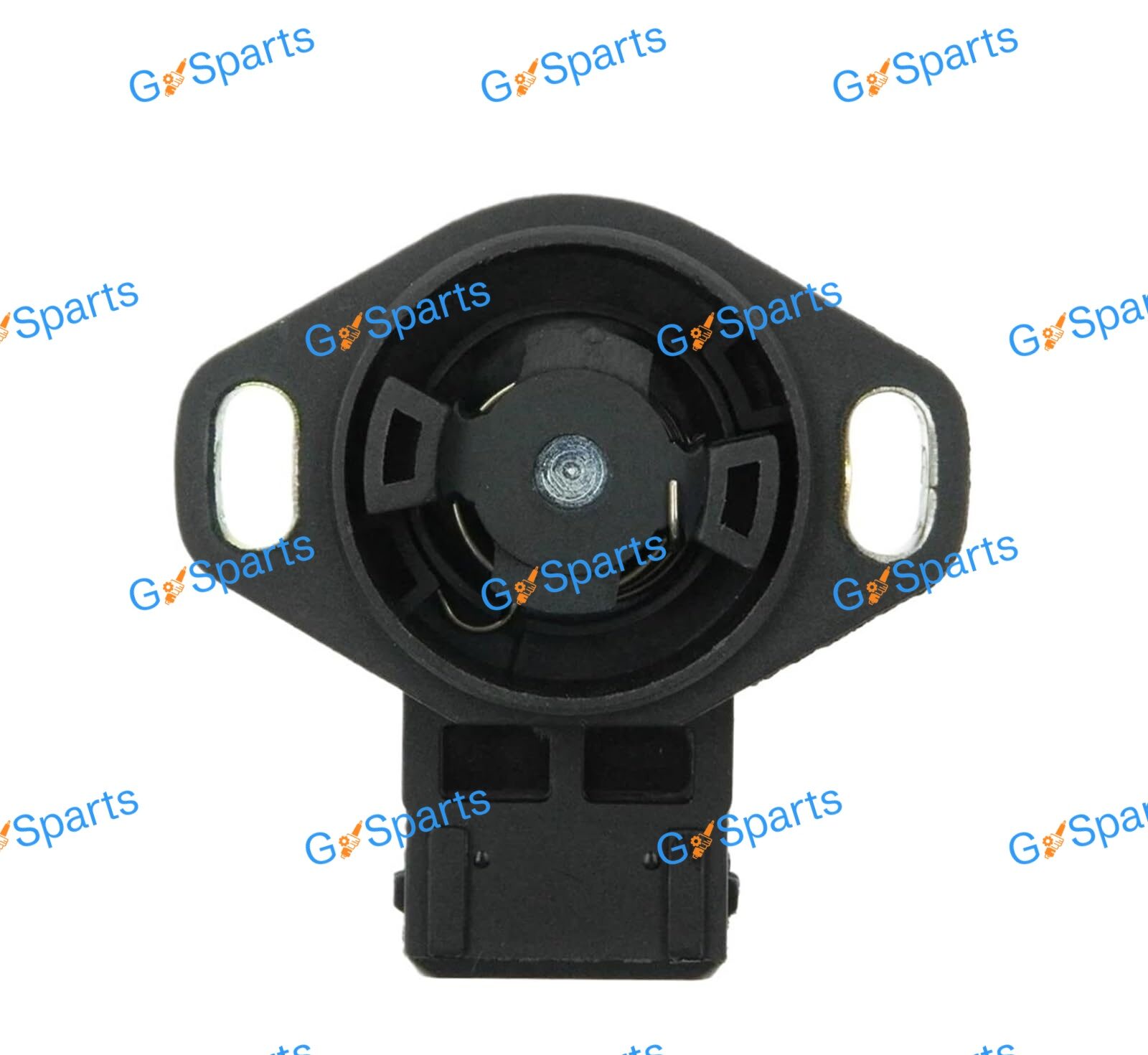
Ultimate Mitsubishi TPS 35102-33005 Eclipse/Galant (1995–2000) – Crisp Throttle, Stable Idle, OEM-Grade Precision
OEM 3‑wire TPS for **Mitsubishi Eclipse & Galant (1995–2000)**. Direct‑fit; check VIN for exact match.
Did you like this product? Add to favorites now and follow the product.

(+86) 180 07 12 47 38 WhatsApp, Telegram, WeChat
Description
TPS **35102‑33005** fits **Mitsubishi Eclipse and Galant (1995–2000)**. This genuine‑fit 3‑wire electronic sensor provides accurate throttle signal to the ECU, improving drivability and emissions control. Designed for quick installation with the correct OEM connector and mounting. Please verify compatibility with your VIN/engine code.
Understanding TPS Fundamentals on the 4G/E-Series Platforms
Throttle position is the ECU’s earliest signal of driver intent, shaping fueling, spark, and transmission logic before airflow even stabilizes. A smooth, monotonic voltage ramp prevents “rubber-band” feel during tip-in and makes small throttle moves predictable in traffic and on highway grades. When the trace jitters, the controller compensates with enrichment and timing swings that waste fuel and feel vague. Restoring a known-good reference, validating it on a short drive loop, and archiving the proof changes everything. For owners and shops wanting predictable, OE-aligned results, Mitsubishi TPS 35102-33005 Eclipse/Galant provides geometry and signal behavior the factory strategies expect, turning guesswork into repeatable outcomes. With Mitsubishi TPS 35102-33005 Eclipse/Galant in place, trims re-center and drivability feels intentionally composed rather than improvised.
Fitment Overview, Connector Indexing, and Throttle Bodies
Across Eclipse and Galant trims, throttle body castings and connector keying can vary slightly. Visually confirm shaft profile, screw spacing, and loom path before opening packaging. Inspect harness insulation for heat glaze, ensure the connector locks positively, and verify sweep direction matches ECU expectations. Photograph the original clocking to mirror during assembly. Proper seating, gentle torque, and strain-relieved routing prevent intermittent opens that masquerade as random hesitation later. When you install Mitsubishi TPS 35102-33005 Eclipse/Galant with attention to indexing and clearance around brackets and shields, the signal path stays clean. That cleanliness lets closed-loop trim work efficiently, so cruise steadies, A/C engagement feels natural, and tip-in crispness returns without chasing phantom faults unrelated to Mitsubishi TPS 35102-33005 Eclipse/Galant.
Recognizing Symptoms: Drift, Noise, and Heat-Soak Artifacts
Before a fault code appears, clues accumulate: stumble pulling away from a stop, gentle “yo-yo” at light throttle on rolling terrain, or idle that wanders when cooling fans cycle. Slow pedal sweeps may reveal stair-steps, flats, or sudden jumps. Always verify 5-volt reference and grounds, clean the throttle bore, and check cable free play to separate mechanical stickiness from electrical noise. If the ramp remains jagged after hygiene, the reference is suspect. Replacing with Mitsubishi TPS 35102-33005 Eclipse/Galant typically restores a smooth curve that correlates with airflow; trims tighten, decel fuel-cut triggers consistently, and the cabin smells cleaner after long downhills. Those “boringly good” graphs are the signature of Mitsubishi TPS 35102-33005 Eclipse/Galant doing its job quietly.
Baseline Diagnostics: Sweep Tests and Correlation
Start warm. Confirm a stable closed-throttle voltage and a clean, monotonic rise during a slow pedal sweep. Correlate angle with airflow so enrichment aligns with reality. Repeat with lights, rear defogger, and A/C engaged to expose supply sag or ground noise. Smoke-test intake plumbing to remove leak confusion. Document baseline plots; evidence beats adjectives. If traces wobble despite clean mechanics and power/ground integrity, replacing the sensor is rational. Post-install, Mitsubishi TPS 35102-33005 Eclipse/Galant should show a tidy sweep and steady idle reading, making later comparisons meaningful. Keeping those overlays by VIN turns future support conversations into quick, objective checks rather than time-consuming debates over subjective feelings in traffic.
Installation Prep: Tools, Index Marks, and Safety
Success begins before the wrench. Gather a torque-limited driver, JIS bits, contact-safe cleaner, and lint-free swabs. Remove the intake tube for sightlines; wipe varnish from the throttle plate perimeter so sticky deposits don’t mimic electrical faults. Scribe a tiny index across a sensor ear and the body to replicate clocking. Hand-start screws to protect casting ears, confirm connector clearance around loom brackets, and route with service slack for engine rock. With Mitsubishi TPS 35102-33005 Eclipse/Galant on the bench and a clear plan, installs become a calm, one-session job. After reassembly, perform idle relearn if supported, letting the controller meet the new, truthful angle signal without fighting stale learned positions.
Correct Clocking, Gentle Torque, and Strain Relief
A slightly over-rotated sensor can fake an elevated idle angle, making the ECU chase airflow with trims and idle control. Set the unit so closed-throttle voltage lands in spec, tighten evenly, and recheck the sweep end-to-end. Route the harness to avoid sharp bends and radiant heat, clip at factory points, and leave just enough slack. Excess tension breaks conductors; sloppy slack invites chafe—both produce intermittent artifacts that feel like misfires. Seated correctly, Mitsubishi TPS 35102-33005 Eclipse/Galant produces a “boringly linear” output, letting transient fueling tables behave. That steadiness shortens diagnostics, restores confidence in data, and ensures your time is spent validating success instead of chasing electrical gremlins unrelated to Mitsubishi TPS 35102-33005 Eclipse/Galant.
Idle Quality: Agreeing on “Closed” with the ECU and ISC
Idle calm requires agreement between the angle the ECU believes and the actual airflow the engine ingests. After installation, verify closed-throttle switch status (if present), confirm learned idle angles are sane, and ensure the bore isn’t sticky. Misalignment forces the idle valve and fuel trims to argue, creating oscillation and odor. With a steady closed reading from Mitsubishi TPS 35102-33005 Eclipse/Galant, the controller trusts the baseline; A/C clutching no longer causes wandering, and STFTs hover narrowly around zero. That glass-smooth cadence is the tangible payoff owners seek—urban serenity with fans and accessories cycling, and a sense the car is cooperating rather than asking the driver to compensate for inconsistency.
Part-Throttle Smoothness: Creep, Cruise, and Tip-In
Drivers notice refinement most at low angles—alleyway creep, parking maneuvers, and 60–80 km/h cruise. Here the ECU blends angle rate with airflow to command tiny fueling nudges. Any jitter appears as shudder or vague response. After installing Mitsubishi TPS 35102-33005 Eclipse/Galant, run a short validation route with two gentle accelerations and a long decel. The angle trace should be monotonic; trims should oscillate narrowly; tip-in should feel crisp, not rubbery. This is where small improvements feel huge: smoother torque hand-offs, predictable shifts, and hill cruising without surge. A clean reference also keeps catalyst temperatures saner because enrichment aligns with real load, not noise implied by a shaky angle line.
Deceleration Fuel-Cut: Temperature, Economy, and Feel
Recognizing closed throttle promptly during overrun protects catalysts and saves fuel. Watch for decisive injector cut on long downhills and a bump-free re-entry when you roll back into the pedal. If fuel-cut triggers late or re-entry thumps, revisit clocking and confirm closed-throttle voltage. With Mitsubishi TPS 35102-33005 Eclipse/Galant reporting honestly, decel behaves textbook: injector cut arrives quickly, exhaust temperatures moderate, and the car feels polished rather than lurchy. That outcome shows up on graphs first and in comfort immediately—no rich odor after mountain descents, no odd stumble when merging again, just quiet confidence that the ECU understands exactly what your right foot intends.
Heat-Soak Consistency for Summer Traffic
Under-hood temperature swings expose weak internal contacts and unstable materials. Validate repeatability: capture a clean sweep at normal temperature, then repeat after ten minutes of idling with A/C on. Curves should overlay closely; hot drift or staircase behavior points to wiring issues or sensor weakness. With Mitsubishi TPS 35102-33005 Eclipse/Galant installed and routing tidy, the hot trace mirrors the cold, trims remain centered, and the car stays composed even in stop-and-go heat. For tuners, that consistency shortens mapping sessions, because transient tables respond predictably rather than being distorted by temperature-dependent input noise that once masked real calibration needs.
Electrical Hygiene: Grounds, Voltage Drop, and Connectors
A perfect part can be framed by noisy wiring. Clean ground eyelets, verify low voltage drop with accessories engaged, and inspect terminals for corrosion or oil wicking that raises impedance. Perform a gentle tug test near stress risers, and reseat connectors until the lock audibly snaps. These small practices strip away external variables so the ECU can trust the clean ramp produced by Mitsubishi TPS 35102-33005 Eclipse/Galant. The payoff appears as stable idle readings, tidy progression during slow sweeps, and narrow trim oscillations at cruise—objective markers of health that translate directly into calmer, more predictable manners every time you pull away from a light or feather the pedal in traffic.
Installation Toolkit and Step-By-Step Discipline
Prepare a torque-limited driver, JIS bits, dielectric cleaner, and a flashlight mirror. Remove intake plumbing for access, mark original index, and clean varnish from the throttle edge. Hand-start fasteners, torque lightly, confirm sweep by hand, then lock the connector. After mounting Mitsubishi TPS 35102-33005 Eclipse/Galant, clear learned idle if supported and let the controller relearn with accessories cycling. Finish with a five-minute validation loop. That simple discipline—document, install, validate—turns a sensor swap into a defendable repair. Your final graph becomes the customer hand-off artifact that explains the “why,” not just the “what,” behind the smoother behavior they immediately feel.
Logging That Proves Success in Five Minutes
Evidence beats adjectives. Warm fully, confirm closed-loop entry, then record a minute of idle, steady mid-speed cruise, two gentle accelerations, and a long decel to fuel cut. Log angle, rate-of-change, MAF, pulsewidth, ignition advance, and STFT. With Mitsubishi TPS 35102-33005 Eclipse/Galant installed, you should see a smooth angle curve that correlates tightly with airflow, narrowed trims at cruise, decisive injector cut on overrun, and bump-free re-entry. Save overlays with ambient noted. Six months later, the same loop lets you decide in minutes whether a complaint points to airflow, ignition, or fueling—rather than second-guessing the angle signal.
Stock ECU and Standalone Tuning Considerations
Truthful input shrinks the need for band-aid fueling. On stock controllers, transient enrichment tables respond predictably when angle rate is clean, letting you trim tip-in without courting stumble. On standalone ECUs, verify ADC scaling, sensor ground strategy, and ensure filtering isn’t masking real rate-of-change data. Because Mitsubishi TPS 35102-33005 Eclipse/Galant aligns with OE voltage windows, small map changes hold across weather swings and fuel blends. The result is refined, street-civil response that preserves character when asked for more—subtle, confident torque shaping rather than dramatic fixes that only hide jitter from an unreliable input.
Avoiding Misdiagnosis: Sequence Beats Guesswork
Hesitation, odor, or roughness overlap with ignition faults, fuel pressure problems, vacuum leaks, and airflow errors. Enforce order: verify pressure and delivery volume, scope ignition under load, smoke-test intake and pre-throttle plumbing, then interrogate the TPS sweep. If fundamentals are green and the trace still shows flats or steps, correct the reference. Swapping in Mitsubishi TPS 35102-33005 Eclipse/Galant often turns a multivariate complaint into a single solved cause. Re-run the identical route, overlay plots, and show the improvement plainly—confidence rises when data, pedal feel, and results all agree.
Maintenance Rhythm: Seasonal Checks, Early Warnings
Add light electrical hygiene to seasonal service: re-torque grounds, inspect harness clips, and keep the throttle bore clean so sticky varnish doesn’t mimic sensor error. Record a short validation sweep and compare to your baseline. Trending deviation is a nudge to investigate before manners degrade or fuel economy slides. With Mitsubishi TPS 35102-33005 Eclipse/Galant as the baseline reference, those comparisons are meaningful, transforming routine maintenance into proactive assurance that the car will feel composed long after the initial fix, regardless of climate, traffic, or accessory load.
Counterfeit Awareness, Packaging, and Returns
Critical signals attract convincing copies that drift early and waste diagnostic hours. Protect outcomes with tamper-evident packaging, scannable serials tied to orders, and a “verify your unit” photo guide—connector mold lines, stamping depth, terminal finish. Ask installers to photograph labels and final clocking for the work order. Predictable behavior from Mitsubishi TPS 35102-33005 Eclipse/Galant makes approvals fast: when traces don’t match the known-good sweep, routing or part identity is wrong—clear, fair, and quick to resolve without frustrating customers or technicians.
Buyer’s Checklist for First-Pass DIY Success
Clarity creates wins: match throttle-body style, connector keying, and sweep direction; confirm screw length and thread condition; stage tools and cleaner; and plan the five-minute validation route. Photograph the original index, then replicate it during install. After mounting Mitsubishi TPS 35102-33005 Eclipse/Galant, verify idle voltage, perform a slow pedal sweep, and complete your loop with A/C on for load. Save the after-plot with ambient noted. This practical, evidence-first approach turns a Saturday project into a once-and-done success—smoother parking-lot creep, steadier cruise, cleaner decel, and an immediately noticeable improvement in confidence at low angles.
Product Page Content and Helpful Schema That Convert
Education sells technical parts and narrows returns. Pair your listing with indexing photos, torque spec, connector close-ups, and a tiny “good vs bad sweep” thumbnail. Use Product, HowTo, and FAQ schema so search surfaces answers directly. Offer a downloadable validation worksheet listing idle targets, sweep steps, and a decel observation box. When shoppers see that Mitsubishi TPS 35102-33005 Eclipse/Galant comes with proof-oriented guidance, anxiety drops, conversion rises, and support time shrinks because buyers know exactly what “success” will look like on their own logs before they click “Buy.”
Community Proof: Reviews That Teach and Reassure
Invite buyers to share car year, install time, final clocking photo, and a screenshot of the validation sweep. Curate a gallery with hot-day, cold-morning, and high-altitude plots. Seeing the calm, linear curve delivered by Mitsubishi TPS 35102-33005 Eclipse/Galant across conditions builds trust quickly. Future shoppers arrive better informed, and support can point to known-good overlays that match their vehicles. This turns testimonials into teachable references, raising satisfaction while reducing the back-and-forth that usually precedes simple, evidence-friendly installations.
Club & Fleet Playbooks: Predictability at Scale
Across many vehicles, tiny inefficiencies compound into line items—fuel spend, driver complaints, and technician hours. Standardize parts, steps, and sign-off so rookies and veterans get the same result. A shared five-minute route and archived overlays by VIN turn “feels off” into fast, objective checks. Centering the workflow on Mitsubishi TPS 35102-33005 Eclipse/Galant keeps angle truth constant; differences in logs then point to real mechanical issues instead of input inconsistency. The payoff is predictable drivability, fewer comebacks, calmer phones during busy seasons, and a data trail that makes future approvals straightforward.
Winter Starts, Short Trips, and Voltage Reality
Cold mornings stress batteries and sticky throttles, revealing weak sensors or marginal grounds as rough flares and late closed-loop entry. Confirm cranking voltage and alternator output, clean the bore, and validate time-to-stable idle post-install. With Mitsubishi TPS 35102-33005 Eclipse/Galant providing a steady closed angle and clean ramp, short-trip enrichment settles smoothly, trims converge promptly, and consumption returns to normal. The improvement is measurable on overlays and perceptible every driveway exit—no hesitation when feathering the pedal to merge into early traffic, just calm, predictable response from the first minute.
Practical Troubleshooting for Edge Cases
If a fresh part still yields odd logs, widen the lens. Compare TPS to MAF during micro-transients, check throttle cable free play, inspect engine mounts that tug the loom under torque, and look for heat shields radiating onto the connector. Correct those externals, then re-test. With Mitsubishi TPS 35102-33005 Eclipse/Galant feeding a clean, rate-consistent curve, tune adjustments stick across weather and fuels; the car behaves like a precise instrument at low angles while retaining character when asked for more.
Environmental Robustness: Materials and Longevity
Daily use means vibration, moisture, dust, and thermal cycles. Robust sealing, stable wiper materials, and vibration-resistant construction preserve calibration through abuse. In practice, that means Mitsubishi TPS 35102-33005 Eclipse/Galant keeps trims centered on summer commutes and winter errands alike, protecting catalysts from over-fueling and preserving that factory-polished civility. Reliability may be invisible, but inspections go smoother, MPG steadies, and owners describe the car as “easy to live with” months after the repair, which is the quiet value of doing the fundamentals exactly right the first time.
Technician Training: Checklists That Survive Busy Seasons
Under pressure, memory fails; checklists don’t. Teach techs to mark clocking, hand-start fasteners, verify closed-throttle voltage, route with slack, and run the validation loop. Require two screenshots and one routing photo in every job packet. With Mitsubishi TPS 35102-33005 Eclipse/Galant as the reference part, expected windows and sweep shapes become institutional knowledge. Deviations then trigger smart investigation, not guesswork—protecting margins and reputations when schedules are tight and patience is short.
Light Modifications and Street-Friendly Refinement
Even modest intake or exhaust changes can expose jitter in poor references. Start with a proven signal, confirm repeatable upstream waveforms at warm idle and mid-speed cruise, and nudge transient tables only after plots remain stable. Anchoring calibration on Mitsubishi TPS 35102-33005 Eclipse/Galant ensures smooth merges, steady hill climbs, and polished parking-lot manners without bloating enrichment. What drivers feel is coherence: torque that rises exactly with intent, not with noise, creating confidence on every commute and smoother control when conditions are slippery or visibility is low.
Content & Hand-Off That Build Trust
Owners want clarity, not jargon. Provide a one-page summary—what changed, why it matters, and two tiny graphs (idle and cruise) comparing before and after. Include three habits: keep the throttle bore clean, fix grounds promptly, and rerun the five-minute loop at each service. Framing the result around Mitsubishi TPS 35102-33005 Eclipse/Galant turns an invisible electrical fix into a felt difference plus proof, strengthening reviews and reducing pre-sale anxiety for others evaluating the same solution.
Data-Driven Sign-Off and Long-Term Assurance
Objective proof closes the story and accelerates future diagnostics. After installation, log the sweep, cruise stability, and decel cut; overlay with baseline; archive PDFs with route and ambient noted. Months from now, a quick re-run reveals whether any complaint points to airflow, ignition, or fuelling—not the angle signal you’ve already secured. Built on Mitsubishi TPS 35102-33005 Eclipse/Galant, this loop delivers months of calm composure: steady idle, linear tip-in, predictable cruise, and a car that simply feels right every day, long after the tools are back in the drawer.
External Resources (Standards & Technical References)
- ISO 26262 — Road Vehicles Functional Safety
- ISO 11898 — Controller Area Network (CAN)
- ISO 14229 — Unified Diagnostic Services (UDS)
- SAE J1979 — OBD-II Diagnostic Test Modes
- AEC-Q100 — Stress Test for Automotive ICs
Related Internal Links
Related products



G-SPARTS – Leading Auto Parts Supplier Since 2009
Trusted by 1000+ Clients Worldwide | Chinese (BYD, Geely, Chery, …), Japanese (Toyota, Honda, Nissan, …), European (BMW, Mercedes, VW, …) & American (Ford, Chevrolet, Tesla, …) Car Spares | Best Prices & OEM Quality | 15+ Years Expertise | Professional Team, Fast Global Shipping
Copyright 2025 © G-Sparts All Rights Reserved. | Premium Chinese Auto Parts Supplier – Worldwide Shipping | Best Prices on OEM & Aftermarket Spares

Reviews
There are no reviews yet.