
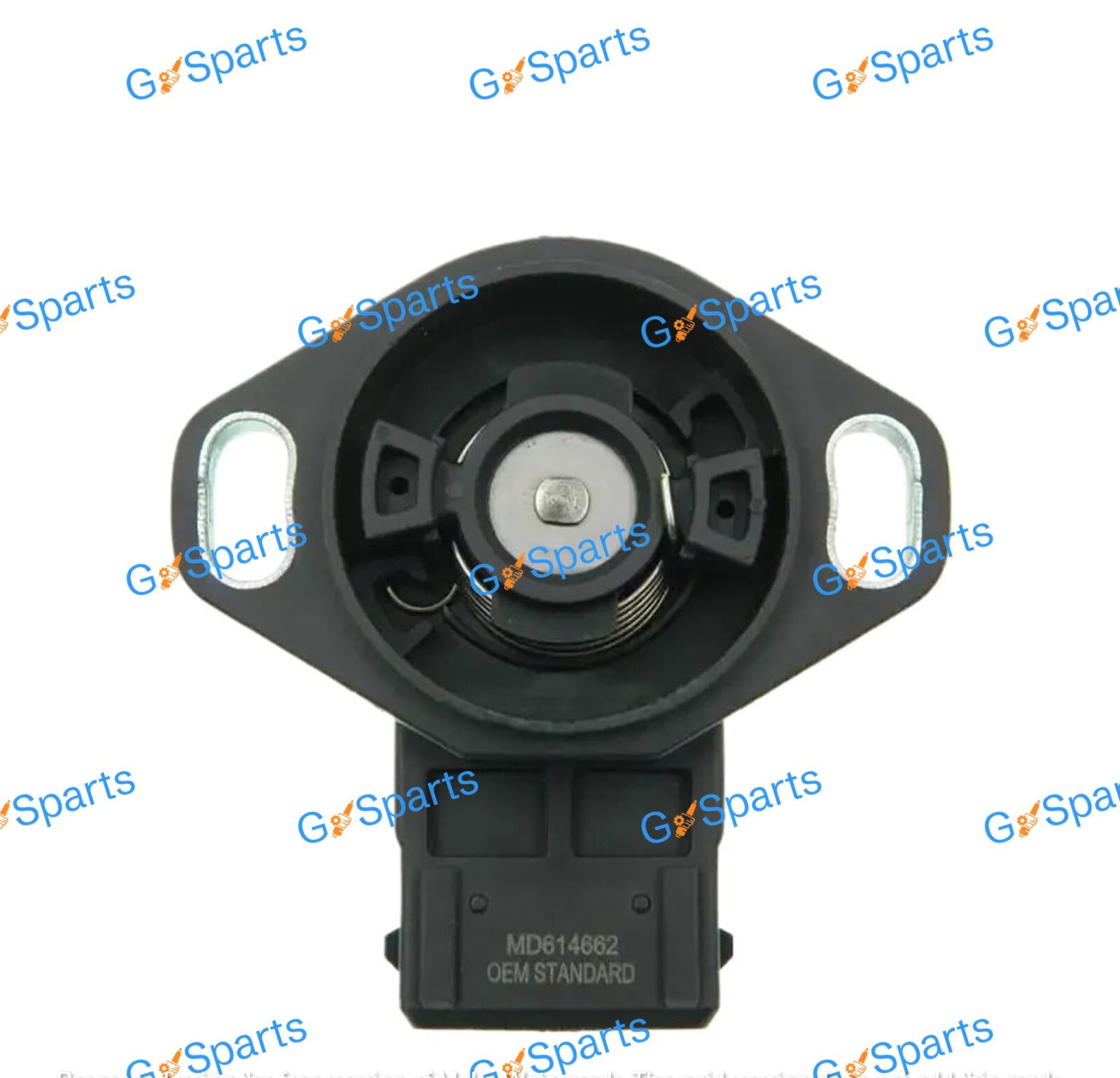
Ultimate Mitsubishi TPS MD614662 Mirage/Diamante (1997–2002) – Smooth Idle & Sharper Throttle
3‑wire electronic TPS for **Mitsubishi Mirage & Diamante (1997–2002)**. OEM connector; VIN confirmation advised.
Did you like this product? Add to favorites now and follow the product.

(+86) 180 07 12 47 38 WhatsApp, Telegram, WeChat
Description
Throttle position sensor **MD614662** for **Mitsubishi Mirage and Diamante (1997–2002)**. The 3‑wire electronic design provides precise throttle angle reporting for better throttle response and fuel economy. Built to Mitsubishi OEM standards for plug‑and‑play replacement. Verify compatibility via VIN.
Understanding the TPS and Why It Matters
A throttle position sensor converts tiny blade movements into a clean voltage signal the ECU can trust. When that curve is correct, fueling, spark, and transmission logic track driver intent precisely, delivering smooth takeoffs and predictable downshifts. Drift, flat spots, or noise force the ECU to guess, creating hesitation, hunting, and poor economy. Installing Mitsubishi TPS MD614662 Mirage/Diamante restores the signal geometry your calibration expects, returning the platform to factory behavior with minimal relearn time. Because Mitsubishi TPS MD614662 Mirage/Diamante is engineered as a direct-fit component, it avoids the compromises of universal parts and reduces the risk of nuisance codes tied to implausible throttle readings.
Direct-Fit Accuracy vs. Look-Alike Parts
Look-alike units can share bolt spacing yet differ in wiper taper, indexing, and connector keying. Those subtle mismatches distort the angle-to-voltage map, leading to harsh shifts, idle flare, or dead zones at tip-in. A direct-fit sensor is clocked correctly, seals against dust, and mates to the harness without strain. Choosing Mitsubishi TPS MD614662 Mirage/Diamante aligns hardware and calibration, preserving closed-loop stability and keeping diagnostic graphs tidy. That alignment saves time for both DIY owners and technicians, ensuring the ECU’s models of airflow and load remain coherent during hot restarts, winter mornings, and everyday city driving.
Platform Fitment and Trim Nuances
Within Mirage and Diamante families, throttle body variants, IAC strategies, and transmission pairings evolved across years and markets. Even a few millimeters of harness routing difference can stress a connector or cause intermittent faults. Mitsubishi TPS MD614662 Mirage/Diamante meets the expected mounting geometry and output span for these platforms, minimizing adaptation and preventing harness overextension. Before ordering, confirm engine code and throttle body type; a quick visual of screw pattern and indexing notch is usually enough. With that verification done, you’ll experience a confident, predictable installation and a fast return to clean drivability.
Symptoms That Point to Throttle Sensing Issues
Classic signs include stumble on tip-in, surging at steady cruise, erratic idle, or abrupt downshifts during light throttle. Scan tools may show angle spikes, lagging response, or implausible correlation with MAF. Left unresolved, drivability annoyances can escalate into converter stress and excess fuel consumption. Replacing a drifting unit with Mitsubishi TPS MD614662 Mirage/Diamante removes uncertainty from the load model the ECU relies on. Because Mitsubishi TPS MD614662 Mirage/Diamante delivers a crisp, low-noise signal, you’ll feel steadier throttle modulation in traffic and more consistent return-to-idle when coasting toward lights.
Smart Diagnostics Before You Swap
Confirm grounds and 5V reference, inspect connectors for corrosion, and verify throttle blade movement is smooth. Use live data to watch angle vs. RPM and MAF at steady pedal positions; repeatability matters more than perfection. If the trace is erratic despite solid wiring and a clean throttle bore, replacement is prudent. Installing Mitsubishi TPS MD614662 Mirage/Diamante gives you a known-good reference so any remaining issues can be traced to vacuum leaks, sticky blades, or secondary sensors—not the throttle signal itself. This methodical approach prevents parts-chasing and speeds a durable fix.
Installation Prep for a Clean Outcome
Gather the correct driver bits, a torque screwdriver if available, and electronic-safe cleaner for the mounting face. Disconnect the battery only if your service procedure recommends it to protect stored adaptations. Inspect the throttle shaft for play and confirm gasket condition before seating the new unit. Mitsubishi TPS MD614662 Mirage/Diamante ships with indexing that engages the shaft without force, reducing the chance of cracked housings. Keeping the work area tidy and protecting the harness from sharp edges or heat shields pays dividends months later.
Removal, Seating, and Harness Routing
Mark the original sensor’s orientation if your throttle body allows slight adjustment. Loosen fasteners evenly, then ease the unit off to avoid twisting the tang. Engage the new sensor gently; you should feel positive alignment without prying. Tighten to spec in small increments to preserve housing flatness and seal integrity. Once mounted, route the harness along factory paths to prevent chafe. After installing Mitsubishi TPS MD614662 Mirage/Diamante, recheck that connectors click firmly and that no wires contact hot runners or moving linkages during engine rock.
Calibration, Idle Normalization, and Drive Cycle
Some ECUs relearn quickly; others prefer an idle normalization followed by a short mixed drive. Clear codes if set, then observe idle stability, tip-in smoothness, and decel return. A successful install of Mitsubishi TPS MD614662 Mirage/Diamante shows as a stable angle trace, fewer enrichment blips, and cleaner transitions with A/C load. If trims were previously skewed by bad data, expect a brief adaptation period that settles as the ECU trusts the restored signal. Mitsubishi TPS MD614662 Mirage/Diamante helps this process by matching the expected output curve closely.
Verifying Success with Live Data
Plot throttle angle against time under steady pedal and repeated blips. Look for a repeatable slope without spikes or plateaus. Correlate with MAF and timing at light load; the trio should display consistent, sensible relationships. If any residual instability remains, smoke-test for vacuum leaks and ensure the throttle blade is spotless. With Mitsubishi TPS MD614662 Mirage/Diamante providing a clean reference, lingering issues typically trace to airflow or sealing rather than electronics, simplifying your troubleshooting tree and reducing unnecessary part swaps.
Fuel Economy, Emissions, and Converter Health
Accurate throttle data allows leaner, more controlled transitions and reduces over-enrichment that overheats catalysts. City drivability improves as spark and injector pulse width stay inside expected windows. Many owners report quieter operation and steadier cruise speeds after replacement. Mitsubishi TPS MD614662 Mirage/Diamante contributes by minimizing signal noise in the mid-range where most driving occurs, protecting converters from repeated rich spikes and extending service life while trimming fuel costs over long commutes and hot-weather idling.
Transmission Logic and Shift Quality
Modern transmissions infer load heavily from throttle angle. A noisy or drifting signal leads to early kick-downs, delayed upshifts, and gear hunting on grades. By providing a truthful, stable input, Mitsubishi TPS MD614662 Mirage/Diamante lets line pressure and shift timing follow the original calibration. Expect smoother yet decisive changes, cleaner torque-converter lockup, and less oscillation in traffic. That refinement reduces clutch wear and restores the composed feel the platform had when new, particularly noticeable on rolling suburban roads.
Idle Stability with Accessory Loads
When A/C compressors, radiator fans, or power steering demand engages, the ECU anticipates load and adjusts airflow and spark. Weak throttle information causes dips, flares, or stalls. With Mitsubishi TPS MD614662 Mirage/Diamante installed, the control system predicts accurately, maintaining steady RPM at lights even in heat-soak conditions. You’ll notice calmer behavior during parking maneuvers and fewer driver corrections to hold idle with accessories running, an everyday improvement that reduces fatigue and protects emissions hardware.
Built for Under-Hood Realities
Heat, vibration, humidity, and fumes challenge sensor internals. Robust housings, contact metallurgy, and sealing strategies are essential to keep drift at bay through seasonal extremes. Mitsubishi TPS MD614662 Mirage/Diamante focuses on durable materials and gas-tight construction so angle data remains consistent after hot soaks, rain-soaked commutes, and winter starts. That stability prevents the ECU from chasing phantom corrections and keeps drivability steady long after the first flawless test drive.
Avoiding Common Pitfalls During Service
Over-tightening can warp the housing; under-tightening invites micro-movement that scrubs the wiper track. Misrouting the harness near hot shields embrittles insulation and creates intermittent faults months later. Always engage the internal tang gently and avoid aggressive solvents that can wick into seals. Following these fundamentals with Mitsubishi TPS MD614662 Mirage/Diamante ensures the fix you intend is the fix you keep, eliminating self-inflicted variables that masquerade as new problems.
How TPS Interacts with MAF, MAP, and O2 Feedback
Throttle angle is one leg of a three-sensor stool alongside airflow and exhaust feedback. If angle data is unreliable, fuel and spark strategies skew, masking root causes elsewhere. By restoring a clean, predictable signal with Mitsubishi TPS MD614662 Mirage/Diamante, you’ll see steadier short-term trims, more rational ignition at part throttle, and easier isolation of true airflow or sealing faults. This clarity helps both stock vehicles and lightly modified setups find a stable tune faster.
Upgrades, Tuning, and Repeatability
Intakes and exhaust changes alter airflow, but consistent throttle mapping remains the anchor for successful calibration. A reliable angle trace lets tuners target accurate tables instead of compensating for sensor noise. Mitsubishi TPS MD614662 Mirage/Diamante provides that stable baseline, improving repeatability between pulls and keeping daily drivability civilized. Enthusiasts will notice more predictable pedal modulation and fewer idle wander incidents after hardware changes that otherwise stretch adaptation routines.
Total Cost of Ownership and Shop Efficiency
Random stalls and tip-in flat spots burn diagnostic hours. Addressing the root signal problem costs less than repeated “clean and hope” visits. Mitsubishi TPS MD614662 Mirage/Diamante aligns output with factory expectations, reducing comebacks and protecting downstream components from erratic load signals. Over a service year, improved fuel economy, fewer retests, and faster bay turnover compound into tangible savings for owners and fleets alike, while raising customer satisfaction scores for service departments.
Road-Test Script to Confirm the Repair
Replicate the complaint: gentle launch from a stop, suburban steady cruise, on-off throttle in traffic, and A/C engagement at idle. Watch for clean transitions, stable RPM, and logical downshifts on slight grades. After installing Mitsubishi TPS MD614662 Mirage/Diamante, these checks should feel uneventful—in the best way. If anything remains, revisit vacuum integrity and throttle cleanliness before suspecting electronics again. A calm, predictable drive confirms the ECU trusts its primary load input.
Behavior Across Seasons and Temperatures
Electronics suffer most at extremes. Heat-soaked restarts highlight marginal sealing; polar mornings expose sticky blades and brittle connectors. Mitsubishi TPS MD614662 Mirage/Diamante maintains output consistency across these conditions, allowing the ECU to compensate without over- or under-correcting. Expect fewer hot-restart dips, easier cold starts, and steadier accessory-on idle—small daily wins that add up to a powertrain that simply feels composed year-round.
Preventive Maintenance and Data Snapshots
Build a simple schedule: periodic throttle body cleaning, connector inspections, and quick data captures at fixed pedal positions. Trending those snapshots reveals degradation before it becomes a complaint. When replacement is indicated, Mitsubishi TPS MD614662 Mirage/Diamante returns the system to a known baseline, making year-over-year logs comparable and actionable. Fleets benefit from predictable interventions that keep cars out of the shop during peak utilization windows.
Authenticity, Packaging, and Receiving Inspection
Counterfeits skimp on contact metallurgy and sealing, causing early noise. Source from vendors who publish clear connector photos, batch codes, and protective packaging details. On receipt, check indexing, housing flatness, and harness strain reliefs before the vehicle hits the lift. Mitsubishi TPS MD614662 Mirage/Diamante from reputable channels gives technicians confidence that installation time buys durable results, not temporary improvement that fades after a week of heat cycles.
Bench Testing, Live-Data Criteria, and Proof of Repair
Before releasing the vehicle, validate the fix with a quick bench and on-car protocol that any shop can repeat. With the scan tool connected, log throttle angle at several fixed pedal positions (for example, 10%, 25%, 40%, 60%, and 85%) and verify that readings climb smoothly without jitter or plateaus. Add three brisk tip-ins from idle to mid-throttle and check that timing and MAF traces track predictably with no enrichment spikes. Store screenshots in the job file so future techs can compare trends. This disciplined acceptance test confirms the signal geometry is correct with Mitsubishi TPS MD614662 Mirage/Diamante and closes the loop between installation quality and real driving behavior.
Electrical Integrity, Ground Strategy, and Noise Immunity
Throttle sensors live in a harsh electrical neighborhood filled with ignition transients, fan motors, and alternator ripple, so wiring hygiene matters. Inspect the 5-volt reference for stability under accessory loads, check ground drop with a loaded circuit, and confirm connector tension with a gentle back-probe tug. Route the harness away from coils and high-current runs, add abrasion sleeves where it touches brackets, and ensure any shared grounds are bright metal, not painted surfaces. These fundamentals keep the trace clean on hot days and cold starts alike, protecting the crisp voltage ramp you expect from Mitsubishi TPS MD614662 Mirage/Diamante and preventing intermittent faults that masquerade as software gremlins.
Catalog Accuracy, VIN Decoding, and Inventory Confidence
Parts lookups can drift when platforms span multiple years, emissions packages, and transmission pairings. Embed VIN decoding early in your workflow and map each stored VIN to a verified throttle body image in your DMS so counter staff can compare screw pattern and indexing at a glance. Track returns by root cause—wrong indexing, short harness, or incompatible taper—and feed that data into supplier reviews and safety stock rules. The goal is zero-surprise installs, minimal bay idle, and clean paperwork. Standardizing on Mitsubishi TPS MD614662 Mirage/Diamante for the applicable Mirage/Diamante set simplifies training, shortens order time, and aligns what arrives at the parts counter with what actually bolts to the throttle shaft.
Customer Aftercare, Road-Test Script, and KPI Follow-Up
Great repairs include education and a short plan to verify results over time. Hand customers a one-page road-test script—gentle launches, steady suburban cruise, A/C on at idle—and invite them to note any hesitations across the first week. Schedule a quick no-charge check to re-inspect connectors, confirm trims, and ensure idle normalization is complete after mixed driving. Clear expectations, data-anchored explanations, and a friendly follow-up convert a vague “it surges sometimes” complaint into measured satisfaction. Center that conversation on the clean, stable angle signal provided by Mitsubishi TPS MD614662 Mirage/Diamante so customers understand exactly why the car now feels composed and predictable.
Logical Troubleshooting if Issues Persist
If symptoms linger, test for vacuum leaks, sticky throttle plates, and unstable 5V references. Cross-check MAF plausibility and ground integrity under load. With Mitsubishi TPS MD614662 Mirage/Diamante verified, remaining faults usually live in airflow paths or wiring—not in throttle sensing. A disciplined decision tree protects budgets and timelines, solving the true constraint rather than masking it with repeated adaptation resets that only offer short-term relief.
Communicating Results and Building Trust
Drivers often say “it hesitates” or “it surges,” which can sound vague. Show before/after angle traces, explain how clean throttle data shapes shift quality and idle stability, and invite a two-week follow-up to recheck connectors and trims. Anchoring the repair in Mitsubishi TPS MD614662 Mirage/Diamante gives you a clear narrative: restore the primary load signal, verify with data, and validate on the road. That transparency turns a frustrating complaint into a measurable, confidence-building fix.
Confident Finish and Next Steps
A healthy throttle signal is foundational to drivability, emissions, and transmission longevity. By specifying Mitsubishi TPS MD614662 Mirage/Diamante, you reunite hardware and calibration, shorten diagnostics, and return everyday refinement that drivers immediately feel. Install thoughtfully, verify with live data, and log results for future trend comparisons. With the right part in place, the platform regains its original character—predictable, smooth, and efficient—setting the stage for thousands of uncomplicated kilometers ahead.
External Resources (Standards & Technical References)
- ISO 26262 — Road Vehicles Functional Safety
- ISO 11898 — Controller Area Network (CAN)
- ISO 14229 — Unified Diagnostic Services (UDS)
- SAE J1979 — OBD-II Diagnostic Test Modes
- AEC-Q100 — Stress Test for Automotive ICs
Related Internal Links
Related products



G-SPARTS – Leading Auto Parts Supplier Since 2009
Trusted by 1000+ Clients Worldwide | Chinese (BYD, Geely, Chery, …), Japanese (Toyota, Honda, Nissan, …), European (BMW, Mercedes, VW, …) & American (Ford, Chevrolet, Tesla, …) Car Spares | Best Prices & OEM Quality | 15+ Years Expertise | Professional Team, Fast Global Shipping
Copyright 2025 © G-Sparts All Rights Reserved. | Premium Chinese Auto Parts Supplier – Worldwide Shipping | Best Prices on OEM & Aftermarket Spares

Reviews
There are no reviews yet.