
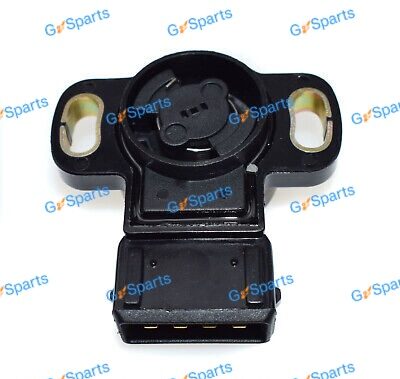
Ultimate Mitsubishi TPS MD614734 Mirage/Diamante (1997–2002) – Restore Throttle Precision & Power
3‑wire OEM TPS for **Mitsubishi Mirage & Diamante (1997–2002)**. Direct‑fit connector; VIN match recommended.
Did you like this product? Add to favorites now and follow the product.

(+86) 180 07 12 47 38 WhatsApp, Telegram, WeChat
Description
Throttle Position Sensor **MD614734** fits **Mitsubishi Mirage and Diamante (1997–2002)**. This Mitsubishi OEM 3‑wire electronic sensor delivers reliable throttle signal for consistent drivability. Built to factory tolerances for plug‑and‑play installation. Confirm the OE code with your VIN prior to ordering.
Role of the Throttle Position Sensor in Modern Fuel Control
The throttle position sensor (TPS) communicates your pedal intent to the ECU, translating blade angle into a voltage curve that shapes fuel, ignition timing, and transmission logic. When the signal is clean, you feel linear response, consistent idle, and smooth shifts. When drift or dropouts appear, the ECU guesses, leading to hesitation and poor mileage. For owners seeking a direct-fit solution that brings the system back to baseline, Mitsubishi TPS MD614734 Mirage/Diamante delivers OEM-spec geometry and calibration. Technicians appreciate how Mitsubishi TPS MD614734 Mirage/Diamante shortens diagnostic time by providing a known-good reference, restoring closed-loop stability and confidence on every start, cruise, and deceleration without the need for splicing or custom adaptors.
Why Direct-Fit Matters More Than You Think
Throttle sensors look similar, but connector indexing, tooth profiles, wiper tracks, and output taper differ by platform. A near-match can bolt on yet feed the ECU the wrong angle-to-voltage relationship, triggering harsh shifts or inconsistent idle air control. Selecting Mitsubishi TPS MD614734 Mirage/Diamante ensures the signal curve aligns with factory maps, protecting drivability and avoiding phantom codes. Direct-fit also means correct screw pattern, harness length, and dust sealing, so you aren’t improvising on a critical metering device. For DIY and professional installs alike, the right part prevents a cascade of compensations elsewhere in the control strategy.
Common Symptoms of a Failing TPS You Shouldn’t Ignore
Drivers report flat spots on tip-in, surging at steady speeds, erratic idle, or abrupt downshifts. Scan tools may show inconsistent throttle angle, implausible correlation with MAF data, or intermittent voltage spikes. Left unresolved, these faults stress converters and transmissions. Replacing a drifting sensor with Mitsubishi TPS MD614734 Mirage/Diamante gives the ECU a stable, predictable input again. Expect cleaner transitions around parking lot speeds, fewer stalls on hot restarts, and smoother cruise control engagement—exactly what precise throttle feedback is supposed to deliver when the calibration matches the platform.
Inside the Part: Signal Geometry, Wiper Track, and Sealing Strategy
High-quality TPS design hinges on a consistent taper across the wiper track, robust contact metallurgy, and ingress protection against humidity, dust, and under-hood heat. Cheaper copies often skip these details, causing early noise in the mid-range where you spend most driving time. Mitsubishi TPS MD614734 Mirage/Diamante focuses on maintaining a crisp, low-noise signal across small angle changes, which the ECU uses for spark and enrichment finesse. That’s why Mitsubishi TPS MD614734 Mirage/Diamante consistently helps stabilize idle trims and improves part-throttle refinement without requiring software tweaks or band-aid adaptations.
Mirage and Diamante Platform Nuances That Affect Fitment
Across years and trims, throttle bodies, IAC strategies, and transmission pairings evolve. Even minor changes in blade stop position or harness routing can impact connector stress and screw access. Mitsubishi TPS MD614734 Mirage/Diamante is mapped to the geometry and voltage span your ECU expects, minimizing relearn time and preventing awkward harness strain. Before ordering, verify engine code and throttle body variant; a quick under-hood glance confirms the screw layout, gasket profile, and clocking. With that check complete, installation becomes a straightforward, confidence-building service step.
Prep and Tools: Setting Yourself Up for a Clean Install
Gather a torque-friendly screwdriver set, a calibrated torque driver if available, a flashlight for connector inspection, and electronic-safe cleaner for the mating surface. Disconnect the battery if your service manual recommends it to protect the ECU during sensor swaps. Inspect the throttle shaft for play and the gasket condition before mounting Mitsubishi TPS MD614734 Mirage/Diamante. A tidy work area, correct tool choice, and careful harness handling reduce the risk of pin damage or cracked housings—small details that prevent intermittent faults later.
Removal and Installation: Practical, Time-Saving Tips
Mark the original sensor position relative to the throttle body if your model uses a slightly adjustable mount. Loosen mounting screws evenly to avoid twisting the housing. Seat the new unit gently, ensuring the internal tang engages the throttle shaft without forcing. Tighten evenly to spec to preserve housing flatness and seal integrity. Once Mitsubishi TPS MD614734 Mirage/Diamante is in place, route the harness away from hot runners and sharp edges. These habits protect the signal path and extend component life under daily heat cycles and vibration.
Calibration, Relearns, and Initial Drive Checks
Some ECUs automatically relearn idle and tip-in after battery reconnection; others benefit from a short idle normalization and gentle drive cycle. Watch for stable idle RPM, smooth off-idle response, and consistent return to idle when coasting to a stop. Mitsubishi TPS MD614734 Mirage/Diamante typically requires minimal fuss to integrate, but it’s smart to clear codes, reset trims if appropriate, and verify throttle angle readings in live data. That diligence confirms the voltage curve matches expectations and that the ECU’s adaptation settles quickly after installation of Mitsubishi TPS MD614734 Mirage/Diamante.
Data-Driven Diagnostics to Confirm Success
Open your scan tool and observe throttle angle versus RPM and MAF. The curve should be linear and repeatable; minor variations are normal, spikes are not. Compare commanded versus actual timing around light throttle. A healthy signal lowers idle hunt and eliminates sudden enrichment blips. If issues persist, check for vacuum leaks, sticky throttle blades, or misaligned cables before suspecting the new sensor. A verified-good Mitsubishi TPS MD614734 Mirage/Diamante narrows troubleshooting to mechanical or wiring concerns, streamlining your path to a clean, test-drive-ready result.
How TPS Health Impacts Fuel Economy and Emissions
Accurate angle data lets the ECU target leaner transitions and reduce unnecessary enrichment during city driving. That means fewer HC spikes and improved catalyst longevity. On highway cruises, smoother spark control and more precise injector pulse width stabilize combustion. Replacing a noisy sensor with Mitsubishi TPS MD614734 Mirage/Diamante often brings back the subtle refinement you forgot your car had—quieter operation, cleaner shifts, and steadier cruise speeds that together save fuel over months of commuting.
Transmission Logic: Why Throttle Accuracy Shapes Shifts
Modern automatics and electronically controlled manuals reference throttle angle heavily to decide shift timing and line pressure. A drifting signal can force early kick-downs or delay upshifts, wearing clutches and annoying drivers. Install Mitsubishi TPS MD614734 Mirage/Diamante to give the TCM a truthful snapshot of engine load. The payoff is crisper yet smoother changes, less hunting between gears on grades, and better lock-up behavior. Transmission tune was built around precise throttle data; restoring that precision renews the original driving character.
Idle Quality and Accessory Load Compensation
When fans, power steering, or A/C compressors engage, the ECU anticipates load changes using throttle and idle control data. Weak or noisy signals lead to dips, flares, or stalls at lights. With Mitsubishi TPS MD614734 Mirage/Diamante in place, the ECU’s predictive routines work again: it nudges airflow and timing just enough to avoid stumble while keeping emissions in check. Expect calmer stop-and-go manners and fewer driver inputs to hold idle, especially in hot weather or with multiple accessories running, thanks to the stable output of Mitsubishi TPS MD614734 Mirage/Diamante.
Environmental Hardening: Heat, Vibration, and Contaminants
Under-hood life is brutal—thermal cycling, fuel vapor, oil mist, and constant vibration. Sensor housings, seals, and internal tracks must endure these stressors year after year. Mitsubishi TPS MD614734 Mirage/Diamante prioritizes sealing strategy and materials that resist drift from heat soak and humidity swings. That stability keeps the ECU from chasing phantom angles on summer restarts or rainy-day commutes. Fewer nuisance adaptations mean more consistent throttle feel and less time clearing intermittent codes that trace back to temperature-sensitive components.
Avoiding Common Installation Pitfalls
Over-tightening screws can warp the housing; under-tightening risks vibration and micro-movement that scrubs the wiper track. Misrouted harnesses can chafe, inviting intermittent faults months later. Always align the internal tang carefully—forcing engagement is a fast way to damage the throttle shaft. Use manufacturer-approved cleaners and avoid flooding the area with aggressive solvents. Following these fundamentals with Mitsubishi TPS MD614734 Mirage/Diamante helps ensure you don’t introduce new variables while fixing the original drivability complaint.
Interactions with MAF, MAP, and O2 Feedback
Throttle position doesn’t act alone. The ECU correlates it with MAF/MAP signals and oxygen sensor feedback to triangulate load and mixture. If angle data is flaky, the entire model skews, masking root causes or triggering misleading codes. Installing Mitsubishi TPS MD614734 Mirage/Diamante restores one corner of that triangle, making remaining issues easier to spot. You’ll see steadier short-term trims and more rational timing behavior, especially around the transition from idle to light cruise where many drivability complaints start.
Performance and Tuning Considerations
Enthusiasts who upgrade intakes or exhausts sometimes overlook the importance of accurate throttle mapping. A stable signal lets tuners make finer adjustments without compensating for hardware noise. Mitsubishi TPS MD614734 Mirage/Diamante offers a reliable baseline so software tweaks target airflow reality, not sensor drift. Expect better repeatability between pulls, more predictable throttle modulation in traffic, and less time chasing idle wander after hardware changes that otherwise push adaptation routines to their limits.
Cost of Ownership: Saving Money the Smart Way
Chasing random stalls and surges burns shop hours and patience. Fixing the root cause—degraded throttle sensing—usually costs less than repeated “clean and hope” visits. Mitsubishi TPS MD614734 Mirage/Diamante reduces comebacks by aligning output exactly with factory tables. Fewer retests, fewer parts-swaps, and better fuel economy add up. Over a year of commuting, that precision pays for itself while protecting components downstream that rely on trustworthy load signals to stay within design stress levels.
Verifying the Fix: Road Test Checklist
Begin with gentle tip-in from a stop: no stumble, no flare. Hold 40–60 km/h and confirm steady speed without oscillation. Perform a few light throttle lift-offs and watch for clean return to idle. Finally, a moderate hill climb should provoke logical downshifts without hunting. If the vehicle passes these checks after installing Mitsubishi TPS MD614734 Mirage/Diamante, you can be confident the ECU is receiving coherent angle data, and any remaining quirks belong to other subsystems, not throttle sensing.
Seasonal Behavior: Hot Soak and Winter Starts
In summer, heat soak can reveal marginal electronics; in winter, cold plastics and thicker lubricants challenge throttle movement. A high-integrity sensor helps the ECU compensate accurately in both extremes. With Mitsubishi TPS MD614734 Mirage/Diamante, expect fewer hot-restart dips and improved cold-start drivability as temperature-dependent offsets remain predictable. Consistency across seasons isn’t just comfort—it reduces stress on converters and starters by minimizing misfires and over-enrichment episodes associated with misread throttle inputs.
Building a Preventive Maintenance Plan
For fleets and meticulous owners, pair regular throttle body cleaning with periodic connector inspections and data snapshots of throttle angle at fixed pedal positions. Trends reveal degradation before it becomes a complaint. When replacement is indicated, Mitsubishi TPS MD614734 Mirage/Diamante returns the system to a known baseline, making logs comparable year over year. This proactive approach stabilizes operating costs and keeps vehicles out of the shop during peak use periods when uptime matters most.
Supply Chain, Authenticity, and Lead Time Management
In today’s aftermarket, availability can swing quickly with seasonal demand and logistics constraints, so planning purchases and stocking spares matters as much as technical fit. Prioritize distributors who publish real-time inventory, provide batch traceability, and photograph the actual connector clocking you’ll receive. Clear ETAs reduce bay idle time and avoid partial reassembly while waiting on parts. Ask for humidity-controlled storage details and impact-resistant packaging to protect sensitive wiper tracks in transit. When you standardize on Mitsubishi TPS MD614734 Mirage/Diamante, you simplify procurement, training, and diagnostics—one known-good signal geometry across vehicles in scope. That consistency shrinks troubleshooting trees, speeds technician onboarding, and improves the likelihood that first-time fixes hold under demanding customer cycles.
Documentation, Torque Specs, and Technician Enablement
Even a perfect part underperforms if install steps are rushed or undocumented. Build a concise, shop-ready checklist that captures removal notes, screw torque targets, harness strain-relief points, and a quick live-data verification routine for throttle angle plausibility. Pair it with annotated photos showing screw access and sensor tang engagement to remove ambiguity for newer techs. Capture baseline trims and idle RPM before replacement so post-install comparisons are meaningful. With Mitsubishi TPS MD614734 Mirage/Diamante as your standard, you can template these documents once and reuse them, shaving minutes from every job while elevating quality control. The result is fewer comebacks, cleaner customer explanations, and a stable, repeatable service experience.
Customer Communication, Test-Drive Script, and Satisfaction
Drivers often describe the issue vaguely—“hesitates,” “hunts,” or “jerks”—so structure your road test to replicate their scenarios: gentle tip-in, steady suburban cruise, parking maneuvers, and A/C load engagement. Explain how throttle signal clarity affects transmission behavior and idle compensation, then show before/after data to build trust. Encourage a two-week follow-up to recheck connectors and adaptation status, reinforcing your commitment to durable outcomes. By specifying Mitsubishi TPS MD614734 Mirage/Diamante, you anchor that conversation in an OEM-aligned solution known for predictable results. Clear expectations plus objective verification turn a frustrating drivability complaint into a confident, measurable fix that customers can feel immediately in daily traffic.
Choosing Trusted Sources and Authentic Packaging
Counterfeits cut corners on wiper metallurgy, sealing, and calibration checks. Buy from vendors who document traceability and show clear connector and indexing photos. Packaging should protect the sensor from shock and humidity, include identifiable markings, and match the expected hardware kit. Mitsubishi TPS MD614734 Mirage/Diamante sourced from reputable channels gives technicians the confidence that installation time translates into durable results, not short-term improvements that fade as the component drifts under real-world conditions.
When Problems Persist: A Logical Next-Step Tree
If symptoms remain after installing Mitsubishi TPS MD614734 Mirage/Diamante, inspect for vacuum leaks, throttle plate soot causing sticking, frayed pedal cables (where applicable), or failing IAC valves. Confirm grounds and sensor reference voltage stability under load. Cross-check with MAF readings for plausibility. By ruling out adjacent causes systematically, you avoid parts-cannon tactics and protect both budgets and timelines, resolving the actual constraint rather than masking it with adaptation resets.
Real-World Results: What Drivers Typically Report
Owners commonly describe smoother neighborhood driving, more predictable parking maneuvers, and cleaner shifts after replacement. Fuel economy stabilizes, and the vehicle feels less “on edge” in traffic. Shops see reduced comeback rates for “intermittent stall” and “random surging” tickets. These lived outcomes track with what the ECU models mathematically: consistent angle data lets every other routine work as intended. Mitsubishi TPS MD614734 Mirage/Diamante is a small component with outsized influence on everyday refinement.
The Confident Finish: Return the Platform to Factory Feel
A well-functioning throttle position sensor is foundational to drivability, emissions, and transmission health. By choosing Mitsubishi TPS MD614734 Mirage/Diamante, you align hardware with calibration, shorten diagnostics, and give the ECU the clear input it needs to manage the entire powertrain gracefully. Install carefully, verify with data, and enjoy the restored precision that makes daily driving effortless—proof that the right part, correctly fitted, can transform the experience without changing anything else under the hood.
External Resources (Standards & Technical References)
- ISO 26262 — Road Vehicles Functional Safety
- ISO 11898 — Controller Area Network (CAN)
- ISO 14229 — Unified Diagnostic Services (UDS)
- SAE J1979 — OBD-II Diagnostic Test Modes
- AEC-Q100 — Stress Test for Automotive ICs
Related Internal Links
Related products



G-SPARTS – Leading Auto Parts Supplier Since 2009
Trusted by 1000+ Clients Worldwide | Chinese (BYD, Geely, Chery, …), Japanese (Toyota, Honda, Nissan, …), European (BMW, Mercedes, VW, …) & American (Ford, Chevrolet, Tesla, …) Car Spares | Best Prices & OEM Quality | 15+ Years Expertise | Professional Team, Fast Global Shipping
Copyright 2025 © G-Sparts All Rights Reserved. | Premium Chinese Auto Parts Supplier – Worldwide Shipping | Best Prices on OEM & Aftermarket Spares

Reviews
There are no reviews yet.