
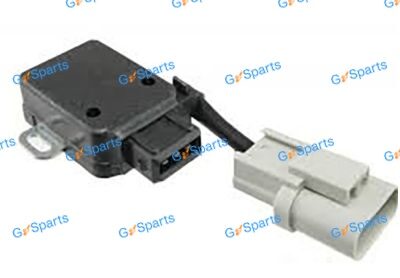
Genuine Nissan TPS Sensor 22620-40P00 for 300ZX 1990–1993 – Precision Throttle Control, Smooth Power, OEM-Grade Reliability
Throttle Position Sensor for Nissan 300ZX (1990–1993), ensures correct throttle signal and engine response.
Did you like this product? Add to favorites now and follow the product.

(+86) 180 07 12 47 38 WhatsApp, Telegram, WeChat
Description
The Nissan TPS Sensor 22620-40P00 fits the iconic 300ZX models (1990–1993). Manufactured by Duralast, Hitachi, and Standard Motor Products, this OEM 3-wire electric TPS guarantees precision in throttle position measurement for performance and reliability. Ideal for rear-wheel-drive configurations, it restores factory performance. Always check VIN before purchase.
Overview: Why Throttle Position Data Rules the VG
The VG30 platform rewards clean inputs. When throttle angle is measured accurately, the ECU nails transient fueling, sets timing with confidence, and keeps torque delivery smooth in traffic or at speed. Owners who complain about hesitation, surging, or wandering idle are often fighting noisy position data rather than injectors or coils. Restoring the reference transforms the car from “touchy and vague” to composed and responsive. That’s the core promise behind Nissan TPS Sensor 22620-40P00 for 300ZX, which brings OEM-spec linearity, correct indexing, and durable sealing. By centering your repair around data quality and validating with logs, you turn guesswork into repeatable results that survive heat, vibration, and seasonal swings.
Closed-Loop Fueling and Tip-In Behavior Explained
Every time you crack the throttle, the ECU predicts airflow, checks actual angle, and blends fuel to hit the target mixture before torque demand arrives. If the signal jitters, the controller widens its safety margins, dulling response and spiking fuel use. A stable sweep lets trims stay tight and decel fuel cut behave predictably, which owners feel as a crisp but civil take-off and smooth rolling throttle. Installing Nissan TPS Sensor 22620-40P00 for 300ZX re-centers that behavior, giving the ECU a trustworthy angle trace that aligns with calibration intent. The difference shows up in data first—clean slopes, no flat spots—then on the road as confident, linear pedal feel.
Fitment Precision, Indexing, and Connector Clocking
Great electronics fail without correct mechanics. The sensor must seat squarely, index to the throttle shaft without preload, and present the connector at the factory angle so the harness isn’t stressed. Photograph the original orientation, scribe a fine reference line, and confirm the new unit matches spline alignment before tightening. Torque gently and evenly to avoid ear distortion that shifts base angle. With Nissan TPS Sensor 22620-40P00 for 300ZX, geometry and keying mirror OE intent, so “zero” lands where the ECU expects and sweep mapping remains monotonic from closed to wide open. That’s how you avoid phantom idle problems that are really alignment errors.
Symptoms That Point Straight to TPS Drift
Small clues add up: an off-idle hiccup during parking, lazy throttle on hills, cruise that hunts at light load, or idle that wobbles when the A/C kicks in. On a graph, you’ll see stair-stepped position at a steady pedal or dropouts during a slow sweep. These issues appear long before a fault code. Replacing a tired unit with Nissan TPS Sensor 22620-40P00 for 300ZX eliminates the noise at the source so adaptive strategies settle, trims recentre, and the car regains that “OEM calm.” You’ll feel smoother creep in traffic and decisive yet predictable response when merging.
Codes, Freeze-Frames, and Live Data Patterns
Range/performance and correlation errors with airflow or pedal angle often accompany throttle complaints. Freeze-frames capture RPM, load, temperature, and angle at failure—vital for distinguishing hot-soak issues from cold starts. In graphing mode, a slow pedal sweep should trace a smooth, continuous line with no sudden jumps. After installing Nissan TPS Sensor 22620-40P00 for 300ZX, clear codes, complete a short validation route, and re-plot to prove stability. Save before/after graphs in the work order so you convert “seat-of-the-pants” improvement into objective, defensible proof for future service decisions.
Materials, Sealing, and Long-Term Stability
Heat cycles, oil mist, and vibration punish weak housings and potting. Moisture intrusion corrodes terminals and triggers intermittent dropouts that mimic random faults. Durable materials and consistent sealing keep the wiper’s contact consistent across thousands of cycles, maintaining linear output that the ECU can trust. Choosing Nissan TPS Sensor 22620-40P00 for 300ZX supports steady drivability in real weather—winter starts, summer traffic, coastal humidity—without data jitter that inflates trims or confuses decel fuel cut. That quiet reliability is the difference between a one-and-done fix and a nagging complaint that returns with the seasons.
Pre-Install Checks That Prevent Headaches
Start with safety and access: disconnect the battery, pull intake ducting for clear sightlines, and inspect the throttle plate for varnish that can mask improvement. Verify part number and connector keying against your VIN and throttle body type before opening the bag. Use a torque-limited driver; over-tightening distorts ears and shifts the base angle. With Nissan TPS Sensor 22620-40P00 for 300ZX on the bench, confirm orientation, mark the shaft reference, and dry-fit to feel the engagement. These simple rituals keep the job in the “predictable” column and save an afternoon of chasing a self-inflicted alignment error.
Relearn Steps and Baseline Validation
Controllers cache closed-throttle voltage and airflow targets, so a relearn is part of the job. Some cars adapt after a key-on sequence; others want a scan-tool routine. Warm the engine, confirm a believable closed-angle value, then sweep the pedal slowly while logging. Drive a short loop—gentle accelerations, steady cruise, and long decelerations—to let trims settle. If trims refuse to stabilize, revisit grounds, vacuum integrity, and plate cleanliness before second-guessing Nissan TPS Sensor 22620-40P00 for 300ZX. When the sweep is smooth and trims sit near center, you’ve earned data-backed confidence.
Immediate Drivability Gains You Can Feel
Owners notice the payoff fast: cleaner tip-in without jerkiness, steadier creep in parking lots, and rolling-hill cruising that stops “yo-yoing.” Automatic transmissions feel more decisive because torque estimates stabilize, and accessory loads are absorbed gracefully as the controller anticipates demand correctly. These cumulative wins restore the composed character that made the chassis feel modern when new. Installing Nissan TPS Sensor 22620-40P00 for 300ZX turns vague behavior into crisp predictability, the kind you can sense on the first commute and confirm later in the logs.
Avoiding Classic Installation Pitfalls
Three mistakes cause most repeat visits: misalignment that preloads the wiper, connectors not fully seated until the lock snaps, and skipping relearn so the ECU interprets new voltages through old assumptions. Each mistake adds diagnostic noise and tempts parts darting. A disciplined sequence—index carefully, seat the plug until it clicks, torque to spec, run the correct relearn, and validate with graphs—cuts through confusion. When you follow that sequence with Nissan TPS Sensor 22620-40P00 for 300ZX, repair tickets close faster, and the fix stays fixed.
Idle Control Harmony and Cruise Smoothness
Cable throttles depend on a trustworthy closed-angle baseline for idle control, while electronic strategies integrate position sensing with airflow predictions in a tight loop. Noisy inputs force wider tolerances and visible wander. A stable reference lets controllers tighten bands: restarts are smoother, A/C engagement doesn’t upset idle, and cruise holds speed without micro-corrections. These outcomes are the natural consequence of clean data. In practice, Nissan TPS Sensor 22620-40P00 for 300ZX becomes the anchor that returns the loop to “boringly perfect,” which is exactly what you want.
Emissions Readiness and Real-World Economy
Erratic angle signals can slow monitor completion and trigger enrichment overshoot during test transitions, heating catalysts and wasting fuel. Stabilizing the reference helps the ECU track stoichiometry tightly so the substrate lives an easier life and MPG rebounds in mixed driving. After replacing the unit, reset monitors and follow a documented route to verify completion. Shops that track readiness consistently see faster passes when Nissan TPS Sensor 22620-40P00 for 300ZX feeds the controller a clean, repeatable signal—data quiets down, and the inspection line becomes routine instead of stressful.
Transmission Logic, Line Pressure, and Shift Quality
Automatic and electronically controlled transmissions schedule shifts and regulate line pressure around calculated engine torque, which is heavily influenced by throttle angle quality. If the reference jitters, the TCU sees inconsistent torque requests and responds with awkward timing or hunting under light load. Stabilize the angle trace and gear changes feel decisive yet smooth, with converter lockup engaging predictably on rolling terrain. That’s the practical payoff from restoring clean position data at the source. Installing Nissan TPS Sensor 22620-40P00 for 300ZX returns clarity to the torque estimate, while validating Nissan TPS Sensor 22620-40P00 for 300ZX via a short log after a mixed drive proves the new calm beyond doubt.
Mild Mods, Tuning, and Part-Throttle Refinement
Intakes, freer exhausts, and conservative timing tweaks magnify any noise in throttle feedback because transient fueling tables grow more sensitive. Tuners aim for crisp but civilized response where the car actually lives: creeping through traffic, merging, and rolling hills at partial pedal. Begin with a known-good sweep so calibration edits chase intention rather than sensor lag. With Nissan TPS Sensor 22620-40P00 for 300ZX providing repeatable linearity, you’ll find fewer map revisions, quieter decel fuel cut, and steadier cruise trims. That discipline frees time to polish drivability instead of compensating for jitter, a change customers immediately feel as a smoother, more predictable pedal.
Data Logging, Sign-Off, and Evidence You Can Show
A repair becomes trust when you can show the graphs. After installation, perform a slow pedal sweep to confirm a smooth, monotonic trace; then record warm idle, steady 60–80 km/h cruise, and a long decel. Overlay short- and long-term trims to demonstrate convergence near center as the ECU regains authority. Archive the before/after plots in the work order so future techs can troubleshoot from reality, not guesswork. That evidence-first approach turns subjective words like “better” into objective closure, and it’s straightforward to deliver when the reference input is Nissan TPS Sensor 22620-40P00 for 300ZX installed by the book and validated on a consistent route.
Misdiagnosis Avoidance and Sequenced Troubleshooting
Throttle stumble, rich smells, and idle wander can be fuel pressure, ignition, vacuum, or airflow issues—not just position sensing. To avoid parts darting, enforce a sequence: verify fuel pressure and delivery, scope ignition under load, smoke-test for intake leaks, check MAF contamination, and only then evaluate throttle position behavior with a slow, graphed sweep. When every other fundamental is solid and the trace is jagged, the fix is obvious and defensible. Replacing the suspect with Nissan TPS Sensor 22620-40P00 for 300ZX and reproducing the route with clean plots proves root cause, closes tickets faster, and protects customer trust without overselling additional parts.
Buyer’s Checklist, Tools, and First-Pass Success
Success starts at the bench. Confirm VIN fitment, throttle body style, and connector keying; lay out a torque-limited driver, fine marker for indexing, O-ring-safe cleaner for the bore, and a scan tool for relearn. Photograph the original orientation and mark a reference line on the shaft. Plan to remove intake ducting for sightlines so you’re not fighting blind fasteners. When you can walk a new tech through this list, they’ll achieve the same quality every time. The part choice that keeps this predictability high is Nissan TPS Sensor 22620-40P00 for 300ZX, and the validation that makes it obvious is the post-install graph showing a calm, continuous sweep.
Counterfeit Avoidance, Packaging, and Traceability
Critical signals deserve authentic components. Counterfeits often copy housings but miss on wiper materials, potting, and seal quality, introducing intermittent faults that waste hours. Protect your workflow with tamper-evident packaging, scannable batch labels, and a quick visual checklist: connector mold lines, pin finish, logo depth, and ear thickness. Photograph the box and label before install and staple it to the work order. When the sensor is genuine—like Nissan TPS Sensor 22620-40P00 for 300ZX sourced from a trusted channel—you gain not only stable data but also warranty leverage if anything goes sideways later.
Grounds, Harness Integrity, and Electrical Hygiene
Even the best sensor can be framed by bad wiring. Check engine grounds for corrosion, confirm the harness isn’t tensioned or rubbing, and inspect connectors for oil wicking. A gentle tug test on each conductor finds breaks masquerading as intermittent noise. Add dielectric-safe contact cleaner where appropriate, and ensure strain relief at factory clip points. This electrical hygiene removes external variables so the ECU can interpret angle honestly. With these basics correct, Nissan TPS Sensor 22620-40P00 for 300ZX feeds a clean signal path that keeps trims steady, decel logic predictable, and inspector time in the “quick pass” category.
Environmental Robustness and Seasonal Stability
Real roads mean sub-zero mornings, desert heat soaks, coastal humidity, and pothole vibration. That environment punishes weak seals and brittle potting, creating dropouts that look random on a graph. Durable housings and stable wiper contact maintain linearity through those swings so control loops don’t widen and fuel economy doesn’t sag each season. When logs stay boring—tight oscillations, no surprise spikes—drivers feel it as fewer odd moments in traffic and more consistent passing power. Choosing Nissan TPS Sensor 22620-40P00 for 300ZX builds that resilience into the signal you rely on daily, whether the commute is a frosty dawn or a blazing afternoon.
Fleet Playbooks and Predictable Operations
Across multiple cars, tiny inefficiencies turn into fuel costs, retests, and driver complaints that soak technician hours. Standardize parts, procedures, and validation routes so first-pass fixes become default. Archive graphs by VIN to spot patterns, train new techs faster, and plan service windows around real data rather than gut feeling. When procurement locks in Nissan TPS Sensor 22620-40P00 for 300ZX as the reference, results become repeatable across drivers and climates. The proof is quieter phones, fewer comebacks, and inspection logs that read like clockwork—boringly great, exactly as operations managers prefer.
Product Page Content, Schema, and Conversion Wins
Education sells. Pair your listing with micro-guides: tool list, torque spec, indexing photo, relearn steps, and a three-plot validation example so DIYers know exactly what “success” looks like. Add HowTo and FAQ schema for rich results, and surface an at-a-glance benefits panel—crisper tip-in, steady idle with A/C, stabilized cruise trims. This transparency removes fear, trims pre-sale questions, and lowers returns. When the featured component is Nissan TPS Sensor 22620-40P00 for 300ZX, your content and the car’s behavior align, delivering an e-commerce experience that feels as polished as the drive afterward.
Warranty Policy, Evidence-First Support, and Speed
Support can be fast without being loose. Ask for two screenshots—warm idle and steady cruise angle plots—and one photo of connector seating and harness routing. Define coverage for workmanship versus misalignment or contamination. Approvals get quicker, customers feel respected, and your techs spend less time debating and more time fixing. It’s easy to be confident in an evidence-led policy when the equipment you sell behaves predictably; that’s precisely the case with Nissan TPS Sensor 22620-40P00 for 300ZX, whose stable sweep underpins rapid, fair decisions.
Final Recommendations and Road-Test Proof
Turn process into peace of mind. Clean the throttle bore, confirm grounds, install carefully with proper indexing, complete the relearn, and run a short, structured drive loop. Save the before/after plots to close the story with facts, not feelings. When the angle trace is smooth and trims sit near center, the car regains the composed character that made it special in the first place. Specify Nissan TPS Sensor 22620-40P00 for 300ZX to anchor that result, and remember: validating Nissan TPS Sensor 22620-40P00 for 300ZX with a five-minute log is the simplest way to prove you fixed root cause—not just the symptom.
External Resources (Standards & Technical References)
- ISO 26262 — Road Vehicles Functional Safety
- ISO 11898 — Controller Area Network (CAN)
- ISO 14229 — Unified Diagnostic Services (UDS)
- SAE J1979 — OBD-II Diagnostic Test Modes
- AEC-Q100 — Stress Test for Automotive ICs
Related Internal Links
Related products




G-SPARTS – Leading Auto Parts Supplier Since 2009
Trusted by 1000+ Clients Worldwide | Chinese (BYD, Geely, Chery, …), Japanese (Toyota, Honda, Nissan, …), European (BMW, Mercedes, VW, …) & American (Ford, Chevrolet, Tesla, …) Car Spares | Best Prices & OEM Quality | 15+ Years Expertise | Professional Team, Fast Global Shipping
Copyright 2025 © G-Sparts All Rights Reserved. | Premium Chinese Auto Parts Supplier – Worldwide Shipping | Best Prices on OEM & Aftermarket Spares

Reviews
There are no reviews yet.