
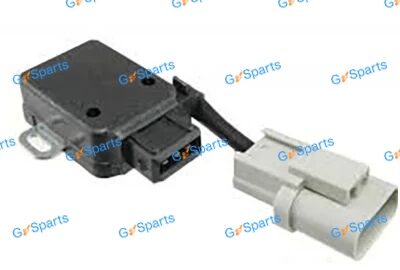
Ultimate Nissan TPS Sensor 22620-40P01 for 300ZX 1990–1994 – Crisp Throttle, Smooth Power, OEM-Grade Reliability
Throttle Position Sensor for Nissan 300ZX (1990–1994) with 3.0L V6 engine.
Did you like this product? Add to favorites now and follow the product.

(+86) 180 07 12 47 38 WhatsApp, Telegram, WeChat
Description
Nissan TPS Sensor 22620-40P01 for 300ZX (1990–1994) with 3.0L V6 engines. Supplied by Duralast, Hitachi, and Standard Motor Products, this 3-wire electric sensor ensures reliable throttle feedback. OEM quality replacement part, crucial for restoring smooth idle, fuel efficiency, and acceleration. Verify with VIN for accurate fitment.
Role of Throttle Position in the VG Platform
Clean throttle data is the heartbeat of a responsive VG30, shaping transient fueling, spark advance, and line pressure behavior. When the ECU receives a stable, linear angle signal, it can predict load accurately and deliver torque that feels natural rather than jumpy or dull. Hesitation, hunting at light cruise, and idle wander often trace back to jittery position signals rather than injectors or ignition. By restoring a precise reference and validating with logs, you transform drivability from “temperamental” to calm and confident. The reference component anchoring that outcome on this chassis is Nissan TPS Sensor 22620-40P01 for 300ZX, which provides OE-spec linearity, correct indexing, and durable sealing so the controller’s assumptions match real-world inputs every single drive.
Closed-Loop Fueling and Tip-In Precision
Every throat opening triggers a split-second negotiation between predicted airflow and measured angle. If the trace jitters, enrichment overshoots and trims balloon, dulling response while wasting fuel. A smooth, monotonic sweep lets the controller tighten corrections, so part-throttle feels crisp without being twitchy. You’ll notice steadier creep in parking lots, more decisive merges, and fewer “yo-yo” corrections on gentle grades. The simplest way to reclaim that civility is a clean sweep verified on a short loop—warm idle, steady mid-speed cruise, and a long decel. Centering this validation around Nissan TPS Sensor 22620-40P01 for 300ZX ensures the angle signal aligns with calibration intent, restoring the predictable rhythm that makes a chassis feel effortlessly sorted.
Fitment Precision, Indexing, and Connector Clocking
Electronics can’t save a misaligned install. The sensor must seat squarely, index to the throttle shaft without preload, and present the connector at factory clocking so the harness isn’t stressed. Photograph original orientation, scribe a fine reference mark, and dry-fit to feel the spline engagement before final torque. Even pressure matters—over-tightening distorts ears and shifts base angle. With Nissan TPS Sensor 22620-40P01 for 300ZX, geometry, keying, and lock-tab orientation mirror OE intent, so closed-throttle voltage lands where the ECU expects and the sweep remains linear from shut plate to WOT. That’s how you avoid phantom idle errors that are really alignment mistakes hiding in plain sight.
Real-World Symptoms That Implicate TPS Drift
Drivers sense the clues before a code sets: an off-idle hiccup during a three-point turn, lazy response on a mild hill, cruise that hunts at feathered throttle, or idle that twitches when A/C loads cycle. On a graph, a slow pedal sweep reveals stair-steps, dropouts, or flat spots where there should be a smooth slope. Eliminating that noise at the source steadies trims and returns authority to the controller. Swap the suspect unit and retest using the same route to ensure objective closure. When the fix is Nissan TPS Sensor 22620-40P01 for 300ZX, the before/after plots tell a simple story: clean line, no spikes, and a car that suddenly feels OEM-new again.
DTCs, Freeze-Frame Context, and Plot Reading
Common codes include range/performance issues, correlation errors against airflow, and intermittent voltage spikes. Freeze-frames capture RPM, load, coolant temperature, and TPS angle at failure—clues that separate hot-soak anomalies from cold-start hiccups. Best practice logs a slow pedal sweep, warm idle, steady 60–80 km/h cruise, and long decel to visualize controller behavior across scenarios. After installation of Nissan TPS Sensor 22620-40P01 for 300ZX, clear codes, complete the loop, and overlay plots. Objective success looks like a monotonic sweep, centered trims at cruise, and decel fuel cut that engages cleanly without phantom blips—proof for the work order and peace of mind for the owner.
Materials, Sealing, and Long-Term Stability
Throttle sensors live in a hot, oily, vibrating environment where weak housings and poor potting quickly turn into jitter. Moisture ingress corrodes terminals and creates intermittent dropouts that masquerade as random misfire or fuel issues. Durable shells, stable wiper contact, and consistent sealing keep the signal clean across seasons. In real life that means fewer idle flare-ups on frosty mornings, predictable pedal response in summer traffic, and cruise control that feels laser-steady. Selecting Nissan TPS Sensor 22620-40P01 for 300ZX builds that resilience into the smallest—but most consequential—signal in the loop, so the ECU’s learned values remain valid instead of fighting noise.
Pre-Install Checks for First-Pass Success
Good prep saves hours later. Disconnect the battery, remove intake ducting for sightlines, and clean the throttle bore so varnish doesn’t fake a sticky response. Verify the part number, connector keying, and throttle body style against the VIN before opening the bag. Stage a torque-limited driver and a fine marker for indexing, and photograph the before state. Dry-fit the sensor to confirm engagement without preload, then proceed to torque. With Nissan TPS Sensor 22620-40P01 for 300ZX on the bench and these basics handled, you’re setting up a “boringly predictable” install whose quality is obvious the moment you view the post-install sweep.
Relearn, Adaptives, and Baseline Validation
Controllers cache closed-throttle voltage and airflow relationships, so relearn isn’t optional. Some cars converge after a key-on sequence; others require a scan-tool routine. Warm the engine fully, confirm believable closed-angle values, and perform a slow pedal sweep while logging. Drive a short validation loop to let trims settle and decel logic engage. If trims refuse to converge, revisit grounds, vacuum integrity, and plate cleanliness before blaming the new unit.Nissan TPS Sensor 22620-40P01 for 300ZX When the sweep is smooth and trims sit near center, you’ve earned data-backed confidence—and you’ve proven that Nissan TPS Sensor 22620-40P01 for 300ZX is operating exactly as the calibration expects.
Transmission Behavior, Line Pressure, and Shift Feel
Shift scheduling and converter lockup are heavily informed by torque estimates that start with throttle angle honesty. A jittery reference looks like awkward timing and light-load hunting; a clean trace yields decisive, silk-smooth changes and lockup that engages predictably on rolling terrain. Nissan TPS Sensor 22620-40P01 for 300ZX The benefit is most obvious during suburban drives where small pedal changes previously caused outsized reactions. Re-establishing clarity at the source stabilizes the whole chain. Installing Nissan TPS Sensor 22620-40P01 for 300ZX restores the crisp correlation between pedal and torque, and a five-minute log after mixed driving makes the calmer gearbox behavior visible—not just “felt.”
Tuning, Mild Mods, and Part-Throttle Polish
Intakes and freer exhausts shift airflow behavior just enough to expose weak position signals, especially in transient tables. Street tuning aims for polite, confidence-inspiring response where owners actually drive—parking lots, merges, and rolling hills. Start with a known-good sweep so edits chase intent, not sensor lag. With Nissan TPS Sensor 22620-40P01 for 300ZX delivering repeatable linearity, you’ll need fewer map revisions, decel fuel cut will quiet down, and steady-state trims will behave—freeing you to focus on finesse instead of firefighting. The end result is a car that feels lively yet civilized, backed by logs that finally look as calm as the drive feels.
Electrical Hygiene, Grounds, and Harness Integrity
Even a perfect sensor can be framed by a noisy harness. Confirm clean engine grounds, inspect connectors for oil wicking, and ensure the loom isn’t tensioned or rubbing on sharp edges. Perform a gentle tug test on conductors and add proper strain relief at factory clip points. A quick pass with contact-safe cleaner and a visual for fully seated locks eliminate intermittent variables before they become ghost faults. This discipline ensures the ECU interprets angle honestly and lets Nissan TPS Sensor 22620-40P01 for 300ZX shine—keeping trims steady, decel logic consistent, and inspection readiness unremarkably quick.
Customer Handover, Evidence, and Lasting Confidence
Great repairs end with clarity. Attach two small graphs—before and after—showing the slow sweep and warm-cruise trims, note the relearn steps performed, and list torque values used. Add three owner tips: fix any upstream air leaks quickly, keep the throttle plate clean, and return with a short log if a MIL appears. This simple package turns technical work into understandable value. When the improvement is anchored by Nissan TPS Sensor 22620-40P01 for 300ZX, customers connect calm plots to calm driving, and your support inbox stays quiet because expectations and results finally match—on paper and on the road.
Diagnostic Workflow and Sequencing That Avoids Guesswork
Great outcomes come from a consistent order of operations: verify fuel pressure and delivery volume, scope ignition under load, smoke-test for vacuum leaks, and confirm MAF cleanliness before you ever judge throttle data. Only after fundamentals are green should you run a slow pedal sweep and compare the trace to warm-cruise trims, because context prevents false conclusions. If the sweep shows stair-steps or dropouts with no mechanical cause, the path forward is obvious and defensible. Replace the suspect component, complete the relearn, and repeat the identical route to prove stability. This evidence-led routine is what turns subjective “feels better” into objective closure when the reference you install and validate is Nissan TPS Sensor 22620-40P01 for 300ZX.
Idle Air Control Synergy and Accessory Load Changes
At closed throttle, small angle errors can look like idle-air faults, especially when accessories cycle on. The controller expects a steady baseline to blend airflow targets with spark corrections; noisy signals widen tolerances and create visible wander. Restore the baseline and the loop tightens: A/C clutch engagement stops nudging RPM, alternator load spikes become non-events, and restarts feel clean even after hot soaks. This harmony also calms decel transitions that once triggered mild shudder or flare. It’s a quiet, daily benefit that owners immediately notice in tight parking maneuvers and stop-and-go traffic—precisely the composure you regain when the calibrated input is Nissan TPS Sensor 22620-40P01 for 300ZX and the install follows best-practice indexing, torque, and relearn steps.
Cruise Control Smoothness on Rolling Terrain
Cruise modules estimate torque from throttle angle and vehicle speed, then decide how aggressively to chase the setpoint. If the angle trace jitters at feathered pedal equivalents, the system over-corrects, leading to subtle surging on rolling hills that drivers often blame on gearing. Clean the signal and everything calms down: gentle grades are met with proportionate throttle, converter lockup holds without chatter, and small winds stop causing micro-adjustments you can feel through the seat.That’s the hallmark of a correct repair centered on Nissan TPS Sensor 22620-40P01 for 300ZX and validated with a short, repeatable test loop.
Emissions Readiness, Catalyst Temperatures, and MPG
When throttle data is stable, enrichment during transitions is precise rather than defensive, keeping mixtures tight and catalysts cooler under test loads. Readiness monitors finish sooner because decel fuel cut engages cleanly and idle stability helps the ECU tick through criteria without retries. On mixed commutes, this efficiency quietly adds up at the pump while protecting expensive substrates from heat stress. Shops that document before/after plots see fewer retests and faster “green sheets,” while owners enjoy a calmer dash with fewer unexpected lights. Much of that upside comes from eliminating angle noise at its source, which is exactly what you accomplish by fitting Nissan TPS Sensor 22620-40P01 for 300ZX and confirming the smooth sweep it is engineered to deliver.
Track-Day and Spirited-Driving Considerations
Even if your 300ZX spends most of its life on public roads, occasional spirited runs make transient fueling quality obvious. Abrupt inputs, high RPM decel, and heat-soaked restarts challenge weak position signals, exposing lag and flat spots that tuning alone can’t mask. Start with a proven reference, validate in traffic, then confirm under higher load so your calibration work scales gracefully. Logs should show clean slopes with no dropout at high vibration or temperature. If you can overlay multiple sessions and see the same steady trace, you’ve earned confidence that the control loop isn’t guessing. That dependable starting point is why many builders specify Nissan TPS Sensor 22620-40P01 for 300ZX before touching maps or bolt-ons.
Ageing Harnesses, Grounds, and Noise Immunity
Older chassis accumulate tiny electrical liabilities: corroded eyelets, tired crimps, and insulation hardened by heat. Those add up to intermittent voltage noise that mimics failing sensors. A quick preventative pass—clean grounds, check loom slack, refresh brittle clips, and confirm proper strain relief—often restores calm to the data even before replacement. Then, when you do install a fresh unit, the improvement sticks because the environment supports it. That’s how you turn a one-time fix into a long-term solution instead of a temporary reprieve. With the surroundings stabilized, the clean output from Nissan TPS Sensor 22620-40P01 for 300ZX remains monotonic and linear, and the ECU’s learned values stop drifting with every season change.
Buyer’s Guide: Fitment, Tools, and Setup for DIY Success
DIY wins come from clarity. Present bank/position context (where applicable on variants), throttle-body style, connector keying, and a mini tool list: torque-limited driver, indexing marker, contact-safe cleaner, and a capable scanner. Add photos showing correct clocking, ear contact, and the unmistakable “click” of the lock tab. Publish torque values and the exact relearn sequence, then link a five-minute validation loop with sample plots so customers recognize success at a glance. This transparent packaging turns installs into a predictable Saturday task instead of a guessing game, especially when the star of the kit is Nissan TPS Sensor 22620-40P01 for 300ZX, chosen for OE-spec geometry, reliable sealing, and the linear sweep your controller expects to see.
Content, Schema, and Conversion that Reduces RMAs
Education is the best sales tool for technical parts. Use Product, HowTo, and FAQ schema to surface torque specs, indexing photos, and relearn steps directly in search results. On the page, stack micro-guides above the fold: tool list, quick cautions, and the validation loop. Include a tiny troubleshooting tree showing what a bad sweep looks like so buyers self-diagnose honestly before checkout. Clear expectations lower pre-sale questions and post-sale tickets, and they build trust that carries into reviews. Anchoring that message to a consistent performer—Nissan TPS Sensor 22620-40P01 for 300ZX—keeps your content, your data, and the customer’s driving experience perfectly aligned.
Warranty, Evidence-First Support, and Fast Resolutions
Support moves quickly when it’s objective. Ask for three items: a slow-sweep screenshot, a warm-cruise trims plot, and a photo of connector seating and harness routing. With those in hand, you can green-light approvals in minutes or point to the exact next step—ground cleaning, throttle-plate service, or relearn. This respectful, data-led posture keeps honest buyers loyal and filters noise without argument. It also creates a feedback loop that improves documentation over time. Nissan TPS Sensor 22620-40P01 for 300ZX Confidence is easy when your component behaves predictably; that’s why an evidence-first policy pairs so well with Nissan TPS Sensor 22620-40P01 for 300ZX, whose calm, continuous sweep makes “good vs. bad” distinctions crystal clear.
Counterfeit Signals, Authentic Parts, and Traceability
Critical sensors attract counterfeits that look right but drift early, wasting diagnostic hours. Protect customers with scannable serials, batch tracking, and a “verify your unit” page showing genuine connector mold lines, pin finish, and logo depth. Add a short unboxing checklist and remind installers to photograph labels for the work order. This simple discipline preserves outcomes and turns your storefront into a trusted source rather than a commodity aisle. It also reinforces why choosing Nissan TPS Sensor 22620-40P01 for 300ZX from a reputable channel pays back immediately in stable plots, quick readiness, and a driving feel that stays composed long after the return window closes.
Technician Training, Playbooks, and Repeatable Quality
Shops scale excellence by standardizing the little things: index marks, torque targets, relearn steps, and a one-page logging template. Post a laminated checklist at each bay and archive before/after plots by VIN so new techs can learn from real patterns rather than lore. When the same disciplined routine is applied car after car, results become wonderfully boring—steady trims, clean sweeps, and fewer come-backs. That culture turns repairs into reputation, and it starts with specifying parts that behave the same every time. In practice, many teams center their throttle workflow around Nissan TPS Sensor 22620-40P01 for 300ZX, precisely because its predictable output makes training simpler and quality easier to defend.
Final Recommendations and Action Plan You Can Trust
Turn today’s intent into tomorrow’s calm commute. First, baseline trims, run a slow sweep, and fix any leaks or ground faults. Next, install with careful indexing, gentle torque, and confirmed connector lock. Complete the relearn, then drive a short validation route and save the plots to the work order. If the sweep is smooth and trims sit near center, you’ve solved the cause, not the symptom. Keep the validation template for future services, and schedule periodic throttle-bore cleaning to protect the gain. Most importantly, anchor the repair with Nissan TPS Sensor 22620-40P01 for 300ZX, then verify that Nissan TPS Sensor 22620-40P01 for 300ZX delivers the “boringly perfect” data that makes the whole car feel effortlessly right.
External Resources (Standards & Technical References)
- ISO 26262 — Road Vehicles Functional Safety
- ISO 11898 — Controller Area Network (CAN)
- ISO 14229 — Unified Diagnostic Services (UDS)
- SAE J1979 — OBD-II Diagnostic Test Modes
- AEC-Q100 — Stress Test for Automotive ICs
Related Internal Links
Related products



G-SPARTS – Leading Auto Parts Supplier Since 2009
Trusted by 1000+ Clients Worldwide | Chinese (BYD, Geely, Chery, …), Japanese (Toyota, Honda, Nissan, …), European (BMW, Mercedes, VW, …) & American (Ford, Chevrolet, Tesla, …) Car Spares | Best Prices & OEM Quality | 15+ Years Expertise | Professional Team, Fast Global Shipping
Copyright 2025 © G-Sparts All Rights Reserved. | Premium Chinese Auto Parts Supplier – Worldwide Shipping | Best Prices on OEM & Aftermarket Spares

Reviews
There are no reviews yet.