
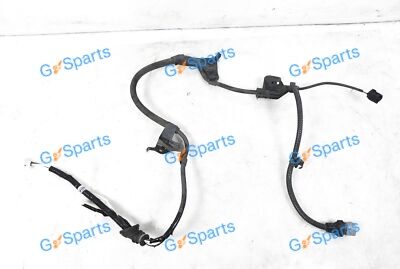
Genuine Toyota ABS Sensor 890C0-02010 – 2020–2025 Toyota Corolla (Front (typically FL/FR)) – OEM Wheel Speed Precision for Safer Stops & Smooth Control | G-Sparts
ABS Sensor for 2020–2025 Toyota Corolla – Front (typically FL/FR). OEM 890C0-02010 with 2-wire, magnetic sensor for accurate, safe braking.
Did you like this product? Add to favorites now and follow the product.

(+86) 180 07 12 47 38 WhatsApp, Telegram, WeChat
Description
Maintain precise ABS performance on your 2020–2025 Toyota Corolla with this OEM-equivalent wheel speed sensor (Part 890C0-02010, Front (typically FL/FR)). Its 2-wire, magnetic sensor design provides dependable wheel-speed data for ABS/ESC systems, reducing lock-up and improving control during emergency stops. Trusted aftermarket coverage includes Denso, Bosch, Standard Motor Products. Often found in front wheel positions; ensure correct part number. Always confirm by VIN, axle location, and connector style before ordering.
Why Reliable Wheel Speed Data Makes Every Stop Safer
ABS, traction, and stability systems can only act as quickly as the information they receive from each hub. Crisp pulses allow the controller to release and reapply brake pressure before a slide grows, keeping you steerable on patchy pavement and wet paint. When the signal is noisy or weak, the system hesitates or overreacts, turning calm stops into chatter and lengthening distances. The simplest path back to confidence is a direct-fit sensor that reestablishes strong amplitude and clean edges from the very first wheel rotation. For owners and workshops who want a first-time-right repair, Toyota ABS Sensor 890C0-02010 restores that trustworthy stream of data the control module depends on in every season.
How Modern Brake Control Interprets the Wheel Pulse
ABS logic compares expected deceleration to real-time wheel speed and modulates pressure many times per second to protect steering authority. Traction control meters torque when a driven wheel spins, and stability control trims a single corner to realign yaw before a slide becomes visible. All of this depends on a high-contrast, low-noise signal that doesn’t collapse under bumps, heat, or steering angles. Replace a borderline reader and the difference is unmistakable: interventions arrive earlier, are smaller, and fade away as grip returns. That’s the everyday benefit drivers feel after fitting Toyota ABS Sensor 890C0-02010 and verifying that all four corners track smoothly at walking pace on a scan.
Fitment Certainty: Geometry, Plug Keying, and Seating Depth
A look-alike part can sit a fraction too far from the tone ring, shrinking amplitude or allowing contact that scars the tip. Correct seating depth, bracket angle, and grommet shape protect the air gap through heat cycles and suspension travel. Confirm connector face and latch style before you wrench, and reuse factory clips so the loom can’t chafe on the strut. Choosing Toyota ABS Sensor 890C0-02010 aligns the mechanical interface with the knuckle, and Toyota ABS Sensor 890C0-02010 matches the electrical characteristics the module expects, turning verification into a quick mixed-surface road test rather than a second diagnosis.
Recognizing Early Clues Before the Lamp Stays On
Borderline sensors rarely fail loudly; they fade. You might notice a brief ABS blink over ripples, a traction icon while cruising straight, or a light pulsing during gentle stops. Some platforms borrow wheel speed for the speedometer, so a momentary drop can appear on the dash. Inspect for iron filings on the tip, cracked or swollen tone rings, and harness scuffs near the spring perch. If the mechanical path checks out but one corner reads erratic at 5–20 km/h on a scan, the reader itself is suspect. Refreshing the circuit with Toyota ABS Sensor 890C0-02010 typically ends the nuisance and restores calm, measured braking.
A Straightforward Diagnostic Flow That Respects Time
Start visually, then validate with data. Confirm matching tire sizes and tread depths side to side, check the ring for missing teeth, and verify every clip is present. On a scan, graph all four wheels during a steady crawl and through a gentle turn; the inside wheel should read slower, but traces must remain stable. If amplitude at one corner collapses over bumps while others stay clean, you’ve found your culprit. The goal is a defensible, repeatable process that avoids parts roulette and ends with a tidy “before/after” graph the owner can understand—exactly what a new Toyota ABS Sensor 890C0-02010 helps you produce.
Preparing the Seat and Bore for a Predictable Install
Rust in the knuckle bore can tilt the face or pinch the body, disturbing the air gap and inviting dropout. Soak the fastener, brush the boss to bare metal, and clear the bore with a nylon tool—not steel—so you don’t scratch the ring. Stage the retaining screw and a small torque wrench, and line up the loom clips in order to duplicate factory routing. A tiny wipe of dielectric grease on the outer connector seal improves weatherproofing. With the site clean and organized, Toyota ABS Sensor 890C0-02010 will seat squarely, and Toyota ABS Sensor 890C0-02010 will hold position through heat-soak and suspension travel.
Removing a Stubborn Old Unit Without Collateral Damage
In salty climates, plastic swells and bolts seize. Support the knuckle to relieve stress, work the fastener patiently with penetrant, and twist the body gently to break the rust bond before lifting out. Never pry against the tone ring, and take the moment to spin the hub by hand to listen for bearing roughness that could mimic sensor faults. Cleaning the bore to a satin finish prevents tilt on the new install, turning the next steps into a calm sequence rather than a wrestling match. Once the path is clear, the new reader drops in and restores the geometry the controller relies on.
Air Gap, Torque, and Harness Routing: Small Details, Big Outcomes
Signal health lives in the details. Hand-start the fastener to protect threads, then torque to spec so the flange isn’t distorted. Verify the face is parallel to the ring and debris-free, and snap each clip into its standoff so the loom has slack at full lock but can’t rub on coils or spring steel. Proper routing prevents micro-fretting at the connector and intermittent faults that only appear after a wet week. With these basics counted for, Toyota ABS Sensor 890C0-02010 generates a robust pulse train the module can parse confidently on the very first key cycle.
Connector Hygiene and Weather Sealing for Long-Term Stability
Moisture-wicked pins and relaxed terminal tension create the kind of intermittent that vanishes on the lift and returns on the highway. Inspect for green corrosion, confirm a crisp latch, and keep dielectric off the contacts where it can insulate. The goal is a dry, firm interface that turns tiny voltage swings into dependable data the controller trusts. Treating the plug with the same care as the seat ensures Toyota ABS Sensor 890C0-02010 isn’t undermined by a simple environmental leak, preserving the crisp edges your scope or scanner will show during a parity check.
Post-Install Validation with a Simple Scan Snapshot
Clear history codes and observe all four corners at walking pace; traces should be smooth and in family. During a slow figure-eight, the inside wheel will read slower, but the lines should remain steady without dropouts. A brief low-μ stop on gravel confirms controlled modulation and correct lamp behavior. Save a screenshot as your “known good” baseline for this car. When the graph looks tidy after fitting Toyota ABS Sensor 890C0-02010, you can return the vehicle with confidence that the controller has truthful inputs for ABS, traction, and stability decisions.
Road-Test Confidence on Real, Imperfect Surfaces
Paint stripes, steel plates, patched asphalt—this is where strong amplitude pays dividends. With a clean signal, the controller intervenes sooner and softer, keeping the car arrow-straight without jarring pulses. Traction trims torque gracefully instead of chopping, and stability nudges feel nearly invisible. These small improvements add up to a calmer daily drive and clearer mind in sudden stops. Owners often describe the change after installing Toyota ABS Sensor 890C0-02010 as “uneventful braking,” which is exactly the goal: safety systems that work so well you stop noticing them.
One Input, Three Systems: ABS, TCS, and ESC in Harmony
Wheel speed is the shared truth among braking, traction, and stability. When that truth is clean, each subsystem can perform with finesse: ABS protects steering on split-μ, traction meters torque on slick launches, and stability trims a single corner to realign yaw with a light touch. A weak or noisy trace forces heavy-handed corrections. Renewing the input with Toyota ABS Sensor 890C0-02010 returns the orchestra to tune so the car feels planted in rain, poised in traffic, and predictable on winding routes—even when the surface quality changes corner to corner.
Seasonal Realities: Salt, Slush, Dust, and Heat-Soak
Winter swells rust in the bore and locks sensors in place; spring slush drags magnetic particles to the tip; summer heat softens looms and reveals lazy routing. Plan for these insults by cleaning the seat thoroughly, routing the harness along factory clips, and rinsing wheel wells after salty drives. Built to shrug off seasonal stress, Toyota ABS Sensor 890C0-02010 maintains amplitude and edge clarity across temperature swings, helping the dash stay dark and stopping distances stay short regardless of what’s on the road or falling from the sky.
The Hidden Cost of Ignoring a Flickering ABS Icon
Driving with marginal data risks longer stops on mixed traction, harsher torque cuts in busy traffic, and late stability corrections when you need them most. It can also complicate inspection in regions where lamp behavior is validated, leading to retests and wasted time. Worse, a weak signal may hide bearing play or ring damage that needs attention. Replacing the questionable reader with Toyota ABS Sensor 890C0-02010 removes doubt, exposes any remaining mechanical fault quickly, and returns your safety net to full strength before the next rainy surprise.
Sourcing Matters: Avoid Counterfeits and Near-Fits
Look-alike parts can hide off-spec plastics, poor sealing, or resistance values that drift with temperature. The result is intermittent behavior that wastes diagnostic time and erodes trust. Buy from a reputable channel that shows connector faces, bracket angles, and harness length, and ships in packaging that protects the tip and terminals. Selecting Toyota ABS Sensor 890C0-02010 through trusted supply lines is the simplest way to ensure the piece in the box matches the piece on the page and behaves the same on day one and day ninety-one.
Product Page Content That Helps Buyers Self-Verify
Clarity converts and prevents returns. Lead with a three-angle connector gallery, a bracket-orientation photo, harness length in metric and imperial, and a sensor-face close-up. Add a compact “Will this fit?” checker keyed to model, year, axle, and side, plus a one-minute install checklist. Plain-language benefits—stable ABS modulation, smoother traction, subtler stability—should sit above the fold. When shoppers can verify Toyota ABS Sensor 890C0-02010 in seconds, they install it correctly in one session and keep it, which improves reviews and lowers support load at the same time.
Fleet & Workshop Playbook for First-Time-Right Repairs
Consistency beats heroics in busy bays. Standardize a simple routine: photograph routing, clean the bore, seat and torque, clip-by-clip route, scan at a crawl, then road-test on mixed surfaces. Save a wheel-speed screenshot to the work order so any future visit starts from proof, not memory. Stock by axle position and label bins with connector photos to prevent mis-picks. Teams that adopt Toyota ABS Sensor 890C0-02010 as the reference report fewer comebacks and faster triage when a lamp returns, because the signal source is no longer a variable.
Returns, Warranty, and Shipping Transparency That Builds Trust
Shoppers move faster when logistics feel predictable. Publish return windows, condition requirements, and return-freight rules above the fold, mirror those in an FAQ, and show live inventory plus delivery estimates by postal code. Include an inspection checklist in the confirmation email—connector keying, bracket angle, harness length—so customers can verify fit before booking lift time. This operational clarity, paired with the technical story behind Toyota ABS Sensor 890C0-02010, turns high intent into quick, confident purchases and fewer post-sale questions.
Accessory Bundles That Ensure a One-Session Fix
Many setbacks aren’t about the sensor; they’re about missing prep tools. Offer a one-click install kit with penetrant, a new retaining screw, a nylon bore brush, shop towels, and a small packet of dielectric for the outer seal (never on contacts). Add a laminated torque card and a QR link to a ninety-second video showing bore cleaning and seating depth checks. These small touches around Toyota ABS Sensor 890C0-02010 turn an ordinary replacement into a controlled, first-time-right repair that leaves both DIYers and pros feeling supported.
Troubleshooting When a Warning Returns After Replacement
If the lamp comes back, widen the lens. Measure air gap, inspect the ring for hairline cracks, verify bearing endplay, and check shared grounds for corrosion. Wiggle-test the loom at full lock to expose hidden strain points. Because the new input is known good, remaining faults usually trace to upstream wiring or mechanical wear. This is where the baseline screenshot you saved after installing Toyota ABS Sensor 890C0-02010 pays off—you can compare today’s traces to “known good” and guide the next step with confidence.
Sustainability and Total Cost of Ownership Benefits
Accurate wheel speed reduces tire flat-spotting during hard stops, limits needless brake cycling that glazes pads, and keeps interventions efficient, which lowers energy waste. Over time, that means fewer premature tire replacements and steadier stopping distances as tread wears. Choosing Toyota ABS Sensor 890C0-02010 is a small, high-leverage investment that protects larger components, supports safer roads, and keeps your budget focused on scheduled maintenance rather than preventable fixes.
Owner Habits That Protect the Repair Year-Round
Rinse wheel wells after salty drives, avoid blasting connectors with pressure washers, and verify clip positions during rotations. If you hear a bearing hum, address it before it chews the ring. During brake jobs, keep filings away from magnetic faces and clean the seat before reinstalling. These habits keep the signal crisp so the controller never has to guess, letting Toyota ABS Sensor 890C0-02010 do quiet, accurate work mile after mile without calling attention to itself.
Cross-Region and Model Notes That Prevent Returns
Global platforms often share knuckles but vary connector keying, bracket angle, or harness length by region and trim. Verify by VIN when possible, and compare the old connector index and clip locations before removal. Publish both metric and imperial harness lengths on your product page to help international buyers. With those checks complete, Toyota ABS Sensor 890C0-02010 becomes a drop-in solution that seats cleanly, routes naturally, and validates quickly on a short, mixed-surface test.
Plain-Language Answers to Pre-Purchase Questions
Do you need a relearn? Most platforms do not—clear codes, scan at a crawl, and confirm parity through a gentle turn. Is grease on the face okay? Never—keep magnetic surfaces clean and dry. Can a “universal” unit work? Physical fit isn’t enough; seating depth and resistance curves matter. Pick the exact match so the controller recognizes the signal family instantly. When in doubt, cross-reference your VIN and confirm the connector photo and harness length against Toyota ABS Sensor 890C0-02010 before you order.
Building Proof with Data: The Value of a Baseline Library
Pros who save “known good” traces by model compress future diagnostics dramatically. Capture idle-crawl graphs on delivery, low-μ stops, and gentle slaloms after installing Toyota ABS Sensor 890C0-02010, and tag them by VIN. Months later, if a vehicle returns with a new complaint, you can compare apples to apples instead of guessing. This habit elevates communication with customers and trains junior techs to lean on evidence rather than intuition—a shop culture that solves problems faster and with less friction Toyota ABS Sensor 890C0-02010.
Final Takeaway: Quiet Confidence in Every Stop
Great braking feels uneventful because safety systems act early and lightly, preserving steering authority instead of stealing attention. That composure rests on one humble truth: clean wheel speed at each hub. If your dashboard lamp flickers, stops feel inconsistent, or traction cuts arrive with a thump, renew the foundation with Toyota ABS Sensor 890C0-02010. Seat it squarely, route the loom correctly, validate with a brief scan and mixed-surface loop, and enjoy the evidence on your very next drive—short, straight stops, smooth launches, subtle stability nudges, and a dash that stays dark.
External Links (ABS Sensor Education & References)
Internal Links (Keep Users on G-Sparts)
Related products



G-SPARTS – Leading Auto Parts Supplier Since 2009
Trusted by 1000+ Clients Worldwide | Chinese (BYD, Geely, Chery, …), Japanese (Toyota, Honda, Nissan, …), European (BMW, Mercedes, VW, …) & American (Ford, Chevrolet, Tesla, …) Car Spares | Best Prices & OEM Quality | 15+ Years Expertise | Professional Team, Fast Global Shipping
Copyright 2025 © G-Sparts All Rights Reserved. | Premium Chinese Auto Parts Supplier – Worldwide Shipping | Best Prices on OEM & Aftermarket Spares

Reviews
There are no reviews yet.