
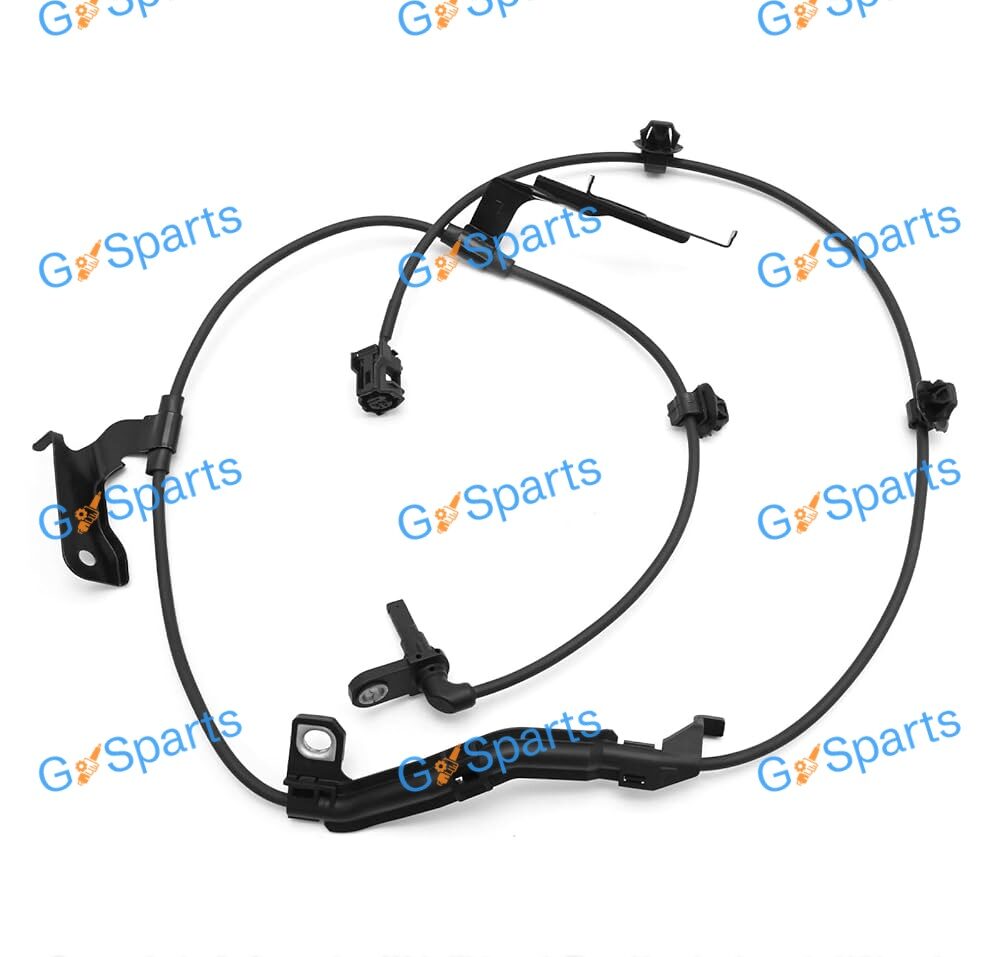
Ultimate Toyota ABS Sensor 89543-02160 – 2020–2025 Toyota Corolla (Front (typically FL/FR)) – OEM Wheel Speed Precision for Safer Stops & Smoother Control | G-Sparts
ABS Sensor for 2020–2025 Toyota Corolla – Front (typically FL/FR). OEM 89543-02160 with 2-wire, magnetic sensor for accurate, safe braking.
Did you like this product? Add to favorites now and follow the product.

(+86) 180 07 12 47 38 WhatsApp, Telegram, WeChat
Description
Maintain precise ABS performance on your 2020–2025 Toyota Corolla with this OEM-equivalent wheel speed sensor (Part 89543-02160, Front (typically FL/FR)). Its 2-wire, magnetic sensor design provides dependable wheel-speed data for ABS/ESC systems, reducing lock-up and improving control during emergency stops. Trusted aftermarket coverage includes Denso, Bosch, Standard Motor Products. Commonly used in front wheel positions; verify fitment before purchase. Always confirm by VIN, axle location, and connector style before ordering.
ABS Fundamentals: Why Wheel Speed Truth Drives Safety
Anti-lock braking, traction control, and stability systems all depend on clean wheel speed data to keep the car steerable under hard stops. When the signal is crisp, brake modulation feels transparent, stop distances are consistent on mixed surfaces, and stability corrections arrive before a slide grows. A tired or contaminated reader, by contrast, feeds noise that makes algorithms hesitate or overreact. Replacing an aging unit with Toyota ABS Sensor 89543-02160 restores the controller’s confidence so it can regulate pressure exactly when it matters. That immediate uptick in calm, predictable stopping is why technicians standardize on Toyota ABS Sensor 89543-02160 for a first-time-right repair that protects both drivability and safety.
How ABS, TCS, and ESC Interpret Wheel Signals
Your brake controller compares tooth-by-tooth pulse timing across all corners to detect slip and command modulation. If one wheel decelerates faster than physics allow, it briefly releases pressure, then reapplies to keep you steering. High-quality sensing ensures the microsecond decisions behind this ballet are accurate. A weak trace invites false positives (chatter) or late intervention. Refitting with Toyota ABS Sensor 89543-02160 gives the module a stable, high-amplitude waveform with clean edges, allowing ABS, traction, and stability systems to remain decisive over gravel, wet paint, and patched asphalt without feeling intrusive.
Fitment Confidence and Connector Matching
Direct-fit matters because connector indexing, harness length, bracket angles, and sensor tip depth vary by platform. A look-alike may bolt up yet sit the wrong distance from the tone ring, creating low amplitude or rubbing contact. Cross-check plug face, latch style, grommet footprint, and loom clips before you wrench. When the seating depth is correct, the air gap is stable through heat cycles and wheel bearing play, producing a robust signal from the first key cycle. Choosing Toyota ABS Sensor 89543-02160 eliminates adapter guesswork and shortens verification to a simple test drive on mixed traction surfaces.
Symptoms That Point to Sensor Drift or Damage
Common patterns include an intermittent ABS light on bumpy roads, traction control blinking while driving straight, or stability control intervening on gentle curves. You may feel pulsing at low speeds on dry pavement or notice speedometer dropouts if the platform uses a wheel input for vehicle speed. Corrosion at the tone ring, iron filings on the tip, or a chafed harness near the strut are frequent culprits. After confirming tire sizes match and wheel bearings are quiet, renewing the circuit with Toyota ABS Sensor 89543-02160 is the high-leverage step that returns clean data and ends nuisance warnings.
A Calm, Data-First Diagnostic Flow
Start visually: inspect harness routing, bracket fasteners, and the sensor tip for debris. Spin the wheel and look for cracked or missing tone ring teeth. With a scan tool, monitor each wheel’s speed at a steady crawl; a dropping or erratic corner is your lead. Backprobe for reference and signal voltage or use a scope for amplitude and symmetry. If mechanicals check out but the trace remains weak, replace the unit. Installing Toyota ABS Sensor 89543-02160 provides the amplitude margin and edge clarity diagnostics love, turning an intermittent lamp into a resolved case.
Preparation for a Predictable Install
Soak fasteners with penetrant, wire-brush rust from the boss, and blow away grit so nothing falls onto the tone ring. Support the knuckle to relax tension on seized bolts, and keep a small pick and nylon brush for the seat. Lay out harness clips in order so you duplicate factory routing and avoid future chafe. Have dielectric grease ready for the connector weather seal, but keep it off pins. With the area clean and staged, seating Toyota ABS Sensor 89543-02160 becomes a gentle, controlled operation rather than a wrestling match against corrosion.
Seating Depth, Air Gap, and Torque Discipline
Signal quality depends on a square seat and correct air gap. Hand-start the retaining bolt to avoid cross-threading in the knuckle, then torque to spec—over-tightening can distort the tab or crack the flange, while under-torque invites vibration. Verify the sensor face is parallel to the tone ring and free of debris. Finish by snapping loom clips into their original standoffs so suspension travel can’t tug the lead. With Toyota ABS Sensor 89543-02160 properly aligned, amplitude remains stable through bumps, heat, and steering angles, which means the controller trusts every pulse.
Cleaning vs. Replacing: When Service Isn’t Enough
Light iron dust can be brushed off, and surface rust in the bore can be cleaned with Scotch-Brite, but a swollen plastic body, swollen O-ring, cracked pigtail, or scarred face calls for replacement. Repeated removal often worsens fit and air gap consistency. If the tone ring is intact yet the trace remains noisy, stop spending time reconditioning a compromised unit. Installing Toyota ABS Sensor 89543-02160 resets both mechanical geometry and electrical integrity, letting you test the system’s logic rather than chasing ghosts created by a marginal signal source.
Harness Routing and Connector Care
ABS leads live near moving suspension, sharp brackets, and road spray. Follow factory clip positions so the loom doesn’t rub under compression or bind at full lock. Inspect for previous zip-tie “fixes” that shortened slack and created hidden strain points. At the plug, confirm clean, untarnished terminals and a weather seal that compresses evenly. A tiny dab of dielectric on the outer seal—not the contacts—keeps moisture out. Plugging in Toyota ABS Sensor 89543-02160 with this level of care prevents micro-fretting and the intermittent faults that only appear after a long, wet drive.
Post-Install Relearns and Scan Checks
Most platforms do not require a formal relearn for passive wheel speed sensors, but a short scan session is smart. Clear history, watch all four wheel speeds at 5–30 km/h, and verify parity through smooth turns (inside wheel will read slower, but traces should remain stable). Trigger a low-speed ABS event on gravel to confirm modulation and lamp behavior. A tidy, symmetric graph after installing Toyota ABS Sensor 89543-02160 is your proof the controller sees clean data and can modulate with confidence in the real world.
Real-World Braking Benefits You’ll Feel
With a strong signal, ABS pulses feel minimal because the system intervenes earlier and more precisely. Stops on mixed surfaces—paint stripes, metal plates, or leaf-covered asphalt—stay straight, and steering authority remains intact. You’ll also notice traction control transitions soften; instead of abrupt cuts, torque reduces smoothly, then returns as grip recovers. These small, repeatable wins are the daily payoff of fitting Toyota ABS Sensor 89543-02160 and restoring the controller’s trust in its fastest, most critical input.
Stability Control and Traction Logic That Works With You
ESC blends yaw rate, steering angle, and wheel speed to predict where the car should point and compares it to where it is going. Bad data makes that comparison unreliable, leading to over- or under-intervention. A clean, high-contrast pulse train from Toyota ABS Sensor 89543-02160 lets the system trim brake pressure at a single corner to realign the car without drama. On low-μ launches, the same clarity helps traction control meter torque instead of simply cutting power, so progress feels steady rather than staccato.
Seasonal Challenges: Salt, Slush, and Summer Heat
Winter corrosion swells sensor bodies and locks them into the knuckle; summer heat softens looms and reveals lazy routing. Add gravel dust and magnetic particles, and marginal sensors get worse fast. A thorough seat cleaning, proper anti-seize where appropriate (never on the face), and correct clip placement help any new unit thrive. Built to withstand these insults, Toyota ABS Sensor 89543-02160 keeps amplitude up and noise down through freeze-thaw cycles and heat-soak, so you don’t face a seasonal parade of warning lights.
The Cost of Ignoring a Flickering ABS Lamp
Driving with a flaky input risks longer stops on split-μ surfaces, harsher torque cuts in traffic, and stability corrections that arrive late. It also complicates inspections in regions that validate lamp behavior. Worse, a weak signal can mask bearing wear or tone ring damage you actually need to fix. Replacing the questionable reader with Toyota ABS Sensor 89543-02160 removes the variable, revealing any remaining mechanical issues quickly and keeping your brake controller ready for real emergencies—not just dashboard theater.
Avoiding Counterfeits and Near-Fits
Look-alike sensors may hide poor sealing, off-spec tip materials, or inconsistent resistance that drifts as temperature rises. The result is intermittent behavior that wastes diagnostic time and undermines trust. Buy from a reputable channel with clear connector photos, bracket angles, and harness lengths so you know what arrives will match what you remove. Choosing Toyota ABS Sensor 89543-02160 through a trusted supplier is the simplest way to protect your schedule, your reputation, and your stopping distance.
Packaging, Handling, and Bench Prep
Keep caps on the connector until the moment of installation and avoid setting the tip on gritty benches. Verify the mounting ear is free of burrs, confirm bolt threads by hand, and pre-fit harness clips in order so you aren’t twisting the lead in-car. If you’re servicing multiple corners, label looms to prevent cross-routing. This small discipline ensures Toyota ABS Sensor 89543-02160 seats cleanly and the connector seals perfectly on the first try, making your verification drive a formality.
Product Page Content That Reduces Returns
Clear, above-the-fold information helps buyers self-verify: a three-angle connector gallery, bracket orientation photo, harness length, and a close-up of the sensor face. Add a short “Will this fit?” tool keyed to model, year, and axle position, plus a 60-second install checklist. When shoppers understand what arrives and how it installs, they choose confidently. Listing Toyota ABS Sensor 89543-02160 with these details cuts support tickets and boosts review quality because expectations match reality from unboxing to test drive.
Workshop and Fleet Process Wins
Standardizing on a known-good reference compresses training and reduces comebacks. Build a simple playbook: photograph routing before removal, clean the bore, seat and torque, clip by clip route, scan and road-test on mixed μ. Saving a post-repair wheel speed screenshot gives you a defensible baseline for future visits. Fleets adopting Toyota ABS Sensor 89543-02160 report fewer intermittent faults and quicker triage when a light does appear, because the sensor variable is off the table.
Forensic Diagnostics: When an Issue Persists
If an ABS lamp returns after replacement, widen the lens. Check the tone ring for hidden cracks, confirm bearing endplay, measure sensor-to-ring air gap, and inspect grounds shared by multiple chassis sensors. Wiggle-test the loom at full lock to reproduce an intermittent. Because Toyota ABS Sensor 89543-02160 stabilizes the signal source, lingering faults usually trace to mechanical damage or wiring upstream, making root-cause analysis faster and cheaper.
Conversion-Focused Content Additions That Lift PDP Performance
Turning high-intent visitors into confident buyers starts with information density that respects their time. Add a compact comparison table showing fitment by model/trim/year, harness length, mounting ear orientation, and connector face so shoppers can verify Toyota ABS Sensor 89543-02160 in seconds. Below the fold, include a troubleshooting accordion (intermittent lamp on bumps, tone ring cracks, harness chafe near strut) with quick “fix/no-fix” decision trees that always circle back to verifying Toyota ABS Sensor 89543-02160 signal parity via scan. Sprinkle trust badges—fast shipping, warranty length, returns policy—and surface real reviews that mention resolved ABS lights and cleaner traction control behavior to nudge fence-sitters over the line.
Structured Data, Media, and UX Tweaks That Improve Discovery
Small technical upgrades compound. Mark up the PDP with Product, Offer, and Aggregate Rating schema so search engines display price, stock status, and review snippets for Toyota ABS Sensor 89543-02160 directly in results. Add alt text that describes the connector keying and bracket angle so accessibility and image SEO both improve for Toyota ABS Sensor 89543-02160. Implement a sticky “Check Fitment” bar that anchors users during scroll, and a mini-cart that lists compatible models to reduce bounce. Finish with a contextual “often bought together” bundle—penetrant, mounting bolt, nylon brush—so DIY buyers complete the job in one session, raising AOV without cluttering the page.
B2B Playbook: Stocking, Training, and Aftercare That Reduce Comebacks
For workshops and fleets, consistency beats heroics. Standardize a three-step intake play: photograph routing before removal, clean and gauge the bore, then seat and scan-verify Toyota ABS Sensor 89543-02160 with a low-speed parity test. Stock by axle position and region, labeling bins with connector photos to eliminate mis-picks. After installation, attach a wheel-speed screenshot to the work order so any future diagnosis starts from proof that Toyota ABS Sensor 89543-02160 delivered clean amplitude and edges. This repeatable loop trims diagnostic time, cuts returns, and builds customer trust because every repair ends with a tangible, shareable “passed/verified” artifact.
Road Test: Verifying on Real Surfaces
A thorough validation includes smooth asphalt, painted lines, and a patch of gravel. From a crawl, trigger a gentle ABS event and watch lamp behavior; then perform a few low-μ launches to sample traction logic. Through a slow slalom, confirm stability control remains quiet until provoked. After fitting Toyota ABS Sensor 89543-02160, these scenarios should feel tidy and proportional, with interventions that help rather than surprise.
Environmental and Sustainability Benefits
Accurate ABS inputs reduce tire flat-spotting, shorten panic stops, and limit intrusive stability corrections that waste energy. Over time, that means fewer premature tire replacements and less brake pad glazing from needless cycling. It’s a subtle sustainability story: reliable sensing that prevents damage rather than fixing it later. Installing Toyota ABS Sensor 89543-02160 is a small part with a large systems effect—smoother control that preserves components and confidence.
Owner Tips: Habits That Protect the New Sensor
Rinse wheel wells after salty drives, avoid pressure-washing directly at connectors, and inspect loom clips during tire rotations. If you hear a bearing hum, address it promptly before it chews the tone ring. During brake jobs, keep metal filings away from magnetic faces and clean seats before reinstalling. These habits help Toyota ABS Sensor 89543-02160 maintain its crisp signal so the controller never has to guess about what each wheel is doing.
Seasonal Tire Swaps and Calibration Sanity
Mismatched rolling diameters from uneven wear or mixed tire models can trigger false slip detection at highway speeds. Rotate on schedule, replace in sets, and reset any tire size parameters if your platform supports it. After changing tires, a quick scan comparison of wheel speeds during a steady cruise ensures parity. With correct tires and Toyota ABS Sensor 89543-02160 in place, the system’s decisions remain aligned with physics, not artifacts.
Closing Summary: Confidence You Can Feel in Every Stop
When the brake controller knows wheel speed with certainty, it can act early and precisely, keeping you steerable on the worst surfaces you’ll actually encounter. That composure shows up as straight stops on patchy pavement, traction that meters rather than chops, and stability corrections that feel invisible until they save your day. If your dash light or road feel hints that the signal has grown unreliable, restore the foundation with Toyota ABS Sensor 89543-02160 and enjoy the quiet proof on your very next drive—calm braking, clean launches, and a dashboard that stays dark.
External Links (ABS Sensor Education & References)
Internal Links (Keep Users on G-Sparts)
Related products


Recently Viewed Products


G-SPARTS – Leading Auto Parts Supplier Since 2009
Trusted by 1000+ Clients Worldwide | Chinese (BYD, Geely, Chery, …), Japanese (Toyota, Honda, Nissan, …), European (BMW, Mercedes, VW, …) & American (Ford, Chevrolet, Tesla, …) Car Spares | Best Prices & OEM Quality | 15+ Years Expertise | Professional Team, Fast Global Shipping
Copyright 2025 © G-Sparts All Rights Reserved. | Premium Chinese Auto Parts Supplier – Worldwide Shipping | Best Prices on OEM & Aftermarket Spares

Reviews
There are no reviews yet.