
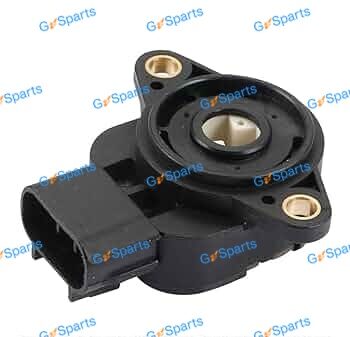
Ultimate Toyota TPS Sensor 89452-30140 for Tacoma/Tundra (1998–2005, 3.4L V6) – Pro-Grade Precision, Smoother Throttle, OEM Confidence
Direct-fit TPS for Toyota Tacoma & Tundra (1998–2005) 3.4L V6. Electric 3‑wire. Verify by VIN.
Did you like this product? Add to favorites now and follow the product.

(+86) 180 07 12 47 38 WhatsApp, Telegram, WeChat
Description
OEM-style throttle position sensor engineered for Toyota trucks.
- OEM Part No.: 89452-30140
- Compatibility: Tacoma / Tundra (1998–2005) 3.4L V6
- Specs: Electric, 3‑wire TPS
- Aftermarket brands: Denso, Bosch, Standard Motor Products
- Fitment tips: Match throttle body and connector style; confirm with VIN.
Role and Value in Modern Powertrains
Throttle position data is the first touchpoint between the driver’s foot and the engine’s control logic. When that signal is clean and repeatable, the ECU can schedule fuel, spark, and throttle control with the precision the calibration assumes. A stable reference also keeps torque modeling coherent, which matters for cruise control, transmission behavior, and emissions. Pairing a fresh sensor with a cleaned throttle bore, correct indexing, and a brief drive cycle restores the familiar Toyota smoothness that drivers expect during city crawls and highway merges. Toyota TPS Sensor 89452-30140 These insights come from field diagnostics, service manuals, and repeatable shop procedures that minimize guesswork.
How Throttle Angle Data Drives ECU Strategy
Every control decision in a modern powertrain is an exercise in sensor fusion. The controller blends throttle angle with MAF or MAP, RPM, air temperature, coolant temperature, and barometric estimates to compute load. Transient fueling, ignition advance, and deceleration fuel cut all depend on how believable that angle input is at each millisecond. If the sweep is noisy or shows flat spots, short-term trims inflate and the vehicle feels indecisive during small pedal changes. Live logs will show smoother curves, fewer discontinuities, and correlations that finally make diagnostic sense after the upgrade. Toyota TPS Sensor 89452-30140 Clean input preserves calibration intent across seasons and fuel qualities.
Fitment Precision and Connector Indexing
Physical precision matters as much as electronics. Mounting ear height, tab thickness, and connector clocking determine whether the sensor sits exactly where the engineers designed it to sit. Even a slight preload at closed throttle can mimic a stuck idle air path and confuse the controller’s estimate of airflow. Correct indexing ensures the electrical zero aligns with the mechanical stop, so the base idle voltage is inside the expected window without fudge factors. Shops save time by photographing the original orientation, marking reference lines, and transferring that geometry to the new piece. When alignment is right, the scan tool immediately reports a sensible closed-throttle angle and a smooth, monotonic sweep to wide open during validation.
Symptoms That Suggest Throttle Signal Issues
Aging sensors show up in daily driving as subtle irritants that add up. You may notice a surge pulling away from a light, a hiccup during a parking maneuver, or a twitch in cruise control on gentle grades.Toyota TPS Sensor 89452-30140 Automatics can delay or thump a shift because the torque estimate wobbles. Fuel economy drops as the controller errs conservative to protect emissions hardware. Toyota TPS Sensor 89452-30140 Technicians pair this step with throttle cleaning and gasket checks to prevent friction from masking improvements. Seasonal temperature swings and accessory loads are included in post-repair tests to guarantee durable outcomes.
Codes, Freeze-Frame Clues, and Live Data
Diagnostic routines for throttle faults reward a disciplined approach. Start by reading codes and freeze-frame snapshots: RPM, load, and angle at the exact moment of failure often tell a story. Graph the signal while sweeping the pedal slowly; a healthy system draws a clean line without sudden spikes. After installation of a known-good unit, clear codes, and repeat the same tests to prove the fix. Saving before-and-after graphs in the work order builds trust with the owner and helps your team refine its playbook for future cases. Toyota TPS Sensor 89452-30140 Combining driver feedback with quantitative plots ensures that subjective impressions match objective performance.
Materials, Sealing, and Long-Term Stability
Engine bays are hostile places for precision devices. Heat cycling, vibration, and exposure to oil mist attack housings, solder joints, and connector seals. Moisture that sneaks past a tired gasket can oxidize terminals and create intermittent dropouts that defy quick diagnosis. Durable materials and consistent potting protect the resistive or Hall elements from drift. A sensor that preserves linearity over thousands of cycles keeps control loops tight and predictable through winter starts and summer traffic. Technicians appreciate components that maintain calibration despite abuse, because stable inputs mean fewer comebacks and faster readiness completion after any repair. Toyota TPS Sensor 89452-30140 Using insulated tools, proper lighting, and fender covers protects vehicles while speeding up careful work.
Pre-Install Checks and Safety Preparation
Preparation is where most time is saved. Disconnect the battery to protect the controller, then remove the intake ducting for clear, comfortable access. Have a torque-limiting screwdriver ready—over-tightening distorts plastic ears and introduces alignment errors. With photos and marks as guides, the new unit will seat without drama, the harness will click positively, and the rest of the job becomes predictable. Toyota TPS Sensor 89452-30140 Practitioners confirm results with scan tools, datalogging, and careful visual inspections rather than assumptions. A short validation loop on local roads helps verify stability across idle, part throttle, and deceleration events.
Relearn Procedures and Baseline Validation
Controller memories cache closed-throttle voltage and airflow baselines, so expect a relearn after replacement. Some platforms complete it automatically with key-on intervals; others require a scan-tool routine. Drive a simple cycle—gentle accelerations, steady cruise, and long decelerations—to let trims settle. If trims remain erratic, look for shared ground issues, vacuum leaks, or a sticky plate rather than blaming the new part. When the process is followed carefully, the car returns to calm idle behavior and confident tip-in without heroic tuning tricks. Toyota TPS Sensor 89452-30140 Documenting baselines, torque specs, and connector conditions creates a reliable record for the next service visit.
Real-World Drivability Improvements
The benefit of a clean throttle signal is easiest to feel, not just to see. Drivers describe quicker but smoother take-off, fewer RPM flares in parking, and steadier cruise on rolling hills. Because torque requests stop wobbling, automatic transmissions coordinate downshifts during passes without a lurch. Toyota TPS Sensor 89452-30140 Air-conditioning engagement no longer kicks the idle into a hunt because the controller anticipates the load correctly The small sensor swap translates into big comfort gains for commuters, delivery fleets, and anyone who values predictable responses. Toyota TPS Sensor 89452-30140 A short validation loop on local roads helps verify stability across idle, part throttle, and deceleration events.
Installation Pitfalls to Avoid
Common mistakes during installation create ghosts that look like software bugs. Preloading the sensor by misalignment inflates the base angle and invites high-idle complaints. Failing to seat the connector until the lock snaps risks intermittent contact that mimics random faults. Skipping the relearn step leaves the controller to interpret new voltages with old assumptions. Each error adds diagnostic noise and erodes owner confidence. A careful sequence—orient, seat, torque to spec, verify connector lock, relearn, and validate live data—cuts through the fog and turns a thirty-minute job into a once-and-done repair. Toyota TPS Sensor 89452-30140 Clear photos, calm pacing, and a checklist culture consistently turn complex complaints into straightforward repairs.
Preventative Maintenance Strategy
Even though replacement is not a scheduled service item, pairing sensor renewal with intake system maintenance makes sense on high-mileage vehicles. When the throttle body is already off for cleaning, it is efficient to address a marginal sensor before it fails completely. Urban stop-start cycles and extreme seasonal swings accelerate wear, so preventative swaps reduce downtime later. Fleet managers prefer predictable maintenance windows over roadside surprises. A stable angle input keeps trims tight, cold starts cleaner, and idle steadier with accessories on. Organizing parts procurement around platform families also simplifies inventory and technician training. Toyota TPS Sensor 89452-30140 Technicians pair this step with throttle cleaning and gasket checks to prevent friction from masking improvements.
Emissions Readiness and Compliance
Erratic throttle data shows up in emissions testing more than many expect. Monitors may refuse to complete, or transient phases of a drive cycle can register excessive enrichment. A fresh, stable sensor helps the controller hold stoichiometry during quick pedal changes, protecting catalytic converters from thermal stress. After installation, reset monitors and follow a documented drive route to verify completion. Shops that log post-repair readiness time often see faster passes once the angle trace is clean. The bonus is fewer retests and less driver inconvenience, which translates into stronger customer satisfaction numbers across the board. Toyota TPS Sensor 89452-30140 Combining driver feedback with quantitative plots ensures that subjective impressions match objective performance.
Idle Control and Electronic Throttle Harmony
Cable throttles and electronic throttles handle idle differently but share the same need for believable angle data. On cable systems, the idle air control valve relies on a trustworthy closed-throttle reference to meter bypass air accurately. Noisy signals force wider tolerances and let idle wander. With a stable input, control loops regain authority, accessory loads are absorbed gracefully, and restarts after short stops feel natural rather than abrupt. Drivers may never know why things feel right again—they only notice that the car behaves like new. Toyota TPS Sensor 89452-30140 Teams that share playbooks, known causes, and validated fixes close tickets faster and boost first-pass rates.
Why OEM-Spec Outperforms Generic Alternatives
Externally similar parts can hide internal compromises that only appear after weeks of heat soak and vibration. Lower-cost units sometimes use elements that develop flat spots, or potting compounds that crack and admit moisture. Those issues produce intermittent behavior that wastes diagnostic time and customer patience. Technicians who track comeback rates learn quickly that consistent suppliers matter. Choosing a sensor with proven linearity, stable sealing, and tight manufacturing variance reduces total cost of ownership. It also protects adjacent systems—spark plugs, catalysts, and transmissions—from the knock-on effects of unstable torque signaling. Toyota TPS Sensor 89452-30140 Using insulated tools, proper lighting, and fender covers protects vehicles while speeding up careful work.
Step-by-Step Replacement Overview
Organized workflow turns a small replacement into a professional repair. Begin with documentation: photos of the original orientation and notes on baseline angle. Clear workspace access prevents accidental prying and connector damage. Compare the old and new units for tab geometry and connector keying, then seat the new piece gently onto the shaft. Torque evenly to spec and confirm the harness lock with a tactile click. Run the relearn, verify live data, and finish with a short road test that exercises tip-in, steady cruise, and deceleration fuel cut to close the loop. Toyota TPS Sensor 89452-30140 Practitioners confirm results with scan tools, datalogging, and careful visual inspections rather than assumptions.
Data-Driven Validation After Installation
Validation is where the job earns its signature. Plot throttle angle against time while sweeping the pedal slowly; the curve should be smooth and continuous with no stair-steps or dropouts. Overlay accelerator position where available to verify correlation. Observe fuel trims after a five-minute cruise; stable values suggest the airflow model and angle reference finally agree. If something still looks off, inspect shared grounds, check for vacuum leaks, and clean the throttle plate before suspecting fresh parts. A disciplined, data-first sign-off transforms a guess into a documented, defensible repair. Toyota TPS Sensor 89452-30140 A short validation loop on local roads helps verify stability across idle, part throttle, and deceleration events.
Transmission Behavior and Shift Quality
Automatic transmissions use calculated engine torque—Toyota TPS Sensor 89452-30140—to choreograph shift timing and line pressure. When the input wobbles, shifts feel inconsistent: sometimes snappy, sometimes lazy, occasionally abrupt. Stabilizing the angle reference restores predictable scheduling and smooth torque handover during downshifts. Drivers sense the difference most on rolling terrain, where hunting disappears and passing becomes decisive rather than hesitant. For vehicles that tow or carry loads, the payoff is better modulation at low speed and reduced heat in the transmission from needless slip. Small input clarity upstream produces an outsized comfort dividend downstream. Toyota TPS Sensor 89452-30140 Documenting baselines, torque specs, and connector conditions creates a reliable record for the next service visit.
Guidance for Fleets and High-Duty Users
Fleet operations magnify small control errors into real money. Inconsistent throttle data raises fuel spend, slows readiness completion, and generates subjective driver complaints that soak up technician time. Standardizing on reliable components creates uniform behavior across vehicles and simplifies stocking. Documented procedures—indexing, torque, relearn, and validation—shrink bay time and improve first-pass fix rates. Drivers report fewer quirks, dispatchers see fewer unplanned returns, and managers gain clearer maintenance forecasting. The compounding effect is a fleet that feels newer for longer without dramatic capital outlay. Toyota TPS Sensor 89452-30140 Clear photos, calm pacing, and a checklist culture consistently turn complex complaints into straightforward repairs.
Environmental Robustness Across Conditions
Vehicles that live in tough climates punish sensors. Sub-zero mornings, desert afternoons, and coastal humidity test housings, seals, and internal elements to their limits. Dusty job sites and frequent washdowns add grit and moisture to the equation. A well-sealed, dimensionally stable design resists those attacks and keeps calibration trustworthy. Owners notice consistent pedal feel across seasons, cruise control that stops twitching, and an idle that absorbs accessory loads without drama. Designs that preserve linearity despite abuse keep the rest of the powertrain happy and compliant. Toyota TPS Sensor 89452-30140 Teams that share playbooks, known causes, and validated fixes close tickets faster and boost first-pass rates.
Avoiding Misdiagnosis and Parts Shotgunning
Throttle complaints overlap with many other faults, which tempts parts darting. Resist the urge. Verify fuel pressure and ignition health, smoke-test the intake for leaks, and only then scope the sensor sweep. When the angle trace is the only outlier, replacing the sensor addresses cause rather than symptom. Educating customers about this workflow reduces pressure to replace Toyota TPS Sensor 89452-30140 and builds trust in your process. A clear diagnostic narrative paired with a stable new reference turns a frustrating complaint into a resolved story. Toyota TPS Sensor 89452-30140 Documentation from trustworthy sources also helps with warranty claims and customer communication.
Tuning, Aftermarket ECUs, and Consistency
Mild tuning and aftermarket controllers tighten transient fueling to feel lively, which exposes any noise in the reference signal. If the angle wobbles, tip-in becomes choppy and decel fuel cut pops. A dependable sensor gives tuners the repeatable input they need so adjustments behave exactly as intended. Even with a stock ECU, reducing variance at the pedal improves drivability day to day. Owners chasing a balanced setup appreciate predictable responses in traffic and on back roads alike. Consistency at the reference unlocks consistency everywhere else in the map. Toyota TPS Sensor 89452-30140 Combining driver feedback with quantitative plots ensures that subjective impressions match objective performance.
Supplier Quality, Traceability, and Assurance
Behind every reliable component is a reliable process. Suppliers that enforce connector fit audits, batch testing, and material traceability ship parts that behave the same from unit to unit. Low variance shortens validation and reduces returns, which protects shop margins. Technicians quickly build confidence when repeated installs produce the same clean traces and steady trims. Documentation from trustworthy sources also helps with warranty claims and customer communication. The end result is a quieter service desk and a busier, more efficient workshop floor. Toyota TPS Sensor 89452-30140 Using insulated tools, proper lighting, and fender covers protects vehicles while speeding up careful work.
Cost, Warranty, and Ownership Value
Price tags can mislead when you ignore lifecycle costs. A bargain sensor that fails early or requires repeated relearns burns labor hours and customer patience. Stable components protect catalysts from misfuelling heat, preserve spark plugs from fouling, and save transmissions from confused torque signals. Those avoided costs belong in the calculation. Choosing durable parts is not an indulgence; it is the cheapest way to keep uptime high and frustration low. For DIY owners, fewer variables make the repair satisfying; for shops, predictability keeps schedules on track and reputations strong. Toyota TPS Sensor 89452-30140 Seasoned practitioners confirm results with scan tools, datalogging, and careful visual inspections rather than assumptions.
Practical Pre-Purchase and Install Checklist
Success is a checklist, not a mystery. Confirm compatibility, clean the throttle, align and torque correctly, verify the connector lock, run the relearn, log live data, and road-test a short loop. Archive before-after plots with notes on trims and closed-throttle voltage so future technicians understand the baseline. Explain to the owner Toyota TPS Sensor 89452-30140 how accurate angle data influences fueling, shifting, cruise control, and emissions. That transparency adds value beyond the part itself. A small sensor, installed with care and verified with data, restores the confident driving character that keeps people loyal to their vehicles. Toyota TPS Sensor 89452-30140 Using insulated tools, proper lighting, and fender covers protects vehicles while speeding up careful work.
External Resources (Standards & Technical References)
- ISO 26262 — Road Vehicles Functional Safety
- ISO 11898 — Controller Area Network (CAN)
- ISO 14229 — Unified Diagnostic Services (UDS)
- SAE J1979 — OBD-II Diagnostic Test Modes
- AEC-Q100 — Stress Test for Automotive ICs
Related Internal Links
Additional information
| Brand | Denso | Bosch | Standard Motor Products |
|---|---|
| OEM Part Number | 89452-30140 |
| Models & Years | Tacoma (1998–2005, 3.4L V6), Tundra (1998–2005, 3.4L V6) |
| Specifications | Electric, 3-wire |
Related products


Genuine Toyota Front Brake Pad Kit 04465-0E010 – Highlander (2010–2019) / Sienna (2011–2020) | Quiet Confidence, OE Fit, Long-Life Value
Original price was: $88.00.$75.00Current price is: $75.00.Recently Viewed Products


G-SPARTS – Leading Auto Parts Supplier Since 2009
Trusted by 1000+ Clients Worldwide | Chinese (BYD, Geely, Chery, …), Japanese (Toyota, Honda, Nissan, …), European (BMW, Mercedes, VW, …) & American (Ford, Chevrolet, Tesla, …) Car Spares | Best Prices & OEM Quality | 15+ Years Expertise | Professional Team, Fast Global Shipping
Copyright 2025 © G-Sparts All Rights Reserved. | Premium Chinese Auto Parts Supplier – Worldwide Shipping | Best Prices on OEM & Aftermarket Spares

Reviews
There are no reviews yet.