
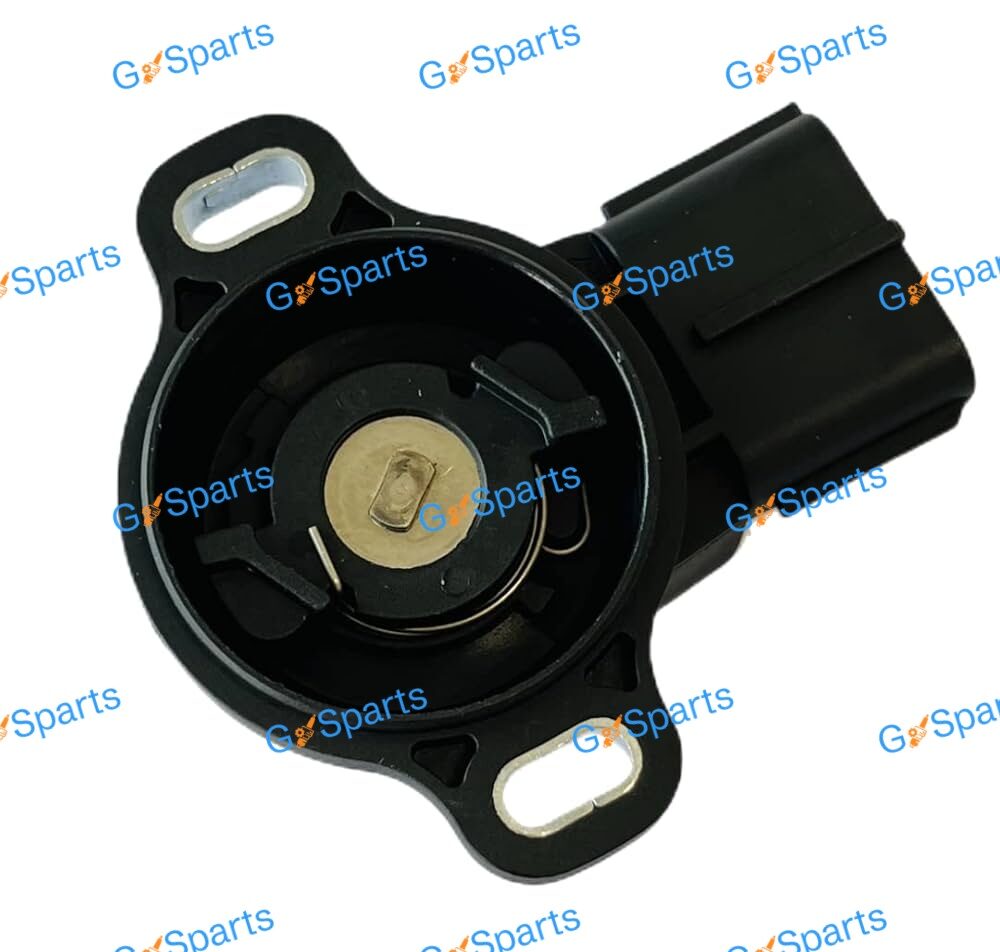
Ultimate Toyota TPS Sensor 89452-30150 for Tacoma/Tundra (1998–2005, 3.4L V6) – Peak Precision, Smoother Throttle, OEM-Grade Confidence
Toyota throttle position sensor for Tacoma & Tundra 3.4L V6 (1998–2005). Electric 3‑wire. VIN match recommended.
Did you like this product? Add to favorites now and follow the product.

(+86) 180 07 12 47 38 WhatsApp, Telegram, WeChat
Description
Premium replacement TPS matching OEM 89452-30150.
- OEM Part No.: 89452-30150
- Compatibility: Tacoma / Tundra (1998–2005) 3.4L V6
- Specs: Electric, 3‑wire
- Aftermarket brands: Denso, Bosch, Standard Motor Products
- Note: Some trims may use 30140 vs 30150 — confirm by VIN and throttle body.
Understanding the Throttle Position Signal’s Importance
The throttle position signal is the ECU’s real-time window into driver intent. When angle feedback is clean and linear, fueling, spark timing, and transmission logic remain synchronized. That harmony delivers calm idle, crisp tip-in, and predictable shifts across conditions. Small irregularities in the signal quickly become surging, hesitation, or hunting, which owners feel immediately. A correct, durable replacement restores baseline integrity so adaptive strategies converge quickly after installation. In workflows that value first-pass fixes, technicians build the repair around a dependable reference, confirm with live data, and document results for future service. For that anchor point, many shops specify Toyota TPS Sensor 89452-30150 to lock in stable behavior that keeps drivability consistent through seasons and mileage.
How the ECU Uses Angle Data in Real Time
Every millisecond, the controller blends throttle angle with airflow, RPM, temperature, and barometric estimates to compute load, adjust injector pulse width, and govern deceleration fuel cut. If angle data jitters, trim corrections inflate and torque estimates wobble, degrading shift quality and cruise stability. The antidote is a sensor whose sweep remains linear from closed to wide open and whose voltage remains steady under vibration and heat. After installation, a short validation route—gentle launch, steady cruise, and long decel—should show smooth traces with no stair-steps or dropouts. With that confidence, it’s clear why service teams trust Toyota TPS Sensor 89452-30150 when they need a dependable input that preserves calibration intent without extra tuning band-aids.
Fitment Precision and Connector Indexing
Mechanical precision matters as much as electronics. Mounting boss height, tab thickness, and connector clocking determine whether the sensor sits at the designed zero. Even a slight preload at closed throttle can mimic air bypass issues and produce high idle, confusing diagnostics. Best practice is to photograph the original orientation, mark reference lines, and transfer geometry carefully during installation. When alignment is correct, the scan tool will immediately report a believable closed-throttle angle and a smooth monotonic sweep. That repeatability is why many workshops standardize on Toyota TPS Sensor 89452-30150, using it as their baseline component for throttle signal integrity and documenting results so future technicians inherit a clean starting point.
Common Symptoms That Point to Signal Degradation
Owners often describe subtle annoyances: a hiccup while easing into a parking space, a surge pulling away from a light, cruise control that twitches on gentle hills, or an idle that wanders when A/C engages. Automatic transmissions may downshift late or thump unexpectedly because torque estimates are inconsistent. On a scan tool, throttle angle under steady pedal shows jagged movement or flat spots during slow sweeps. These clues often trace back to a drifting or noisy sensor rather than injectors or coils. Replacing the suspect part re-establishes linear feedback so adaptive routines stabilize quickly. Many technicians note that Toyota TPS Sensor 89452-30150 turns these scattered complaints into a single, durable resolution backed by clear data.
Codes, Freeze-Frame Clues, and Live Data Patterns
When diagnosing throttle faults, start with codes and freeze-frame snapshots—RPM, load, and angle at fault time reveal whether spikes occurred at steady pedal. Correlation errors with accelerator position or implausible angle deltas are red flags. Plot angle versus time while sweeping the pedal slowly; healthy systems draw a smooth, continuous line. After replacement, clear codes, perform the relearn, and recreate test conditions to prove the fix. Save before-and-after plots in the work order to build trust and inform future decisions. Shops that follow this consistent process report higher first-pass rates, and when the new part is Toyota TPS Sensor 89452-30150, their graphs typically show the quiet, linear traces that controllers are calibrated to expect.
Construction Quality, Sealing, and Long-Term Stability
Engine compartments punish electronics with heat, vibration, oil mist, and condensation. Housings, internal elements, and potting compounds must resist creep, cracking, and moisture ingress to prevent intermittent faults. Stable materials preserve the calibrated relationship between angle and signal output, keeping control loops tight across seasonal extremes. A quality connector seal maintains contact integrity through washdowns and thermal cycles. In field use, replacing marginal units with Toyota TPS Sensor 89452-30150 has helped vehicles maintain readiness completion, reduce misfueling events during transients, and extend catalytic converter life by avoiding enrichment overshoot. That stability translates directly into fewer comebacks and smoother ownership for drivers who depend on predictable behavior.
Pre-Install Checks That Save Time Later
Preparation is where most efficiency is won. Disconnect the battery to protect modules, then remove intake ducting for relaxed access and better visibility. Inspect the throttle plate and bore; varnish or carbon can mask sensor improvements by adding friction. Confirm part compatibility by VIN and throttle body variant, and verify connector keying before opening packaging. Use a torque-limited driver to prevent ear distortion that misaligns the base angle. With orientation photos and index marks set, the new unit seats without drama and the harness locks with a clear click. Following this checklist when installing Toyota TPS Sensor 89452-30150 consistently turns a small job into a reliable, once-and-done repair.
Relearn Procedures and Baseline Validation Steps
Controllers cache closed-throttle voltage and airflow targets, so plan for a relearn. Some platforms complete it automatically with key-on intervals; others require a scan-tool command. Warm the engine fully, verify a believable angle at rest, then sweep the pedal slowly to confirm a smooth, continuous trace. Drive a short loop—gentle accelerations, steady 60–80 km/h cruise, and long decelerations—to let fuel trims settle. If trims remain erratic, inspect shared grounds, vacuum integrity, and throttle cleanliness before suspecting a new part. After a proper routine with Toyota TPS Sensor 89452-30150, most vehicles return to calm idle, confident tip-in, and steady cruise without further intervention.
Drivability Improvements You Can Feel Immediately
A clean throttle reference transforms everyday feel. Take-off becomes crisp but not jumpy, parking maneuvers lose their odd flares, and rolling-hill cruising steadies as torque requests stop wobbling. Automatic transmissions coordinate downshifts during passes more decisively, reducing hesitations that shake driver confidence. Air-conditioning or electrical loads are absorbed gracefully because the controller anticipates them correctly. These small, cumulative wins are what keep vehicles feeling “like new” long after the odometer grows. Many owners report the transformation within a single commute after fitting Toyota TPS Sensor 89452-30150, appreciating how such a small component can restore the chassis’ original calm, responsive character.
Installation Pitfalls and How to Avoid Them
Three mistakes cause most headaches: misalignment that preloads the sensor and inflates base angle, connectors not seated until the lock snaps, and skipping the relearn so the ECU interprets new voltages with old assumptions. Each error creates diagnostic noise and invites unnecessary parts swapping. A disciplined sequence—orient, seat, torque to spec, verify connector lock, run relearn, and validate with live data—cuts through confusion. When technicians follow that sequence and choose Toyota TPS Sensor 89452-30150, they typically close tickets faster, reduce comeback risk, and give customers the kind of stable result that ends lingering doubts about fuel, ignition, or transmission faults.
Position Sensing, Idle Control, and Drive-By-Wire Harmony
Cable throttles depend on a trustworthy closed-angle reference for accurate idle air control, while electronic throttles integrate position sensing with motor control in a tight loop. Noisy inputs widen tolerances, causing wandering idle and vague pedal feel. A stable signal lets controllers tighten their bands, improving restart smoothness after short stops, accessory load absorption, and cold-start transitions. It also helps cruise engage and hold speed without micro-corrections that drivers notice subconsciously. Because baseline integrity is so central, service teams often anchor the loop by installing Toyota TPS Sensor 89452-30150, then confirming with a short, structured road test that exercises idle, part throttle, and long decelerations.
Emissions Readiness, Fuel Economy, and Compliance
Erratic angle signals can delay readiness monitor completion and trigger enrichment overshoot during transient phases of standardized tests. Stabilizing the reference input helps the ECU track stoichiometry more tightly, protecting catalysts from thermal stress and preserving spark plugs from fouling. After replacing the sensor, reset monitors and follow a documented route to verify completion. Workshops that track post-repair readiness time often see faster passes once the angle trace is clean and repeatable. For owners, that means fewer retests and more confidence. Pairing this data-first approach with Toyota TPS Sensor 89452-30150 translates into durable compliance and long-term fuel economy benefits that show up in real-world logs.
Choosing OEM-Spec Components Over Generic Look-Alikes
Externally similar parts can hide internal compromises that surface after heat soak and vibration: flat-spot-prone elements, brittle potting that cracks, or seals that admit moisture. Such flaws create intermittent behavior, wasting diagnostic time and eroding trust. Experienced technicians measure cost over the part’s life, not just the purchase price. When a component protects calibration integrity and reduces returns, it becomes the cheaper choice. Many shops therefore standardize on Toyota TPS Sensor 89452-30150, citing consistent sweep linearity, connector fit, and sealing that survives harsh duty cycles without the mysterious glitches that keep bays occupied and customers frustrated.
Step-By-Step Replacement Overview for Repeatable Success
Begin with documentation: photograph orientation, mark the housing relative to the throttle body, and note baseline readings. Disconnect the battery, remove intake ducting, and free the harness with care for the lock tab. Compare old and new units for tab geometry and keying, then seat the new piece gently on the shaft, aligning with your marks. Torque evenly to spec, reconnect the harness until it clicks, and reassemble intake components. Run the relearn routine, watch live data for a smooth sweep, and finish with a short validation loop. Following this method with Toyota TPS Sensor 89452-30150 consistently yields stable results and clear evidence for the work order.
Data-Driven Sign-Off: Trust the Graphs, Not Guesswork
Objective verification closes the loop. Plot throttle angle against time during a slow pedal sweep; the line should be smooth, monotonic, and free of discontinuities. Overlay accelerator position where applicable, confirm correlation, then observe trims after five minutes of steady cruise. Stable values suggest airflow modeling and angle reference finally agree. If anomalies remain, trace grounds, smoke-test for vacuum leaks, and check plate cleanliness before suspecting fresh parts. Technicians who attach before-and-after graphs to the invoice turn subjective “feels better” into documented proof. That culture pairs naturally with Toyota TPS Sensor 89452-30150, whose quiet, linear traces make sign-off straightforward.
Transmission Logic, Line Pressure, and Shift Feel
Automatic transmissions choreograph shifts based on torque estimates that rely heavily on throttle angle. Unstable inputs create inconsistent line pressure commands, leading to lazy or abrupt engagements and gear hunting on rolling terrain. Stabilizing the angle reference restores predictable scheduling and clean torque handoff during downshifts. Drivers notice that passing becomes decisive rather than hesitant, and towing behavior improves at low speeds where modulation matters most. Because these benefits originate in upstream clarity, they persist across weather and load. When a shop installs Toyota TPS Sensor 89452-30150 and validates with data, they typically see fewer transmission-related complaints that were never transmission faults at all.
Guidance for Fleets and High-Duty Operators
Fleet duty cycles magnify tiny control errors into measurable costs: extra fuel spend, slower readiness, and subjective driver complaints that drain technician hours. Standardizing parts and procedures creates uniform behavior across vehicles and simplifies stocking. Documented steps—indexing, torque, relearn, validation—shorten bay time and lift first-pass fix rates. Drivers report fewer quirks Toyota TPS Sensor 89452-30150, dispatchers see fewer unplanned returns, and managers gain sharper maintenance forecasting. Using Toyota TPS Sensor 89452-30150 as the standard reference aligns with that philosophy, producing consistent pedal feel and predictable shift behavior that keep vehicles productive and drivers confident during long service intervals.
Operating Across Harsh Environments and Seasons
Sub-zero mornings, desert afternoons, coastal humidity, and dusty job sites test the limits of sensor materials and sealing. A design that resists creep, cracking, and moisture maintains calibration despite those swings, preserving calm idle and steady cruise even as conditions change. Owners notice cruise control that holds speed without twitching and accessory loads that no longer push idle into oscillation. By keeping the reference stable across abuse, the rest of the powertrain stays happier, with fewer misfueling events and longer catalyst life. Many technicians report that Toyota TPS Sensor 89452-30150 delivers this resilience, translating environmental robustness into quiet reliability for high-mileage vehicles.
Avoiding Misdiagnosis and Parts Darting
Throttle complaints overlap with fuel delivery, ignition, vacuum leaks, and even transmission issues, tempting guesswork. A disciplined workflow—verify fuel pressure, scope ignition, smoke-test the intake, then evaluate the angle sweep—keeps the process honest. When the only outlier is a jagged or discontinuous sweep, address the root cause at the sensor. Educating customers on this logic reduces pressure to replace unrelated components and builds trust in your craft. After a stable replacement and clean validation graphs, lingering suspicions vanish. In many cases, installing Toyota TPS Sensor 89452-30150 closes multi-visit mysteries with a single, evidence-backed repair.
Mild Tuning, Aftermarket ECUs, and Consistency
Even modest modifications—freer intakes, low-restriction exhausts, or conservative tune revisions—tighten transient fueling to sharpen response. That magnifies the penalty of signal noise: tip-in gets choppy and decel fuel cut pops. Tuners need a repeatable reference sweep so map changes behave as intended. Establishing that baseline first shortens calibration time and preserves daily drivability. For owners who want lively yet civilized behavior, a dependable sensor is the simplest enabler. In this role, Toyota TPS Sensor 89452-30150 provides the consistency that keeps part-throttle transitions smooth while letting performance tweaks shine without unintended side effects.
Supplier Process Control, Traceability, and Assurance
Behind every reliable field result is a reliable factory process: batch testing, connector fit audits, and material traceability that reduce unit-to-unit variance. Low variance compresses validation time and cuts warranty exposure. Technicians quickly gain confidence when repeated installs behave identically on the graph and on the road. Documented sourcing also simplifies warranty conversations with owners who value transparency. Service departments that prioritize process control often report quieter service desks and smoother scheduling. When the component at the heart of that approach is Toyota TPS Sensor 89452-30150, the workshop enjoys predictability that scales from single vehicles to entire fleets.
Cost, Warranty Confidence, and Total Ownership Value
A low sticker price can be expensive if it triggers return visits, prolonged diagnostics, or premature failure that stresses catalysts and fouls plugs. Counting labor, retests, and driver inconvenience, durable parts are cheaper. Toyota TPS Sensor 89452-30150 The best value is the one that preserves calibration integrity from day one and keeps doing so for years. That’s why many professionals consider lifecycle cost, warranty clarity, and field data together. In practice, Toyota TPS Sensor 89452-30150 checks those boxes by delivering stable output, dependable sealing, and fitment precision that reduces variables—essentials for shops guarding margins and for DIY owners who want a fix that simply stays fixed.
Practical Pre-Purchase and Inventory Planning
Success begins before the cart. Toyota TPS Sensor 89452-30150 Verify VIN compatibility and throttle body variant, confirm connector keying, and inspect harness condition for heat or oil damage. Plan to clean the throttle bore, refresh any tired gaskets, and allocate time for relearn and a short validation drive. Stocking a small buffer of reliable sensors for your platform family shortens turnaround and avoids emergency sourcing at premium cost. For many programs, that standard shelf item is Toyota TPS Sensor 89452-30150, chosen because its predictable indexing and steady sweep have already earned technician trust across multiple vehicles and seasons.
Service Documentation, Handover, and Customer Education
Clear records elevate a repair from “done” to “defensible.” Attach before-and-after angle plots, note trim stabilization, and record any firmware or relearn actions. Explain in plain language how stable angle data influences fueling, shifting, cruise control, and emissions readiness. When customers understand the causal chain, they value the work beyond the part itself and return for future service with confidence. Providing this narrative after installing Toyota TPS Sensor 89452-30150 turns subjective impressions into shared evidence, closing the loop between data, feel, and long-term reliability in a way that benefits both owner and workshop.
Standards, Diagnostics Protocols, and Best Practices
Modern diagnostics rides on standardized communications and PID interpretations, which assume clean inputs. A stable throttle reference helps monitors complete under OBD routines and keeps correlation checks aligned. Best practices therefore emphasize input integrity before chasing calibration ghosts. Aligning parts choices with known-good behaviors accelerates troubleshooting, reduces guesswork, and lets technicians focus on genuine mechanical issues. In this context, fitting Toyota TPS Sensor 89452-30150 supports a protocol-friendly environment where tests behave predictably, graphs look boring—in the best way—and conclusions are quicker, clearer, and more defensible to customers and auditors alike.
Building a Preventative Maintenance Strategy
While TPS replacement isn’t a scheduled item, bundling it with intake cleaning, PCV checks, and gasket refreshes on high-mileage vehicles prevents future complaints. Urban stop-start duty and extreme temperatures accelerate wear, so proactive swaps reduce downtime and inspection delays. Fleet managers prefer predictable windows over roadside surprises, and owners appreciate vehicles that simply behave. The modest investment pays back through steadier trims, fewer odd flares with accessories, and smoother cold starts. Many shops formalize this approach and specify Toyota TPS Sensor 89452-30150 in preventative work orders when inspection histories hint at marginal behavior or aging connectors and seals.
From Complaint to Closure: A Repeatable Playbook
A great repair is repeatable. Start with symptoms, verify with codes and freeze-frames, test the sweep, and address root cause instead of chasing secondary effects. Install Toyota TPS Sensor 89452-30150 carefully, relearn, validate with data, and document. This playbook turns throttle complaints from open-ended mysteries into short, satisfying stories with clear endings. It scales from a single daily driver to a mixed fleet and trains new technicians faster because steps are explicit and evidence-based. Anchoring the process with Toyota TPS Sensor 89452-30150 makes the results boring—in the best possible sense—so owners remember the smooth drive, not the days spent in the shop.
Final Recommendations and Actionable Next Steps
If your vehicle shows hesitation, hunting idle, twitchy cruise, or inconsistent shifts—and graphs confirm a noisy or non-linear angle sweep—start by restoring the input the ECU trusts. Clean the throttle, install a precise, sealed, and well-indexed unit, run the proper relearn, and validate with data under realistic driving. This disciplined approach resolves root causes, protects emissions hardware, and returns the confident feel Toyota owners expect. For a durable baseline you can build on with certainty, choose Toyota TPS Sensor 89452-30150, confirm the smooth traces, and enjoy the calm, predictable drivability that follows from getting the small but crucial signal perfectly right.
External Resources (Standards & Technical References)
- ISO 26262 — Road Vehicles Functional Safety
- ISO 11898 — Controller Area Network (CAN)
- ISO 14229 — Unified Diagnostic Services (UDS)
- SAE J1979 — OBD-II Diagnostic Test Modes
- AEC-Q100 — Stress Test for Automotive ICs
Related Internal Links
Additional information
| Brand | Denso | Bosch | Standard Motor Products |
|---|---|
| OEM Part Number | 89452-30150 |
| Models & Years | Tacoma (1998–2005, 3.4L V6), Tundra (1998–2005, 3.4L V6) |
| Specifications | Electric, 3-wire |
Related products



G-SPARTS – Leading Auto Parts Supplier Since 2009
Trusted by 1000+ Clients Worldwide | Chinese (BYD, Geely, Chery, …), Japanese (Toyota, Honda, Nissan, …), European (BMW, Mercedes, VW, …) & American (Ford, Chevrolet, Tesla, …) Car Spares | Best Prices & OEM Quality | 15+ Years Expertise | Professional Team, Fast Global Shipping
Copyright 2025 © G-Sparts All Rights Reserved. | Premium Chinese Auto Parts Supplier – Worldwide Shipping | Best Prices on OEM & Aftermarket Spares

Reviews
There are no reviews yet.