
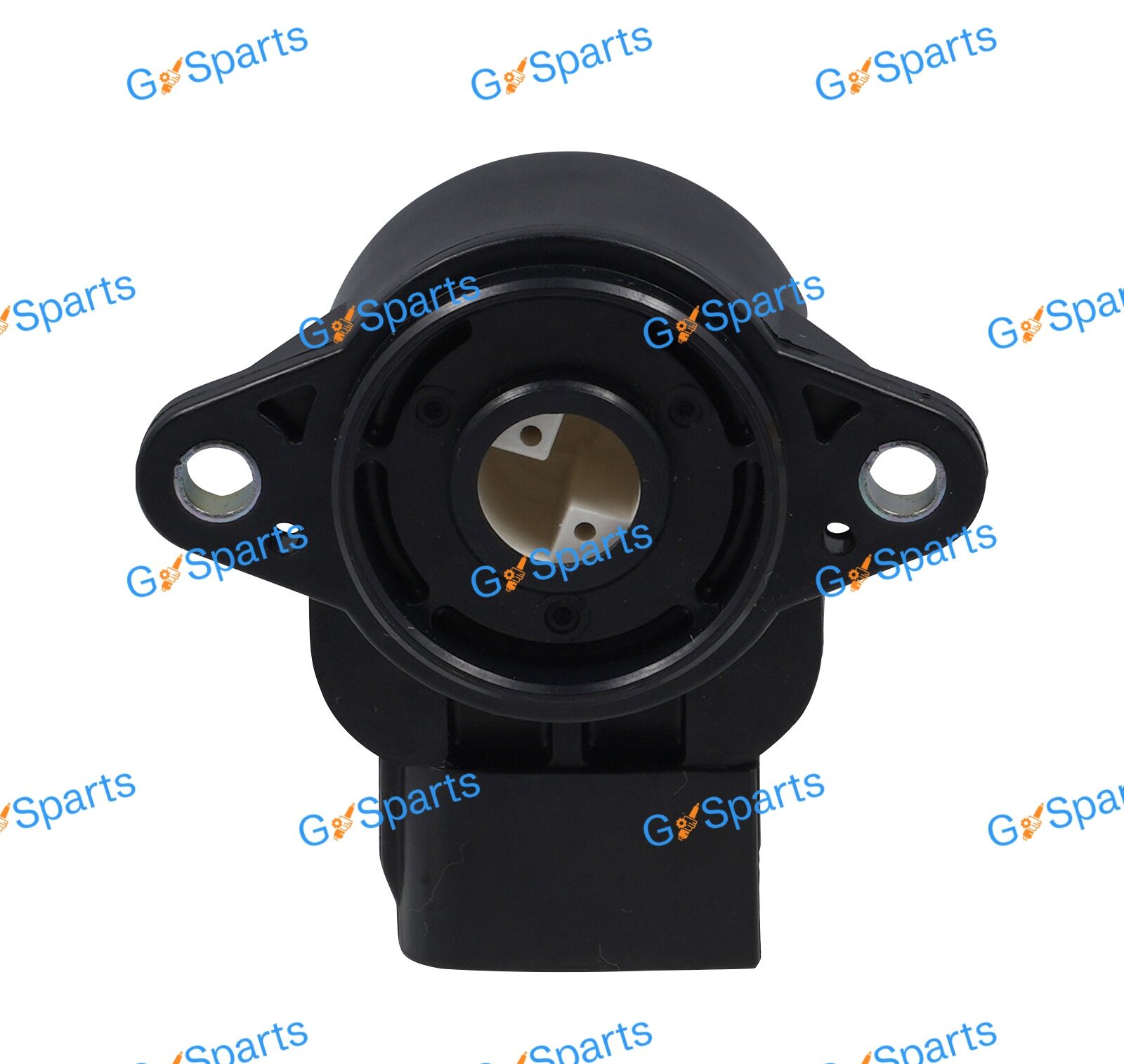
Toyota TPS Sensor 89452-35020 for Camry/Avalon/Sienna (1996–2006) – Elite Precision, Smoother Throttle, Trusted OEM Performance
Throttle Position Sensor for Toyota Camry, Avalon & Sienna (1996–2006). Electric 3‑wire configuration. Check VIN to confirm fit.
Did you like this product? Add to favorites now and follow the product.

(+86) 180 07 12 47 38 WhatsApp, Telegram, WeChat
Description
OEM-quality Toyota TPS for a wide range of late‑90s/early‑2000s models.
- OEM Part No.: 89452-35020
- Compatibility: Camry / Avalon / Sienna (1996–2006; engine/trim dependent)
- Specs: Electric, 3‑wire
- Aftermarket brands: Denso, Bosch, Standard Motor Products
- Note: Compare connector and throttle body before ordering.
Introduction to Function and Value
The throttle position sensor translates throttle plate angle into a signal the ECU trusts for fueling and spark, and that role makes reliability non-negotiable. A strong signal prevents surging, hesitation, and unpredictable shifts, preserving the factory driving character that owners expect from Toyota platforms. Selecting the right part number reduces diagnostic loops and ensures the closed-throttle baseline aligns with mechanical stops. When drivability deteriorates—wandering idle, delayed tip-in, erratic downshifts—the most efficient fix is installing a high-integrity sensor with proven stability. In practice, Toyota TPS Sensor 89452-35020 provides the clean, linear feedback modern controllers need, restoring responsive acceleration, controlled engine braking, and confidence in everyday traffic and demanding routes.
How the Signal Shapes ECU Decisions
The ECU constantly fuses throttle angle with MAF or MAP, RPM, intake air temperature, and coolant temperature to estimate engine load. That estimate governs injector pulse width, ignition timing, and deceleration fuel cut thresholds. If signal sweep is noisy or non-linear, fuel trims inflate and drivability degrades during transitions. Calibrations are built around predictable inputs, so data integrity at the pedal is a first-order requirement. Choosing Toyota TPS Sensor 89452-35020 protects that integrity; its stable sweep helps the controller resolve transient enrichment without overshoot. In comparative diagnostics, a vehicle fitted with Toyota TPS Sensor 89452-35020 typically shows smoother angle-versus-time plots, faster trim convergence, and fewer torque-request discrepancies.
Key Fitment Considerations and Connector Indexing
Correct indexing of the sensor relative to the throttle shaft is crucial because a few degrees of preload can mimic a stuck idle air path. Mounting boss geometry, connector angle, and tab depth must match the throttle body to prevent harness stress and water ingress. The goal is repeatable seating pressure and proper o-ring compression, ensuring stable contact resistance over thermal cycles. With Toyota TPS Sensor 89452-35020, the alignment targets the intended mechanical zero without forcing relearn routines to compensate for misalignment. That precision shortens post-install validation and lets technicians focus on confirming idle quality, pedal mapping, and correlation with accelerator position where applicable.
Symptoms That Point to Sensor Degradation
Common complaints include tip-in stumble, hunting idle with accessories engaged, and sporadic RPM flares during parking maneuvers. On automatic transmissions, shift timing may feel indecisive because torque estimates vary with a noisy pedal signal. Fuel economy often drops as the ECU defaults to conservative maps. Live data reveals jagged angle traces at steady pedal or flat spots during gradual sweeps. Replacing the worn unit with Toyota TPS Sensor 89452-35020 restores linearity so adaptive strategies stabilize. After the swap, owners typically notice quieter idle behavior, more predictable throttle during merges, and regained confidence while maneuvering in tight spaces or on grades.
Related Trouble Codes and What Freeze-Frame Reveals
Trouble codes associated with throttle position issues include low or high input ranges, performance faults, and correlation errors with accelerator position. Freeze-frame snapshots are invaluable: they capture throttle angle, engine speed, and load at the instant of fault, often revealing angle spikes under steady pedal. When testing, a healthy trace increases smoothly without dropouts. Installing Toyota TPS Sensor 89452-35020 gives the ECU a trustworthy reference, reducing false flags and narrowing diagnosis to genuine mechanical or wiring faults if symptoms persist. Post-install, clear codes, execute idle relearn, and re-evaluate live data under light cruise, moderate climbs, and decel fuel-cut conditions to confirm Toyota TPS Sensor 89452-35020 is performing as intended.
Construction, Sealing, and Long-Term Stability
Engine bays punish electronics with heat, vibration, and contaminants. Robust housings, stable sensing elements, and quality potting prevent drift and intermittent behavior, while connector seals block condensation that corrodes terminals. Material stability across temperature swings preserves the calibrated relationship between angle and output. A well-designed sensor maintains linearity even after thousands of throttle cycles. Field experience shows Toyota TPS Sensor 89452-35020 withstands harsh conditions with minimal signal noise, helping vehicles keep readiness monitors complete and emissions controls consistent across seasons. For owners who rely on predictable commuting or fleet uptime, that endurance reduces downtime and unplanned service intervals.
Preparation Before Removing the Old Unit
Disconnect the battery to protect modules, then remove intake plumbing for access and photograph orientation to replicate alignment. Inspect the throttle plate for varnish, since sticky transitions can mask sensor improvements. Confirm your VIN, throttle body variant, and connector keying to avoid pinout errors. Have a torque-limited driver ready to prevent ear distortion on the sensor housing. When you fit Toyota TPS Sensor 89452-35020, seat it gently on the shaft, align to the original index marks, and verify the harness lock clicks positively. Careful preparation prevents repeat visits and makes subsequent calibration steps straightforward.
Relearn Procedures and Baseline Validation
Many controllers store closed-throttle voltage and airflow targets that must be relearned after replacement. Some platforms complete relearn through key-on, engine-off intervals; others require scan-tool commands. Warm the engine, confirm throttle angle at rest, and observe a smooth, monotonic increase with pedal input. With Toyota TPS Sensor 89452-35020 installed, trims should settle to normal ranges after a brief drive cycle including gentle acceleration, steady cruise, and fuel-cut decelerations. If values remain unstable, inspect grounds, vacuum integrity, and throttle cleanliness. Successful relearn yields a calmer idle, cleaner take-off, and confident re-engagement from coasting.
Drivability Improvements Owners Can Feel
Drivers often describe the improvement as making the car feel “connected.” Off-idle transitions become crisp without jerks, and part-throttle cruising no longer oscillates under minor grade changes. Transmission behavior benefits because line pressure and shift scheduling depend on coherent torque requests. Replacing a drifting unit with Toyota TPS Sensor 89452-35020 typically reduces hunting on rolling hills and smooths downshifts during passing. On vehicles with cruise control, speed regulation stabilizes, reflecting cleaner feedback loops. If towing or carrying loads, predictable pedal response improves modulation during low-speed maneuvers, parking, and trailer backing where precision matters. These tangible changes validate the small, precise upgrade.
Pitfalls to Avoid During Installation
Preloading the sensor by misaligning it on the throttle shaft forces the ECU to interpret an inflated idle angle, inviting high-idle complaints. Reusing a brittle harness clip risks intermittent contact that mimics random faults. Skipping the relearn step can leave the controller using legacy assumptions against new voltages. The antidote is disciplined procedure: correct orientation, verified connector lock, and a complete relearn. Selecting Toyota TPS Sensor 89452-35020 removes ambiguity around indexing and pin mapping, reducing variables. After fastening, confirm closed-throttle angle with live data and verify a smooth, glitch-free sweep to wide open under slow and steady pedal movements.
Maintenance Strategy for High-Mileage Platforms
Although the TPS is not a typical interval item, bundling replacement with throttle body cleaning, PCV checks, and gasket refreshes maximizes value. Vehicles that experience heavy urban duty cycles or wide temperature swings tend to stress sensors earlier. Preventative replacement with Toyota TPS Sensor 89452-35020 during scheduled intake service helps maintain consistent trims, smoother starts, and stable accessory-on idle. The upshot is fewer diagnostic sessions later, smaller chances of inspection delays, and better long-term fuel economy. For owners planning road trips or seasonal changes, addressing this component preemptively eliminates a common source of avoidable drivability issues.
Emissions Readiness and Inspection Confidence
Erratic throttle signals can slow readiness monitor completion or cause transient over-fuelling during test cycles. With a clean reference input, the ECU sustains stoichiometry more consistently through accelerations and decelerations. After fitting Toyota TPS Sensor 89452-35020, reset monitors and complete a structured drive cycle to verify compliance. Many shops report quicker readiness completion and fewer retests once throttle data stabilizes. The benefit extends to catalytic converter longevity, as fewer misfuelling events reduce thermal stress. Ultimately, a reliable TPS helps both private owners and fleets maintain regulatory compliance with less administrative friction and fewer return trips to testing centers.
Interaction with Idle Control and Electronic Throttle
Cable-driven throttles rely on an idle air control valve to manage airflow at rest, while electronic throttles integrate motor control with angle sensing. In both cases, the controller’s state estimation hinges on accurate angle data. When noise creeps in, control loops widen tolerances, producing uneven idle and vague pedal feel. Upgrading to Toyota TPS Sensor 89452-35020 tightens those loops, enabling steadier idle control and quicker convergence after accessory loads such as A/C engagement. In cold starts and altitude shifts, consistent angle feedback helps prevent overshoot in air-fuel corrections, yielding a calmer warm-up and more predictable response as conditions evolve.
Choosing OEM-Spec over Generic Alternatives
Externally similar parts often differ internally in element stability, bearing quality, and potting compounds. Cheaper sensors may function initially but show early drift, flat spots, or moisture susceptibility that complicates diagnosis later. Factoring the labor cost of repeat visits and customer dissatisfaction, the total cost favors dependable components. Field technicians repeatedly report that Toyota TPS Sensor 89452-35020 delivers lasting linearity and minimal noise, protecting shop margins and owner time. By anchoring drivability to a known-good reference, you avoid downstream costs in catalysts, spark plugs, or transmission wear caused by unstable torque signaling.
Step-By-Step Replacement Overview
Begin with battery disconnect and intake duct removal for space. Document the original alignment and mark reference points. Release the harness lock, remove fasteners evenly, and support the sensor to avoid twisting loads. Compare the new unit to the old for tab and connector congruence, then seat it gently onto the throttle shaft. Align to your marks and torque to spec, avoiding ear deformation. Reconnect the harness until the lock clicks and reassemble intake plumbing. With Toyota TPS Sensor 89452-35020 in place, run the relearn sequence and validate closed-throttle angle. A short road test confirms smooth tip-in, steady cruise, and consistent decel behavior.
Validating with Data Instead of Guesswork
Objective verification closes the loop on quality. Monitor live throttle angle and plot against time while sweeping the pedal slowly; the trace should be smooth and monotonic with no discontinuities. Observe fuel trims during steady cruise and after short idle periods; stabilized trims suggest coherent airflow and angle relationships. When installed, Toyota TPS Sensor 89452-35020 generally presents a clean trace that aligns with accelerator position where applicable. If anomalies remain, check shared grounds, inspect for vacuum leaks, and confirm throttle plate cleanliness before suspecting new components. A data-driven sign-off prevents lingering doubts and ensures customer confidence.
Effects on Shift Quality and Line Pressure Control
Automatic transmissions coordinate shifts based on torque estimates heavily influenced by throttle angle. Unstable angle inputs cause irregular line pressure commands, leading to harsh engagements or lazy shift timing. Swapping a drifting unit for Toyota TPS Sensor 89452-35020 stabilizes torque modeling, yielding crisp, predictable gear changes. Adaptive shift learning also benefits, converging faster after battery disconnects or service. Drivers often notice fewer hunting events on rolling terrain and more decisive downshifts during passing. These improvements reflect the upstream clarity provided by accurate throttle information—small signal upgrades that deliver outsized real-world comfort.
Guidance for Fleets and High-Duty Users
Fleet vehicles encounter extreme duty cycles, frequent thermal swings, and varied operators. Tiny control errors translate into measurable cost across fuel, maintenance, and downtime. Standardizing on Toyota TPS Sensor 89452-35020 creates uniform drivability and simplifies parts inventory. Because drivers feel fewer inconsistencies at the pedal, subjective complaints decline, freeing service teams to focus on genuine faults. Predictable throttle data also streamlines emissions compliance across a fleet. The result is tighter operational control, fewer roadside surprises, and a clearer maintenance cadence driven by data rather than intermittent symptoms.
Operating Conditions and Environmental Robustness
Regions with sub-zero mornings, desert afternoons, or coastal humidity expose sensors to stress that can loosen internal tolerances and invite corrosion. A well-sealed, dimensionally stable design retains calibration despite these cycles. Vehicles operating across mountain passes or dusty job sites particularly benefit from durable sensing. In such contexts, Toyota TPS Sensor 89452-35020 preserves angle fidelity, preventing the drift that makes cruise control twitchy or idle unstable under accessory loads. The payoff is season-agnostic predictability—consistent pedal feel whether you’re navigating winter commutes, summer highway trips, or humid stop-and-go traffic with frequent A/C cycling.
Avoiding Misdiagnosis and Parts Shotgunning
A stumbling launch or wandering idle can implicate ignition, fueling, air leaks, or transmission—symptoms overlap. Proper workflow sequences checks: fuel pressure verification, ignition scope patterns, smoke testing for leaks, and finally sensor sweeps. When angle traces are noisy or discontinuous, replacing the sensor targets root cause. Using Toyota TPS Sensor 89452-35020 ensures the new baseline is trustworthy, so remaining issues point to mechanical causes rather than input noise. Educating customers on this logic curbs pressure to replace unrelated components and reinforces confidence in the diagnostic craft that underpins durable repairs.
Mild Tuning, Aftermarket ECUs, and Consistency
Even modest modifications like intake upgrades or freer exhausts rely on solid throttle data. Tuners tighten transient fueling and torque blending for responsiveness, which magnifies the penalty of signal noise. Building around Toyota TPS Sensor 89452-35020 provides the repeatable sweep needed to keep tip-in enrichment crisp without bucking and decel fuel cut clean without popping. The sensor’s stability accelerates calibration convergence, reduces time on the dyno for drivability polishing, and preserves daily usability. For owners chasing a balanced setup, it offers an anchor point that makes every other change more predictable and verifiable.
Supplier Process, Traceability, and Quality Assurance
Beyond published specs, consistent manufacturing controls determine field outcomes. Batch testing, connector fit audits, and material traceability reduce unit-to-unit variance and keep failure rates low. Workshops value components that arrive within tight tolerances because they compress validation time. In real operations, Toyota TPS Sensor 89452-35020 aligns with those expectations, exhibiting reliable sealing and sweep linearity that survive heat-soak and vibration. That reliability lowers warranty exposure for shops and raises owner satisfaction, turning what could be a recurring complaint into a quick, durable fix with clear documentation and defensible quality standards.
Cost, Warranty Confidence, and Total Ownership Value
An inexpensive sensor that fails early or triggers repeat calibrations becomes costly once labor, scheduling, and customer inconvenience are counted. A robust unit pays for itself by preventing comebacks and protecting catalysts, plugs, and transmission behavior from the downstream effects of noisy torque signaling. Selecting Toyota TPS Sensor 89452-35020 balances purchase price with lifecycle value, especially when supported by clear warranty processes. For do-it-yourself owners, fewer variables make the repair satisfying and swift. For professional shops, predictable outcomes protect margins and reputation while keeping bays moving on schedule.
Practical Pre-Purchase Checklist for a Smooth Install
Verify VIN compatibility and throttle body variant, confirm connector keying, and inspect harness condition for heat or oil damage. Plan to clean the throttle body, replace any compromised gaskets, and schedule time for relearn and a road validation loop. Have a scan tool ready to observe live angle and trims. With Toyota TPS Sensor 89452-35020 selected, installation generally proceeds without surprises, and post-fit data checks are quick. Keeping Toyota TPS Sensor 89452-35020 in inventory also shortens turnaround for future jobs, since technicians already trust its indexing, sealing, and sweep behavior across multiple platforms.
Service Documentation, Data Logs, and Customer Handover
Good records close the service story. Capture before-and-after plots of throttle angle, note trim stabilization, and log any firmware or relearn actions taken. Provide customers with a concise explanation of how stable angle data influences fueling, shifting, and idle quality. When the fix includes Toyota TPS Sensor 89452-35020, state that the part restores the reference signal used by the ECU and that the vehicle now shows smooth sweeps and normal trims in testing. This transparency adds perceived value, reduces post-service questions, and strengthens trust for future maintenance decisions.
Standards, Diagnostics Protocols, and Best Practices
Modern vehicles communicate over standardized protocols and rely on consistent PID interpretations, making sensor integrity central to reliable diagnostics. A clean throttle reference helps monitors complete under OBD routines and keeps correlation checks aligned. Incorporating Toyota TPS Sensor 89452-35020 into repair strategy supports best practices by minimizing edge-case behaviors that complicate protocol-based tests. For workshops, aligning parts choices with known-good behaviors accelerates troubleshooting, reduces guesswork, and allows technicians to focus on genuine mechanical concerns. That alignment translates directly into shorter bay times and higher first-pass fix rates.
Final Recommendations and Actionable Next Steps
Throttle data quality is the invisible thread connecting idle stability, acceleration feel, shift precision, and emissions compliance. If symptoms suggest throttle signal instability, anchor the repair in a component that restores baseline integrity. Follow a disciplined process—correct indexing, reliable harness engagement, thorough relearn, and data-verified validation. In repeated field use, Toyota TPS Sensor 89452-35020 has proven to deliver consistent, linear output that controllers interpret confidently. For owners and shops pursuing dependable results, adopting Toyota TPS Sensor 89452-35020 and the practices outlined here will bring back the smooth, responsive driving experience that defines well-maintained Toyota vehicles.
External Resources (Standards & Technical References)
- ISO 26262 — Road Vehicles Functional Safety
- ISO 11898 — Controller Area Network (CAN)
- ISO 14229 — Unified Diagnostic Services (UDS)
- SAE J1979 — OBD-II Diagnostic Test Modes
- AEC-Q100 — Stress Test for Automotive ICs
Related Internal Links
Additional information
| Brand | Denso | Bosch | Standard Motor Products |
|---|---|
| OEM Part Number | 89452-35020 |
| Models & Years | Camry (1996–2006), Avalon (1996–2006), Sienna (1996–2006) |
| Specifications | Electric, 3-wire |
Related products



G-SPARTS – Leading Auto Parts Supplier Since 2009
Trusted by 1000+ Clients Worldwide | Chinese (BYD, Geely, Chery, …), Japanese (Toyota, Honda, Nissan, …), European (BMW, Mercedes, VW, …) & American (Ford, Chevrolet, Tesla, …) Car Spares | Best Prices & OEM Quality | 15+ Years Expertise | Professional Team, Fast Global Shipping
Copyright 2025 © G-Sparts All Rights Reserved. | Premium Chinese Auto Parts Supplier – Worldwide Shipping | Best Prices on OEM & Aftermarket Spares

Reviews
There are no reviews yet.