
What Are Crash Repair Parts? A Complete Guide
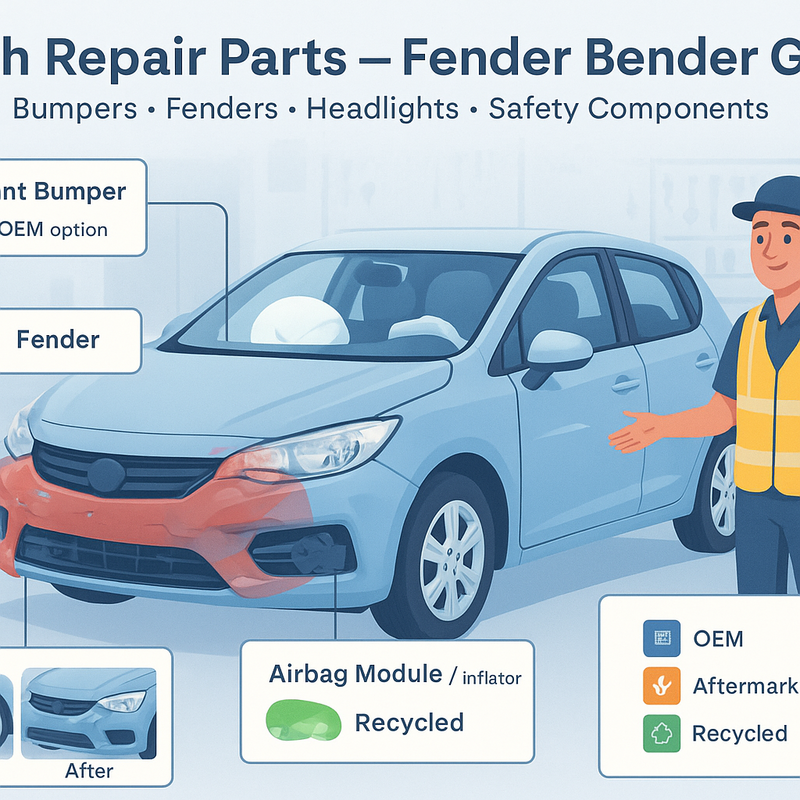
What Are Crash Repair Parts? A Complete Guide
Strap in—because understanding crash repair parts is just as important as buckling up for safety. Picture this: your car just had a fender bender, and amid the chaos of dialing your mechanic and freezing in panic, you hear the term “crash repair parts.” What exactly are these? Are they the superhero components that help your car bounce back stronger? (Spoiler alert: yes, kind of.)
Today, we’re diving deep into the essential world of crash repair parts—a mix of mystery and necessity that helps save your vehicle—and your wallet—from disaster. Whether you’re the type who loves decoding auto jargon or just wants to get to the bottom of what your mechanic means, this guide is your new go-to. Ready to roll?
What Are Crash Repair Parts, Anyway?
Your car’s had its run-in with an unfortunate object—like a mailbox or another car—and now it’s time for crash repair parts. Simply put, these are the specialized components automotive experts use to fix your damaged vehicle, turning it from “accident victim” back into “road-ready warrior.”
Crash repair parts are not just any old car parts. They play a vital role in restoring your car’s appearance and, more importantly, in maintaining its safety for future drives.
Crash repair parts mainly come in three types:
1. OEM Parts — The Originals
OEM stands for Original Equipment Manufacturer. These are the exact parts made by your car’s original factory. They fit perfectly, look authentic, and maintain your vehicle’s original safety standards. When it comes to quality and reliability, OEM crash repair parts are the gold standard—because no one wants a part failing mid-drive.
2. Aftermarket Parts — The Budget-Friendly Alternatives
Aftermarket parts are, essentially, third-party components made to replace originals. They range from great to “meh” in quality, sometimes fitting just right, other times not so much. Often cheaper and more widely available, aftermarket parts can be a practical choice, but quality varies widely, so choose wisely.
3. Reconditioned and Recycled Parts — The Eco-Warriors
These parts have histories of their own. Reconditioned parts are used items restored to near-new condition. Recycled (or salvage) parts come straight from damaged vehicles and are sold “as-is.” Think of them as the sustainable option—cost-effective and earth-friendly, but sometimes with quirks or wear.
Common Crash Repair Parts You’ll Encounter
- Bumpers and Bumper Covers: Your car’s frontline defenders and often the visible signs of damage.
- Fenders: The sleek panels above your wheels—protecting from debris and adding style.
- Grilles and Headlights: The “face” of your car—cracked or broken? Not a good look.
- Hoods and Doors: Larger body parts that often take the brunt of collisions.
- Radiators and Cooling System Components: Keeping your engine cool under pressure.
- Glass and Windows: Essential for safety and security, not just aesthetics.
- Airbags and Seatbelts: Non-negotiable safety features that must be up to spec.
- Structural Components: The hidden but critical frame parts that hold everything together.
Why Does the Type of Crash Repair Parts Matter?
You might wonder, “Can’t I just take whatever parts they have in stock?” Not so fast. Choosing the right parts influences not just cost, but your car’s safety, durability, and performance.
- Safety Is Priority One: OEM parts are tested rigorously as part of your vehicle’s original design. Aftermarket or recycled parts might not meet the same high standards.
- Proper Fit and Finish: Poorly fitting parts can cause rattles, leaks, and quickly depreciate your car’s value.
- Durability Over Time: Cheaper parts may mean more frequent repairs down the road.
- Insurance Rules and Costs: Many insurers have policies about acceptable parts, often favoring OEM despite the higher price.
Crash Repair Terms You Should Know
| Term | Plain English Explanation |
|---|---|
| OEM | Original parts from your vehicle’s manufacturer. |
| Aftermarket | Third-party parts with varying quality. |
| Reconditioned | Used parts refurbished to near-new condition. |
| Salvage/Recycled | Used parts taken from wrecked cars, sold as-is. |
| Crash Replacement Parts | Specifically made to replace damaged components after accidents. |
Pros and Cons of Crash Repair Parts
| Part Type | Advantages | Disadvantages |
|---|---|---|
| OEM Parts | Perfect fit, high safety, long lifespan | Higher cost, sometimes longer wait times |
| Aftermarket | Lower price, easy availability, diverse options | Quality varies, potential impact on resale value |
| Reconditioned | Environmentally friendly, affordable | Limited availability, may show signs of prior use |
| Salvage | Cost-effective, sustainable | Possible fit issues, wear and tear from previous damage |
How Repair Shops Handle Crash Repair Parts
Think of car repair like surgery for your vehicle:
- Damage Assessment: Experts analyze every dent and crack.
- Parts Sourcing: The shop orders parts considering your budget and insurance.
- Paperwork and Ordering: Logistics get underway.
- Installation: Old damaged parts come off; new ones go on.
- Finishing Touches: Painting and polishing bring your car back to life.
- Quality Check: Final inspections ensure everything is safe and smooth.
Know Your Consumer Rights During Repairs
Here’s your power move:
- Right to Information: Always ask which parts are being used on your vehicle.
- Right to OEM Parts: You can insist on original parts if you prefer—just be ready for a higher bill.
- Right to Proper Repairs: Your car must be as safe after the fix as it was before.
- Part Disclosure: Shops and insurers should be transparent about the parts installed.
Understanding these rights keeps you in control and ensures no Frankenstein fixes.
Going Green: Sustainability in Crash Repairs
The eco-friendly approach is gaining momentum. Using reconditioned and recycled parts reduces waste and lowers your vehicle’s carbon footprint. Many repair shops and regulations encourage these green options, benefiting both your budget and the planet.
Expert Tips for Choosing Crash Repair Parts
- Review your insurance policy to know what parts are covered.
- Ask your repair shop about the part types upfront—clarity is key.
- For crucial safety components like airbags and seatbelts, stick to OEM parts.
- Older vehicles might do well with a mix of aftermarket or recycled parts.
- Always request warranties or guarantees in writing to protect your investment.
Why OEM Parts Are Worth the Hype
As highlighted by Crash Repair Info, OEM parts aren’t just pricey labels. Using the correct OEM crash repair parts can literally be lifesaving. Vehicles repaired with inferior parts risk poor fits and safety failures later on. Sometimes, spending a little more upfront means better protection in the long run.
Final Thoughts: Crash Repair Parts Matter More Than You Think
Crash repair parts aren’t just technical jargon—they’re vital players in how well your car recovers from an accident. Knowing the difference between OEM, aftermarket, and recycled options helps you make smart, safe, and budget-friendly decisions.
So next time someone throws around “crash repair parts,” remember: it’s about picking the perfect components for your car’s comeback. And yes, this knowledge just might save you a headache down the road.
Keep those questions coming, stay informed, and drive safely! 🚗🛠️✨
Helpful Resources for Your Crash Repair Journey
- Crash Repair Info – What Are Crash Parts?
- Consumer Rights in Auto Repairs – Texas AG
- Sustainability in Auto Repair – Auto Recycling World
- OEM vs Aftermarket Parts Explained
Armed with this knowledge, you’re ready to impress your mechanic, navigate insurance talks confidently, and make smart choices for your vehicle’s repair. After all, savvy is the ultimate horsepower!
Posts Widget
-
1

-
2

-
3

-
4

G-SPARTS – Leading Auto Parts Supplier Since 2009
Trusted by 1000+ Clients Worldwide | Chinese (BYD, Geely, Chery, …), Japanese (Toyota, Honda, Nissan, …), European (BMW, Mercedes, VW, …) & American (Ford, Chevrolet, Tesla, …) Car Spares | Best Prices & OEM Quality | 15+ Years Expertise | Professional Team, Fast Global Shipping
Copyright 2025 © G-Sparts All Rights Reserved. | Premium Chinese Auto Parts Supplier – Worldwide Shipping | Best Prices on OEM & Aftermarket Spares
