
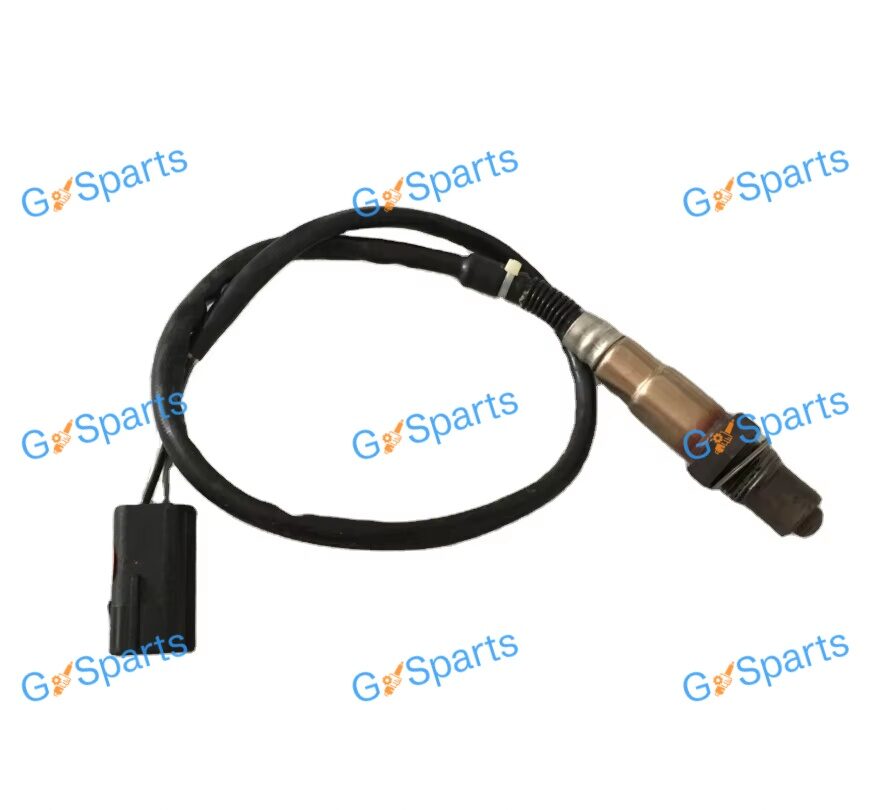
Genuine Changan Oxygen O2 Sensor CV6010-0500 – Changan Eado, CX20, Alsvin (Upstream (pre‑cat))
O₂ sensor for Changan Eado, CX20, Alsvin – Upstream (pre‑cat). OE 4‑wire heated; OEM connector; OE probe length (refs: CV6010-0500).
Did you like this product? Add to favorites now and follow the product.

(+86) 180 07 12 47 38 WhatsApp, Telegram, WeChat
Description
OE‑style oxygen (lambda) sensor listing for Changan Eado, CX20, Alsvin (catalog coverage varies). Typical spec: OE 4‑wire heated; OEM connector; OE probe length. Position: Upstream (pre‑cat). Fitment advice: Shown for EADO family—use VIN to confirm exact engine fit. Source: jacaqbp.en.made-in-china.com.
Confident Driveability Begins with Accurate Exhaust Feedback
A composed vehicle feels effortless: the idle is steady, throttle response is predictable, and the cabin stays calm even when accessories cycle on. Replacing an aging reader with a direct-fit component restores harmony across the powertrain. For owners and workshops seeking an immediate improvement with factory-matched behavior, the smart choice is Changan Oxygen O2 Sensor CV6010-0500, a part that helps the controller reach closed loop quickly and hold it consistently during real-world driving. With careful installation, the result is a vehicle that feels modern, efficient, and quietly confident again.
What an Oxygen Sensor Actually Does in the Control Strategy
The controller compares the sensor’s switching pattern to decide whether the mixture trends rich or lean, then trims injector pulse and modulates timing to keep combustion centered. When feedback is crisp, transitions in traffic feel smooth, highway cruising requires less throttle, and the catalyst operates in its comfort zone. A lazy element forces the controller to hunt, which you feel as tiny surges and stumbles that add stress to every commute. Returning to a clean, predictable signal lets adaptive logic do its best work. That is why technicians reach for Changan Oxygen O2 Sensor CV6010-0500 when they want a direct path back to the refined drivability the platform delivered when new, without workarounds or guesswork.
Recognizing Symptoms That Point to a Tired Sensor
Most owners don’t describe catastrophic failure; instead, they mention a slight fuel smell after short trips, a reluctance to settle at stoplights, or a dashboard light that reappears after clearing codes. Another common clue is inconsistent midrange pull that seems worse on damp mornings. These are classic signs of imprecise feedback rather than a deeper mechanical issue. If those basics are sound, a fresh, application-correct unit is the decisive fix. For this role, Changan Oxygen O2 Sensor CV6010-0500 provides a stable reference the controller can trust, bringing back the calm, measured response that makes a vehicle easier to guide through city streets and open roads alike.
Why Direct-Fit Precision Beats Generic Substitutions
Oxygen sensors are not interchangeable widgets; heater loads, connector indexing, and response curves vary by application. A look-alike with the wrong electrical behavior can trigger nuisance codes, delay closed loop, or subtly distort trims, leading to misdiagnosis later. A direct-fit part eliminates those variables so the controller sees exactly what it expects. That is the practical value of Changan Oxygen O2 Sensor CV6010-0500, which mirrors factory geometry and calibration for immediate recognition. Shops appreciate that Changan Oxygen O2 Sensor CV6010-0500 also simplifies stocking and documentation, while drivers appreciate that the improvement is felt right away: smoother tip-in, steadier idle, and fewer surprises when accessories add load.
Fitment Fundamentals That Save Time and Prevent Comebacks
Successful installs begin with comparison: check connector faces, latch orientation, harness length, and any heat shielding path. The correct unit should thread smoothly, seat squarely, and allow the lead to rest without tension near hot surfaces. Reusing intact clips or adding heat-rated ties to maintain routing protects the harness and keeps noise out of the signal. A quick dry-fit before torqueing confirms alignment and reduces the chance of cross-threading in a carbon-laden bung. When the part matches the original in form and function, verification becomes straightforward. Choosing Changan Oxygen O2 Sensor CV6010-0500 ensures these steps feel natural, turning installation into a clean, predictable process rather than a long exercise in improvisation.
Clarifying Upstream and Downstream Roles for Better Diagnosis
Upstream sensors actively guide fuel trims, while downstream sensors mainly monitor catalyst performance. Mixing up locations wastes time and undermines confidence. Poor economy, unstable idle, and sluggish response usually implicate the upstream position; efficiency codes without obvious drivability complaints often implicate the downstream position. Match bank and position before opening tools, and confirm with visual cues along the harness. With the correct site chosen, the controller can interpret data properly and settle quickly after start. Using Changan Oxygen O2 Sensor CV6010-0500 in the intended location avoids confusing adaptation behavior and keeps your repair focused on results rather than chasing symptoms that don’t align with the sensor’s actual role.
Materials, Heaters, and Shields That Protect Signal Integrity
Under-hood life is harsh: heat, vibration, and moisture conspire to degrade materials and disturb calibration. A robust body, gas-permeable shield, and a heater tuned for rapid but controlled warm-up preserve the switching rhythm that closed-loop logic expects. Sealed terminals defend against capillary moisture and road salt, while strain-relieved leads maintain terminal tension through seasonal expansion and contraction. When construction choices prioritize durability, the engine behaves like a coordinated system rather than a set of parts arguing with each other. That is the practical promise behind Changan Oxygen O2 Sensor CV6010-0500, which is built so the signal you depend on remains clean from the first cold start of the week to the longest hot-weather climb.
Preparation Steps That Make the Job Predictable and Clean
Before turn-in, let the exhaust cool completely, pre-treat the bung with a penetrating oil, and clean around the area to keep grit out of threads and connectors. Stage the proper socket, a torque wrench, and heat-rated clips or ties for routing. Protect the connector from contamination and compare the new plug to the old one before removing caps. A few minutes spent here often saves an hour later. With preparation complete, installing Changan Oxygen O2 Sensor CV6010-0500 feels like a calm sequence: thread by hand, seat squarely, torque appropriately, and route the harness so it cannot sag toward heat after a long drive. Good prep is the difference between a quick win and a lingering puzzle.
Installation Technique That Preserves Threads and Harness Health
Start threading by hand to confirm engagement, then bring the sensor to specification—secure, not excessive. Align the harness to relieve strain at the connector, and use existing mounts or heat-rated ties to maintain distance from hot pipes and moving parts. Click the connector fully and tug gently to confirm terminal engagement without stressing pins. A tidy install is more than pride; it’s protection against vibration-induced noise and intermittent faults. Done well, the first start tells the story: the idle settles, the controller transitions to closed loop promptly, and the exhaust note calms. That is exactly what owners and technicians expect when fitting Changan Oxygen O2 Sensor CV6010-0500 with care.
Verifying Results with Simple Observations and Optional Data
After installation, clear stored faults and allow the engine to warm without heavy electrical loads. Listen for a steady note and watch for a settled idle. If live data is available, upstream switching should be brisk and regular, while the downstream trace appears steadier as the catalyst works. A short loop that includes light cruise and a few gentle accelerations helps trims find their bearings. When the feedback baseline is solid, the vehicle feels cooperative rather than nervous. That cooperative, intuitive feel is exactly what returns when the job is anchored by Changan Oxygen O2 Sensor CV6010-0500 and supported by clean wiring and good routing.
The Compound Benefits: Economy, Emissions, and Refinement
Precise feedback reduces needless enrichment, preserves catalyst temperature control, and allows spark strategies to stay confident without pushing into knock. Over time, the effect is measurable: fewer grams of fuel burned, more reliable inspection readiness, and a calmer driving character that reduces fatigue in traffic. Many owners also notice steadier air-conditioning load transitions and cleaner tip-in on mild grades. These gains aren’t magic; they’re the predictable outcome of restoring honest data to the control loop. Installing Changan Oxygen O2 Sensor CV6010-0500 starts that virtuous cycle quickly, because the heater reaches target temperature decisively and the switching pattern remains stable across everyday conditions.
Practical Diagnostics That Prevent Parts Roulette
A disciplined approach prevents frustration. Inspect for exhaust leaks ahead of the sensor, confirm harness integrity near heat shields and brackets, and verify that no misfires or vacuum leaks are present to skew readings. When the environment is sound, a new unit becomes a confident fix rather than an expensive guess. Shops often document trims and readiness before and after replacement to create a clear baseline that customers can understand. Following this path keeps budgets intact and calendars sane. For the final step, Changan Oxygen O2 Sensor CV6010-0500 provides the stable curve that turns diagnostic notes into a satisfying test drive, rather than yet another round of uncertainty.
Electrical Hygiene: Grounds, Shielding, and Connector Care
Even the best element cannot overcome poor electrical health. Clean grounds stabilize references, intact shielding resists interference, and firm terminal tension keeps noise out of the signal. During routine service, include a quick visual of routing and seals so nothing rubs, wicks moisture, or loosens. These small habits preserve accuracy across seasons. When you combine tidy wiring with an application-correct replacement, the vehicle’s behavior becomes pleasantly predictable. That predictability is a hallmark of a system anchored by Changan Oxygen O2 Sensor CV6010-0500, where the data path is as trustworthy as the sensing element itself.
Maintenance Habits That Protect the Entire Emissions System
Taking care of the basics pays dividends. Address misfires promptly so raw fuel doesn’t overheat the converter, keep intake plumbing tight to prevent false lean conditions, and avoid silicone-heavy sealants that can poison elements. When cleaning nearby components, shield connectors from solvent spray and reseat clips that secure harness paths. These small steps preserve quick, accurate feedback and reduce the chance of seasonal quirks. With a friendly environment, the closed-loop system stays invisible, which is exactly how it should feel after replacing the sensor with the application-matched Changan Oxygen O2 Sensor CV6010-0500 and verifying a clean transition to normal operation.
Avoiding Counterfeits: Buy Once, Fix Once with Confidence
Look-alike parts can hide shortcuts in heater durability, sealing, and calibration stability. The cost shows up later as intermittent codes, early drift, and repeat labor. Reputable sources document compatibility with clear connector photos, maintain traceable packaging, and protect terminals in transit. When parts behave consistently out of the box, diagnostics remain straightforward if another issue appears later. Standardizing on trusted channels for Changan Oxygen O2 Sensor CV6010-0500 reduces risk and preserves reputation, because the outcome you promised at the counter is the outcome delivered on the road, without post-install surprises that erode confidence.
Packaging and Logistics That Protect Precision Before Installation
Sensitive electronics deserve thoughtful transit. Immobilizing trays prevent pin deformation, moisture barriers protect the element, and clear labels speed receiving and shelf selection. On your bench, keep protective caps in place until threading begins, and compare the new connector to the old one as a final check. These small habits defend signal integrity and save time. With preparation done, Changan Oxygen O2 Sensor CV6010-0500 moves from box to bung without drama, letting you focus on torque, routing, and verification rather than rescuing a damaged harness or mystery connector that didn’t match expectations.
Value for Shops and Fleets: Predictable Outcomes that Compound
Professional operations thrive on first-time fixes and consistent behavior across applications. A sensor that installs cleanly, warms predictably, and holds calibration reduces comebacks and training complexity. Changan Oxygen O2 Sensor CV6010-0500 Drivers notice the difference as steadier vehicles that demand less attention in traffic. Parts managers appreciate simpler stocking with fewer one-off exceptions. In this context, Changan Oxygen O2 Sensor CV6010-0500 is more than a component; it’s a way to standardize results so teams can refine process instead of firefighting variability, keeping bays productive and customers returning for maintenance rather than repeat diagnostics.
Product Page Clarity and Structured Data that Build Trust
Clear images of connector faces, harness length context, and thread descriptions help buyers verify fit at a glance. Plain-language explanations of position and role, paired with normalized attributes in structured data, align human understanding with search visibility. When shoppers see exactly what their vehicle expects, returns drop and reviews improve. That alignment is no accident; it’s the result of presenting the right details at the right time. For listings centered on Changan Oxygen O2 Sensor CV6010-0500, this approach turns curiosity into confident action and reduces the pre-purchase friction that often delays a straightforward repair.
Quick Answers to Common Questions that Slow Decisions
People often ask whether anti-seize is required, whether a universal splice will work, or how soon inspection monitors will set. The most reliable guidance is simple: follow what ships on the threads, prefer direct-fit for heater and signal integrity, and clear codes after installation before beginning normal driving. If a code returns, verify bank and position with photos and confirm there are no upstream leaks. With the right part in the right place, the controller settles quickly. That is the typical experience after installing Changan Oxygen O2 Sensor CV6010-0500 and taking a short loop that mixes idle, light cruise, and a few gentle throttle changes.
Seasonal Performance from Frosty Mornings to Summer Heat
Cold starts challenge heaters and seals, while hot traffic tests routing and shielding. A component designed for these extremes maintains calibration instead of drifting with the weather. Owners describe fewer rough first blocks in winter and calmer idle with air conditioning in summer once accurate feedback returns. That steadiness is what separates a car that merely runs from one that feels well-kept. Anchoring the system with Changan Oxygen O2 Sensor CV6010-0500 preserves that familiar behavior across seasons, so the vehicle feels the same on any day, not just the day you installed the parts Changan Oxygen O2 Sensor CV6010-0500.
Driving Impressions That Confirm a Repair Done Right
The first neighborhood loop usually reveals the truth. Tip-in feels clean, the car creeps smoothly in traffic, and idle stays calm as accessories cycle. On rolling roads, maintaining speed takes less pedal because trims aren’t fighting stale data. Downshifts align with intent rather than arriving a beat late. These improvements feel subtle yet unmistakable to anyone who drives the same route often. They are the signature of a control loop receiving honest information. When the sensor at the heart of that loop is Changan Oxygen O2 Sensor CV6010-0500, those impressions last, turning a nagging complaint into a quiet win you barely think about again.
Looking Ahead: Sensor Tech Progress and Today’s Best Practices
Materials, coatings, and heater designs continue to evolve, offering stronger resistance to contamination and wear. While the future promises even more robust elements, the fundamentals remain: install carefully, protect wiring, and keep the environment healthy. Doing those things now delivers nearly all of the benefit available to the platform. Choosing Changan Oxygen O2 Sensor CV6010-0500 aligns current best practices with an application-correct curve, providing a dependable foundation for the rest of the control strategy and minimizing the need for compensations that can cloud diagnostics later Changan Oxygen O2 Sensor CV6010-0500.
Support and Documentation that Respect Your Time
Good outcomes rely on good information. Clear compatibility notes, high-resolution connector photos, and concise installation tips shorten the path from cart to test drive. When questions arise, practical assistance—bank and position checks, routing reminders, or verification steps—prevents detours. This is how buying confidence is built: by matching promises to reality at every step. When your chosen unit is Changan Oxygen O2 Sensor CV6010-0500, that alignment continues after purchase, with responsive help if needed and straightforward policies that keep focus on the result—a vehicle that simply behaves.
Short-Trip Advantages: Faster Settling, Less Fuel Smell, Calmer Starts
Urban cycles expose weak heaters and slow elements because the engine spends more time cold and idling. A component that reaches operating temperature decisively reduces the fuel-heavy limbo before closed loop, cutting odor and smoothing early throttle. That’s where drivers often feel the biggest day-to-day difference: fewer abrupt corrections in the first blocks, and faster settling at the curb. By restoring timely feedback, Changan Oxygen O2 Sensor CV6010-0500 makes even brief errands feel more composed, with benefits that accumulate quietly as weeks roll by, from cleaner plugs to steadier fuel usage that better matches the trip computer’s optimistic estimates.
A Calm Conclusion: Bring Back Accuracy and Enjoy the Drive
Great ownership experiences are a chain of small, quiet wins—starts that settle without drama, traffic that feels manageable, and a dashboard that stays dark. Those wins depend on honest data guiding the control unit. Replacing a drifting element with an application-matched unit restores that honesty and lets every subsystem cooperate. Approach the job deliberately, confirm routing, and verify results with a short drive. Do that, and the improvement speaks for itself. With Changan Oxygen O2 Sensor CV6010-0500 installed and the basics in good order, your vehicle returns to the composed, predictable character you expect—efficient, responsive, and ready for many uncomplicated miles.
External Resources (Standards & Technical References)
- SAE J1979 — OBD-II Diagnostic Test Modes
- ISO 15031 — Road Vehicles/Scan Tool Communication
- US EPA — Basic Information on OBD-II
- NGK/NTK — Oxygen (Lambda) Sensors Overview
- Bosch Mobility — Oxygen Sensor Technology
Related Internal Links
Additional information
| OEM / Reference | CV6010-0500 |
|---|---|
| Models | Alsvin, Changan Eado, CX20 |
| Years | catalog coverage varies |
| Position | Upstream (pre‑cat) |
| Specifications | OE 4‑wire heated; OEM connector; OE probe length |
| Source | jacaqbp.en.made-in-china.com |
Related products



G-SPARTS – Leading Auto Parts Supplier Since 2009
Trusted by 1000+ Clients Worldwide | Chinese (BYD, Geely, Chery, …), Japanese (Toyota, Honda, Nissan, …), European (BMW, Mercedes, VW, …) & American (Ford, Chevrolet, Tesla, …) Car Spares | Best Prices & OEM Quality | 15+ Years Expertise | Professional Team, Fast Global Shipping
Copyright 2025 © G-Sparts All Rights Reserved. | Premium Chinese Auto Parts Supplier – Worldwide Shipping | Best Prices on OEM & Aftermarket Spares

Reviews
There are no reviews yet.