
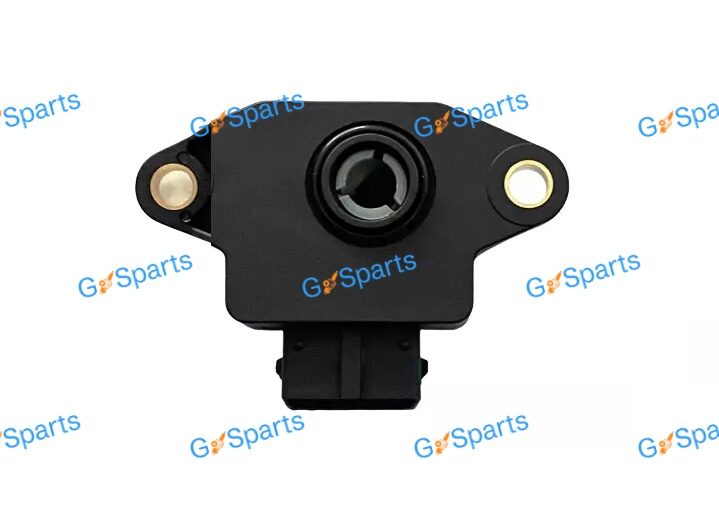
Genuine Geely TPS Sensor 471Q-1L-1107800 – MK, MK2, MK Cross (2005–2025) – Ultimate Fitment, Testing & Install Guide | G-Sparts
OEM TPS Sensor for Geely MK, MK2, and MK Cross (2005–2025).
Did you like this product? Add to favorites now and follow the product.

(+86) 180 07 12 47 38 WhatsApp, Telegram, WeChat
Description
The Geely TPS Sensor 471Q-1L-1107800 ensures accurate throttle control for Geely MK, MK2, and MK Cross models (2005–2025). Designed with electric 2-wire specifications, it guarantees smooth performance. Confirm fitment with VIN details before purchase.
Why Throttle Accuracy Matters for Everyday Driveability
When the throttle position signal is crisp and repeatable, fueling, spark, and transmission logic all align to deliver smooth response Geely TPS Sensor 471Q-1L-1107800. Small errors here ripple through idle control, decel fuel cut, and torque requests, which is why many drivability complaints begin with the sensor on the throttle shaft. If your vehicle hesitates off the line, hunts at idle, or feels oddly flat during gentle tip-in, the first place to validate is the throttle input. In this guide we’ll show you how to confirm fitment, test, install, and validate the Geely TPS Sensor 471Q-1L-1107800 so your engine management can trust what your foot is asking for.
What the TPS Actually Does Inside the Control Loop
The throttle position sender converts shaft angle into a smooth voltage sweep that the ECU blends with airflow, speed, and manifold pressure to calculate load. That single stream influences injector pulse width, ignition timing, and even evaporative system checks. Noise in the sweep confuses the controller’s short-term adaptations and widens fuel trims. A linear, jitter-free signal stabilizes idle, sharpens throttle transitions, and helps the converter stay comfortable. When your baseline is correct, everything downstream becomes easier to diagnose. Matching the expected electrical behavior is the whole game, which is why a direct-fit component like the Geely TPS Sensor 471Q-1L-1107800 saves time and keeps your focus on verification rather than improvisation.
Decoding Labels, Curves, and Physical Interfaces
Part identifiers aren’t just SKU stickers; they encode connector keyways, mounting-slot arc, shaft tang shape, and the resistance track that dictates output. Two housings can look similar yet deliver curves the ECU will never fully accept. That’s why the Geely TPS Sensor 471Q-1L-1107800 earns attention: its mounting geometry and sweep align with common Geely throttle bodies, and its indexed connector reduces guesswork at plug-in. Before opening the pouch, compare ear clocking and the tang profile to your original, then bench-sweep the Geely TPS Sensor 471Q-1L-1107800 with a meter to confirm a smooth, monotonic rise. If your prechecks agree with documentation, you’re set up for a quick install and an easy relearn afterward.
Pre-Fitment Checks You Can Do in Minutes
A smart fitment routine starts with eyes and a phone. Photograph the existing sensor, the harness routing, every clip and stand-off, and the throttle stop marks. Verify connector indexing, wire colors, and the way the boot “falls” when the unit is torqued. Measure the lead’s relaxed reach so the replacement doesn’t tug on clips during engine rock. Clean the throttle body flange lightly and confirm fastener thread condition. These simple steps prevent cross-threading, misalignment, and heat-soak rub points later. When everything aligns with your notes, installing the Geely TPS Sensor 471Q-1L-1107800 becomes a straightforward seat-and-set rather than a wrestling match that risks the housing or the throttle shaft.
Common Symptoms of a Sensor Past Its Prime
Failing throttle position senders usually fade rather than die, and the first clues are subtle: a slight stumble off idle, cruise control hunting, or a need to crack the pedal to stabilize idle. On a graph you’ll see tiny dropouts or a stair-stepped rise where the pedal moves smoothly. Those jitters push fuel trims around, nudge timing into protective zones, and drain economy. Left alone, the converter works harder to clean up small mixture errors. Replace the noisy source before it contaminates other diagnostics. A clean, linear sweep from a fresh component such as the Geely TPS Sensor 471Q-1L-1107800 lets the ECU trust driver intent again and restores that easy, settled feel in traffic.
A Simple, Data-Led Diagnosis You Can Trust
Warm the engine fully, then log throttle position alongside rpm, short-term trims, and spark advance during a steady neighborhood cruise and a few gentle roll-ons. A healthy sensor yields a smooth line that tracks your foot with no flicker when you tap the housing. Verify a solid five-volt reference and low-resistance grounds; poor electrical hygiene can mimic a worn track. If the sweep jitters or shows flat spots and your power, ground, and intake plumbing are sound, replacement is justified. Installing the Geely TPS Sensor 471Q-1L-1107800 turns the test from “maybe” into “measured,” and your after-log should show trims tightening and timing behaving predictably with identical route, speed, and temperatures.
Tools, Workspace, and Small Parts That Matter
Good process beats lucky guesses. Assemble a precision bit set, a small torque driver, contact cleaner, dielectric grease for the connector seal, a quality multimeter, and fresh fasteners if yours look tired. Protect the intake opening from dropped screws, and stage a bright work light so you don’t over-rotate the housing while aligning the tang. Keep the new Geely TPS Sensor 471Q-1L-1107800 sealed until the flange is spotless, and avoid oily fingers on terminals. Photograph the original witness marks; they’ll help you land the baseline quickly. With this kit beside you, the job becomes a tidy sequence rather than a scramble that risks the throttle body or the harness.
Removing the Old Sensor Without Drama
Soft aluminum, tiny screws, and fragile connectors reward patience. Break the fasteners free with a correctly sized driver, supporting the throttle body so the shaft isn’t leveraged. Mark the old alignment before loosening; those scribe lines are free calibration hints. As the unit lifts, note the feel of the spring preload and the angle where the tang engages—that tactile memory guides the new one home. Clean the mating face with a lint-free cloth and inspect the connector for green tint or spread terminals. Now the site is ready for the Geely TPS Sensor 471Q-1L-1107800, and you’ve preserved both threads and alignment cues for a first-try success.
Mounting and Aligning the Replacement Precisely
Seat the sensor gently, rotating it just enough to pick up the tang and establish light spring preload. Start both screws by hand to prevent cross-threading, then nudge within the slots to bring closed-throttle voltage into the service window. Tighten evenly and recheck readings because tiny movements matter. The connector should click authoritatively; a whisper-thin smear of dielectric grease on the seal helps keep moisture out without insulating pins. Cycle the throttle by hand and watch live data for a smooth rise and return. With correct geometry baked in, the Geely TPS Sensor 471Q-1L-1107800 tends to land on spec without heroic adjustment, which shortens relearn and reduces comeback risk.
Key-On Baseline and Scan-Tool Sanity Checks
Before the first start, switch ignition on and confirm that throttle percentage at rest is plausible and stable. Tap the housing lightly; the value should not flicker. If your platform allows minor adjustment, loosen just enough to center the number, then re-torque. Graph the sweep while moving the plate slowly from closed to wide open and back; you’re hunting for a monotonic, noise-free trace. Clear any stored faults so your next steps aren’t colored by history. Because its curve mirrors factory expectations, the Geely TPS Sensor 471Q-1L-1107800 is usually accepted immediately by the controller, making this sanity check quick and reassuring.
Idle Learn and First Road Relearn That Actually Work
Most systems relearn quickly when the baseline is right. Let the engine reach operating temperature and idle undisturbed while the ECU confirms airflow and throttle targets. Take a calm route with steady cruise, light accelerations, and gentle decels so transient tables refresh cleanly. Watch that throttle position remains steady at a held pedal and that trims relax around center. If an automatic gearbox felt indecisive before, it should now downshift and upshift with confidence because torque requests are believable again. This is exactly the behavior you want to see after fitting a known-curve component like the Geely TPS Sensor 471Q-1L-1107800.
Drive-Cycle Validation Without Guesswork
Validation doesn’t require a proving ground. Use a repeatable loop: warm the vehicle, maintain a steady suburban pace, add a few shallow roll-ons, coast-downs, and a short idle to finish. Log throttle, trims, and timing together. You’re looking for clean tracking of your foot, narrow trim oscillations, and stable spark at constant load. If you ran a before-log, overlay it now. You should see smoother traces and less corrective activity once the Geely TPS Sensor 471Q-1L-1107800 is installed; that’s your proof. Keep a screenshot with mileage and ambient conditions so future diagnostics have a trustworthy baseline built on the same loop the Geely TPS Sensor 471Q-1L-1107800 just aced.
Installation Mistakes That Create False Faults
Most post-repair wobbles come from tiny oversights: uneven screw torque that warps the housing, misrouted harnesses that rub the linkage, or connectors that aren’t fully latched. Another classic is ignoring a tired ground elsewhere on the shared reference circuit—voltage drop there looks like “sensor noise.” Work methodically: hand-start, align, torque evenly, re-create service loops, confirm slack for engine rock, and tap-test the housing while watching live data. Clear codes only after you’ve verified a clean sweep. This disciplined approach prevents blaming the part when the process is the real culprit.
Choosing Between OEM, Premium Aftermarket, and Reman
You’re balancing predictability, availability, and cost. Factory units offer the exact sweep and sealing the calibration team validated. Premium aftermarket can equal that when they publish real test data and show the connector indexing and slot geometry clearly. Reman products vary widely; look for proof the track was replaced and the sweep verified, not just cleaned. Whatever you choose, ensure labeling matches your order and the seller stands behind returns. If your catalog points to the Geely TPS Sensor 471Q-1L-1107800, you’re picking a footprint and curve the ECU expects, which shortens adaptation and keeps diagnostics tidy.
Spotting Counterfeits Before They Cost You Time
Counterfeits often copy the housing but skimp on the internal track and quality of terminals. Red flags include fuzzy print, inconsistent fonts, missing batch codes, rough mold parting lines, and connectors that feel loose rather than precise. The plating on terminals should be uniform, and the body should not rattle if you shake it gently. Geely TPS Sensor 471Q-1L-1107800 Compare the indexing rails and ear clocking to your original. If the package arrived crushed or the seal looks disturbed, pause and document. A quick bench sweep can expose a dirty trace before it reaches the car, saving you hours and protecting the throttle body from repeat cycles.
Vetting Sellers, Shipping, and Documentation Habits
Trustworthy vendors show high-resolution photos of the actual connector and tang, publish compatibility by engine family, and disclose return terms clearly. They also pack electronics so the tang can’t punch through the box. Keep unboxing photos and a copy of your baseline scan in the same folder as the invoice; if anything acts odd, you’ll have evidence for a quick swap. When the listing, label, and paperwork all identify the Geely TPS Sensor 471Q-1L-1107800 precisely, you reduce uncertainty and shorten any support calls because everyone is talking about the same, correct unit.
Maintenance That Extends Sensor and Throttle Life
A clean throttle plate, intact harness sheathing, and tight grounds do more for sensor longevity than any magic spray. Geely TPS Sensor 471Q-1L-1107800 At routine service, inspect the connector seal for tears and keep pressure-washing away from electronics. Carbon on the stop can shift the effective closed angle and confuse the baseline; a gentle cleaning restores what you set during install. If a refresh is needed years down the road, a plug-in part with the right tang and slot arc makes it painless. Keeping notes about your alignment and scan values helps future you land the target in minutes rather than chasing it across an afternoon.
If Symptoms Persist After a Correct Install
Sometimes the throttle sender was innocent. Sticking plates, vacuum leaks, or a wandering airflow signal can mimic a failing track. Geely TPS Sensor 471Q-1L-1107800 Confirm the five-volt supply remains stable under electrical load, smoke-test the intake, and inspect loom segments where they pass brackets for hidden chafe. If you have access to a scope, watch the signal during tiny foot movements; a clean trace there clears the sensor. Once you’ve eliminated plumbing and power noise, broaden the search to idle control steps, airflow meters, or software updates. A sound replacement removes doubt so effort goes where it will actually pay off.
How Throttle Data Interacts with Automatic Transmissions
On many platforms, the gearbox leans on throttle percentage to estimate driver intent. If that input jitters, shift timing wanders and downshifts feel late or busy. Restoring a stable sweep calms the communication between engine and transmission, so requests are honored consistently. After replacement, the first drive should reveal crisper engagement at small pedal changes and fewer awkward moments at parking-lot speeds. Geely TPS Sensor 471Q-1L-1107800 This refinement is one of the quiet wins from getting the right baseline, and it’s a great sign your control system trusts the signal again.
Data Logging KPIs: What Good Looks Like on Graphs
Healthy traces have personality: a smooth linear ascent with no steps, a steady idle value that doesn’t creep as the engine warms, and close correlation between throttle percentage and commanded torque at light load. Your trims should narrow, spark advance should stop “hunting” at constant pedal, and catalyst temperature should remain calmer in traffic. Geely TPS Sensor 471Q-1L-1107800 Capture a quick overlay of before-and-after logs using the same route so you can see the improvement, not just feel it. When the fix is right, the graphs get boring—in the best possible way—because the controller isn’t chasing noise anymore.
Environmental Stewardship and Safe Disposal
Old electronics shouldn’t go in household bins. Many parts stores and municipal depots accept sensors along with batteries and oil filters. Keep the removed unit intact, wipe any fluids, and drop it at a proper collection point. Recycle the new part’s cardboard once your validation drive is finished. Responsible disposal costs nearly nothing and keeps metals and plastics in the supply loop. Geely TPS Sensor 471Q-1L-1107800 It also signals to the next owner or technician that the car’s maintenance history is thoughtful from end to end, not just quick fixes under time pressure.
Budget Planning, Downtime, and Value Over Time
Geely TPS Sensor 471Q-1L-1107800 Beyond the part price, plan for contact cleaner, dielectric grease, fresh screws, and a short validation drive. Balanced against those small extras are steadier idle, better shift coordination, and a catalytic converter that doesn’t have to mop up preventable errors. Over months, those dividends outpace tiny differences at the checkout page. Picking a sensor that lands on spec the first time reduces repeat labor, protects your schedule, and keeps your diagnostic headspace clear for the jobs that truly need deep investigation.
When It’s Wise to Involve a Professional
Geely TPS Sensor 471Q-1L-1107800 Certain patterns justify escalation: multiple correlation codes appearing together, symptoms that vary with humidity, or behavior that changes if you flex the harness. A shop armed with a scope, smoke machine, and platform-specific procedures can separate signal noise from genuine faults quickly. Bring your logs and your alignment notes; that context shortens the path to resolution. Professionals appreciate clear data, and you’ll appreciate not buying parts you didn’t need. If the test plan leads back to the TPS, you’ve already selected the correct footprint, so installation time goes into verification rather than guesswork.
Documentation That Creates Future Confidence
Good records turn a successful repair into lasting value. Note symptoms, pre-repair codes, baseline scans, alignment marks, and post-install logs. Photograph clip positions and the latched connector, then file the invoice with date and mileage. Months from now, you—or the next owner—can confirm the throttle input was addressed thoughtfully. Geely TPS Sensor 471Q-1L-1107800 This paper trail also strengthens warranty conversations because you can demonstrate proper process, clean validation, and stable behavior after the work.
Shipping, Handling, and Storage Best Practices at Home
Electronics are tough in operation and fragile on the bench. Choose carriers that cushion impacts, inspect boxes before opening, and keep the unit in its antistatic sleeve until the throttle body is clean and the bay is cool. Avoid prying on the housing during alignment and don’t touch terminals with oily gloves.Geely TPS Sensor 471Q-1L-1107800 If you keep a spare on the shelf, store it dry, away from solvents, at stable room temperature. These small habits prevent invisible damage that masquerades as “bad out of the box” later.
Heat Management and Harness Longevity After the Fix
Geely TPS Sensor 471Q-1L-1107800 Thermal realities matter. Ensure the harness doesn’t touch the throttle linkage or rest against a hot manifold runner. Replace missing stand-offs and add a short reflective sleeve where clearance is tight. After a hot soak, pop the hood and confirm the loom still clears edges; expansion can shift relationships you thought were generous. Protecting the cable today prevents intermittent opens tomorrow, the kind that only appear when everything is heat-soaked and you least want to chase ghosts.
Quick Owner FAQs, Answered Clearly
Can cleaning fix an old sender? You might buy a little time if contamination is external, but worn tracks won’t recover their smooth sweep. Do I need a scan tool? It’s the fastest way to land the baseline and validate the repair, though a good meter will still show steps or dropouts. Does battery disconnect help? It can clear adaptations, but a proper idle learn and a calm road loop are the real reset. Geely TPS Sensor 471Q-1L-1107800 The goal is always the same: stable baseline, smooth sweep, predictable adaptation, and a car that feels calmer everywhere.
Final Road-Test Checklist and Confident Sign-Off
End with a calm loop at neighborhood speeds, a steady suburban cruise, a few gentle roll-ons, and a short idle. Confirm no new faults appear, the throttle trace is smooth, trims hover near center, and shifts feel decisive. Back in the bay, recheck clip engagement and harness clearance after a hot soak, then note mileage and conditions in your records. When the inputs are stable, everything downstream behaves. Geely TPS Sensor 471Q-1L-1107800 With a precise process and a curve-correct part, your throttle request and engine response are once again in lockstep—the quiet definition of a car that’s simply “right” every time you drive it.
External Resources (Standards & Technical References)
- ISO 26262 — Road Vehicles Functional Safety
- ISO 11898 — Controller Area Network (CAN)
- ISO 14229 — Unified Diagnostic Services (UDS)
- SAE J1979 — OBD-II Diagnostic Test Modes
- AEC-Q100 — Stress Test for Automotive ICs
Related Internal Links
Related products



G-SPARTS – Leading Auto Parts Supplier Since 2009
Trusted by 1000+ Clients Worldwide | Chinese (BYD, Geely, Chery, …), Japanese (Toyota, Honda, Nissan, …), European (BMW, Mercedes, VW, …) & American (Ford, Chevrolet, Tesla, …) Car Spares | Best Prices & OEM Quality | 15+ Years Expertise | Professional Team, Fast Global Shipping
Copyright 2025 © G-Sparts All Rights Reserved. | Premium Chinese Auto Parts Supplier – Worldwide Shipping | Best Prices on OEM & Aftermarket Spares

Reviews
There are no reviews yet.