
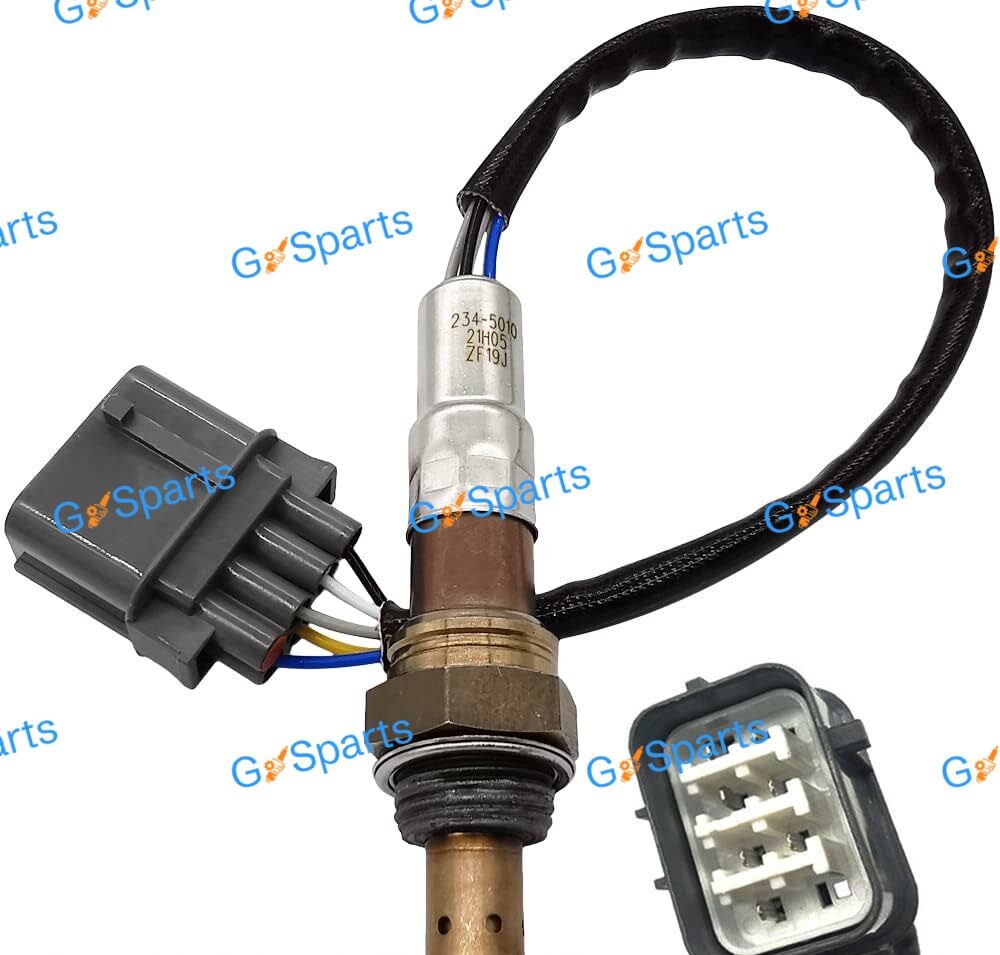
Genuine Honda Oxygen O2 Sensor Honda wideband/A-F specific (examples: Denso 234‑4621 etc.) – Accord Hybrid, Civic Hybrid, modern direct‑injection variants (Upstream (A/F sensor))
O₂ sensor for Accord Hybrid, Civic Hybrid, modern direct‑injection variants – Upstream (A/F sensor). Specs: A/F sensors differ from narrow‑band O₂; typically 4+ wires & special calibration.
Did you like this product? Add to favorites now and follow the product.

(+86) 180 07 12 47 38 WhatsApp, Telegram, WeChat
Description
OE‑style oxygen (lambda) sensor listing for Honda applications. Models: Accord Hybrid, Civic Hybrid, modern direct‑injection variants. OEM/reference(s): Honda wideband / A‑F specific (examples: Denso 234‑4621 etc.). Position: Upstream (A/F sensor). Typical specification: A/F sensors differ from narrow‑band O₂; typically 4+ wires & special calibration. Brands/cross‑refs: Denso wideband / OEM A/F sensors. Fitment guidance: Hybrids and A/F applications require exact OEM match — VIN recommended. Source: DENSO Auto Parts.
What “Wideband/A-F Specific” Means for Modern Hondas
When people search Honda Oxygen O2 Sensor Honda wideband/A-F specific, they’re usually talking about the upstream air-fuel ratio sensor that feeds the ECU precise lambda data. Unlike older narrowband units that only toggle rich/lean around stoichiometric, the wideband cell outputs a current proportional to oxygen content across a broad range. That richer signal lets the ECU control fueling smoothly during cold starts, transients, and light-load cruise, preventing surging and protecting the catalytic converter. Because the sensor’s heater and pumping circuits are integral to accuracy, matching the correct part number is vital. Choose the exact A/F sensor your calibration expects and you’ll feel crisper tip-in, steadier idle, and a quicker transition into clean closed-loop operation in everyday driving.
Narrowband vs. Wideband: Why It Matters to You
If you’ve typed Honda Oxygen O2 Sensor Honda wideband/A-F specific into a catalog, you’ve already recognized there’s a difference. Narrowband sensors switch voltage rapidly near 14.7:1 but carry little information away from that point. Wideband A/F sensors measure lambda precisely above and below stoich, enabling the ECU to track targets like lean cruise or enrichment with nuance. That means fewer fuel-smell moments after cold starts, smoother throttle in traffic, and stable fuel trims. Tuners also benefit, because a healthy A/F sensor gives predictable feedback when blending maps for emissions compliance and drivability. The takeaway: if your Honda uses a wideband upstream, stick with the specific A/F-designated unit for reliable control.
How A/F Sensors Work in Simple Terms
Searches for Honda Oxygen O2 Sensor Honda wideband/A-F specific often lead to technical diagrams, but the principle is straightforward. The sensor has a Nernst (reference) cell and a pumping cell. The ECU drives current through the pump cell to maintain a fixed oxygen level in the sensing chamber. The amount of current required is proportional to exhaust oxygen, which the ECU interprets as lambda. Because the controller is actively balancing oxygen, response is quick and linear across rich and lean conditions. A tight-tolerance heater keeps the ceramic at operating temperature, since accuracy depends on heat. That’s why proper heater control, good grounds, and the correct part number are non-negotiable for consistent results.
Recognizing the Right Part in Listings
The phrase Honda Oxygen O2 Sensor Honda wideband/A-F specific should appear explicitly in quality listings, but photos and specs tell the rest of the story. Look for the right connector keyway, pin count, lead length, shield shape, and pre-applied thread compound. Reputable suppliers publish operating temperature range and heater wattage, plus compatibility notes by engine code. A true A/F sensor will never ship as a splice-in universal; it should be a dedicated plug that matches your loom and clips. If the listing is vague—“fits many models” without dimensions—move on. An exact match saves installation time, accelerates readiness, and avoids chasing false rich/lean codes caused by curve mismatches.
Fitment Checks Before You Order
Typing Honda Oxygen O2 Sensor Honda wideband/A-F specific is step one; step two is verifying physical fit. Count connector pins, inspect keyways, and measure the existing lead so the replacement reaches every clip without tension. Photograph harness routing around heat shields and brackets. Compare the bung angle and sensor body profile to the photos, noting how the connector exits when torqued. Regional emissions packages can alter routing and shield geometry, so check the under-hood certification label too. When your visual cues and documentation align, you’ll receive a proper drop-in sensor that preserves strain relief and clearances—critical for long-term insulation health in a hot exhaust environment.
Symptoms of a Fading A/F Sensor
Owners searching Honda Oxygen O2 Sensor Honda wideband/A-F specific usually report subtle issues first: a small MPG drop, hesitant tip-in, or a check-engine light after extended cruise. On a scan tool, you’ll see fuel trims widening while commanded targets look normal. Cold starts linger richer because the heater can’t stabilize the element quickly. Catalytic converter efficiency codes can follow as mixture control drifts. If exhaust and intake are leak-free and MAF/MAP data is plausible, a slow A/F sensor is likely. Replacing it restores quick, proportional feedback so trims re-center, readiness sets predictably, and the car regains the polished, “in-tune” feel that Honda drivetrains are known for.
Data-Driven Diagnosis You Can Do at Home
Before buying from a Honda Oxygen O2 Sensor Honda wideband/A-F specific listing, confirm with data. Warm the engine and log short-term and long-term trims during steady 60–80 km/h cruise and gentle transitions. Healthy systems show small, symmetrical corrections. If trims chase in one direction or react sluggishly to throttle changes, suspect the A/F sensor. Verify heater status PIDs, check power and ground voltage drop under load, and confirm there are no exhaust leaks ahead of the bung. If fundamentals are solid yet response remains lazy, the sensor is the rational next step. A new, correct A/F unit almost always tightens trims within a short drive.
Tools and Supplies for a Professional Result
When your cart reads Honda Oxygen O2 Sensor Honda wideband/A-F specific, add a few essentials. You’ll want an O2 socket, 3/8-inch ratchet with extensions, a small torque wrench, penetrating oil, brake cleaner, dielectric grease for the connector seal, and fresh loom clips or reflective sleeves. Good lighting and a wobble extension help on recessed bungs. Keep the new sensor sealed until the engine is cool and the bung is clean. With a staged workspace and the right pieces on the bench, the job becomes a straightforward sequence instead of a knuckle-busting fight—protecting both threads and the new sensor’s delicate wiring.
Safe Removal Without Damaging Threads
Plenty of searches for Honda Oxygen O2 Sensor Honda wideband/A-F specific happen after a removal goes sideways. Avoid that fate by warming the manifold briefly, then letting it cool to a safe touch so thermal expansion helps break corrosion. Apply penetrant and wait. Keep the socket square, using steady pressure instead of hammering, which rounds flats. As the sensor loosens, don’t twist the harness; support the body and unwind carefully. Clean the bung with a soft brush; avoid aggressive chasing that can alter sealing surfaces. Prep like this ensures the new sensor starts by hand, seats evenly, and torques to spec without drama.
Installing the New Sensor the Right Way
With your Honda Oxygen O2 Sensor Honda wideband/A-F specific in hand, start threads by hand for several turns to confirm alignment. If threads are pre-coated from the factory, don’t add compound—excess can poison the element. Torque to spec so the crush washer seals without deforming the bung. Route the lead along factory clips and stand-offs, maintaining clearance from the downpipe and moving parts. Listen for a positive connector latch, then tug gently to confirm. A final flashlight sweep checks for chafe risks and verifies slack for engine rock. This tidy routing preserves signal quality and harness life through seasons of heat cycles.
Resetting Adaptations After Install
After installing a Honda Oxygen O2 Sensor Honda wideband/A-F specific unit, clear codes and fuel trims so the ECU builds new baselines. Let the engine idle until the fan cycles, then drive a steady loop while watching trims re-center and heater status stabilize. Avoid abrupt throttle changes for the first minutes as the catalyst equilibrates. If your platform has a published idle learn or speed-hold procedure, run it now. Expect smoother idle, more consistent tip-in, and monitors that begin progressing. Capture a short “known good” log as a reference for future diagnostics or resale documentation.
A Practical Drive Cycle That Works
Many who buy a Honda Oxygen O2 Sensor Honda wideband/A-F specific part need readiness quickly. Use a simple route: cold start to full warmup, five to ten minutes of steady suburban cruise, a few gentle accelerations and decelerations, then a brief idle. You’re looking for narrow trim oscillations, stable heater status, and no pending codes. If local inspection requires a specific protocol, follow speed and coolant windows precisely. With the correct A/F sensor, most systems complete without drama, because proportional feedback lets the ECU meet self-test thresholds faster and with less dithering.
Common Mistakes and How to Avoid Them
We see “installed Honda Oxygen O2 Sensor Honda wideband/A-F specific and still have codes” posts often. The culprits are familiar: cross-threaded bungs, over-torque that distorts sealing, lubricant contamination on the tip, or routing the lead against a hot shield. Skipping minor strain-relief clips allows vibration to fatigue internal conductors. Always hand-start threads, torque to spec, reinstall heat sleeves, click the latch, and confirm slack with the engine rocked. Finally, don’t forget to clear adaptations; stale trims can mask your success for a few trips. A five-minute data check prevents head-scratching later.
Tuning Context: Why a Healthy A/F Sensor Still Rules
Even if you log with an external wideband, your daily closed-loop control depends on the Honda Oxygen O2 Sensor Honda wideband/A-F specific upstream unit. If it’s slow or biased, transient fueling suffers and your carefully crafted map feels inconsistent. Before a dyno session, verify there are no leaks, grounds are clean, and the A/F current tracks target smoothly during light sweeps. Replacing a drifting sensor ensures the ECU’s feedback layer behaves, letting the tune focus on spark, torque shaping, and knock limits—where the real drivability polish lives.
Protecting the Catalyst and Your Wallet
One reason to seek a Honda Oxygen O2 Sensor Honda wideband/A-F specific replacement is catalyst health. Rich spikes overheat the brick; lean spikes invite misfire. A precise A/F signal minimizes both, easing the converter’s workload and extending life. The payoff is fewer odor episodes after cold starts, steadier torque at low throttle, and cleaner tailpipe numbers. Considering catalyst costs, keeping the upstream A/F sensor fresh is affordable insurance—especially on vehicles that see short-trip use or frequent altitude and temperature swings.
Electrical Integrity: Power, Ground, and Noise
If a new Honda Oxygen O2 Sensor Honda wideband/A-F specific doesn’t resolve trims, verify the circuit. Voltage-drop test the grounds under load, confirm heater power delivery, and inspect shared references if other sensors look odd. Repair poor crimps or corroded terminals, and route harnesses away from coils to reduce EMI. A/F sensors are exquisitely sensitive to supply and ground quality; giving them a clean electrical environment ensures the ECU interprets their current correctly and trims stay centered.
Exhaust Integrity: Leaks that Fake Lean
Plenty of “bad Honda Oxygen O2 Sensor Honda wideband/A-F specific?” threads turn out to be tiny leaks before the sensor. Fresh air drawn into a cracked flex joint or loose flange elevates oxygen content and tricks the ECU into adding fuel. Look for soot tracks, ticking noises, or smell patterns, and smoke-test if necessary. Fix leaks first, then reassess data. A sealed exhaust and a healthy A/F sensor make mixture control boring—in the best way possible.
Heat Management and Harness Longevity
Installing a Honda Oxygen O2 Sensor Honda wideband/A-F specific unit is half the battle; keeping the harness cool is the other half. Reinstall shields, replace missing stand-offs, and add reflective sleeves where clearances are tight. After a hot soak, recheck that the lead still clears edges and the downpipe, since expansion can shift relationships. Honda Oxygen O2 Sensor Honda wideband/A-F These simple steps prevent cooked insulation and intermittent opens that masquerade as sensor failures months later.
Selecting OEM vs. Aftermarket by Real Metrics
When evaluating a Honda Oxygen O2 Sensor Honda wideband/A-F specific, focus on data: published heater wattage curves, confirmed connector indexing, lead length, and documented operating range. Avoid splice-in universals upstream—resistance and moisture risk don’t belong in this circuit. A direct-fit A/F sensor shortens install time and matches calibration. Reputable brands share specs and real photos, not just generic art. That transparency correlates strongly with first-time success and long-term stability.
Counterfeit Warning Signs to Watch
The market for Honda Oxygen O2 Sensor Honda wideband/A-F specific parts attracts counterfeits. Red flags include fuzzy print, inconsistent fonts, missing batch codes, rough connector mold lines, and oddly light housings. If packaging is crushed or seals look tampered with, pause and contact the seller. Substandard ceramics or wrong heater curves will waste hours of diagnosis. Buy from vendors who accept returns, publish specs, and show the actual plug and keyways in high-resolution images.
Storage, Handling, and Shipping Tips
Treat your Honda Oxygen O2 Sensor Honda wideband/A-F specific like delicate lab gear. Choose cushioned shipping, inspect boxes before opening, and keep the sensor sealed until the engine is cool and the bung is clean. Don’t touch the tip with oily gloves; contaminants can poison the element. Handle the connector by its body, not the wires, to protect internal crimps. If storing, keep it dry, away from solvents, and at stable temperatures. These habits pay off at first key-on.
Budgeting the Whole Job
When budgeting a Honda Oxygen O2 Sensor Honda wideband/A-F specific replacement, include a dedicated socket, penetrant, dielectric grease, and new clips. Factor time for a validating drive cycle before inspection or a road trip. Against that small spend, expect steadier idle, smoother transitions, cleaner emissions, and fewer diagnostic detours. Over months, the cost per kilometer is tiny compared with the wasted fuel and catalyst wear caused by a drifting sensor.
Quick FAQ for Owners
Will cleaning fix my Honda Oxygen O2 Sensor Honda wideband/A-F specific? External grime can be wiped off, but internal aging or contamination won’t regain response; replacement is the reliable fix. Do I need anti-seize? Use only the pre-applied compound if present; otherwise a tiny amount of nickel-based compound, keeping it off the tip. Should I disconnect the battery? You can, but clearing codes and trims with a scan tool is cleaner and preserves radio and window settings.
Document Your Work for Future You
After fitting a Honda Oxygen O2 Sensor Honda wideband/A-F specific, save before/after logs, note mileage, and photograph routing and clip positions. Keep the invoice and part label for warranty and resale value. A tidy digital record proves the upstream reference is fresh, makes future diagnosis faster, and reassures the next owner that emissions-critical components were replaced thoughtfully and correctly.
When to Involve a Professional
If multiple sensors show correlation codes, or behavior changes with humidity or heat, it may be time to escalate beyond a Honda Oxygen O2 Sensor Honda wideband/A-F specific swap. A pro can scope the pump-cell current, check heater duty cycles, smoke-test for leaks, and confirm ECU updates. Arriving with the correct A/F sensor ensures shop time goes to verification instead of parts sourcing, minimizing downtime and uncertainty.
Final Road-Test Checklist and Sign-Off
Close the loop after installing a Honda Oxygen O2 Sensor Honda wideband/A-F specific sensor with a calm verification drive. Start with neighborhood speeds, move to a steady cruise while watching trims, then include a few gentle transitions and a brief idle. Ensure no pending codes appear, switching is crisp, and trims sit near zero. Back in the bay, recheck clearances after a hot soak. If everything looks clean, the repair is complete—and your Honda should feel effortlessly consistent again.
External Resources (Standards & Technical References)
- SAE J1979 — OBD-II Diagnostic Test Modes
- ISO 15031 — Road Vehicles/Scan Tool Communication
- US EPA — Basic Information on OBD-II
- NGK/NTK — Oxygen (Lambda) Sensors Overview
- Bosch Mobility — Oxygen Sensor Technology
Related Internal Links
Additional information
| OEM / Reference | Honda wideband / A‑F specific (examples: Denso 234‑4621 etc.) |
|---|---|
| Brands / Cross | Denso wideband / OEM A/F sensors |
| Models | Accord Hybrid, Civic Hybrid, modern direct‑injection variants |
| Position | Upstream (A/F sensor) |
| Specifications | A/F sensors differ from narrow‑band O₂; typically 4+ wires & special calibration |
| Fitment note | Hybrids and A/F applications require exact OEM match — VIN recommended. |
| Source | DENSO Auto Parts |
Related products



G-SPARTS – Leading Auto Parts Supplier Since 2009
Trusted by 1000+ Clients Worldwide | Chinese (BYD, Geely, Chery, …), Japanese (Toyota, Honda, Nissan, …), European (BMW, Mercedes, VW, …) & American (Ford, Chevrolet, Tesla, …) Car Spares | Best Prices & OEM Quality | 15+ Years Expertise | Professional Team, Fast Global Shipping
Copyright 2025 © G-Sparts All Rights Reserved. | Premium Chinese Auto Parts Supplier – Worldwide Shipping | Best Prices on OEM & Aftermarket Spares

Reviews
There are no reviews yet.