
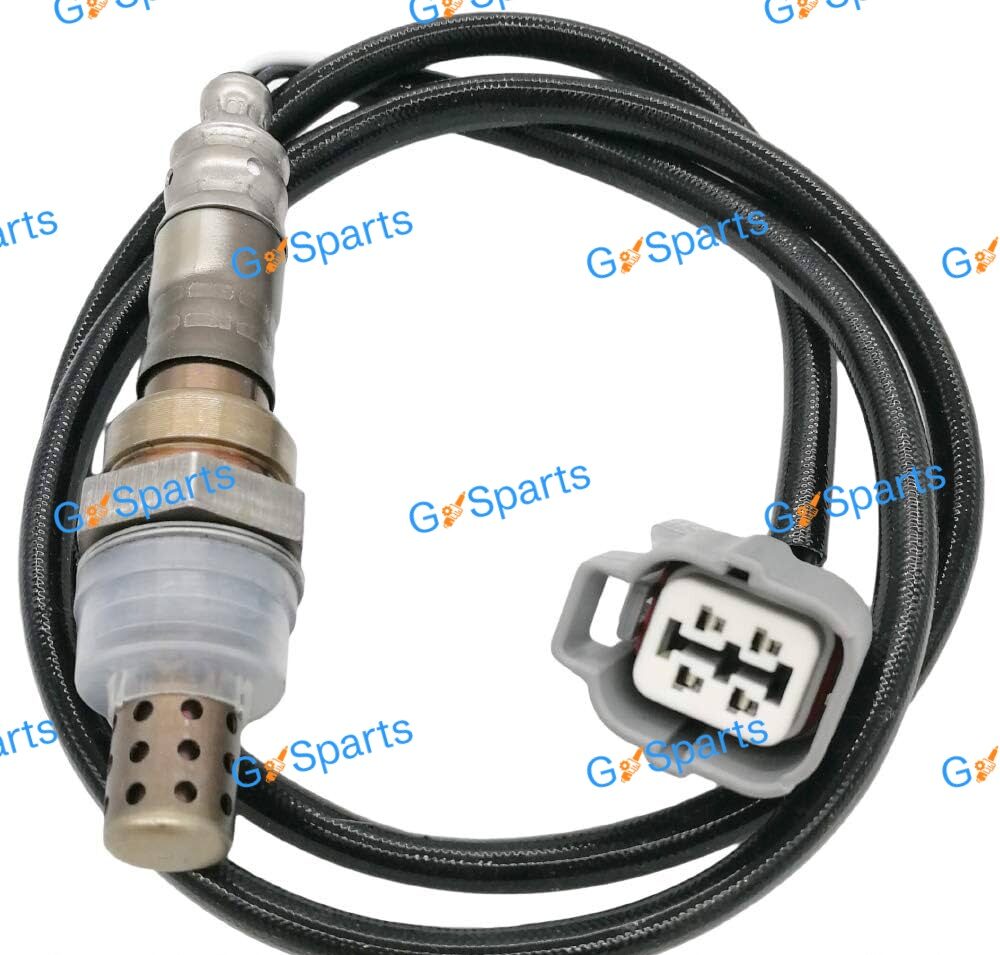
Ultimate Honda Oxygen Sensor Universal/low-cost ‘fits Honda’ – Smart Buyer Guide, Risks & Safer Alternatives | G-Sparts 2025
O₂ sensor for Older & common Honda petrol models advertised as ‘fits Honda’ – Replacement (may require adapter). Specs: Variable: thread/probe length/wire count may not match OE.
Did you like this product? Add to favorites now and follow the product.

(+86) 180 07 12 47 38 WhatsApp, Telegram, WeChat
Description
OE‑style oxygen (lambda) sensor listing for Honda applications. Models: Older & common Honda petrol models advertised as ‘fits Honda’. OEM/reference(s): Universal / low‑cost ‘fits Honda’. Position: Replacement (may require adapter). Typical specification: Variable: thread/probe length/wire count may not match OE. Brands/cross‑refs: Generic ASIN / marketplace SKUs. Fitment guidance: Avoid unless connector pinout, probe length & wiring match OEM spec. Source: Amazon.
What “Universal” Really Promises—and What It Doesn’t
Universal labels can be seductive because they suggest one part covers many vehicles, but oxygen sensing is more nuanced than thread size. Your engine controller expects a specific signal behavior, heater warm-up curve, connector indexing, and even a precise lead length that avoids tension at clips. A sensor that physically bolts in but doesn’t match the electrical profile can cause wandering trims, hesitant tip-in, prolonged open-loop operation, and stubborn readiness monitors. If a listing lacks real data, pass. That mindset is essential when evaluating Honda Oxygen Sensor Universal/low-cost ‘fits Honda’, because small mismatches create big drivability headaches and erase any savings you hoped to bank.
Why ECU Expectations Make or Break the Outcome
Modern Honda control strategies are built around the assumption that upstream feedback is fast, linear where required, and stable across temperature swings. If a replacement alters switching speed or forces the heater to overshoot, the controller spends energy correcting its own corrections, and you feel that as surge, odor, or a rough idle. The downstream sensor is more tolerant, but it still expects believable information to judge catalyst performance. Buying on price alone invites endless “almost fixed” outcomes. Keep this discipline front and center any time you consider Honda Oxygen Sensor Universal/low-cost ‘fits Honda’ so the hardware you install behaves like what the software was written around.
Narrowband Versus Wideband/A-F: Know Which You Have
Not all Honda platforms use the same technology upstream. Some rely on narrowband sensors that toggle voltage near stoichiometric, while many later models use wideband air-fuel (A/F) sensors that report a proportional pump-cell current across lambda. Universals often emulate narrowband behavior and will not substitute for an A/F sensor, even if the thread and plug appear compatible. Confirm what your engine uses by decoding the emissions label and platform documentation before you shop. That single check avoids most return headaches when assessing Honda Oxygen Sensor Universal/low-cost ‘fits Honda’, and it keeps you from chasing ghost problems rooted in a technology mismatch rather than a defective part.
Connector Indexing, Lead Length, and Routing Realities
A sensor can be electrically perfect and still fail in the real world if the harness doesn’t reach factory clips or drapes against a hot shield. A universal with the wrong exit geometry can push the loom toward sharp edges or radiant heat, cooking insulation and creating intermittent opens months later. True plug-and-play means matching the path the factory intended, not improvising with zip ties. Apply this lens when judging Honda Oxygen Sensor Universal/low-cost ‘fits Honda’ so you preserve strain relief, clearance, and long-term signal integrity instead of trading one problem for another.
Heater Wattage, Warm-Up Time, and Cold-Start Manners
Sensor accuracy depends on temperature, and the heater is the quiet hero that gets you there quickly and predictably. Under-powered heaters keep the engine in enrichment too long; over-aggressive heaters overshoot and introduce noise until the element stabilizes. Either scenario dulls throttle feel and loads the catalyst unnecessarily. Reputable listings publish heater wattage, expected warm-up behavior, and current draw at supply voltage so you can compare against known good baselines. If that information is missing, assume compromise. You’ll feel the difference every frosty morning. Give priority to verified heater performance whenever Honda Oxygen Sensor Universal/low-cost ‘fits Honda’ crosses your screen, because warm-up discipline is the line between refined daily manners and a car that never quite settles.
Exhaust Leaks That Masquerade as Sensor Failure
A pinhole upstream of the sensor admits fresh air, tricks the controller into thinking the mixture is lean, and invites enrichment that crushes mileage. Owners then swap parts, see no improvement, and blame the new sensor. Smoke-testing flanges, joints, and flex sections before you buy is the cheapest diagnostic you’ll do this season. Fixing plumbing first makes any sensor look smarter because the ECU finally sees truthful oxygen content. Take this step before pressing “add to cart” on Honda Oxygen Sensor Universal/low-cost ‘fits Honda’, and you’ll either save the cost entirely or install into a known-good system where performance can be judged fairly on the merits.
A Simple, Data-Led Diagnosis You Can Do at Home
Warm the engine fully, then graph upstream behavior alongside short-term trims at a steady suburban cruise and during gentle pedal sweeps. Healthy systems show brisk, consistent switching (narrowband) or proportional current that tracks target (A/F), with trims hovering near center. If the waveform is lazy even after verifying power, ground, and a leak-free exhaust, replacement is justified. This method turns guesswork into evidence, making your purchase a measured choice rather than a coin flip. Use the same before/after route to validate results if you decide to try Honda Oxygen Sensor Universal/low-cost ‘fits Honda’, and you’ll know within minutes whether the part is a keeper or a quick return.
Tools and Setup That Turn Budget into Value
Even a low-cost sensor deserves a professional install. Lay out an O2 socket, small torque wrench, wobble extension, penetrant, brake cleaner, dielectric grease for the connector seal, and fresh loom clips. Good lighting prevents cross-threading; patience prevents burns. Photograph routing before you touch anything so factory strain relief is easy to recreate. Keep the new unit sealed until the engine is cool and the bung is clean. This straightforward prep shrinks the risk of post-install leaks, wiring rubs, or loose connectors—issues that can make a decent Honda Oxygen Sensor Universal/low-cost ‘fits Honda’ look bad when the real culprit is an avoidable process error rather than flawed hardware.
Safe Removal Techniques That Preserve Threads and Leads
Thermal cycles weld threads to bungs. The cure is a calm sequence: warm the manifold briefly, let it cool to safe touch, apply penetrant, and give the chemistry time to work. Keep the socket square and use steady pressure rather than hammering the handle, which rounds flats and escalates a small job into a big one. As the sensor breaks free, support the body so you don’t twist the internal conductors. Brush carbon from the bung gently—no aggressive chasing that distorts the seat. This care sets the stage for the new Honda Oxygen Sensor Universal/low-cost ‘fits Honda’ to hand-start cleanly, seal evenly, and torque to spec without drama on the very first attempt.
Threading, Sealing, and Torque for a Leak-Free Seal
Cross-threading a bung is the fastest path from budget to heartbreak. Start by hand for multiple turns, then finish with a torque wrench so the crush washer seats without deforming the boss. If the new sensor ships with pre-applied compound, resist the urge to add more; excess can migrate toward the tip and contaminate the element. Refit shields, then verify clearance with a flashlight while the engine idles—thermal growth can change relationships. Follow this micro-checklist with any Honda Oxygen Sensor Universal/low-cost ‘fits Honda’ and you’ll avoid whisper leaks that masquerade as mixture issues and keep trims chasing a moving target long after the wrenching is done.
The Hidden Cost of Splicing and Adapters
Upstream circuits live a hard life near heat and moisture. Every splice adds resistance, potential ingress, and long-term uncertainty—even with heat-shrink. Many budget kits rely on crimp-your-own pigtails, and the failure shows up months later as intermittent bias or a heater fault when corrosion sneaks in. If saving is the priority, at least demand a molded, model-correct connector so the joint count stays at zero. Better still, keep universal approaches downstream only. Reserving direct-fit upstream while you evaluate Honda Oxygen Sensor Universal/low-cost ‘fits Honda’ for secondary positions balances cost control against the precision your feedback loop needs to behave like factory in daily traffic.
Clearing Codes, Resetting Adaptations, and First Drive
New hardware deserves new baselines. Clear stored faults and fuel trims, let the engine idle until the fan cycles, then cruise steadily while watching upstream behavior and short-term trims. Avoid hard accelerations during the first minutes as the catalyst equilibrates. Save a quick screenshot of this “known good” state for your records. If Honda Oxygen Sensor Universal/low-cost ‘fits Honda’ is performing like stock, you’ll see tidy oscillations and centered corrections; if not, you’ll know early enough to use return windows wisely. This data-first approach turns a budget experiment into a controlled trial rather than a lingering question mark.
A Repeatable Drive Cycle That Exposes Problems Quickly
Validation doesn’t require a proving ground. Warm fully, hold a steady moderate speed for several minutes, add gentle accelerations and decelerations, and finish with a brief idle. Success looks boring: centered trims, crisp transitions, no pending codes. Parts that are “close but off” will reveal themselves with longer open-loop time, sluggish recovery after pedal changes, or oscillation at cruise. Running this loop immediately after installing Honda Oxygen Sensor Universal/low-cost ‘fits Honda’ is the fastest way to decide keep versus return—before you invest days of fuel and patience in a choice that doesn’t meet your standards.
Common Pitfalls That Make Good Parts Look Bad
Most comebacks trace to small oversights. Over-torque distorts the seat and causes micro-leaks. Missing stand-offs let the lead sag onto hot shields, cooking insulation and inviting intermittent opens. Dirty grounds add noise that resembles a tired element. Solve these first with a simple checklist: hand-start, torque, route, clip, latch, slack, shield, scan. If those boxes are green and Honda Oxygen Sensor Universal/low-cost ‘fits Honda’ still misbehaves, the electrical curve is likely incompatible. That clarity saves you from chasing symptoms in circles and gives you solid footing to request a return without second-guessing your installation quality.
Total Cost of Ownership Versus Sticker Price
A bargain isn’t a bargain if it triggers repeat labor, wasted fuel, or premature catalyst stress. Add the price of penetrant, sockets, reflective sleeve, your time, and the probability of a redo when you weigh options. Often, a mid-tier direct-fit upstream paired with a carefully chosen universal downstream produces the best reliability-per-euro. Framing the decision this way turns Honda Oxygen Sensor Universal/low-cost ‘fits Honda’ into an informed experiment rather than a blind bet—one where you pocket real savings without handing back the difference at the pump or the inspection station.
Vetting Sellers with Specs, Photos, and Plain Honesty
Trustworthy vendors publish the details that matter: heater wattage, operating temperature range, technology type, connector keyway photos, boot angle, lead length, thread coating, and crush washer thickness. They also show the actual part—no generic art. Reviews mention routing success and readiness completion, not just delivery speed. Keep screenshots of listings and unboxing photos; they speed support if you need to swap. Hold Honda Oxygen Sensor Universal/low-cost ‘fits Honda’ offers to that standard and your first-time-right odds climb sharply, because good suppliers are usually good about returns and technical questions too.
Spotting Counterfeits Before They Burn Your Time
Counterfeits often mimic housings while missing the heater curve or electrical behavior your ECU expects. Red flags include fuzzy print, inconsistent fonts, missing batch codes, rough connector mold lines, and oddly light shells. Crushed packaging or broken seals deserve a pause. Substandard ceramics and poor crimps turn into phantom faults that waste hours. Protect your schedule by buying Honda Oxygen Sensor Universal/low-cost ‘fits Honda’ only from channels that show high-resolution connector images, publish real specifications, and honor straightforward returns when a part doesn’t meet its claims under a quick, documented road test.
Cold Weather, Short Trips, and Your Real Use Case
Short commutes in winter keep engines rich longer and expose weak heaters brutally. Honda Oxygen Sensor Universal/low-cost ‘fits Honda’ If most of your driving is cold starts and brief runs, precision upstream behavior matters more than ever. You can still manage costs by reserving universals for the downstream role and choosing a direct-fit upstream. That blend recognizes the realities of your route while keeping drivability polished. When you evaluate Honda Oxygen Sensor Universal/low-cost ‘fits Honda’, make the choice that suits your climate and routine, not just your cart, and you’ll notice fewer odors, steadier idle, and quicker readiness progress when temperatures drop.
Tuning Context: Why Upstream Health Still Rules
Even cars tuned with an external wideband rely on the factory upstream signal for daily closed-loop corrections. If that layer is noisy or biased, transient fueling feels inconsistent no matter how artful the map is at full load. Before dyno day, fix leaks, refresh grounds, and ensure the upstream behaves crisply. If you experiment with Honda Oxygen Sensor Universal/low-cost ‘fits Honda’, log thoroughly and be ready to revert if the curve doesn’t align. The cheapest path to refined manners is a precise upstream, tidy routing, and clean electrical fundamentals—not an hour of laptop time wrestling with feedback that never stabilizes.
Catalyst Protection and Long-Term Health
Catalytic converters thrive on balanced mixtures and quick corrections. Rich spikes overheat the brick; lean spikes invite misfire under load. A sluggish or biased upstream signal forces the catalyst to mop up bigger mistakes, shrinking your safety margin during heat or climbs. Renewing accuracy pays off immediately as steadier torque, fewer cold-start odors, and cleaner tailpipe behavior. If you’re set on Honda Oxygen Sensor Universal/low-cost ‘fits Honda’, bias the precision to upstream with direct-fit and capture savings downstream, so after-treatment stays in its comfort zone and your budget survives intact over many seasons.
Electrical Integrity: Power, Ground, and Noise Discipline
Great hardware can’t outrun bad wiring. Voltage-drop test grounds under load, verify heater power delivery, and inspect shared references if other sensors act odd. Route harnesses away from coils to reduce electromagnetic interference, and fix tired crimps or corroded terminals. Honda Oxygen Sensor Universal/low-cost ‘fits Honda’ With these fundamentals solid, you judge the new part fairly on its signal, not on electrical noise masquerading as laziness. Make electrical hygiene part of your plan whenever Honda Oxygen Sensor Universal/low-cost ‘fits Honda’ is on the bench, because a clean circuit is the multiplier that turns an affordable component into a reliable one.
Heat Management, Shields, and Harness Longevity
Thermal management is as crucial as torque specs. Reinstall every shield you removed for access, ensure they don’t chafe the loom, and add reflective sleeves where clearance is minimal. After a hot soak, recheck that the lead still clears edges and the downpipe; expansion changes relationships you thought were safe. These simple steps extend insulation life and prevent mysterious intermittent opens months later. Treat routing like a design task each time you install Honda Oxygen Sensor Universal/low-cost ‘fits Honda’, and you’ll preserve the calm, “in-tune” feel that separates a sorted daily driver from one that always seems a little grumpy.
Documentation That Pays Off at Resale and Service Time
Good records convert effort into value. Save before/after logs, note mileage and ambient conditions, photograph clip positions and the latched connector, and file the invoice and label. If performance drifts later, you have a baseline to compare; if you sell, you have proof that emissions-critical work was performed thoughtfully. This paper trail also strengthens return claims if Honda Oxygen Sensor Universal/low-cost ‘fits Honda’ under-delivers, because you’re presenting evidence rather than frustration. Ten quiet minutes with your phone today can save hours of debate tomorrow Honda Oxygen Sensor Universal/low-cost ‘fits Honda’.
Responsible Recycling and Environmental Sense
Retired sensors contain ceramics and metals that should re-enter productive use, not landfills. Many parts stores and municipal depots accept them with batteries and oil. Keep the old unit intact, wipe off fluids, and drop it at an appropriate site. Recycle the packaging once your validation loop passes. Honda Oxygen Sensor Universal/low-cost ‘fits Honda’ Choosing components wisely—and disposing of the old ones responsibly—lets your Honda Oxygen Sensor Universal/low-cost ‘fits Honda’ project improve both efficiency under the hood and stewardship beyond it, a small but meaningful win that scales when thousands of owners do the same..
Final Perspective: Saving Money Without Paying Twice
Budget parts have a place when they respect the details. Verify technology type, demand heater data, match connector geometry and lead length, and route the loom like the factory did. Validate on the road with a repeatable loop and document everything. If a universal proves compatible downstream and you select direct-fit upstream, you’ve balanced cost and certainty with a light touch. Approach Honda Oxygen Sensor Universal/low-cost ‘fits Honda’ with that discipline, and you’ll keep your Honda’s easygoing character intact while spending where it counts—and only where it counts—on the path to a clean, reliable repair.
External Resources (Standards & Technical References)
- SAE J1979 — OBD-II Diagnostic Test Modes
- ISO 15031 — Road Vehicles/Scan Tool Communication
- US EPA — Basic Information on OBD-II
- NGK/NTK — Oxygen (Lambda) Sensors Overview
- Bosch Mobility — Oxygen Sensor Technology
Related Internal Links
Additional information
| OEM / Reference | Universal / low‑cost 'fits Honda' |
|---|---|
| Brands / Cross | Generic ASIN / marketplace SKUs |
| Models | Older & common Honda petrol models advertised as 'fits Honda' |
| Position | Replacement (may require adapter) |
| Specifications | Variable: thread/probe length/wire count may not match OE |
| Fitment note | Avoid unless connector pinout, probe length & wiring match OEM spec. |
| Source | Amazon |
Related products



G-SPARTS – Leading Auto Parts Supplier Since 2009
Trusted by 1000+ Clients Worldwide | Chinese (BYD, Geely, Chery, …), Japanese (Toyota, Honda, Nissan, …), European (BMW, Mercedes, VW, …) & American (Ford, Chevrolet, Tesla, …) Car Spares | Best Prices & OEM Quality | 15+ Years Expertise | Professional Team, Fast Global Shipping
Copyright 2025 © G-Sparts All Rights Reserved. | Premium Chinese Auto Parts Supplier – Worldwide Shipping | Best Prices on OEM & Aftermarket Spares

Reviews
There are no reviews yet.