
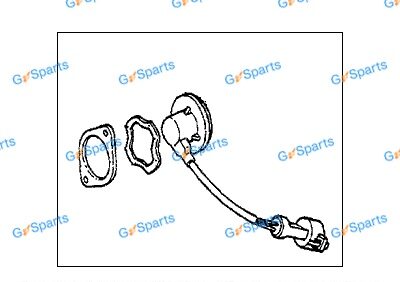
Genuine Honda TPS Sensor 37890-PD6-661 – Fits Accord, Prelude, Civic, CR-V, Element (1985–2005)
OEM Honda TPS Sensor 37890-PD6-661 fits Accord, Prelude, Civic, CR-V, and Element (1985–2005). Precision 3-wire throttle sensor for stable engine performance.
Did you like this product? Add to favorites now and follow the product.

(+86) 180 07 12 47 38 WhatsApp, Telegram, WeChat
Description
The Honda TPS Sensor 37890-PD6-661 ensures accurate throttle control for Accord, Prelude, Civic, CR-V, and Element models spanning 1985 to 2005. Built with a robust 3-wire electric configuration, it enhances ignition timing, fuel management, and acceleration response. Supported by Dorman, NTK, and Standard Motor Products, this sensor offers both OEM and aftermarket dependability. Always cross-check with your VIN to confirm part compatibility before purchase, ensuring long-lasting reliability for your Honda vehicle.
Overview: Why the TPS Rules Drivability
Throttle accuracy governs idle stability, tip-in smoothness, cruise steadiness, and shift logic. When the signal drifts, the ECU guesses; when it’s precise, everything calms down. The Honda TPS Sensor 37890-PD6-661 restores the angle-to-voltage curve your engine expects during tiny blade movements. With believable input, fuel trims re-center, spark stabilizes, and torque-converter lockup behaves. If you’re chasing lurchy parking maneuvers, hunting on mild grades, or an idle that wobbles with the A/C on, the Honda TPS Sensor 37890-PD6-661 is a high-leverage fix. It brings back the quiet refinement Honda tuned into these cars—something you can verify on any decent OBD logger with clean, monotonic throttle traces and proportional airflow.
Fitment & Geometry: More Than Bolt Holes
Bolt pattern alone doesn’t guarantee correct behavior. Shaft-tang depth, indexing range, connector keying, and wiper-track taper determine whether the ECU sees truth or jitter. The Honda TPS Sensor 37890-PD6-661 matches throttle-body geometry, aligning mechanical rotation with the calibration’s expected voltage slope. Look-alike parts can seat yet flatten low-angle sensitivity, causing idle wander and cruise hunting that adaptation cannot mask. Correct geometry preserves fine control near closed throttle where drivability complaints are born. Choose the Honda TPS Sensor 37890-PD6-661 when you need the right taper, seating face, and plug indexing so the signal resolves tiny movements cleanly and the controller stops filtering chaos and returns to optimization.
Symptoms That Point to TPS Drift
Drivers describe feelings before codes: a soft stumble leaving lights, a hiccup easing into turns, or late downshifts on gentle hills. Logs reveal stair-steps, dropouts, or disagreement between MAF and angle at a fixed pedal. Replacing a tired unit with the Honda TPS Sensor 37890-PD6-661 collapses ambiguity into a clean, monotonic ramp. Expect smoother tip-in, calmer converter behavior, and predictable hill climbs. If the throttle plate is sticky or the cable has excessive slack, correct those first so the Honda TPS Sensor 37890-PD6-661 reports genuine driver intent. When mechanics are right and signal integrity returns, small annoyances vanish because the ECU finally trusts its inputs.
Codes & First-Pass Triage Without Guesswork
Correlation faults (P0121), low/high input (P0122/P0123), or intermittent spikes suggest sensor or harness issues. Begin with freeze-frame: note TPS %, RPM, load, and MAF. Closed throttle should sit stably in low single digits; wide-open should approach the platform’s upper band without stair-steps. After fitting the Honda TPS Sensor 37890-PD6-661, back-probe the 5-V reference and sensor ground; voltage drop must remain minimal even with accessories on. If the ramp is crisp yet trims wander, smoke-test for vacuum leaks and inspect idle-air passages. A healthy Honda TPS Sensor 37890-PD6-661 often reveals environmental faults the old lazy signal hid, so fix the context before blaming new electronics.
Mechanical Baseline Before Electronics
Electronics can’t rescue sticky mechanics. Clean the throttle bore and blade edges, confirm return-spring snap, and set cable free-play so the plate closes fully without binding. Inspect intake boots for splits and seat clamps past ridges to prevent unmetered air. With that baseline established, install the Honda TPS Sensor 37890-PD6-661 to capture a stable zero and shorten relearn. A clean stop and smooth blade motion let the Honda TPS Sensor 37890-PD6-661 track small angles accurately, keeping idle control steady and shift logic predictable. Skipping these basics forces the ECU to burn adaptation on grime rather than honoring genuine pedal input.
Tools, Access & Safety That Save Time
Plan the job on a cool engine. Gather JIS/Phillips drivers, a small torque screwdriver, a mirror for connector access, contact-safe cleaner, and a paint marker for orientation. Pre-stage loom clips to keep wiring off hot shields. Practice the latch feel at the bench on the Honda TPS Sensor 37890-PD6-661 so the on-car click is unmistakable. Avoid prying against the throttle shaft; even torque prevents housing warp that later appears as mid-range chatter. Ten careful minutes here ensure the Honda TPS Sensor 37890-PD6-661 delivers a calm ramp on the very first key-on—no surprises after heat-soak or a bumpy road test.
Removal & Installation Habits That Prevent Comebacks
Loosen fasteners in alternating turns and never twist the throttle shaft to “help” removal. Keep solvents away from seals and the PCB cavity. When seating the Honda TPS Sensor 37890-PD6-661, feel gentle tang engagement—resistance signals misalignment. Hand-start screws, torque lightly in a cross pattern, then route the loom through factory clips with proper strain relief. These quiet habits keep the Honda TPS Sensor 37890-PD6-661 stable through heat-soak, winter starts, and rough pavement. A clean install is invisible during operation—no intermittent dropouts, no mystery hiccups, just a believable angle signal the controller welcomes.
Indexing & Setting a Believable Zero
If rotational adjustment is available, mark the original index. Install the Honda TPS Sensor 37890-PD6-661 flush against the stop, then tweak within the slot only enough to achieve a steady, low single-digit TPS % at closed throttle without creep. A believable zero stabilizes idle control, prevents false “driver demand,” and shortens long-term trim migration. Recheck after heat-soak; a consistent baseline proves seating is correct and the mechanical stop is honest. Skipping this two-minute discipline invites wandering idle, delayed lockup, and needless rework that the Honda TPS Sensor 37890-PD6-661 could have avoided with proper indexing.
Electrical Baseline & Smooth Voltage Sweep
Key-on, engine-off: verify a steady 5-V reference, a clean sensor ground, and a linear sweep as you rotate the blade by hand. The Honda TPS Sensor 37890-PD6-661 should produce a monotonic rise without flat spots or dropouts. During the sweep, gently wiggle the connector—any flicker hints at pin tension or crimp issues to correct now. After wiring is proven, trace correlation with airflow at idle and light cruise. When the Honda TPS Sensor 37890-PD6-661 and MAF agree, the ECU doesn’t waste time filtering noise; it simply controls fuel and spark smoothly, yielding calmer timing and steadier neighborhood launches.
Idle Relearn Without Drama
Some ECUs relearn instantly; others prefer a short ritual. After installing the Honda TPS Sensor 37890-PD6-661: warm idle with A/C off, steady suburban cruise for a few minutes, and one clean engine-brake decel to a stop. Short-term trims should oscillate modestly around zero; long-term trims drift toward center; return-to-idle becomes uneventful even as fans or steering loads engage. If idle creep appears, recheck indexing and the throttle stop rather than chasing software. With a believable zero, the Honda TPS Sensor 37890-PD6-661 lets the controller settle quickly and keeps shift scheduling and lockup logic consistent.
Live-Data: What “Good” Actually Looks Like
Graph TPS % with MAF and ignition timing at warm idle and light cruise. A healthy trace from the Honda TPS Sensor 37890-PD6-661 shows a smooth slope; airflow rises proportionally; timing jitter shrinks as load stabilizes. Add three light tip-ins; enrichment should be brief and proportional without flare or bog. Save screenshots tied to the VIN. Months later, re-run the script; tidy overlays confirm the Honda TPS Sensor 37890-PD6-661 is aging gracefully. If drift appears, smoke-test the intake and verify fuel pressure before suspecting the new sensor—good inputs expose context problems rather than creating them.
Transmission Logic & Shift Quality
Automatic schedules infer load heavily from throttle trend. A drifting signal causes early kick-downs, delayed upshifts, and lockup dithering that feels like indecision on rolling terrain. With a stable slope from the Honda TPS Sensor 37890-PD6-661, the controller trusts your request. Expect calmer neighborhood launches, predictable hill climbs, and consistent converter behavior. Manuals benefit, too: heel-toe blips become repeatable, and low-speed modulation regains finesse. The Honda TPS Sensor 37890-PD6-661 doesn’t add peak power; it removes friction you perceive as hesitation or bog—refinement you notice every time you feather the pedal.
Idle Stability With Accessory Loads
Fans, A/C, and steering add load at exactly the wrong moment for marginal loops. Believable angle from the Honda TPS Sensor 37890-PD6-661 lets the ECU anticipate and nudge airflow and spark before RPM sags. The result is fewer steering-wheel vibrations at lights, quieter A/C-on behavior, and less pedal babysitting. Pair the Honda TPS Sensor 37890-PD6-661 with a clean bore and healthy idle-air control to lock in that composed, factory-like idle owners expect. If behavior changes only with seasonal fuel or deep cold, confirm grounds and harness condition before suspecting the sensor.
Cold Starts, Heat-Soaks & Seasonal Fuels
Dense winter air and oxygenated blends stress compensation; hot-soaks challenge connectors and tracks. The Honda TPS Sensor 37890-PD6-661 shortens adaptation, preventing cold tip-in flare or dip and post-soak wander. If behavior shifts only with ambient swings, re-inspect grounds, harness routing, and battery health. A stable reference and clean signal keep mixture, timing, and gear logic aligned across summer grades and winter commutes. The payoff is subtle but constant: fewer stumbles in the first 50 meters, quieter departures with A/C load, and drivability that feels “just right” without theatrics.
Harness Care, Connector Hygiene & Noise Immunity
Millivolt-scale signals are unforgiving. Inspect the loom for past splices, tight bends, and abrasion at brackets. Clean the connector with contact-safe spray; avoid dielectric grease on low-voltage pins unless service data specifies it. After installing the Honda TPS Sensor 37890-PD6-661, tug-test the latch, sleeve near hot panels, and leave slack for engine rock. These habits prevent fretted pins, intermittent dropouts, and the dreaded “only after heat-soak” complaint. Good wiring discipline lets the Honda TPS Sensor 37890-PD6-661 deliver the calm trace you expect long after the first perfect test drive.
Avoiding Pitfalls That Waste Hours
Most comebacks trace to basics: over-tightened screws warping housings, half-latched connectors, misrouted looms rubbing a bracket, or solvent-swollen seals. Slow down for torque, alignment, and clip engagement. Don’t chase idle with throttle-stop tweaks; fix the cause, then let the Honda TPS Sensor 37890-PD6-661 report reality. A five-minute validation loop after install prevents the intermittent gremlin that erodes trust. If a road test still shows jitter, bench-sweep the sensor and wiggle the harness—pin tension issues masquerade as “bad parts” until you catch them in the act under a gentle tug.
DIY vs. Shop: Picking the Right Path
Many installs are driveway-friendly with patience and light tools. Escalate if fasteners are seized, the housing is warped, or access is cramped. A good shop will index, torque, and validate quickly with a scope and scan tool. Bringing the Honda TPS Sensor 37890-PD6-661 ensures exact fit; bringing proof after install ensures confidence. Ask the shop to capture before/after traces—angle ramp, MAF correlation, trims—so “feels better” becomes evidence. With the Honda TPS Sensor 37890-PD6-661 installed and documented, future diagnostics start from known truth rather than hunches.
A Compact, Repeatable Verification Script
Create a simple road test: warm idle 60 seconds, steady 2,200–2,500 rpm 90 seconds, three gentle tip-ins, and one engine-brake decel to idle. Capture TPS %, MAF g/s, RPM, spark, and STFT. With the Honda TPS Sensor 37890-PD6-661 installed, healthy results show a linear ramp, proportional airflow, modest STFT oscillation, and reduced timing jitter as load steadies. Save screenshots under the VIN, then re-run at oil changes. Consistent overlays prove durable health and flag drift early—usually a tiny leak or aging coil—so the Honda TPS Sensor 37890-PD6-661 keeps anchoring a calm feedback loop.
Case Study: Hill Hunts & Parking-Lot Jerkiness
A customer reported late downshifts on rolling terrain and lurchy low-speed maneuvers. Baseline logs showed stair-stepped angle and mismatch with airflow at a fixed pedal. After installing the Honda TPS Sensor 37890-PD6-661, performing a short relearn, and cleaning the throttle bore, the ramp smoothed and converter dithering vanished. The driver noticed predictable hill climbs and gentle, controllable creep in tight spaces. Follow-up captures two weeks later matched day-one overlays. That’s the quiet value of the Honda TPS Sensor 37890-PD6-661: not fireworks, just refined control the calibration can trust every day.
Quality Control & Bench Testing Before Install
Small pre-install checks prevent big headaches. Before mounting the Honda TPS Sensor 37890-PD6-661, verify packaging integrity, inspect housing flatness, and confirm the shaft tang engages smoothly without play. With a regulated 5-V bench supply, back-probe the signal and sweep the throttle slowly; you should see a clean rise with no jumps or dead zones. Lightly wiggle the connector during the sweep—any flicker hints at pin or crimp issues to correct now. Label install date and mileage, then photograph routing; the Honda TPS Sensor 37890-PD6-661 will reward your discipline with predictable results.
Product Page Essentials That Prevent Misorders
Great e-commerce reduces friction. A clear listing for the Honda TPS Sensor 37890-PD6-661 should show connector macros, shaft-tang style, indexing range, harness length, and clear trim compatibility. Add torque targets, a concise idle-relearn primer, and a one-page validation checklist so buyers move from checkout to confirmation the same day. These details cut returns, shorten support calls, and help DIYers and shops land first-try success with the Honda TPS Sensor 37890-PD6-661, turning a small part into a predictable drivability win.
Protecting Catalysts, Saving Fuel, Extending Calm
Accurate load inference prevents defensive enrichment that wastes fuel and overheats catalysts. Over months, small improvements compound into quieter operation and steadier speed holding. By restoring believable angle with the Honda TPS Sensor 37890-PD6-661, transitions stay clean, reducing soot and protecting substrates in traffic and on grades. The win is subtle yet daily: the dash stays dark, shifts feel logical, and the engine responds proportionally. That’s tangible value from the Honda TPS Sensor 37890-PD6-661—refinement you feel in every commute without touching the tune.
Long-Term Habits That Preserve the Win
Keep filters fresh, fix misfires quickly, and avoid aggressive solvents near seals and PCBs. Once or twice a year, re-run your logging script at fixed pedal positions; trends reveal degradation early. If overlays drift, re-smoke the intake and confirm fuel pressure before suspecting the Honda TPS Sensor 37890-PD6-661. Document routing photos and torque notes with the VIN so future diagnostics start from known truth. Good habits plus honest data keep manners intact—linear pedal mapping, quiet shifts, and stable idle—season after season.
Pre-Inspection Checklist Owners Can Trust
Before any lane visit, confirm no pending angle-correlation faults, verify a steady idle with A/C off and on, and run your suburban loop. With a healthy Honda TPS Sensor 37890-PD6-661, trims remain centered, converter lockup is predictable, and cruise holds speed without hunting. Bring baseline screenshots; data on paper ends debates fast and proves the loop is anchored by a clear throttle signal. If a new complaint appears later, compare to day-one overlays; when the Honda TPS Sensor 37890-PD6-661 trace stays clean, the environment—not the sensor—is where to look.
Accessory Loads & Return-to-Idle Grace
Electrical loads can expose marginal control. After installing the Honda TPS Sensor 37890-PD6-661, test headlights, blower, and rear defogger at idle. The controller should pre-empt RPM sag with airflow and spark nudges, then settle smoothly without oscillation. If you observe creep, revisit indexing and re-verify closed-throttle angle. When the Honda TPS Sensor 37890-PD6-661 reports a believable zero and a smooth ramp, load steps become boring—exactly what civilized idle should feel like.
Heat-Soak, Vibration & Connector Integrity
Thermal cycling and vibration are the enemies of millivolt-scale signals. Route and sleeve the harness so it clears sharp brackets and hot shields. After fitting the Honda TPS Sensor 37890-PD6-661, perform a gentle wiggle test while graphing TPS at warm idle; flat traces under movement confirm healthy crimps and pin tension. Many “intermittent” complaints are simply connectors that never fully latched. A firm click and strain relief keep the Honda TPS Sensor 37890-PD6-661 from becoming a scapegoat when the real issue is harness fatigue.
Cable-Throttle Nuances & Free-Play Checks
On cable-actuated systems, free-play that’s too tight fakes partial demand; too loose delays response. Set free-play to spec, then confirm the Honda TPS Sensor 37890-PD6-661 sits in a stable low-percent zone at closed throttle. With blade edges clean and the stop honest, the sensor’s output should remain rock-steady at idle yet ramp smoothly with tiny pedal movements. This is where the Honda TPS Sensor 37890-PD6-661 shines—translating micromotions into a trustworthy signal the ECU can act on instantly without overshoot or oscillation.
Manual Transmission Smoothness & Precision
Modulation at parking speeds and heel-toe blips depend on predictable throttle behavior. A choppy signal complicates fuel and spark transitions, making rev-matching clumsy. Install the Honda TPS Sensor 37890-PD6-661, validate the sweep, and you’ll notice crisp blips that land where you expect, with the engine catching itself gracefully on return. Pair this with sound engine mounts and a clean idle-air path and manual drivability feels precise again. The Honda TPS Sensor 37890-PD6-661 gives your right foot a faithful, linear conversation with the ECU.
ECU Learning Windows & When to Reset
Not every complaint needs a hard reset. If trims are wildly biased, clear them after installing the Honda TPS Sensor 37890-PD6-661 and completing the mechanical baseline. Otherwise, allow the controller to learn over several calm drives; a believable signal speeds convergence naturally. A targeted reset after major air-path changes plus the Honda TPS Sensor 37890-PD6-661 typically produces the best balance: quick stabilization without erasing useful history that already fits your engine’s personality and fuel.
Evidence-Backed Confidence, Every Time
The simplest way to build trust is to show data. Before replacing the sensor, capture idle and cruise snapshots; after installing the Honda TPS Sensor 37890-PD6-661, repeat the exact script. When owners see tidy overlays—smooth ramp, proportional airflow, centered trims—confidence replaces speculation. That is the professional edge: not just fitting the Honda TPS Sensor 37890-PD6-661, but proving the system is now anchored by a clean, believable throttle signal that the calibration can use to deliver factory-smooth manners day in and day out.
External Resources (Standards & Technical References)
- ISO 26262 — Road Vehicles Functional Safety
- ISO 11898 — Controller Area Network (CAN)
- ISO 14229 — Unified Diagnostic Services (UDS)
- SAE J1979 — OBD-II Diagnostic Test Modes
- AEC-Q100 — Stress Test for Automotive ICs
Related Internal Links
Related products


Recently Viewed Products


G-SPARTS – Leading Auto Parts Supplier Since 2009
Trusted by 1000+ Clients Worldwide | Chinese (BYD, Geely, Chery, …), Japanese (Toyota, Honda, Nissan, …), European (BMW, Mercedes, VW, …) & American (Ford, Chevrolet, Tesla, …) Car Spares | Best Prices & OEM Quality | 15+ Years Expertise | Professional Team, Fast Global Shipping
Copyright 2025 © G-Sparts All Rights Reserved. | Premium Chinese Auto Parts Supplier – Worldwide Shipping | Best Prices on OEM & Aftermarket Spares

Reviews
There are no reviews yet.