
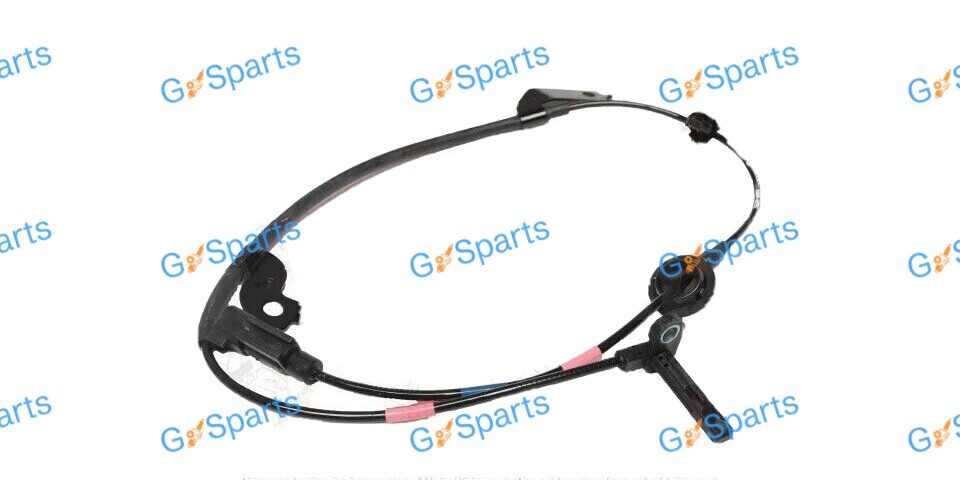
Drive Safer with OEM-Grade Mitsubishi ABS Sensor 4670B310 – 2017–2025 Mitsubishi Outlander, Outlander Sport (Front (typically FL/FR))
ABS Sensor for 2017–2025 Mitsubishi Outlander, Outlander Sport – Front (typically FL/FR). OEM 4670B310 with Magnetic sensor, 2-wire configuration for precise wheel-speed reporting.
Did you like this product? Add to favorites now and follow the product.

(+86) 180 07 12 47 38 WhatsApp, Telegram, WeChat
Description
Restore ABS performance on your 2017–2025 Mitsubishi Outlander, Outlander Sport with this OEM-equivalent wheel speed sensor (Part 4670B310, Front (typically FL/FR)). The robust Magnetic sensor, 2-wire configuration design feeds accurate wheel-speed data to the ABS/ESC systems, reducing lock-up and improving control in emergency braking. Quality aftermarket coverage includes Bosch, Denso, ATE. Found in front wheel positions; ensure correct part number. Always confirm by VIN, axle location, and connector shape before ordering for perfect fit.
Fitment Fundamentals That Prevent Comebacks
Getting the right part starts with careful identification of trim, drivetrain, and build nuances, followed by visual comparison of connector clocking, mounting ear shape, and O-ring profile. Check the harness length and grommet locations against the original so clips align and strain relief is preserved through suspension travel. Inspect the tone ring or encoder surface before installation to avoid substituting a sensor for what is really a mechanical fault. Once these basics are confirmed, Mitsubishi ABS Sensor 4670B310 slides in as a true drop-in, letting you reuse factory hardware without shims or improvisation. That fidelity to design reduces rework, preventing small fit errors from becoming intermittent electrical headaches later.
Early Warning Signs That Point to Wheel End Issues
Before a warning icon appears, the system may whisper clues. Pedal flutter at walking pace, unexpected traction flashes during gentle launches, or a faint clicking from the hydraulic unit on dry pavement are hints that one corner’s speed signal is lagging or dropping out. Mitsubishi ABS Sensor 4670B310 Scan data often shows a stubborn zero near a stop while the other corners report smoothly. Harness chafe at control arms, corrosion in the bore, or metallic dust on the encoder can all distort readings. Replacing compromised components with Mitsubishi ABS Sensor 4670B310 restores clean edges the controller can trust, easing false interventions and returning a reassuring linear feel at the pedal.
How Magnetic Encoders Become Decisions at the Module
Wheel speed sensing converts alternating magnetic patterns into a digital square wave whose frequency mirrors rotation. The control module compares all corners continuously, looking for divergence that indicates impending slip. A stable signal requires the sensing face to sit at the intended gap, robust magnetics, and a harness that preserves edge quality. The geometry and manufacturing discipline behind Mitsubishi ABS Sensor 4670B310 keep the waveform strong from crawl to highway pace. When edge timing stays crisp, pressure modulation feels transparent rather than choppy, and related functions—brake force distribution, traction assistance, stability corrections—coordinate like a single, well-tuned system that quietly has your back.
Evidence Beats Guesswork: Practical Diagnosis That Saves Time
Efficient diagnosis begins with live data. Watch each corner during steady cruise, gentle deceleration, and the roll to a complete stop. Healthy inputs track together; a weak one jitters or freezes suddenly. Wiggle the harness gently at rest and during a slow spin to reveal intermittent breaks. If available, scope the waveform to inspect amplitude and edge shape. Once the suspect corner is identified, installing Mitsubishi ABS Sensor 4670B310 establishes a known-good baseline, ensuring you aren’t chasing hydraulic gremlins or pad irregularities that were never to blame. With Mitsubishi ABS Sensor 4670B310 delivering steady data, the system’s logic returns to smooth, predictable decision-making.
Preparation Makes Installation Clean and Predictable
Set the stage for success. Park on level ground, support the vehicle securely, and remove accumulated grit with gentle brushing rather than pressure that forces debris into connectors. Soak the retaining fastener, have a cylindrical bore brush ready, and keep the new component sealed until it’s time to seat it. Lay out fresh clips, abrasion sleeves, and a dab of dielectric grease for seals—not contacts—to keep moisture at bay. Good preparation doesn’t add much time, yet it pays dividends when Mitsubishi ABS Sensor 4670B310 slips into a clean bore, seats squarely, and begins its service life free from contamination that could otherwise cloud signals within days.
Techniques for Removing Stubborn or Corroded Originals
Wheel ends live in harsh neighborhoods of salt and heat, so old sensors can seize. After removing the fastener, resist prying against the housing; alternately apply localized heat to the knuckle and penetrating oil, then twist and pull straight out. If the body breaks, clean the bore patiently until it’s uniform. Inspect the seating land and confirm the O-ring groove is clear. These steps protect the new part from distortion and preserve the critical air gap. When the passage is truly ready, Mitsubishi ABS Sensor 4670B310 installs without force, ensuring the sensing face aligns where the designer intended and the waveform won’t be compromised by tilt.
Installation Details That Keep Signals Strong
Lightly lubricate the O-ring with a rubber-safe product, insert the unit straight, and confirm the mounting ear sits flush before snugging the fastener. Refit shields that deflect grit from the encoder, and route the harness exactly as the factory intended so it clears coils, links, and knuckles across steering and suspension travel. Use every clip; they exist to prevent micro-motion that can fatigue copper. With these basics handled, Mitsubishi ABS Sensor 4670B310 produces a clean, low-noise signal that the controller reads confidently, transforming choppy low-speed behavior into calm stops and eliminating nuisance interventions that once eroded driver trust at intersections.
Harness Integrity: The Often-Overlooked Lifeline
A perfect pickup cannot overcome a compromised wire. Trace the loom for chafe, flattening, or UV-hardened sections that crack when flexed. Confirm connector seals are intact and terminals maintain proper tension, then apply a thin film of dielectric grease to the perimeter to limit moisture ingress. Add abrasion sleeves where the loom brushes metal edges and ensure generous slack at moving joints so bends remain gentle. Paired with this care, Mitsubishi ABS Sensor 4670B310 delivers crisp, repeatable edges that resist the vibration, splash, and temperature cycling found in real-world driving, preserving module confidence day after day through season changes and rough pavement.
Relearn Basics: Helping the Module Trust Fresh Input
Many platforms adapt to slow drift in their inputs, so clearing stored faults and performing a short drive routine accelerates acceptance of the new baseline. Cycle ignition, confirm no active alerts remain, and complete a calm route that includes steady cruising, mild accelerations, and smooth stops fading to a roll. Watch live data to verify all corners converge to zero uniformly. If your platform requests simple calibrations for steering angle or yaw after battery work, complete them before traffic testing. With procedures followed, Mitsubishi ABS Sensor 4670B310 integrates seamlessly, letting the algorithm refocus on controlling pressure instead of filtering unreliable noise.
Validation Drive: Turning Data into Pedal Confidence
Prove the repair before closing the hood. Start on a quiet street, coast from neighborhood speed, and observe wheel reports taper evenly. Advance to firmer stops on clean pavement, then repeat on a slightly uneven surface to assess modulation finesse. Confirm traction assistance doesn’t intrude on gentle launches and that stability nudges are subtle during mild lane changes. No fresh faults should log during this sequence. When behavior is composed and records remain clean, you’ve demonstrated that Mitsubishi ABS Sensor 4670B310 is communicating clearly and that surrounding hardware supports stable sensing. That’s the calm your foot expects when you press the pedal.
Built to Endure: Materials, Sealing, and Dimensional Discipline
Longevity is engineered. Robust potting shields electronics from moisture, strain-relieved leads resist cyclic motion, and precise molding places the sensing face exactly where flow and field strength produce a crisp waveform. Corrosion-resistant housings help the bore release the unit years later, avoiding future service headaches. When the hub bearing is healthy and the encoder surface stays clean, Mitsubishi ABS Sensor 4670B310 maintains amplitude and timing that keep the controller’s comparison logic sharp, translating into transparent anti-lock on wet leaves, polished concrete, and gravel connectors. Durable construction is the quiet difference between steady confidence and recurring nuisance alerts.
Why Calibration Fidelity Beats Cut-Rate Temptation
Cheap imitations can look convincing while hiding weak magnetics, sloppy potting, or inconsistent geometry that dulls signal edges. The result is choppy modulation and stubborn alerts that waste hours. A component that honors factory calibration lets the algorithm work as designed, avoiding ad-hoc tuning or repeated parts darts. That’s the value proposition behind Mitsubishi ABS Sensor 4670B310: predictable behavior and seamless integration. Drivers feel it as a more natural pedal and fewer surprises, while shops value reduced comebacks and faster throughput. Over time, consistency saves more than the small difference between an OE-grade part and a bargain clone.
Buying Smart: Protecting Yourself from Counterfeits
Counterfeit electronics often reveal themselves through fuzzy box graphics, inconsistent fonts, or missing lot codes. Inspect pins for scratches suggesting prior use and reject units with residue near the sensing face. Choose sellers who provide clear invoices, support returns, and publish real photos of connectors and mounting ears—not generic stock art. Document pre- and post-repair data so you can measure improvement and defend decisions. With reputable sourcing in place, Mitsubishi ABS Sensor 4670B310 arrives in protective packaging with crisp molding and intact seals, ready to slot in and perform without creating new mysteries that demand yet another round of diagnosis.
Defending Against Salt, Heat, and Road Debris
Wheel wells see brine, gravel, and heat cycles that test any component. Brush scale from the bore, use rust-inhibiting compounds on nearby fasteners, and reinstall splash shields that keep grit off the encoder. Verify the harness isn’t in the direct path of spray and add abrasion sleeves wherever the loom skims metal. Good weatherproofing around grommets prevents moisture from wicking along conductors. Supported by these small defenses, Mitsubishi ABS Sensor 4670B310 preserves a clean, repeatable signal through winter freeze and summer baking, maintaining the quiet stability you expect every time the braking system makes a micro-decision on your behalf.
Reading Waveforms: Practical Insight for Faster Fixes
A healthy signal shows crisp, even edges that remain well-formed as the vehicle slows to a crawl. Missing encoder segments create periodic dropouts, while weak pickups round the transitions and complicate edge detection. Compare traces from opposite corners to spotlight anomalies quickly, then correlate with physical inspection of the encoder and harness path. Once root cause is nailed down, replacement transforms the graph and the seat-of-the-pants feel. Clean, consistent traces after installing Mitsubishi ABS Sensor 4670B310 correlate with a calmer pedal and fewer false interventions, creating a satisfying alignment between what the screen shows and what the driver experiences.
System Harmony: How ABS, Traction, and Stability Talk to Each Other
Brake force distribution, traction assistance, and stability logic all converse using the common language of wheel rotation. If one input lags, the conversation goes off-beat and help can arrive late or at the wrong corner. By restoring crisp edges and proper air gap, Mitsubishi ABS Sensor 4670B310 gives every strategy a reliable foundation, so assistance feels transparent rather than intrusive. That harmony means you glide across painted crosswalks, rain-polished intersections, and patchwork asphalt with less drama, because the module isn’t second-guessing bad data—it’s orchestrating pressure changes with the confidence that each wheel report truly reflects what’s happening at the road.
Workflow Wins for Shops and Fleets
Operations thrive on repeatability. Standardizing on proven components tightens estimates, shortens cycle time, and simplifies training. Build a simple checklist—clean the bore, inspect the encoder, route the harness exactly, verify with live data, road-test—so even new techs produce veteran results. Keep a library of good traces for fast comparison. With consistency at each step, Mitsubishi ABS Sensor 4670B310 becomes the quiet backbone of your brake electronics workflow, reducing comebacks and freeing bays for higher-value work. Drivers notice the difference too: fewer alerts, steadier stops, and a sense that the vehicle simply behaves—no drama, no surprises, just dependable control in everyday conditions.
Product Page Essentials That Make Online Buying Easy
Clarity on the product screen prevents delays later. High-resolution photos of the connector face and mounting ear, a verified fitment matrix, and guidance on companion clips or protective loom help customers order confidently. Transparent shipping options and responsive support close the loop. When Mitsubishi ABS Sensor 4670B310 is presented with practical guidance—not just a part number—owners and technicians can complete their carts in one pass and get back to the real work of installation and verification. A helpful page turns a transaction into momentum, moving projects from diagnosis to proof-of-repair without unnecessary back-and-forth.
Replacing Myths with Maintainable Habits
Cleaning the pickup face can help when debris is the culprit, but it won’t heal broken internal leads. Matching connectors don’t guarantee calibration alignment or correct air gap. Warning lights don’t always clear themselves; many controllers expect fault memory to be reset and a short validation route completed. Success comes from evidence, careful installation, and confirmation. Choose a correct, well-built component, verify the encoder and harness health, and validate results. When owners follow these habits with Mitsubishi ABS Sensor 4670B310 as the core replacement, they enjoy lasting calm on the dashboard and braking that feels natural rather than unpredictable.
Calm Troubleshooting When Alerts Return
If a warning reappears, revisit fundamentals. Confirm the connector lock is fully seated, seals are intact, and the harness clears moving parts at full lock and full rebound. Spin the hub while watching live data to ensure the reported value glides to zero without stutter. Inspect the encoder for chips and check bearing play that can alter the air gap under load. If shared grounds or module feeds are suspect, address them methodically. With the surrounding environment corrected, Mitsubishi ABS Sensor 4670B310 provides the steady signal expected, and lingering alerts typically give way to the quiet, predictable behavior that validates the repair.
Seasonal Habits That Preserve Reliable Signals
Cold snaps, spring potholes, and summer construction each stress wheel ends differently. After tire rotations or swaps, recheck clip positions and slack at full steering angle, since small geometry shifts can tug on the loom. Rinse away brine to slow corrosion creep around the bore, and verify grommets continue to seal against splash paths in heavy rain. These quick inspections fit neatly into routine service intervals. Owners who have renewed the pickup with Mitsubishi ABS Sensor 4670B310 find that a few seasonal habits protect their investment, keeping the data stream clean so the controller can focus on precise modulation rather than filtering noise.
DIY or Professional: Choosing the Right Path for Your Repair
Careful enthusiasts can handle straightforward access and cooperative hardware, especially when they prepare tools, clean thoroughly, and respect harness routing. Stubborn, corroded mounts, brittle connectors, or encoders damaged by prior bearing issues are where professional experience shines. There’s no penalty for collaboration: you can prep and clean while a technician handles extraction finesse and final seating. Either approach aims for the same outcome—a crisp, repeatable signal that keeps the dashboard quiet. When installed with care, Mitsubishi ABS Sensor 4670B310 rewards the effort with a composed pedal, minimal intervention, and the easy confidence you feel when every stop just works.
Responsible Disposal and Environmental Stewardship
Thoughtful service doesn’t end at installation. Retire failed electronics through proper recycling channels so metals and plastics can be recovered rather than landfilled. Contain metallic dust from damaged encoders, and keep shop floors and driveways free of debris that might migrate into stormwater. Label removed parts clearly to avoid mix-ups and ensure they don’t drift into general waste. Customers appreciate providers who pair technical skill with environmental responsibility. Wrapping a repair that includes Mitsubishi ABS Sensor 4670B310 with conscientious disposal elevates the experience and demonstrates that safety and sustainability can share the same bay without adding complexity or cost.
Teaching Drivers the Basics for Long-Term Confidence
A minute of coaching transforms outcomes. Explain how wheel speed inputs shape modulation, why harness routing protects against fatigue, and what symptoms merit attention before warning icons appear—like pedal chatter near a stop or traction flashes on dry takeoffs. Encourage owners to mention recent curb strikes or deep pothole encounters that might have jarred the corner. This shared understanding helps small issues surface early. When drivers participate, the clean signal path you created with Mitsubishi ABS Sensor 4670B310 stays healthy longer, and future brake or tire work is more likely to preserve, not disturb, the conditions that keep assistance smooth and quiet.
Warranty, Documentation, and Support That Reduce Downtime
Coverage is more than a piece of paper; it’s a plan. Save receipts, pre-install screenshots, and validation traces to streamline any future conversations. Favor sellers who publish fitment notes, installation tips, and post-install checklists along with the part. Accessible support that speaks the language of diagnostics is invaluable when regional variations or prior modifications complicate an otherwise simple job. Backed by this documentation and service mindset, Mitsubishi ABS Sensor 4670B310 becomes a low-risk choice—easy to defend in a shop environment and easy to recommend when a neighbor asks why your repair worked the first time and stayed fixed.
The Value Equation: Confidence that Pays You Back
The least expensive box rarely yields the lowest total cost. Consider technician time, potential comebacks, driver anxiety from recurring alerts, and the wear imposed by inconsistent modulation. A component that matches calibration and survives real-world abuse preserves pads, stabilizes stops, and reduces diagnostic hours. Viewed through that broader lens, Mitsubishi ABS Sensor 4670B310 is an investment in uptime and peace of mind. It’s the difference between a vehicle that feels tentative in rain and one that remains composed as conditions change—exactly the kind of return that turns a small purchase into a daily confidence boost you notice every time the light stays off.
Use-Case Perspectives: City Commutes, Towing, and Adventure Travel
Different days stress brake control differently. Urban driving brings polished crosswalks and steel plates where delicate modulation pays dividends. Towing asks the system to interpret added rear-axle load and maintain balance as surfaces change. Adventure days add gravel connectors, water crossings, and dust that sticks to magnetic surfaces. Across these scenarios, Mitsubishi ABS Sensor 4670B310 supplies the module with a crisp account of rotation at the wheel end, keeping assistance transparent whether you’re edging into a tight garage, easing down a wet boat ramp, or threading a rain-patched canyon road. Consistent data makes the car feel capable without calling attention to itself.
Pro Tips That Make Good Repairs Great
Small choices compound into lasting results. Use anti-seize sparingly on nearby bolts, never in the bore. Replace tired clips instead of bending them again. Confirm shield tabs actually engage so they deflect grit, not rattle. Photograph routing before teardown and match it exactly on reassembly. Mitsubishi ABS Sensor 4670B310 Share a post-install data snapshot with the customer to close the loop and set expectations. These habits extend the life of Mitsubishi ABS Sensor 4670B310 and the surrounding hardware, protecting your time while building a reputation for fixes that are invisible in the best way—nothing to explain, no quirks to excuse, just quiet competence.
Building a Shop Playbook Around Consistency
Mitsubishi ABS Sensor 4670B310 Shops thrive on habits that scale. Create a wheel-end template that starts with bore prep, encoder inspection, harness evaluation, precise installation, and a documented verification drive. Train new techs to read traces, recognize chafe patterns, and route looms with intention. Keep a shared library of “known-good” captures by platform for quick comparisons. With this framework, Mitsubishi ABS Sensor 4670B310 becomes the dependable constant in your workflow, turning uncertain jobs into predictable wins and making it easy to stand behind every repair with confidence that holds up on wet mornings and hot afternoons alike.
Closing Thoughts: A Small Part with Outsized Impact
Reliable braking isn’t flashy, but it is foundational to every mile you drive. When the controller receives clear, timely inputs, pressure changes feel natural, traction help is subtle, and stability nudges arrive with finesse rather than drama. If your vehicle has started sending mixed signals, return to a calibrated baseline and validate the result with care. Installed properly, Mitsubishi ABS Sensor 4670B310 restores the quiet competence that lets you focus on the road, not the dashboard. Choose a trusted source, follow the steps in this guide, and enjoy the composed, predictable stops that define a car you can count on every day. Mitsubishi ABS Sensor 4670B310
External Links (ABS Sensor Education & References)
Internal Links (Keep Users on G-Sparts)
Related products



G-SPARTS – Leading Auto Parts Supplier Since 2009
Trusted by 1000+ Clients Worldwide | Chinese (BYD, Geely, Chery, …), Japanese (Toyota, Honda, Nissan, …), European (BMW, Mercedes, VW, …) & American (Ford, Chevrolet, Tesla, …) Car Spares | Best Prices & OEM Quality | 15+ Years Expertise | Professional Team, Fast Global Shipping
Copyright 2025 © G-Sparts All Rights Reserved. | Premium Chinese Auto Parts Supplier – Worldwide Shipping | Best Prices on OEM & Aftermarket Spares

Reviews
There are no reviews yet.