
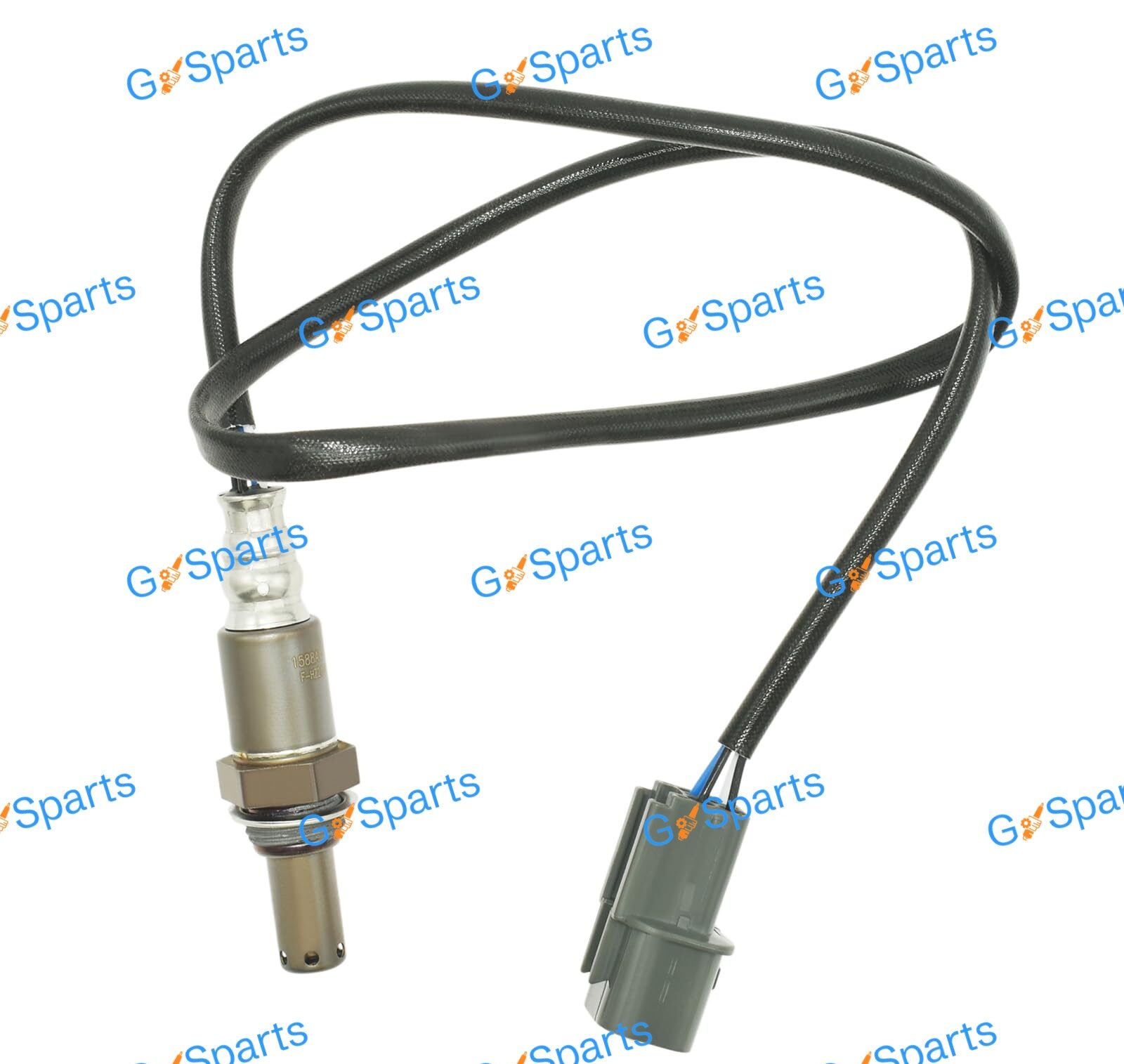
Genuine Mitsubishi Oxygen O2 Sensor 1588A147 – Peak Efficiency, Clean Emissions, OEM-Grade Confidence
O₂ sensor for Outlander 3.0L V6 (2007–2020) – Upstream (vehicle‑specific). Specs: Usually 4‑wire heated for V6; larger sensor body/harness.
Did you like this product? Add to favorites now and follow the product.

(+86) 180 07 12 47 38 WhatsApp, Telegram, WeChat
Description
OE‑style oxygen (lambda) sensor listing for Mitsubishi applications. Models: Outlander 3.0L V6 (2007–2020). OEM/reference(s): 1588A147. Position: Upstream (vehicle‑specific). Typical specification: Usually 4‑wire heated for V6; larger sensor body/harness. Brands/cross‑refs: Mitsubishi OEM; Denso/OE replacements. Fitment guidance: VIN required — V6 vs 4‑cyl determines the exact part number. Source: eBay.
Closed-Loop Control That Drivers Can Feel
Modern ECUs constantly trim fuel using lambda feedback to keep mixtures near stoichiometry under changing loads, weather, and altitude. When the signal is lazy or noisy, trims widen, tip-in feels rubbery, and catalysts run hotter than necessary. Re-establishing a clean, fast waveform returns authority to the controller and calm to the cabin. The practical path is simple: capture a baseline, correct leaks, fit Mitsubishi Oxygen O2 Sensor 1588A147, then validate on a short, repeatable route. The improvement is obvious in both graphs and seat-of-pants, with oscillations tightening and idle becoming steady. Technicians appreciate objective proof; owners appreciate predictable response that makes every commute smoother. That dependable transformation is exactly why shops standardize on Mitsubishi Oxygen O2 Sensor 1588A147.
How a Zirconia O2 Sensor Guides Mixture Control
A zirconia Nernst cell compares oxygen in exhaust versus ambient, producing a steep voltage step around lambda. The ECU watches switching frequency, amplitude, and symmetry to steer injector pulsewidth. A stable heater keeps element temperature consistent across short trips and long idles so chemistry, not ambient, dictates the signal. When upstream switching is crisp, catalysts see fewer thermal shocks and downstream traces look calm at cruise. If cadence slows or becomes noisy, fuel economy fades and transients feel vague. Replacing a tired unit with Mitsubishi Oxygen O2 Sensor 1588A147 re-anchors the loop in physics the mapping expects, restoring the steady rhythm that keeps trims centered and emissions equipment happy mile after mile.
Upstream vs Downstream: Two Signals, One Story
Upstream elements drive immediate correction; downstream elements audit catalyst storage once the brick is hot. On a healthy car, cruise shows lively upstream oscillations with trims hovering near center, while downstream stays relatively steady and drops decisively during fuel-cut deceleration. If both traces misbehave, suspect intake or pre-sensor exhaust leaks; if only downstream is too active at steady speed, evaluate converter efficiency. The disciplined approach is baseline–fix–install–validate using Mitsubishi Oxygen O2 Sensor 1588A147. Clear graphs and consistent road results make approval easy, eliminate guesswork, and turn a vague complaint into a simple, documented resolution that stands up during future checks.
Early Clues Before a Warning Lamp Appears
Problems whisper before they shout. Watch for faint sulfur after long descents, idle wander when the A/C cycles, gentle cruise “yo-yo” on rolling terrain, or MPG that slips a little each fill-up. Scope plots reveal the pattern: slowed upstream cadence and a downstream trace busier than a hot catalyst should permit. Sequenced diagnostics beat parts darts—verify fuel pressure, scope ignition under load, smoke-test intake and pre-cat exhaust, then evaluate feedback. When fundamentals look green yet signatures remain tired, installing Mitsubishi Oxygen O2 Sensor 1588A147 converts ambiguity into a clean, decisive waveform. That tidy result reduces noise in every subsequent decision and accelerates readiness monitors.
Preparation That Protects Time and Budget
Great outcomes begin before a wrench turns. Work on a cool exhaust, pre-soak threads with penetrant, and stage a slotted O2 socket for straight force paths. Inspect the loom for heat glaze or rub-through, refresh brittle clips, and verify bank/position and connector keying to avoid forcing anything. Capture a baseline at warm idle and mid-speed cruise so improvements are measurable, not anecdotal. Hand-start every fastener, then torque to specification so sealing pressure is even. With these basics covered, installing Mitsubishi Oxygen O2 Sensor 1588A147 becomes a predictable, single-session task that ends with graphs you can print, share, and archive for future services.
Fitment Precision: Threads, Washers, and Clocking
Mechanical truth enables electrical honesty. Correct thread reach places the ceramic in the gas stream; a fresh crush washer prevents dilution; clean seats resist loosening; and anti-seize must never touch the tip. Clock the body so the lead clears joints and heat shields, leaving gentle service slack for engine movement. Confirm the connector lock by feel and sound, then photograph final routing. Poor seating invites micro-leaks that flatten waveforms and waste diagnostic time. When fitment is right and routing is tidy, Mitsubishi Oxygen O2 Sensor 1588A147 reports exactly what the ECU expects, letting the rest of the calibration behave like the engineers intended.
Heater Performance and Time-to-Switch Validation
Planar zirconia elements rely on robust heaters to light quickly and stay hot during queues and winter dawns. Weak heaters delay closed loop, push conservative enrichment, and overheat catalysts with excess fuel. After installing Mitsubishi Oxygen O2 Sensor 1588A147, measure time-to-switch from cold start, observe upstream cadence at idle and steady 60–80 km/h cruise, and verify the downstream audit quiets once the converter is hot. A decisive voltage drop during fuel-cut confirms thermal authority. Those signatures—calm, centered, repeatable—prove control has returned. Drivers feel steadier idle, cleaner tip-in, and fewer “quirks” blamed on age that were really just weak thermal management.
Installation Sequence That Lasts Years, Not Months
Hand-start threads, torque to spec, and route the lead with service slack. Avoid tight bends near the connector and radiant hotspots that cook insulation. Clip the loom at factory points and perform a gentle tug test near stress risers while rocking the engine to simulate movement. Keep the sensing tip pristine; never spin the lead to start threads. These small habits prevent heater opens, intermittent shorts, and noisy signals. Do them once, document them, and Mitsubishi Oxygen O2 Sensor 1588A147 will deliver the clean behavior your post-install graphs display today and your customers expect tomorrow.
A Five-Minute Drive Loop That Proves Success
Evidence beats adjectives. Warm fully, confirm closed loop, then record a minute of idle, a steady mid-speed cruise, two gentle accelerations, and a long decel to fuel cut. Healthy upstream switching is brisk and centered; downstream remains comparatively steady once hot and drops decisively during decel. Save overlays with ambient and fuel brand noted so later comparisons are apples-to-apples. When Mitsubishi Oxygen O2 Sensor 1588A147 is working as intended, the calm pattern appears immediately. That tidy plot becomes your objective sign-off today and your fast diagnostic shortcut six months from now.
Readiness Monitors and Predictable Inspections
Many readiness delays originate with weak upstream behavior, not failed converters. Tight upstream control keeps mixture near lambda; honest downstream oversight verifies conversion under realistic load. Re-establishing that balance with Mitsubishi Oxygen O2 Sensor 1588A147 helps monitors complete faster and inspections feel routine. The long-horizon benefit is cooler catalysts during climbs and summer traffic, fewer efficiency codes, and a data trail that keeps conversations brief and friendly. For busy families and fleets, predictability is priceless—and it starts with dependable sensing and disciplined validation.
Fuel Economy, Tip-In, and Total Cost of Ownership
Small lambda errors compound into real fuel spend and dull throttle feel. As switching slows or noise rises, the ECU enriches “just in case,” buying uncertain control with certain fuel. Renew the reference and trims re-center; MPG rebounds; part-throttle becomes crisp instead of hesitant; passing regains decisiveness. Over a maintenance cycle, fewer comebacks and faster validations protect margins for shops and patience for drivers. Because Mitsubishi Oxygen O2 Sensor 1588A147 restores the waveform maps were written around, the gains stick across weather swings and fuel brands without constant recalibration.
Urban Duty: Idle Quality, A/C Loads, and Crawl
Stop-and-go amplifies sloppy loops with frequent restarts, accessory spikes, and micro-transients. Weak feedback shows up as idle wander when the A/C engages, faint shudder during creep, or vague initial tip-in. The fix is methodical: repair intake or pre-cat exhaust leaks, confirm MAF integrity, restore oxygen authority, and validate on an urban-style route. When traces tighten after Mitsubishi Oxygen O2 Sensor 1588A147 renewal, owners notice immediately—glassy creep, clean accessory engagement, fewer “quirks,” and a sense that the car is cooperating rather than asking for compensation.
Light Mods Without Losing Street Civility
Even modest intake or exhaust tweaks can expose jitter if feedback is marginal. Sensible calibration starts with a proven reference: confirm repeatable upstream cadence at warm idle and mid-speed cruise, then adjust transient tables only after waveforms remain stable on the same loop. With Mitsubishi Oxygen O2 Sensor 1588A147 anchoring the input, you refine rather than compensate, improving the feel where drivers live—merges, rolling hills, and gentle tip-in—without spiking converter temperatures or delaying readiness. The result is performance that feels intentional and daily manners that remain quietly excellent.
Conversion-Optimized Product Pages Reduce Returns
High-intent shoppers convert when uncertainty disappears. Pair your listing with compatibility matrices, bank/position diagrams, connector close-ups, thread-reach notes, tool lists, and torque specs. Include a five-step validation drive with “what success looks like” plots that mirror the calm pattern expected after fitting Mitsubishi Oxygen O2 Sensor 1588A147. A concise FAQ clarifies upstream vs downstream roles, readiness timing, and short-trip expectations. When visuals match scan-tool reality, buyers self-verify and returns fall, because your guidance aligns with what they actually see on their drive.
Buyer’s Checklist for First-Pass DIY Success
Clarity creates wins. Match bank and position, verify connector keying and lead length, confirm thread reach and seat style, and inspect the vehicle harness for heat damage or chafe. Stage an O2 socket, torque references, penetrant, high-temp sleeve, and factory-style retainers before opening the hood. Baseline trims and simple plots, map a short validation route, and set expectations for warm-up. With tools, data, and steps ready, installing Mitsubishi Oxygen O2 Sensor 1588A147 becomes a calm, single-session job with an after-graph that speaks for itself—clean, centered, repeatable.
Counterfeit Awareness and Traceability That Protects Outcomes
Critical signals attract convincing copies that drift early and waste diagnostic hours. Protect results with tamper-evident seals, scannable serials tied to orders, and a “verify your unit” photo guide showing genuine connector mold lines, logo depth, and terminal finish. Ask installers to photograph labels and final routing for the work order; require waveform screenshots for claims so decisions rest on evidence, not memory. Sourcing Mitsubishi Oxygen O2 Sensor 1588A147 through vetted channels keeps behavior predictable and support decisions quick, fair, and trust-building.
Electrical Hygiene: Grounds, Voltage Drop, and Terminals
A perfect element can be framed by noisy wiring. Clean engine grounds, measure voltage drop under accessory load, and inspect terminals for corrosion or oil wicking that raises impedance. Ensure strain relief at factory clip points, avoid taut spans across moving joints, and reseat connectors until the lock audibly snaps. This hygiene removes external variables so the ECU can trust what Mitsubishi Oxygen O2 Sensor 1588A147 reports. The payoff shows first in graphs—tidy oscillations, centered trims—and then in driving as smooth response and quiet confidence in every condition.
Harness Routing, Heat Defense, and Vibration Control
Leads suffer when routed against hot shields or sharp edges. Add high-temp sleeve near radiant sources, avoid tight bends close to the connector, and leave service slack for engine movement. After fastening, gently rock the engine to confirm real-world clearance and photograph final routing. These small protections ensure the clean signal from Mitsubishi Oxygen O2 Sensor 1588A147 reaches the ECU intact, preventing intermittent jitters that masquerade as mysterious drivability gremlins and quietly preserving fuel economy over thousands of miles.
Fleet Strategy: Predictability at Scale
Across dozens of vehicles, small inefficiencies turn into line items—extra fuel, delayed monitors, and driver complaints that soak technician hours. Standardize parts, checklists, and a shared validation loop so first-pass fixes become default. Archive plots by VIN to spot drift early, coach drivers with objective data, and schedule service before symptoms escalate. Organizations that center their playbook on Mitsubishi Oxygen O2 Sensor 1588A147 report uniform drivability, smoother inspections, calmer phones, and a support inbox filled with solved tickets instead of recurring mysteries.
Warranty Clarity with Objective Proof
Support can be fast and fair when it is objective. Ask for two screenshots—warm-idle and steady-cruise plots—and one routing photo for claims. Define coverage clearly for workmanship versus contamination or exhaust leaks so expectations remain aligned. Predictable signatures delivered by Mitsubishi Oxygen O2 Sensor 1588A147 make “good vs bad” distinctions obvious on first review, turning tense exchanges into calm, data-led resolutions that protect margins without eroding trust in your brand.
Data-Driven Sign-Off and Organized Archiving
Objective proof closes the story and trains future technicians on what “normal” looks like. After installation, log upstream voltage at idle and cruise; switching should be crisp and centered. Downstream should remain comparatively steady when the catalyst is hot and drop decisively during fuel cut. Overlay trims to confirm authority and watch quick convergence after small load changes. Save PDFs with route, ambient, and routing photos so future comparisons are apples-to-apples. Built around Mitsubishi Oxygen O2 Sensor 1588A147, these records turn later complaints into minutes, not hours.
Cold-Climate Strategy and Short-Trip Reliability
Frosty mornings expose heater and supply-voltage weaknesses that delay closed loop and spike fuel use. Begin by confirming cranking voltage and alternator output; evaluate time-to-switch at similar ambient temperatures; recommend a brief, gentle warm phase before load. Add heat sleeve where the loom passes near splash-prone areas, and inspect connectors for moisture paths appearing after overnight soak. With those supports in place, Mitsubishi Oxygen O2 Sensor 1588A147 reaches operating temperature quickly, trims converge sooner, and seasonal MPG swings shrink from noticeable to negligible.
Reseller Kits, Training Assets, and Unified Playbooks
Give partners a single source of truth: canonical titles, annotated connector close-ups, thread-reach notes, torque values, and a one-page validation guide that shows healthy idle, cruise, and long-decel plots. Equip support with macros requesting two screenshots and one routing photo so approvals are fast and fair. When storefront copy, bench steps, and post-sale policies align around Mitsubishi Oxygen O2 Sensor 1588A147, installers document success the first time, claims resolve quickly, and customers enjoy the OEM-calm drivability promised on the page.
Urban Case Study: Before/After You Can Show Customers
Consider a sedan with vague cruise and sulfur odor after hill descents. Baseline plots show slow upstream cadence and lively downstream activity at hot cruise. Intake leaks repaired and Mitsubishi Oxygen O2 Sensor 1588A147 installed, the validation loop reveals crisp upstream switching, a calm downstream line, and a decisive drop during fuel-cut. Idle stabilizes with A/C cycling, readiness completes within a day, and MPG rebounds by several percentage points. Presenting those overlays during hand-off turns a subjective claim into an evidence-backed story that customers understand instantly and recommend to others.
Practical Troubleshooting for Edge Cases
If a fresh element still yields odd logs, widen the lens. Compare throttle changes with upstream rate, check MAF contamination, verify fuel pressure under load, and ensure engine mounts aren’t tugging the loom under torque. Heat-soak the bay, then repeat the warm-idle sweep to expose temperature dependence. Once externals are corrected, Mitsubishi Oxygen O2 Sensor 1588A147 presents the clean, rate-consistent waveform your mapping expects, allowing subtle transient tweaks to stick across weather and fuels instead of chasing artifacts that were never in the tune.
Catalyst Health, Temperatures, and Long-Term Protection
Catalysts thrive when mixture control is tight and transients are clipped swiftly; they suffer under chronic richness and thermal shock. Accurate upstream feedback prevents over-fueling; honest downstream oversight verifies conversion under load and flags true efficiency loss early. By stabilizing the loop with Mitsubishi Oxygen O2 Sensor 1588A147, you moderate brick temperatures during climbs and loaded tests, reduce efficiency codes, and preserve expensive substrates over the long haul for commuters and fleets alike.
Content & Communication That Build Trust
Owners want clarity, not jargon. Provide a one-page summary—what changed, why it matters, and two tiny graphs (idle and cruise) comparing before and after. Add three habits: keep the throttle body sealed against leaks, fix grounds promptly, and rerun the five-minute loop at each service. Framing the outcome around Mitsubishi Oxygen O2 Sensor 1588A147 turns an invisible electrical fix into a felt difference plus proof, strengthening reviews and reducing pre-sale anxiety for others evaluating the same solution.
Technician Training: Checklists That Survive Busy Seasons
Under pressure, memory fails; checklists don’t. Teach techs to mark clocking, hand-start fasteners, verify closed-loop entry timing, route with slack, and run the validation loop. Require two screenshots and one routing photo in every job packet. With Mitsubishi Oxygen O2 Sensor 1588A147 as the reference, expected signatures become institutional knowledge, and deviations trigger smart investigation, not guesswork—protecting margins and reputations when schedules are tight and every bay hour matters.
Final Action Plan and Next Steps You Can Trust
Turn intention into results today. Baseline trims and waveforms, fix intake or pre-cat exhaust leaks, and confirm grounds before touching parts. Install carefully—hand-start, correct torque, tidy routing—and complete the warm-up procedure. Drive your five-minute loop, save before/after plots with ambient noted, and attach them to the work order. If traces are crisp and readiness completes, you have solved cause, not symptom. For OEM-aligned outcomes you can feel on every drive and defend with data months from now, specify Mitsubishi Oxygen O2 Sensor 1588A147 and make evidence your standard practice.
External Resources (Standards & Technical References)
- SAE J1979 — OBD-II Diagnostic Test Modes
- ISO 15031 — Road Vehicles/Scan Tool Communication
- US EPA — Basic Information on OBD-II
- NGK/NTK — Oxygen (Lambda) Sensors Overview
- Bosch Mobility — Oxygen Sensor Technology
Related Internal Links
Additional information
| OEM / Reference | 1588A147 |
|---|---|
| Brands / Cross | Mitsubishi OEM; Denso/OE replacements |
| Models | Outlander 3.0L V6 (2007–2020) |
| Position | Upstream (vehicle‑specific) |
| Specifications | Usually 4‑wire heated for V6; larger sensor body/harness |
| Fitment note | VIN required — V6 vs 4‑cyl determines the exact part number. |
| Source | eBay |
Related products



G-SPARTS – Leading Auto Parts Supplier Since 2009
Trusted by 1000+ Clients Worldwide | Chinese (BYD, Geely, Chery, …), Japanese (Toyota, Honda, Nissan, …), European (BMW, Mercedes, VW, …) & American (Ford, Chevrolet, Tesla, …) Car Spares | Best Prices & OEM Quality | 15+ Years Expertise | Professional Team, Fast Global Shipping
Copyright 2025 © G-Sparts All Rights Reserved. | Premium Chinese Auto Parts Supplier – Worldwide Shipping | Best Prices on OEM & Aftermarket Spares

Reviews
There are no reviews yet.