
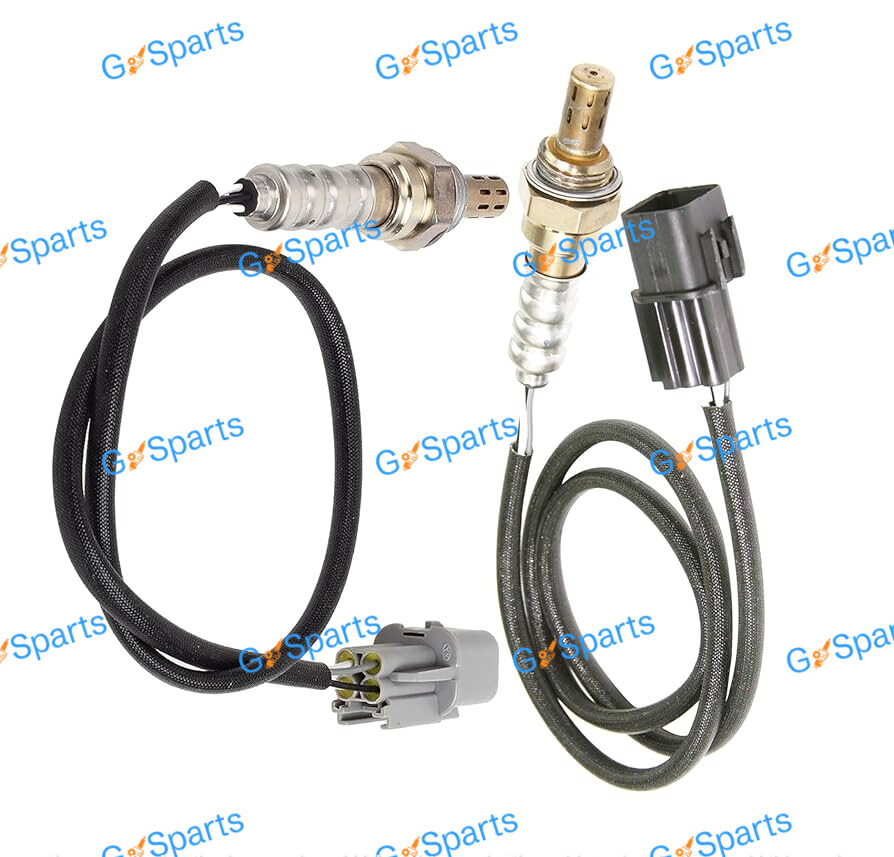
Ultimate Mitsubishi Oxygen O2 Sensor Universal aftermarket (various SKUs) – Save Fuel, Pass Emissions
O₂ sensor for Older Mitsubishi petrol models advertised as ‘fits Mitsubishi’ – Replacement (may require adapter/harness). Specs: Variable: may be 1–4 wires; probe length/thread may not match OE.
Did you like this product? Add to favorites now and follow the product.

(+86) 180 07 12 47 38 WhatsApp, Telegram, WeChat
Description
OE‑style oxygen (lambda) sensor listing for Mitsubishi applications. Models: Older Mitsubishi petrol models advertised as ‘fits Mitsubishi’. OEM/reference(s): Universal aftermarket (various SKUs). Position: Replacement (may require adapter/harness). Typical specification: Variable: may be 1–4 wires; probe length/thread may not match OE. Brands/cross‑refs: Bosch Exact‑Fit, Walker, NTK, Delphi (universal). Fitment guidance: Avoid unless you verify connector, thread, and probe length from VIN/diagram. Source: eBay.
Understanding Universal Sensors vs. Direct-Fit on Mitsubishi Platforms
Universal units promise broad compatibility by letting you reuse the factory connector and splice a new sensing element into the harness. They can work well when carefully matched for heater circuit, wire count, and signal characteristics, but shortcuts cause noise, delayed closed-loop, or nuisance codes. Before deciding, check whether your engine uses a traditional narrowband upstream element or an air-fuel (wideband) sensor that a universal narrowband cannot replace. When chosen and installed correctly, a Mitsubishi Oxygen O2 Sensor Universal aftermarket option can restore feedback fidelity, stabilize trims, and protect the catalyst—yet for newer platforms with precise heater control, direct-fit often remains the safer path unless you verify electrical equivalence and routing constraints in detail.
Wire Counts, Color Codes, and Electrical Equivalence
Universal offerings typically cover 1-, 3-, and 4-wire narrowband configurations; some list cross-references for Mitsubishi harness colors, but you must verify heater polarity and signal ground layout. The ECU expects specific heater wattage and a known switching behavior; mismatches prolong open-loop time or trigger heater faults. Use a high-quality crimp and adhesive-lined heat-shrink—not household solder—to avoid brittle joints. A Mitsubishi Oxygen O2 Sensor Universal aftermarket kit with a detailed pinout card, proper strain relief, and tinned leads shortens install time and reduces noise susceptibility, especially near coils, fans, and alternator runs where EMI can corrupt millivolt-level signals.
Upstream vs. Downstream Roles and What That Means for Universals
Upstream elements steer fueling in real time; downstream elements audit catalyst efficiency. Universal narrowbands are most appropriate downstream, where steadiness matters more than ultra-fast switching, provided the heater and harness length match expectations. Upstream, the ECU relies on crisp cross-counts to center trims and protect the catalyst; universals can work, but only if heater mapping and response characteristics align closely with OE behavior. When using a Mitsubishi Oxygen O2 Sensor Universal aftermarket upstream, plan to validate live data to confirm switching frequency, centered STFT/LTFT, and stable idle with accessories before closing the job.
Heater Circuit Matching and Warm-Up Strategy
Cold starts decide emissions and feel. Under-powered heaters extend open-loop; over-powered heaters can stress ceramics. Verify the universal’s heater resistance against service data, and confirm current draw won’t trip ECU diagnostics. Route and clip the pigtail to avoid hot shields and moving linkages; thermal shock and vibration kill marginal splices first. With a carefully selected Mitsubishi Oxygen O2 Sensor Universal aftermarket unit whose heater spec mirrors OE, you should see quick light-off, fewer rich spikes on winter mornings, and readiness that sets without drama after a short mixed drive.
Connector Splicing, Weather Sealing, and Harness Protection
Successful universals live or die on the splice. Use staggered butt-crimps, adhesive heat-shrink, and a loom sleeve; avoid big heat-shrink “bulges” that won’t fit factory retainers. Keep the joint at least 150 mm from the shell to limit heat soak. If your kit’s instructions conflict with service data, trust the service data. A Mitsubishi Oxygen O2 Sensor Universal aftermarket package that includes proper crimps, tie-downs, and a routing guide makes long-term reliability far more likely than bare-lead kits that leave sealing and strain relief to chance. A second Mitsubishi Oxygen O2 Sensor Universal aftermarket unit in fleet spares ensures fast swap if a vehicle is mission-critical.
Narrowband vs. Wideband Reality on Late Models
Many late-model Mitsubishis use wideband A/F sensors upstream—electrically and functionally different from narrowband oxygen sensors. A narrowband universal cannot substitute for a wideband: the ECU drives and interprets them differently. Always check the part type by VIN, engine code, and connector shape. Downstream elements are more often narrowband and may accept universals if specs align. When in doubt, skip the experiment and choose direct-fit rather than forcing a Mitsubishi Oxygen O2 Sensor Universal aftermarket into a role it was never engineered to fill, especially on platforms with strict readiness logic.
Emissions Compliance, CARB Notes, and Inspection Risk
Regions with stringent tests may require CARB-approved components and intact diagnostic behavior. A universal that trips a heater code or slows switching can delay monitor completion and jeopardize inspection timing. Keep receipts, batch codes, and install photos; they help with warranty or returns if a part isn’t truly equivalent. If inspections are imminent, consider postponing discretionary mods and confirm your Mitsubishi Oxygen O2 Sensor Universal aftermarket choice shows clean live data before heading to a test lane, reducing the chance of a retest fee or temporary registration hold.
Diagnose First: Avoid the Parts Cannon
Before replacing any sensor, smoke-test the intake and pre-cat exhaust, verify fuel pressure, and check for misfires or silicone contamination that can poison cells. Compare throttle angle, MAF grams/second, and trims at idle and light cruise. If the trace shows lazy switching with clean plumbing and solid grounds, replacement is justified. After installing a Mitsubishi Oxygen O2 Sensor Universal aftermarket unit, repeat the exact captures. When cross-counts rise and trims center, you’ve confirmed a feedback-element root cause instead of masking a deeper mechanical fault that would have returned as a comeback.
Prep, Tools, and Safety for a Clean Install
Work on a cool exhaust to prevent burns and thread galling. Essentials: penetrant, quality O2 socket, torque wrench, nylon brush for the bung, and a ratcheting crimper for sealed butt connectors. Pre-fit the loom sleeve and heat-shrink on the bench; dress the harness so the joint lands in a cool, protected run. Once the Mitsubishi Oxygen O2 Sensor Universal aftermarket leads are joined, tug-test each crimp, seal with heat-shrink, then loom and clip along factory paths. A careful install beats rework, especially when bays are full and uptime matters. A second mention of Mitsubishi Oxygen O2 Sensor Universal aftermarket here reflects its central role in planning.
Threads, Anti-Seize, and Torque Discipline
Some sensors ship with pre-coated threads; if so, avoid extra anti-seize. Otherwise, use a tiny amount on the mid-threads only—never near the tip. Hand-start to avoid cross-threading, then torque to spec; under-torque invites micro-leaks that fake lean signals, over-torque risks shell distortion. After installing your Mitsubishi Oxygen O2 Sensor Universal aftermarket unit, run the engine and listen for a tick at the bung; a quick smoke check upstream confirms integrity. These minutes protect hours of future diagnostics by ensuring the ECU sees combustion reality, not diluted samples.
Harness Routing, EMI, and Long-Term Reliability
Keep splices away from exhaust shields and rotating linkages; add abrasion sleeves where the loom touches brackets. Route signal wires far from ignition coils and high-current alternator runs to reduce EMI. Zip-ties should be snug, not crushing. Label the harness for future techs. A tidy, protected path lets a Mitsubishi Oxygen O2 Sensor Universal aftermarket sensor perform like a direct-fit over the long haul, avoiding intermittent dropouts that masquerade as “random” drivability issues when temperatures swing or accessories cycle.
Drive Cycle and Readiness After Installation
Clear codes if trims were far off, then perform a short mixed drive: warm idle, steady 2,000–2,500 rpm cruise, light accelerations, and engine-braking decels. Healthy behavior shows brisk upstream switching, centered STFT/LTFT, and a downstream trace that calms as the catalyst reaches temperature. If monitors lag after fitting a Mitsubishi Oxygen O2 Sensor Universal aftermarket part, verify heater operation, splice integrity, and exhaust tightness; small leaks or poor crimps often explain delayed readiness more than the sensor element itself.
Live-Data Proof: What Good Looks Like
At warm idle and light cruise, a robust upstream narrowband oscillates near stoichiometric several times per second with modest STFT excursions, while LTFT hovers near zero. Add three tip-ins from idle to mid-throttle; timing and MAF traces should track smoothly without enrichment spikes. Save screenshots to the work order. If your Mitsubishi Oxygen O2 Sensor Universal aftermarket waveform is clean but trims remain skewed, the sensor is telling the truth—revisit intake sealing, injector balance, or vacuum leaks rather than condemning the new part prematurely. A second use of Mitsubishi Oxygen O2 Sensor Universal aftermarket emphasizes verification.
Contamination Risks and How to Avoid Them
Silicone sprays, coolant ingestion, and oil mist can poison sensing surfaces, flattening response and inviting slow-switch codes. Fix misfires quickly; raw fuel overheats substrates and ages sensors. Replace air filters on schedule and keep sealants away from intake tracts. When a Mitsubishi Oxygen O2 Sensor Universal aftermarket element replaces a contaminated unit, it will only stay healthy if upstream causes are resolved—otherwise you’ll repeat the cycle. Protecting the feedback loop protects your catalyst and wallet.
Materials, Sealing, and Packaging Quality
Robust ceramics, platinum electrodes, and gas-tight crimps separate dependable sensors from look-alikes. Moisture-controlled packaging and tip protectors reduce transit damage that shows up later as “mystery” faults. Choose a Mitsubishi Oxygen O2 Sensor Universal aftermarket kit from a vendor that documents batch codes, offers connector macro photos, and includes adhesive-lined heat-shrink and loom sleeves. Those details convert theory into field reliability, especially in climates with big daily temperature swings.
Inventory Planning, VIN Notes, and Zero-Surprise Fitment
For shops, store loom sleeves, sealed crimps, and routing clips beside the sensor bin so technicians aren’t hunting for consumables mid-job. Attach a printed pinout card to each SKU, and save VIN-tagged photos of original connectors for quick reference. Adopting a Mitsubishi Oxygen O2 Sensor Universal aftermarket standard with clear documentation cuts return rates, speeds bay turnover, and makes outcomes repeatable—critical when different techs touch the same fleet vehicles over time.
Cost, Value, and When Universal Makes Sense
Universals cost less up front and can be excellent downstream replacements or upstream substitutes on older narrowband platforms when heater specs align. Factor technician time, crimp materials, and verification drives into total cost. If you’re chasing a fast pass before inspection with no appetite for splicing risk, direct-fit may win. Deployed thoughtfully, a Mitsubishi Oxygen O2 Sensor Universal aftermarket choice delivers strong value without sacrificing emissions performance or drivability, provided you validate with live data and protect the harness from heat and abrasion.
Modified Vehicles, Heat Management, and Repeatability
Headers and high under-hood temps change local conditions. Shielding, correct bung placement, and leak-free joints keep the cell in its temperature window so switching remains crisp. Tuners need consistent signals to refine maps; an unstable trace wastes dyno time. A well-matched Mitsubishi Oxygen O2 Sensor Universal aftermarket unit paired with smart heat management preserves repeatability on the street and helps monitors set predictably before inspections, even with mild airflow changes.
Fleet Playbook and Uptime Discipline
Variance kills uptime. Standardize tools, crimps, loom, and a validation script so different techs produce the same results. Keep one spare Mitsubishi Oxygen O2 Sensor Universal aftermarket sensor and a pre-made splice kit on each truck; the ability to restore closed-loop mid-route can prevent missed deliveries when a downstream sensor fails and blocks monitor completion. Document heater resistance readings and post-repair screenshots to build a data trail that supports warranty and training.
Troubleshooting If Trims Still Wander
If trims remain unreasonable after installation, re-smoke the intake and pre-cat exhaust, validate fuel pressure, and scope ignition for random misfires. Confirm ground integrity and 5 V references under accessory loads. When the Mitsubishi Oxygen O2 Sensor Universal aftermarket upstream trace is crisp yet trims drift, the real bottleneck usually lies in airflow measurement, injector balance, or subtle exhaust leaks—not the feedback element you just installed.
Sustainability and Catalyst Protection
Accurate lambda control reduces raw hydrocarbons, protects substrates from thermal stress, and trims fuel spend across thousands of kilometers. That’s cleaner neighborhoods and lower operating costs. A properly installed Mitsubishi Oxygen O2 Sensor Universal aftermarket sensor lets the ECU run closer to engineering intent without resorting to fuel-heavy fallbacks that mask noise but shorten converter life. Treat the splice as a permanent repair, not a temporary patch, and the system will reward you with stability.
Case Study Playbook: Older Narrowband Platforms Done Right
Shops often see legacy models with intermittent surging and slow-switch codes where budgets are tight and downtime hurts. In these scenarios, a disciplined approach turns a Mitsubishi Oxygen O2 Sensor Universal aftermarket install into a clean win: confirm narrowband upstream architecture via VIN, match heater resistance to service data, and pre-stage sealed crimps, loom, and abrasion sleeves. After threading the sensor on a cool exhaust and routing the pigtail along factory paths, execute a validation drive—while logging upstream oscillation and centered trims. Document screenshots, torque spec, splice location, and heater ohms in the work order. With contaminants addressed and leaks ruled out, universals on older narrowband systems can deliver factory-like readiness and drivability at an attractive total cost.
Decision Matrix: When to Choose Universal vs. Direct-Fit
Use a simple matrix to guide choices: If the platform is upstream wideband, inspections are imminent, or harness routing is tight with high heat exposure, pick direct-fit. If it’s an older narrowband system with generous harness clearance, verified heater equivalence, and cost sensitivity, a Mitsubishi Oxygen O2 Sensor Universal aftermarket unit can be the smarter play—provided you commit to sealed crimps, EMI-aware routing, and post-install telemetry checks. Factor technician time and rework risk into the equation; a universal that saves money on paper but delays readiness costs more overall. Whichever path you take, the non-negotiables remain the same: diagnose first, install cleanly, verify with live data, and document.
Owner FAQ: Straight Answers Without Jargon
Will universals void my warranty? Follow local laws and keep install documentation; many regions accept equivalent parts if diagnostics remain clean. Can I use one upstream? Yes—on narrowband systems—if heater specs match and you validate live data. Why did my monitors not set? Most often: small exhaust leaks, poor splices, or wrong heater resistance. A properly chosen Mitsubishi Oxygen O2 Sensor Universal aftermarket part, installed with sealed crimps and verified on a short drive cycle, should behave like OE in daily driving and at inspection.
Documentation That Saves Hours Later
Attach before/after screenshots (idle and light cruise), note torque spec, bung condition, heater resistance, and routing photos. Store the pinout you used, the crimp type, and a quick note on splice location. This record—tied to the Mitsubishi Oxygen O2 Sensor Universal aftermarket SKU and VIN—accelerates future diagnostics, supports warranty claims, and trains new techs to replicate good outcomes instead of reinventing steps on every car.
Final Guidance: Choosing with Confidence
Universal solutions reward disciplined selection and installation. If your platform uses upstream narrowband and you match heater behavior, a Mitsubishi Oxygen O2 Sensor Universal aftermarket sensor can restore closed-loop control, stabilize trims, and pass emissions with confidence. When platforms demand wideband precision or inspections loom and time is tight, direct-fit may be wiser. Either way, diagnose first, install cleanly, verify with data, and document. That process—not luck—delivers the smooth idle, crisp transitions, and predictable readiness that define a professional repair.
External Resources (Standards & Technical References)
- SAE J1979 — OBD-II Diagnostic Test Modes
- ISO 15031 — Road Vehicles/Scan Tool Communication
- US EPA — Basic Information on OBD-II
- NGK/NTK — Oxygen (Lambda) Sensors Overview
- Bosch Mobility — Oxygen Sensor Technology
Related Internal Links
Additional information
| OEM / Reference | Universal aftermarket (various SKUs) |
|---|---|
| Brands / Cross | Bosch Exact‑Fit, Delphi (universal), NTK, Walker |
| Models | Older Mitsubishi petrol models advertised as 'fits Mitsubishi' |
| Position | Replacement (may require adapter/harness) |
| Specifications | Variable: may be 1–4 wires; probe length/thread may not match OE |
| Fitment note | and probe length from VIN/diagram., Avoid unless you verify connector, thread |
| Source | eBay |
Related products



G-SPARTS – Leading Auto Parts Supplier Since 2009
Trusted by 1000+ Clients Worldwide | Chinese (BYD, Geely, Chery, …), Japanese (Toyota, Honda, Nissan, …), European (BMW, Mercedes, VW, …) & American (Ford, Chevrolet, Tesla, …) Car Spares | Best Prices & OEM Quality | 15+ Years Expertise | Professional Team, Fast Global Shipping
Copyright 2025 © G-Sparts All Rights Reserved. | Premium Chinese Auto Parts Supplier – Worldwide Shipping | Best Prices on OEM & Aftermarket Spares

Reviews
There are no reviews yet.