
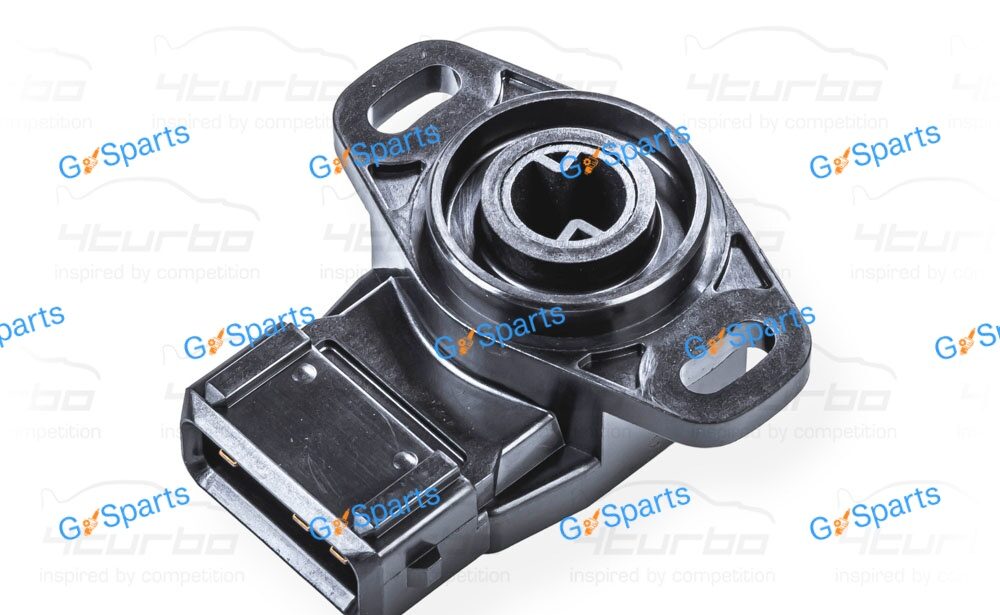
Genuine Mitsubishi TPS MD628074 Lancer Evolution VII/VIII/IX (2003–2006) – Pro-Level Response, Rock-Solid Idle, OEM Precision
Throttle Position Sensor for **Lancer Evolution VII, VIII & IX (2003–2006)**. 3‑wire electronic TPS; genuine Mitsubishi fit. Verify with VIN before purchase.
Did you like this product? Add to favorites now and follow the product.

(+86) 180 07 12 47 38 WhatsApp, Telegram, WeChat
Description
OEM‑grade TPS (Throttle Position Sensor) **MD628074** for **Mitsubishi Lancer Evolution VII, VIII and IX (2003–2006)**. This 3‑wire electronic sensor restores accurate throttle‑angle feedback for crisp response, smooth idle and proper fuel control. Direct‑fit connector and mounting match Mitsubishi factory specs. Always confirm compatibility using your VIN/engine code.
Throttle Position Essentials for the Evo Platform
Throttle position is the ECU’s first language for intent. On turbocharged 4G63T cars, tiny angle changes alter airflow, spark, and boost control. A clean voltage ramp tells the ECU when to enrich, decel-fuel-cut, and hand off to closed loop without hunting. When the trace jitters, you feel it as tip-in hesitation and vague cruise. Replacing a drifting sensor and validating the curve transforms the car from “touchy” to precise. For owners seeking predictable results without guesswork, Mitsubishi TPS MD628074 Lancer Evolution VII/VIII/IX aligns mechanically and electrically with OE assumptions. That’s why shops and clubs standardize on Mitsubishi TPS MD628074 Lancer Evolution VII/VIII/IX before touching maps—because a true reference turns logging into clarity instead of noise.
How the ECU Interprets Angle, Rate, and Load
ECU strategies blend absolute angle, rate of change, and airflow correlation. If angle rises faster than airflow, transient enrichment smooths torque; if angle falls abruptly, decel-fuel-cut saves fuel and protects the cat. A stable ramp avoids over- or under-fuelling bursts that feel like surging. Post-install, a steady idle line and monotonic sweep prove the loop is trustworthy. With Mitsubishi TPS MD628074 Lancer Evolution VII/VIII/IX, the voltage progression matches expected tables so part-throttle behaves cleanly, boost transitions feel intentional, and closed-loop trim doesn’t chase phantom inputs during daily commuting or spirited canyon drives.
Common Symptoms of a Drifting or Noisy Sensor
You’ll often notice clues before a fault code: inconsistent idle after heat soak, lurchy crawl in traffic, or a slight “rubber band” feel on light throttle. Logs show flat spots or stair-steps during slow sweeps. Misfires aren’t the root; the ECU is reacting to untrustworthy inputs. Before condemning injectors or coils, re-establish a credible angle signal. Installing Mitsubishi TPS MD628074 Lancer Evolution VII/VIII/IX and repeating a controlled road loop typically shrinks trims toward center and flattens the trace, confirming cause rather than chasing symptoms with random parts.
Verification First: Baseline Before the Wrench
Good diagnostics beat guesswork. Start with a warm idle check, then perform a slow pedal sweep to inspect linearity. Verify 5 V reference and ground integrity, smoke-test the intake for leaks, and confirm the throttle plate isn’t binding. Only then swap the component. The validation pass—steady cruise, gentle accelerations, and a long decel—should show a clean ramp and decisive fuel-cut. When the new Mitsubishi TPS MD628074 Lancer Evolution VII/VIII/IX sits within expected voltage windows, you’ll see trims calm and drivability return without touching fuel or spark maps.
Fitment Fundamentals: Clocking, Clearance, and Torque
Alignment matters. Scribe a reference line on the throttle body, photograph the original clocking, and hand-start screws to avoid ear distortion. Torque lightly and recheck that the connector clears loom brackets and heat sources. A slightly over-rotated installation can fake an elevated idle angle, forcing the ECU to “chase” airflow. The OE geometry of Mitsubishi TPS MD628074 Lancer Evolution VII/VIII/IX simplifies correct seating, and careful clocking ensures the same Mitsubishi TPS MD628074 Lancer Evolution VII/VIII/IX delivers a monotonic curve you can trust from winter mornings to track-hot afternoons.
Idle Quality and ISC Cooperation
The idle speed controller and TPS must agree about “closed” to avoid wander. After install, verify closed-throttle switch status (where applicable) and confirm learned idle angles. If the TPS reports a cracked-open state, the ECU will trim fuel while the ISC fights airflow, creating unstable idle. Relearn procedures, a clean throttle bore, and the stable ramp from Mitsubishi TPS MD628074 Lancer Evolution VII/VIII/IX restore that glass-smooth cadence with A/C and fans cycling, which owners interpret as “it feels new again.”
Part-Throttle Smoothness and Tip-In Control
On spool, torque changes rapidly; the ECU blends TPS rate, MAF, and boost control to keep the handoff invisible. A jagged angle trace over-commands enrichment, dulling response; a lazy ramp under-commands, causing stumble. With Mitsubishi TPS MD628074 Lancer Evolution VII/VIII/IX, the angle-to-airflow relationship stays consistent, so transient fuel behaves like a well-rehearsed dance instead of an argument, making parking-lot creep and apex exits equally civilized.
Deceleration Fuel Cut and Catalyst Care
Clean decel recognition saves fuel and temperature. If the ECU doubts “closed,” it keeps dripping fuel, raising exhaust heat and inviting odor or knock-learn confusion during tip-back in. Validate that decel triggers promptly in logs after installing Mitsubishi TPS MD628074 Lancer Evolution VII/VIII/IX. You should see immediate injector cut during long overrun and crisp re-entry without a bump, preserving catalyst life and delivering that factory-polished feel on every downhill grade.
Heat Soak, Repeatability, and Summer Traffic
Evos endure underhood heat. Poor sensors drift when hot, forcing trims to wander at lights, then recover only after airflow cools the bay. The stable ceramic and construction of Mitsubishi TPS MD628074 Lancer Evolution VII/VIII/IX keep the output steady across soak cycles. Validate with a second loop after a hot idle: the ramp should look like the cold trace, confirming the calibration holds whether you’re inching through traffic or blasting a back road. For tuners, that repeatability shortens mapping sessions and improves seasonal consistency.
Electrical Hygiene: Grounds, Loom, and Connectors
Great parts need clean paths. Renew ground eyelets, check voltage drop with accessories engaged, and inspect terminals for corrosion or wicking oil. Secure the harness with service slack so engine rock doesn’t tug at the connector. Once the electrical environment is quiet, the clean ramp produced by Mitsubishi TPS MD628074 Lancer Evolution VII/VIII/IX reaches the ECU intact, eliminating phantom enrichment spikes that feel like misfires but are merely electrical noise.
Installation Toolkit and Prep Steps
Gather a torque-limited driver, JIS bits, contact-safe cleaner, and lint-free swabs. Remove the intake tube for sightlines, mark the original index, and clean the throttle bore so sticky varnish doesn’t masquerade as sensor error. After mounting Mitsubishi TPS MD628074 Lancer Evolution VII/VIII/IX, verify a smooth mechanical sweep at the throttle stop by hand. Finish by clearing learned idle values if your ECU supports it, then proceed to on-road validation.
Logging That Proves Success in Five Minutes
Evidence beats adjectives. Build a repeatable route: one minute warm idle, steady 60–80 km/h cruise, two gentle accelerations, and a long decel to fuel cut. Log angle, airflow, short-term trim, and injector pulsewidth. A smooth, monotonic TPS curve from Mitsubishi TPS MD628074 Lancer Evolution VII/VIII/IX will correlate with stable trims and decisive decel behavior. Save overlays with ambient noted so you can compare against future services or seasonal fuel blends.
Tuning Considerations: Flash and Standalone
A truthful sensor reduces band-aid fueling. With Mitsubishi TPS MD628074 Lancer Evolution VII/VIII/IX, throttle-based enrich tables respond predictably, letting you trim transient fuel without courting stumble. On standalone ECUs, verify ADC scaling and ensure noise filtering isn’t masking real rate-of-change data. The goal is subtlety: crisp response that feels OEM-civil on the street but never robs the car’s raucous character when you open it up.
Track Days, Heel-Toe, and Consistency
Consistent downshift blips depend on predictable mapping between pedal travel and torque. Instructors often diagnose “driver inconsistency” that’s really sensor drift. After installing Mitsubishi TPS MD628074 Lancer Evolution VII/VIII/IX, a practiced heel-toe feels telepathic again—no over-rev lurches, no lazy catches. Pair with fresh fluid and pads, then use logs from the cool-down lap to confirm the curve stayed linear despite temperature and vibration.
Misdiagnosis Traps and How to Avoid Them
Aging plugs, fouled MAFs, or pre-turbo leaks can mimic TPS faults. Sequence your tests: verify fuel pressure and delivery, scope ignition under load, smoke-test intake, then interrogate the TPS sweep. If everything else is green and angle still stumbles, replace the reference. The clean output of Mitsubishi TPS MD628074 Lancer Evolution VII/VIII/IX turns overlapping symptoms into a single solved cause you can document and explain to skeptical owners.
Maintenance Rhythm for High-Mileage Cars
Add light electrical hygiene to seasonal service: clean and re-torque grounds, check harness clips, and ensure the throttle stop isn’t gummed. Archive a quick validation plot at each visit to spot slow drift. When the baseline relies on Mitsubishi TPS MD628074 Lancer Evolution VII/VIII/IX, deviations jump off the page early, avoiding the slow creep into poor manners and wasted fuel that owners often accept as “just age.”
Quality Control, Counterfeits, and Returns
Critical signals attract copycats. Poor wipers and potting drift early, wasting diagnostic hours and angering customers. Stock trusted sources and publish a “verify your unit” photo guide: connector mold lines, stamping depth, and terminal finish. The predictable behavior of Mitsubishi TPS MD628074 Lancer Evolution VII/VIII/IX makes approvals quick: if the trace doesn’t match, routing or the part is wrong—simple. Evidence-first policies cut RMAs while keeping honest buyers happy.
Buyer’s Checklist for First-Pass Success
Match throttle-body type and connector keying, confirm sweep direction, and inspect loom length and clip points. Stage tools and cleaning supplies, photograph the original index, and plan the validation route. Communicate steps clearly in your product page so DIY owners feel supported. With Mitsubishi TPS MD628074 Lancer Evolution VII/VIII/IX on the bench and expectations set, installs finish in one calm session, and the first drive feels sorted instead of experimental.
Content That Converts: What to Show on the Product Page
Education sells technical parts. Include bankable assets: torque spec, indexing photo, a 5-minute logging plan, and a “good vs bad sweep” thumbnail. Mark up with Product, HowTo, and FAQ schema so answers surface directly in search. When shoppers see that Mitsubishi TPS MD628074 Lancer Evolution VII/VIII/IX comes with proof-oriented guidance, anxiety drops and conversion rises—because success looks obvious before they click “Buy.”
Community Proof: Reviews That Teach and Reassure
Ask buyers to include vehicle year, install time, a photo of final clocking, and a screenshot of the validation sweep. Curate the best into a gallery that shows hot-day and cold-morning plots. When future buyers recognize the calm, linear trace produced by Mitsubishi TPS MD628074 Lancer Evolution VII/VIII/IX, they’ll purchase with confidence and fewer pre-sale questions, easing your support load while building real credibility.
Club & Fleet Playbooks for Repeatable Outcomes
Standardize parts, steps, and sign-off so veterans and rookies get the same result. A shared checklist and route—paired with Mitsubishi TPS MD628074 Lancer Evolution VII/VIII/IX—turn Saturday tech days into high first-pass success. Archive overlays by VIN or member ID; drift becomes visible early, and coaching shifts from opinion to data. The car feels boring in the best way: predictable, responsive, and easy to live with.
Sensor Scaling and ADC Verification
Before chasing fueling tables, verify the ECU actually reads angle cleanly across the full sweep. Log closed throttle, 10%, 25%, 50%, 75%, and wide open, then compare against airflow and commanded enrichment to confirm monotonic correlation. If a micro-flat appears, widen the sampling window and re-test with lights, defogger, and A/C engaged to expose supply sag or ground noise. Inspect the throttle stop and cable free play, then perform an idle relearn if supported. A smooth ramp ensures tip-in torque is predictable and that transient fuel adds match real intent. Start with Mitsubishi TPS MD628074 Lancer Evolution VII/VIII/IX so ADC scaling and map math align on the first try. Consistent logs simplify future seasonal adjustments.
Driveability Diagnostics Under Load
Some faults appear only under boost onset and light throttle hills, where airflow and torque rise quickly but not linearly. Build a repeatable validation route that includes a gentle incline, steady cruise, two low-RPM pulls, and a long fuel-cut deceleration. Log angle, rate-of-change, airflow, pulsewidth, ignition advance, and short-term trims, then align peaks and zero crossings. Watch for staircase TPS traces or mismatch between angle rate and enrichment onset. If found, confirm grounds, inspect loom strain near engine roll points, and reseat connectors. Replace worn components, then retest. With Mitsubishi TPS MD628074 Lancer Evolution VII/VIII/IX, the angle signal stays coherent, allowing transients to feel crisp, clean, and consistently repeatable across traffic and temperature and altitude.
Quality Assurance for Tuners and Shops
Professional workflows rely on objective checklists that new and veteran technicians can execute the same way every time. Create a one-page sheet that covers visual indexing marks, torque targets, connector lock confirmation, harness slack, and a five-minute log recipe with explicit speed ranges. Ask staff to attach two screenshots—idle and mid-speed cruise—and one engine-bay routing photo to every job. Archive results by VIN so deviations are obvious later. This habit turns comebacks into quick, data-backed conversations and builds customer trust. Standardizing on Mitsubishi TPS MD628074 Lancer Evolution VII/VIII/IX simplifies training as well, because expected voltage windows and ramp shapes match documentation precisely and stay stable through heat cycles, accessories, and seasonal fuel blends over time.
Customer-Facing Education and Conversion
Clear education reduces pre-sale anxiety and lowers return rates for performance platforms with passionate communities. On the product page, publish a compatibility matrix, indexing photo, torque spec, and a tiny “good vs bad sweep” thumbnail. Add a downloadable validation worksheet with space for idle voltage, cruise trend notes, and a quick decel observation. Encourage buyers to submit a post-install screenshot with lighting and A/C on, plus a photo of final clocking. These assets help DIY owners feel confident and give support teams objective material. Featuring Mitsubishi TPS MD628074 Lancer Evolution VII/VIII/IX alongside this evidence-first guidance turns curiosity into conversion and transforms reviews from subjective impressions into measurable, repeatable proof pieces for future buyers and technicians.
Winter Starts, Voltage, and Short-Trip Life
Cold mornings expose weak batteries and sticky throttles. Confirm cranking voltage and alternator output, clean the bore, and then validate time-to-stable idle. The robust heater-adjacent stability of Mitsubishi TPS MD628074 Lancer Evolution VII/VIII/IX keeps reported angle steady while everything else warms up, preventing rich stumbles and saving fuel on short commutes. A five-minute follow-up loop proves it—and owners feel the difference immediately.
Troubleshooting Edge Cases After Install
If a fresh sensor still logs oddities, widen the lens. Compare TPS to MAF during micro-transients, check throttle cable free play, and look for motor mount sag that tugs the loom under load. Once these externals are corrected, Mitsubishi TPS MD628074 Lancer Evolution VII/VIII/IX will present the clean, rate-consistent curve your maps expect, allowing subtle tuning changes to stick across temperatures and fuels.
Final Action Plan and Long-Term Confidence
Make evidence your habit. Baseline, install carefully, validate, and archive. Share the one-page summary—what changed, why it matters, and two tiny plots—so owners understand the result. The reliable curve from Mitsubishi TPS MD628074 Lancer Evolution VII/VIII/IX keeps trims centered, tip-in crisp, and decel clean. Months later, you can rerun the route and prove it’s still right. That’s how a single calibrated part delivers years of “OEM-calm” confidence in a car built to be anything but calm.
External Resources (Standards & Technical References)
- ISO 26262 — Road Vehicles Functional Safety
- ISO 11898 — Controller Area Network (CAN)
- ISO 14229 — Unified Diagnostic Services (UDS)
- SAE J1979 — OBD-II Diagnostic Test Modes
- AEC-Q100 — Stress Test for Automotive ICs
Related Internal Links
Related products



G-SPARTS – Leading Auto Parts Supplier Since 2009
Trusted by 1000+ Clients Worldwide | Chinese (BYD, Geely, Chery, …), Japanese (Toyota, Honda, Nissan, …), European (BMW, Mercedes, VW, …) & American (Ford, Chevrolet, Tesla, …) Car Spares | Best Prices & OEM Quality | 15+ Years Expertise | Professional Team, Fast Global Shipping
Copyright 2025 © G-Sparts All Rights Reserved. | Premium Chinese Auto Parts Supplier – Worldwide Shipping | Best Prices on OEM & Aftermarket Spares

Reviews
There are no reviews yet.