
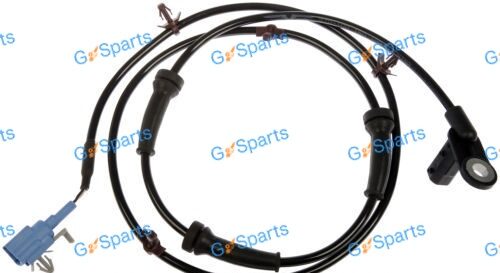
Genuine Nissan ABS Sensor 47900-5FA0C – 2018–2025 Nissan Kicks, Versa (Rear (typically RL/RR)) – Fast Fitment & Warranty | G-Sparts
Nissan ABS Sensor 47900-5FA0C ABS Sensor for 2018–2025 Nissan Kicks, Versa – Rear (typically RL/RR). OEM 47900-5FA0C with 2-wire, magnetic sensor for stable braking and safety.
Did you like this product? Add to favorites now and follow the product.

(+86) 180 07 12 47 38 WhatsApp, Telegram, WeChat
Description
Restore factory ABS function on your 2018–2025 Nissan Kicks, Versa with this OEM-equivalent wheel speed sensor (Part 47900-5FA0C, Rear (typically RL/RR)). The durable 2-wire, magnetic sensor design feeds accurate wheel speed data to ABS/ESC systems, reducing wheel lock-up and improving control during hard stops. Supported by trusted aftermarket brands: Denso, ATE, Bosch, Standard Motor Products. Rear wheel position; check compatibility with your vehicle. Always confirm by VIN, axle location, and connector style before ordering.
Overview for owners and technicians
Understanding how a small electronic component influences overall vehicle safety starts here. For anyone researching the Nissan ABS Sensor 47900-5FA0C this overview explains why proper identification, testing, and replacement matter. The sensor is part of the anti-lock braking system and is integral to traction control and stability systems; ignoring its faults can compromise braking performance and allow wheel lock-up under emergency stops. This paragraph introduces the broader context: what the reader will learn about symptoms, test procedures, fitment checks, and installation best practices. It also establishes the expectation that the guide will focus on pragmatic troubleshooting and procurement practices tailored for shops and DIYers who need clear, actionable steps.
Essential function of the sensor in modern braking systems
To appreciate why replacement choices matter, it’s useful to review the sensor’s primary role in the ABS network and vehicle stability systems. The Nissan ABS Sensor 47900-5FA0C measures wheel rotational speed and transmits that information to the ABS control module so the system can modulate braking pressure during low-traction events. When sensors provide corrupted or missing signals, the ABS controller may set fault codes, illuminate warning lights, or reduce available traction-control functions. Technicians who know how the sensor feeds the ECU can better interpret diagnostic data and prioritize whether the sensor, the tone ring, or the wiring harness is the root cause of a fault.
How the sensor converts motion into signals the ECU understands
At a technical level, wheel speed sensors transduce mechanical movement into electrical pulses by sensing a reluctor (tone) ring or magnetic teeth on the hub. The Nissan ABS Sensor 47900-5FA0C is designed to produce a clean, repeatable waveform that the ABS module interprets as wheel rpm. Signal amplitude, frequency, and waveform symmetry are critical; contaminants, improper gap, or corrosion degrade the signal and may produce intermittent faults. Knowing the expected electrical behavior helps in selecting appropriate diagnostic tools — a multimeter for static checks and an oscilloscope for dynamic waveform analysis — and ensures a precise fix rather than an expensive parts swap that doesn’t correct the issue.
Recognizing real-world symptoms that point to sensor issues
Symptoms vary from a persistent ABS or traction-control warning lamp to subtle changes in stability control intervention during low traction events. Drivers may report that the ABS light comes on after driving through deep water or after hitting a curb, which can suggest sensor or connector contamination. A shop might also observe inconsistent live wheel speed readings, or the ABS engaging inappropriately during normal braking. Each of these reports should prompt a systematic diagnosis rather than immediate replacement: often harness damage, poor grounding, or a damaged reluctor ring produces identical symptoms and must be ruled out before ordering replacement parts.
The diagnostic flow that saves time and money
A logical diagnostic flow prevents unnecessary purchases and reduces comebacks. Start with an ABS code scan and inspect freeze-frame data for contextual clues; then visually inspect connectors and tone rings for damage or debris. For the Nissan ABS Sensor 47900-5FA0C, bench resistance checks and dynamic waveform captures are the next steps if the visual inspection shows nothing obvious. Only after confirming an electrical anomaly at the sensor connector or an absence of expected pulses under wheel rotation does replacing the sensor become the most defensible step. Following this flow protects shop margins and preserves customer trust by demonstrating a thorough approach.
Performing practical electrical tests before replacement
Practical electrical testing distinguishes a failed sensor from a harness issue. Using a multimeter, technicians should check continuity and resistance against specification; if readings are open or shorted, the sensor likely needs replacement. For dynamic verification, an oscilloscope while rotating the hub reveals pulse shape and amplitude; a weak or irregular waveform typically indicates sensor degradation or contamination. When diagnosing a vehicle with a suspected Nissan ABS Sensor 47900-5FA0C, swapping with a known-good sensor or inspecting the harness for intermittent breaks under movement can quickly isolate the faulty circuit, preventing unnecessary part changes.
OEM fitment notes and vehicle compatibility checks
Before ordering any replacement, verify fitment against the vehicle’s VIN and the OEM parts catalog. The Nissan ABS Sensor 47900-5FA0C is identified by OEM catalogs as a rear wheel speed sensor for certain Nissan Kicks and Versa model ranges, and VIN-based lookup tools confirm exact fitment for a vehicle’s build date and trim. Using a verified source or the dealer parts lookup reduces ordering errors caused by mid-cycle engineering updates or regional equipment differences. Always cross-check with VIN data to avoid returns and ensure that the sensor will mate correctly to the vehicle’s connector and tone ring profile. Crest Nissan Parts
Cross-reference and superseded part numbers to watch for
Parts catalogs sometimes list superseded or alternate part numbers that map to the same physical sensor. When sourcing a Nissan ABS Sensor 47900-5FA0C, check whether older part numbers have been replaced by this SKU or whether there are compatible aftermarket cross-references. Cross-referencing avoids ordering a sensor that fits mechanically but has a different electrical connector or reluctor interface. Recording original part numbers before ordering helps technicians and procurement staff identify acceptable substitutes and limits downtime by ensuring the replacement will function with the vehicle’s ABS module without additional modifications.
Distinguishing OEM from aftermarket options on performance and warranty
Choosing between genuine and aftermarket sensors involves balancing cost, fitment certainty, and warranty coverage. Many professional installers prefer OEM units like the Nissan ABS Sensor 47900-5FA0C for guaranteed fit and factory support, while quality aftermarket brands can offer a balance of price and acceptable performance. The risk with aftermarket sensors is variability: inconsistent machining, connector pin differences, or inferior sealing can cause premature failures. Shops should quantify total cost of repair — parts plus labor for potential rework — when deciding whether an OEM or aftermarket part is the best buy for each job.
Visual and mechanical checks during removal and inspection
When removing a suspect unit, keep mechanical inspection thorough. Look for signs of physical damage, bent or missing tone ring teeth, or metallic contamination that might have scratched the sensor face. For a Nissan ABS Sensor 47900-5FA0C, ensure the mounting bore is clean and the sensor tip isn’t scored; any irregularities in the mating surface can change the sensor gap and degrade the signal. Inspect cable routing for pinch points or rubbing against sharp edges. Addressing these mechanical issues during replacement prevents immediate re-failure of the new sensor and decreases the likelihood of post-installation comebacks.
Installation prep: parts, fasteners, and environmental checks
Preparation accelerates a clean install. Gather the replacement sensor, correct fasteners, a torque wrench set to factory specs, and cleaning supplies to remove rust or debris from the mounting face. For the Nissan ABS Sensor 47900-5FA0C, confirm the connector pins mate cleanly and that the sensor’s sealing surfaces are free of contamination that could trap moisture. If the vehicle operates in harsh climates, consider additional sealing or dielectric treatments where recommended by the OEM. Pre-installation preparation reduces installation time and helps ensure the new sensor performs reliably for many miles.
Tools every installer should keep in the bay for ABS work
Efficient ABS diagnostics and installs require specific tools: an advanced OBD-II scanner with ABS module access, an oscilloscope or waveform-capable scan tool, a quality multimeter, proper-size sockets and drivers for sensor fasteners, and non-marring tools for connector work. For replacing a Nissan ABS Sensor 47900-5FA0C, having a torque wrench and a supply of replacement fasteners or anti-seize for threads can save time on the lift. Shops that standardize the toolset reduce job variability and minimize the risk of damaging sensitive sensor connectors or the new sensor during installation.
Step-by-step installation sequence technicians can rely on
Follow a predictable step-by-step sequence: secure the vehicle, remove the wheel, disconnect the ABS harness plug, unfasten the sensor mounting hardware, and carefully extract the old sensor without stressing the harness. Clean the mating surfaces, check the tone ring, and install the Nissan ABS Sensor 47900-5FA0C ensuring the correct gap and orientation. Torque fasteners to spec and secure harness routing as the OEM intended. Finish by clearing codes and performing live data checks while rotating the wheel to verify the new sensor produces steady signals before returning the vehicle to the customer.
Post-install verification and test drive checklist
Post-installation checks confirm success and prevent comebacks. After installing a Nissan ABS Sensor 47900-5FA0C, clear code memory using an ABS-capable scanner, then monitor wheel speed readings at low speeds to ensure the replaced sensor supplies stable data. A short road test under safe conditions will confirm that the ABS and traction control lamps remain extinguished and that braking behavior is normal. If the ABS light returns, re-inspect harness connections and ground paths, and verify the tone ring and air gap one more time to ensure the issue wasn’t mechanical or related to contamination that survived the initial cleaning.
Clearing ABS codes and authoritative methods for recalibration
Some ABS systems perform automatic re-learning after restoring a functional wheel speed signal, while others require a specific relearn procedure accessible with dealer-level tools. After installing a Nissan ABS Sensor 47900-5FA0C, technicians should clear diagnostic trouble codes and observe whether wheel speed data streams correctly. If the system needs a forced calibrate, consult the OEM service manual for the exact procedure to ensure the ABS module correctly recognizes the new sensor’s waveform characteristics. Documenting the steps taken and any relearn actions prevents confusion in case subsequent diagnostics are needed.
Pricing expectations and the variables that move the needle
Pricing for a genuine sensor varies with supplier margins, region, and whether the item is OEM or aftermarket. When budgeting for a Nissan ABS Sensor 47900-5FA0C, expect OEM listings at official parts stores and dealerships, with aftermarket options typically lower but with varying warranties. Beyond the part price, add shipping, potential VAT/sales tax, and labor for installation when advising customers. Comparing a trusted parts dealer against local dealership pricing often reveals competitive OEM offers if purchased via verified online distributors. Nissan RVA Parts
Where to source genuine replacements and avoid bad listings
Buyers should prefer authorized Nissan parts channels and established aftermarket vendors with clear return policies to source a genuine Nissan ABS Sensor 47900-5FA0C. Official Nissan parts stores and reputable OEM distributors list the sensor and confirm fitment via VIN — features that reduce the chance of ordering the wrong item. Avoid listings with vague photos or generic descriptions that fail to show connector pinouts or mounting details. Purchasing from verified channels protects warranty coverage and reduces the chance of counterfeit or mis-stated parts making their way into the supply chain. Nissan Parts
Recognizing counterfeit or poor-quality aftermarket sensors
Spotting a counterfeit or low-quality sensor before installation saves time and money. Signs include inconsistent packaging, low-resolution product photos that don’t show the connector detail, missing manufacturer markings, and sellers who lack a clear returns policy. For a Nissan ABS Sensor 47900-5FA0C, always compare the physical connector and mounting geometry to the OEM item; any discrepancy is a red flag. Reputable suppliers will list compatibility by VIN and provide part numbers that match OEM references. Avoid sellers that cannot answer questions about origin, materials, or warranty terms.
Warranty terms, returns, and expectations from suppliers
Warranties for safety-critical parts like the Nissan ABS Sensor 47900-5FA0C usually cover manufacturing defects and early-life failures, and OEM parts commonly carry factory-backed guarantees. Before purchasing, check whether the supplier requires the original receipt, whether installed parts are eligible for return, and the timeframe for warranty claims. Clear warranty language helps shops and consumers decide whether to buy OEM or aftermarket and influences aftermarket acceptance rates. If a supplier’s return policy penalizes installation, weigh that cost into the procurement decision. Nissan Parts Deal
Quality control checks to perform on arrival of the part
When a replacement arrives, shop staff should perform inbound quality checks to avoid installing a damaged or incorrect unit. For a Nissan ABS Sensor 47900-5FA0C, verify the part number on the packaging, inspect the connector for bent pins, check the sensor face for foreign debris, and compare overall length and mounting hole positions to the removed sensor. Confirming these details in the bay prevents installation of incorrect parts and reduces the administrative overhead of returns and reorders, which ultimately protects the shop’s labor margins.
Troubleshooting intermittent ABS faults that mimic sensor failure
Intermittent faults often point to wiring issues rather than a sensor failure. Symptoms like sporadic ABS lamp illumination or faults that clear with vibration tests suggest harness breaks, poor ground, or connector corrosion. To address this, back-probe the sensor connector and monitor live data during a wiggle test or while rotating the wheel assembly. Swapping a known-good sensor temporarily can reveal whether the issue is mechanical or electrical before committing to replacing the Nissan ABS Sensor 47900-5FA0C, saving parts costs and ensuring a targeted repair.
Harness repairs and connector service techniques that last
Repairing a harness or replacing damaged terminals is often the correct fix for intermittent ABS issues. When servicing the harness feeding the Nissan ABS Sensor 47900-5FA0C, use OEM-style terminals, correct crimp tools, and protective boots or heat-shrink where recommended. Avoid soldering the flexing portion of the harness since rigid joints are prone to fatigue failure under vibration. Proper strain relief and routing extend service life and protect the sensor from re-failure due to chafing or exposure to corrosive road salts or moisture.
VIN verification: why it reduces returns and installation headaches
Always verify the vehicle VIN against parts databases before ordering to confirm compatibility. The Nissan ABS Sensor 47900-5FA0C maps to specific vehicle builds — VIN checks will show whether the rear sensors for a particular production run match the SKU, avoiding unnecessary returns caused by model or equipment differences. Shops that standardize VIN verification before purchase report reduced comebacks and faster turnaround times because the correct parts arrive the first time. Use dealer parts systems or reputable online parts lookups to confirm fitment prior to ordering. Nissan Parts Overstock
Environmental disposal and recycling best practices for electronics
Disposing of old sensors responsibly reduces environmental impact. A retired Nissan ABS Sensor 47900-5FA0C contains metals and plastics that are recyclable; local e-waste or automotive recycling centers can reclaim these materials. Document shop disposal practices to comply with local regulations while demonstrating environmental stewardship to customers. Some OEM programs encourage return or recycling of electronic components; participating reduces waste and positions your business as responsible and forward-looking in the eyes of customers.
Photo, video, and media guidelines that improve buyer confidence
High-quality images and installation videos reduce returns and questions. When presenting the Nissan ABS Sensor 47900-5FA0C on a product page, include close-ups of the electrical connector, mounting face, and overall length comparison with the original part. A short installation clip showing removal, cleaning, and installation helps buyers understand the work involved and sets realistic expectations. Alt text and filenames should include the exact SKU to capture image search traffic and improve discoverability for shoppers looking specifically for that sensor.
Structured data and schema to boost SERP appearance
Implement Product schema that includes SKU, name, description, brand, availability, and price for the Nissan ABS Sensor 47900-5FA0C page. Adding Offer and AggregateRating markup where applicable helps search engines display pricing and review snippets in search results, which can lift click-through rates. Including fitment metadata in a structured way also helps search engines match the part to vehicle queries. Nissan ABS Sensor 47900-5FA0C Proper markup supports both organic visibility and the likelihood of rich result snippets that direct qualified buyers to your product page.
Product page content outline tuned for conversions
Structure the product page for the Nissan ABS Sensor 47900-5FA0C with a concise headline, VIN fitment checker, high-resolution images, clear specs (position, OEM cross-reference), installation tips, warranty info, and an FAQ that answers common pre-purchase concerns. Use a prominent add-to-cart CTA and offer trade account options for installers. Cross-link to diagnostic and installation guides that help buyers complete the repair — content that educates often reduces support requests and increases purchase confidence Nissan ABS Sensor 47900-5FA0C.
A/B test ideas and microcopy that can lift conversions
Test title variations like emphasizing “OEM” vs. “Genuine Nissan” and CTA text such as “Check VIN & Buy” against “Add to Cart — Fast Shipping” to see which drives more conversions for the Nissan ABS Sensor 47900-5FA0C. Also try alt text variations and hero image swaps between single-item photos and in-use installation shots. Track which copy reduces cart abandonment and which image types correlate with higher add-to-cart rates; iterative testing is the best path to discovering the messaging mix that resonates with both DIY buyers and professional installers.
External Links (ABS Sensor Education & References)
Internal Links (Keep Users on G-Sparts)
Related products


Recently Viewed Products


G-SPARTS – Leading Auto Parts Supplier Since 2009
Trusted by 1000+ Clients Worldwide | Chinese (BYD, Geely, Chery, …), Japanese (Toyota, Honda, Nissan, …), European (BMW, Mercedes, VW, …) & American (Ford, Chevrolet, Tesla, …) Car Spares | Best Prices & OEM Quality | 15+ Years Expertise | Professional Team, Fast Global Shipping
Copyright 2025 © G-Sparts All Rights Reserved. | Premium Chinese Auto Parts Supplier – Worldwide Shipping | Best Prices on OEM & Aftermarket Spares

Reviews
There are no reviews yet.