
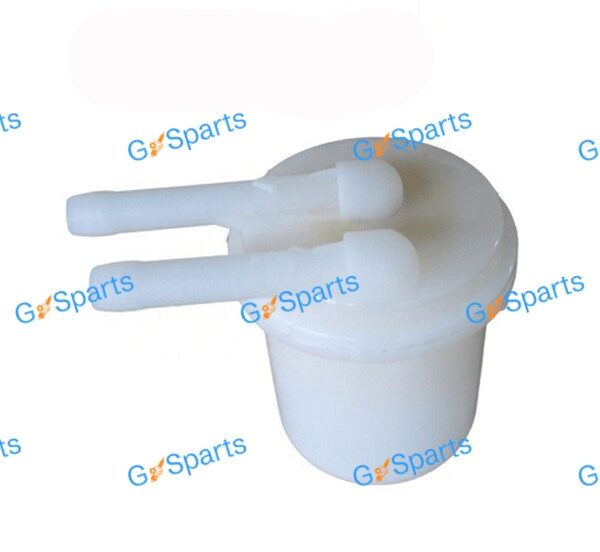
Genuine Nissan Fuel Filter 16400-06W00 – Various Nissan gasoline engine models (multiple markets, years)
OEM Nissan fuel filter 16400-06W00 for Various Nissan gasoline engine models (multiple markets, years). Inline gasoline/diesel filter ensuring clean fuel delivery and engine protection.
Did you like this product? Add to favorites now and follow the product.

(+86) 180 07 12 47 38 WhatsApp, Telegram, WeChat
Description
The Nissan Fuel Filter 16400-06W00 is designed to protect your engine by filtering out harmful contaminants in Various Nissan gasoline engine models (multiple markets, years). It ensures efficient combustion, prevents injector wear, and maintains reliable performance. Built with OEM-grade quality, this filter meets Nissan specifications (Fuel line filter; spec details like pressure/micron not always available). Cross-compatible with Nissan Genuine OEM, making it a trusted replacement part. Recommended replacement intervals align with Nissan service schedules. Notes: VIN/trim check required; some newer Nissan models use in-tank filters.
Role in drivability and why the right part matters
Clean, stable fuel delivery is the quiet foundation of smooth starts, crisp throttle, and consistent economy. Microscopic rust, varnish, and moisture can disturb spray patterns, nudge trims, and create hesitation you feel at stoplights or on ramps. Selecting the correct cartridge, installing it with clean-room discipline, and timing service intervals to your climate and duty cycle prevent those issues from ever reaching the injectors. The Nissan Fuel Filter 16400-06W00 is engineered to balance efficient capture with steady flow so pressure tracks command, startup is uneventful, and idle feels composed. That’s how routine maintenance transforms into predictable, confidence-building performance drivers notice every day.
Fitment confidence with zero-drama indexing
Great service starts with certainty. Verify VIN, engine code, and production month, then confirm connector style, line diameter, and bracket geometry against a shelf photo. A quick visual of the old unit’s ports and flow arrow avoids surprises when the rails are open. When the replacement is the Nissan Fuel Filter 16400-06W00, techs appreciate how the envelope, port alignment, and clip engagement make indexing fast and secure. For DIYers, a simple checklist—depressurize, mark flow, cap lines, swap crush washers, align arrow—keeps the job calm. The outcome you want is uneventful priming, a dry mirror check, and a first drive that simply feels “sorted.”
What “clean fuel” fixes in the real world
Detonation flirtations, rough cold starts, throttle flat spots, and hot-restart stumble often share a single upstream cause: throttled delivery from clogged media. Restoring volume with the Nissan Fuel Filter 16400-06W00 helps the ECU hit target trims at idle and during transition, shrinking the wiggle room that triggers nuisance codes. On high-load climbs or towing, steadier feed prevents lean spikes that feel like brief misfires. Across a week, the benefit shows up as fewer hesitations, more linear tip-in, and hot-idle smoothness that keeps the cabin pleasantly quiet. In fleets, it also protects aftertreatment health and reduces time lost to diagnostic dead-ends.
Inside the can: media, separation, and delta-P stability
Filter “paper” is an engineered matrix. Tight pore distribution captures fines without starving the pump; stable pleat spacing preserves active area across the interval; adhesive bonds keep the pack rigid against pulsing; and a water-management layer helps intercept moisture before it reaches precision components. In practice, the Nissan Fuel Filter 16400-06W00 translates those choices into a steady differential-pressure curve from gridlock to highway grades. If you trend scan-tool data, rising delta-P at similar load conditions is your early warning to schedule the swap. Proactive timing preserves drivability, saves fuel, and prevents the cascade of symptoms that eat diagnostic hours.
Installation choreography that scales quality
Precision becomes predictable when steps never change. Work cold and ventilated, keep an ABC extinguisher close, and stage spill kits plus rated gloves. Depressurize safely, photograph the original routing, and mark flow direction. Cap lines immediately to block airborne grit. Swap O-rings or crush washers the moment fittings come free, wipe brackets spotless, align the arrow on the Nissan Fuel Filter 16400-06W00, and tighten to spec—no cheater bars. Reconnect lines squarely, prime the system in two or three key-on cycles, check at idle, then take a short loop under mild load. Finish with a hot-idle mirror check and a tidy under-hood label.
Interval planning for climate, fuel, and duty
Intervals aren’t universal. Short-trip city cycles invite moisture and varnish; dusty corridors contaminate fill ports; bargain fuels can carry extra particulates. Tie mileage to a calendar cap to catch time-based degradation, and for fleets, trend trims and commanded vs actual rail pressure. When corrections climb at similar loads, the Nissan Fuel Filter 16400-06W00 is approaching end-of-life. Align replacement with seasonal services to consolidate downtime and verify the route’s fuel sources maintain healthy turnover. Proactive cadence protects injectors and pumps while keeping tickets predictable and easy to explain—both to advisors writing estimates and to owners watching costs.
Safety mindset and the “mini clean room”
Fuel system work demands calm, not rush. Use flare-nut wrenches to protect fittings, line caps to prevent ingress, and absorbent pads beneath connections. Eliminate ignition risks: no sparks, heat guns, or smoking near the job. Treat the work zone as a mini clean room—lint and dust become injector problems later. Before priming the Nissan Fuel Filter 16400-06W00, confirm routing, verify every clip is fully seated, and clear tools from the bay. A controlled first prime with eyes on joints prevents pressure-side surprises. That discipline isn’t theater; it’s the invisible layer that keeps results boringly excellent under busy-day pressure.
Fuel economy and the data you can show
Drivers rarely brag about filters, yet they feel the upgrade daily. When the Nissan Fuel Filter 16400-06W00 restores volume, trims tighten and pressure tracks command with less drift, especially at idle and during light throttle. On stop-and-go routes, those micro-improvements add up to small but persistent economy gains. Document baseline trims, rail pressure, and mpg, then repeat after service under similar conditions. A simple before/after graph turns “feels better” into “is better,” giving advisors a clean story and DIYers a confidence boost that their Saturday was well spent. Quiet proof builds trust—and trust builds on-time returns.
NVH, idle quality, and hot-restart smoothness
Uneven feed creates whispers you can hear and feel: a tremor at stoplights, an impatient surge when merging, a reluctant hot restart. Replace the upstream bottleneck with the Nissan Fuel Filter 16400-06W00 and the soundtrack changes to nothing—just calm, composed behavior. Consistent combustion also reduces the micro-shakes that fatigue mounts and tensioners over time. Pair the swap with an intake element and throttle-body cleaning, and you compound the effect without complicating the visit. For owners who spend summers in traffic, the upgrade shows up as a quieter cabin and less low-speed “nervousness,” which is exactly what preventative maintenance should deliver.
Authenticity safeguards that protect engines and shops
Convincing fakes copy ink, not engineering. They miss valve elasticity, media adhesion, or thread tolerances—and they turn quick visits into comebacks. Source the Nissan Fuel Filter 16400-06W00 from traceable suppliers, log batch codes, and keep a reference photo for ten-second checks of base, ports, and stampings. During receiving, spot-check weight and thread start, peek through ports for uniform media, and quarantine anything “off.” This gatekeeping keeps your schedule honest and your brand’s promises intact. DIY buyers should follow the same playbook: if a bargain looks too good, it probably comes with hidden costs measured in time and frustration.
Troubleshooting before and after replacement
Not every stumble is a filter. Start with a scan: trims, misfire counters, commanded vs actual pressure, MAF behavior, and EVAP purge duty. Vacuum leaks and weak pumps can mimic lean spikes. Once the Nissan Fuel Filter 16400-06W00 is in, clear codes, relearn as needed, and repeat the same test loop. If behavior persists, smoke-test for leaks, validate injector balance, and verify grounds and pump voltage under load. Methodical diagnosis preserves credibility, protects labor hours, and leads to the real fix faster. The goal isn’t a part installed; it’s a vehicle that feels elegantly normal in everyday situations.
DIY success without drama or spills
Preparation wins. Park level, depressurize correctly, and lay a broad pan. Photograph the original unit’s arrow and clip positions to eliminate doubt later. Cap lines as they come free, swap seals, and mount the Nissan Fuel Filter 16400-06W00 with its flow arrow aligned. Prime in cycles—key on until the pump stops, key off, repeat—before starting. Inspect under good light at idle and again after a gentle loop. If all is dry, label the bay with mileage and fuel grade. That small ritual turns a Saturday chore into a pro-level result and keeps the next service visit predictably simple.
Shop standardization as a competitive advantage
The healthiest shops sell predictability: the same leak-free finish and steady drive feel every time. Pre-stage bin kits—clips, gloves, absorbents, crush washers—and hang torque cards at eye level. Photo-log the key moments: clean bracket, line seating, final check. When every Nissan Fuel Filter 16400-06W00 install follows the same choreography, training accelerates, call-backs fall, and schedules stabilize. Customers may not know the steps, but they feel the outcome immediately. That feeling—smooth tip-in, quiet idle, no fuel smell—is your brand working in silence. Standardization turns everyday maintenance into a signature experience people trust and repeat.
Inventory and forecasting that keep lanes moving
Fuel filters turn quickly when value is obvious. Track platform usage, set a two-bin Kanban, and reorder before peak season. Store the Nissan Fuel Filter 16400-06W00 away from solvents and ozone, and maintain a “gold unit” for authenticity checks and technician training. Match accessory stock—crush washers, clips, gloves—to expected filter turns to avoid last-minute supply runs. With standardized installs and stable outcomes, forecasting becomes simple math per bay per week. The payoff is a lane that stays on time, a counter that never has to say “tomorrow,” and an owner base that learns to schedule proactively, not reactively.
Customer communication that earns loyalty
Proof beats promises. Share a four-photo set on the invoice: old unit in place, clean bracket, new filter installed, and a hot-idle dry check. Explain in plain language how the Nissan Fuel Filter 16400-06W00 preserves injector health, stabilizes trims, and reduces nuisance warnings. Tie the next interval to climate and miles, not just a round number. For fleets, include a brief data snapshot—pre/post trims and rail pressure—so managers can quantify the benefit. Customers remember how the car felt leaving, and they remember how clearly you explained why. Clarity brings them back on time without reminders that feel like pressure.
Environmental handling and compliance done right
Fuel disposal isn’t optional. Drain the old unit fully, place waste in sealed, labeled containers, and route pickups through certified partners. Wipe the workspace and document the manifest number and date. DIYers should store small amounts in approved cans and use municipal collection points; never pour or evaporate. The Nissan Fuel Filter 16400-06W00 is compact, but careless handling creates outsized risk. Treat the end of the job with the same precision as the install, and your shop stays audit-proof and community-friendly while protecting team safety and reputation.
Bundling services for compounding gains
Stack small wins into a big feel change. An OE-grade intake element, throttle-body cleaning, and the Nissan Fuel Filter 16400-06W00 together reduce load on trims and stabilize idle control. Verify plug condition and PCV function where mileage suggests, and confirm coil boots on platforms prone to arc-over. Present bundles as duty-matched—city vs highway—so recommendations feel calibrated, not generic. The goal isn’t a longer invoice; it’s a vehicle that behaves elegantly in real life. When owners experience that composed, “new enough” character months later, they attribute it to your process—and they return.
Data logging that turns “better” into “proven”
Capture a pre-swap baseline: short- and long-term trims at idle and 2,000 rpm, commanded vs actual pressure, and any misfire counters. After installing the Nissan Fuel Filter 16400-06W00, repeat the same measurements under matched conditions. Present a simple one-page graph. For advisors, it’s a credibility anchor; for fleet managers, it’s maintenance ROI; for DIYers, it’s validation that skill and patience matter. Over time, those snapshots create a local dataset that fine-tunes your interval guidance by climate and fuel source, moving your program from opinion to evidence with every completed service.
Avoiding the common pitfalls that cause comebacks
Most leaks trace to three mistakes: double gaskets, reversed flow, or under-seated connectors. Always verify the old seal isn’t clinging to a bracketed mount, align the arrow before torque, and push connectors until you feel and hear the click—then tug lightly to confirm. Prime in cycles to surface marginal joints without drama, and never “crush it shut” past spec. The Nissan Fuel Filter 16400-06W00 rewards clean technique with a dry first heat cycle. When discipline replaces improvisation, comebacks fade, bays stay calm, and customers learn that maintenance can be pleasantly uneventful.
Diagnosing beyond the filter when symptoms persist
If trims remain wide or a stumble lingers after installing the Nissan Fuel Filter 16400-06W00, widen your lens. Smoke-test for vacuum leaks, validate MAF readings against expected grams/second, and inspect injector balance. Check EVAP purge behavior; an over-eager valve can mimic lean spikes. On high-mileage platforms, confirm pump voltage under load and inspect grounds—supply instability undoes the best filtration. A methodical tree protects credibility, labor, and the owner’s time, ensuring you arrive at the root cause without parts darts or second guesses.
Selecting quality fuel and using additives wisely
Top-tier fuel reduces deposit formation upstream, easing filter workload. For seasonal moisture, a reputable water dispersant can help, but avoid heavy-handed cocktails that swing octane or harm seals. The Nissan Fuel Filter 16400-06W00 will handle contamination, but good inputs lengthen its sweet spot and preserve precision components. Give customers a brand-neutral handout on smart fueling habits—consistent stations, capped filler necks during storms, and avoiding below-quarter-tank operation to limit pump heat. These simple routines amplify the benefits of a proper filter and stretch the calm between service visits.
The fleet manager’s perspective: uptime, not headlines
Uptime is the metric that matters. Standardizing on the Nissan Fuel Filter 16400-06W00 for applicable platforms reduces variance in install feel, leak checks, and post-service behavior. Photo-logged procedures, batch tracking, and interval snapshots satisfy auditors and clients who demand traceability. With predictable outcomes, you can schedule proactively around routes and seasons, turning maintenance from disruption into routine. Quiet lanes, fewer tickets, and vehicles that simply behave—those are the wins that compound across quarters and budgets.
First-start checklist and road-test protocol
After installing the Nissan Fuel Filter 16400-06W00, prime in cycles, then start and let idle stabilize. Inspect ports and fittings for any hint of weep under bright light. On the road, include light-load cruising, a gentle grade, and a short highway pull. Watch trims and commanded vs actual pressure; note hot-restart behavior. Back in the bay, perform a hot-idle mirror check and verify cap seal condition. That twenty-minute protocol catches what haste misses and turns “we hope it’s good” into “we know it’s right.” It’s the professional difference owners feel even if they never see the steps.
Seasonal considerations and regional fuel realities
Winter thickens fuel and stresses pumps; summer heat invites vapor formation; coastal humidity increases moisture risk; high-altitude routes alter density. Tune intervals and checks accordingly. For example, pre-winter replacements of the Nissan Fuel Filter 16400-06W00 reduce cold-start struggle, while pre-summer service stabilizes hot-restart behavior. If your city’s fuel changes blends seasonally, note the dates and align customer reminders. Regional knowledge converts a generic plan into a locally optimal one—and customers sense the care when their vehicle behaves gracefully through the year’s extremes.
For performance enthusiasts: steady feed, steady gains
Tuned engines magnify small upstream problems. Uneven feed translates into inconsistent lambda and timing pull under load, hurting repeatability at the strip or on the dyno. The Nissan Fuel Filter 16400-06W00 helps maintain steady pressure so calibrations stay honest and logs stay boring—exactly what you want when chasing tenths. Combine with a fresh intake element, clean MAF, and verified pump voltage, and you remove variables that don’t add power but can steal it. Reliable baselines make meaningful tuning changes easier to measure and keep fun from becoming frustration.
Post-service owner checklist to prevent support tickets
Give every customer a simple, practical list: use consistent stations with strong turnover; avoid running below a quarter tank to reduce pump heat; listen for hot-start smoothness; note idle steadiness; and call if any fuel smell appears in the first 48 hours. Include a photo of their installed Nissan Fuel Filter 16400-06W00 and the hot-idle dry check on the invoice. Clear expectations reduce anxiety and empower owners to notice useful signals early. When they do call, your team can triage quickly because the install followed a documented process with batch notes and photos.
Business case: fewer surprises, happier calendars
In a busy lane, surprises kill margins. Standard procedure, disciplined receiving, and a cooperative part turn variable jobs into predictable throughput. The Nissan Fuel Filter 16400-06W00 delivers repeatable install feel and steady on-car behavior, shrinking the window for rework. That steadiness stabilizes calendars, improves labor utilization, and gives advisors confident, plain-language explanations customers accept. Reliability isn’t just technical excellence; it’s operational leverage that compounds across weeks, reviews, and referrals.
Closing perspective: make quiet excellence your signature
Drivers don’t rave about filters; they rave about how their cars feel. The Nissan Fuel Filter 16400-06W00 is a small component that enables big calm—cleaner combustion, tighter trims, quieter idle, and confident response under load. Pair it with clean installation, data-anchored communication, and intervals tuned to real duty, and routine service becomes your signature. That’s how you build loyalty without theatrics: deliver silence where there was noise, steadiness where there was doubt, and proof where there were promises.
External Resources (Authoritative)
- Fuel Filter — Wikipedia
- Bosch Automotive: Fuel Filters
- MAHLE Aftermarket: Fuel Filters
- MANN-FILTER Tech: Fuel Filters
- Parker Hannifin: Fuel Filtration
- DieselNet: Fuel Filters & Water Separators
- ICCT: Transportation Fuels & Quality
- US DOE: GDI Engine Basics
- EPA: Vehicle & Engine Emissions (Fuel Quality Context)
- SAE International — Standards (Fuel Systems)
Internal Links — G-Sparts (Fuel Filters)
Related products


Recently Viewed Products



G-SPARTS – Leading Auto Parts Supplier Since 2009
Trusted by 1000+ Clients Worldwide | Chinese (BYD, Geely, Chery, …), Japanese (Toyota, Honda, Nissan, …), European (BMW, Mercedes, VW, …) & American (Ford, Chevrolet, Tesla, …) Car Spares | Best Prices & OEM Quality | 15+ Years Expertise | Professional Team, Fast Global Shipping
Copyright 2025 © G-Sparts All Rights Reserved. | Premium Chinese Auto Parts Supplier – Worldwide Shipping | Best Prices on OEM & Aftermarket Spares

Reviews
There are no reviews yet.