
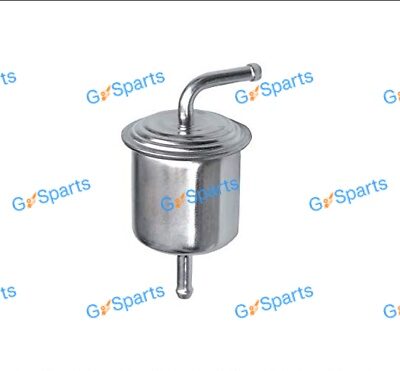
Supreme & Ultimate Building Flow — Nissan Fuel Filter 16400-53J10
Nissan Fuel Filter 16400-53J10 – Altima, Maxima, Pickup/D21 (various years/engines) delivers dependable, low-restriction filtration that stabilizes fuel pressure and protects injectors or carb jets from abrasive contaminants. OE-grade ports and seals lock down a leak-free install, while the rugged, corrosion-resistant canister tolerates harsh climates and older fuel systems. Ideal for rejuvenating drivability on daily sedans and hardworking pickups, it helps cure hesitation, flat spots, and poor starts linked to dirty fuel. Confirm coverage by VIN or engine code, then replace at recommended intervals to extend pump life, sharpen throttle response, and keep your Nissan running smooth mile after mile.
Did you like this product? Add to favorites now and follow the product.

(+86) 180 07 12 47 38 WhatsApp, Telegram, WeChat
Description
The Nissan Fuel Filter 16400-53J10 is designed to protect your engine by filtering out harmful contaminants in Altima, Maxima, Pickup/D21 (various years/engines). It ensures efficient combustion, prevents injector wear, and maintains reliable performance. Built with OEM-grade quality, this filter meets Nissan specifications (Fuel line/inline filter; moderate flow; micron spec often not listed). Cross-compatible with Nissan Genuine OEM, making it a trusted replacement part. Recommended replacement intervals align with Nissan service schedules. Notes: Verify VIN & engine; used in sedans and pickups.
Clean Fueling Fundamentals and Why They Matter
Everyday drivability—quiet starts, smooth idle, and effortless passing—depends on a clean, consistent fuel supply that reaches the rail without debris or varnish. Gasoline picks up microscopic particles from tanks, lines, and station infrastructure, and even tiny grit can distort injector spray, nudge trims, and dull response. it’s the guardrail that keeps mixture control predictable in city heat and highway cold. When you select a part that mirrors factory flow and sealing, you protect injectors, the pump, and catalytic hardware from avoidable stress. As a result, the Nissan Fuel Filter 16400-53J10 becomes a quiet cornerstone of reliability—install it on cadence and the Nissan Fuel Filter 16400-53J10 turns routine service into daily calm.
Fitment Scope, VIN Accuracy, and Model-Year Nuance
Altima, Maxima, and D21-era pickups share family DNA, but fuel plumbing, bracket geometry, and connector angles can vary by engine code and production month. The right process starts with a VIN lookup and confirmation of displacement so the canister threads, port sizes, and clocking match what’s on your car. A quick bench comparison of the old unit’s orientation prevents hose strain and makes reassembly natural. With a properly mapped footprint, the inline element seats squarely, priming takes minutes, and leak checks become a formality. That is exactly the fit-and-feel you should expect from the Nissan Fuel Filter 16400-53J10, chosen to reflect factory intent for these sedans and light trucks.
Inline Architecture and Real-World Driveability
Inline metallic canisters remain a smart design for serviceability and thermal stability, especially on legacy platforms that blend daily commuting with weekend hauling. By trapping debris upstream, the filter keeps pump workload in the efficient current band, while the regulator maintains target pressure without chasing random dips. On the road, hesitations fade and hot restarts shorten—not dramatic, just a chorus of small improvements that add up to confidence. These are the practical dividends of picking a specification-correct element like the Nissan Fuel Filter 16400-53J10, because the Nissan Fuel Filter 16400-53J10 restores the baseline rail behavior the ECU expects during tip-in, cruise, and long grades.
Construction Quality, Media Behavior, and Seal Chemistry
Look-alike cartridges can perform very differently when ethanol blends, vibration, and heat cycles enter the picture. Pleat geometry must resist collapse under transient demand, adhesives need to hold without shedding fibers, and end-cap alignment must keep flow straight. Elastomers are just as critical: gaskets should compress evenly and rebound after hot soak so a faint leak never appears days later as a cabin odor. With a well-built canister, restriction grows gradually rather than abruptly, trims stay tidy, and inspection monitors complete with fewer loops. Selected on those fundamentals, the Nissan Fuel Filter 16400-53J10 behaves like a factory component that quietly preserves rail stability and injector health.
Fuel System Dynamics, Pressure Recovery, and Response
Delivery is a choreography of pump output, inlet restriction, regulator control, and injector demand. When the inlet path loads up, current draw rises and recovery lags during merges or hill climbs—felt as a muted response rather than a code. Refreshing the circuit with a correct inline element reduces suction loss, restoring the curve the ECU was tuned around. The car feels more decisive at part throttle, and catalyst light-off on chilly mornings becomes more consistent. That’s the subtle but lasting payoff of installing the Nissan Fuel Filter 16400-53J10, and it’s why many drivability “ghosts” fade right after the Nissan Fuel Filter 16400-53J10 goes in.
Early Clues That Point to Rising Restriction
Filters almost never fail with drama; they leave breadcrumbs. A slightly longer crank after a quick stop, a soft surge maintaining speed on a familiar grade, or a faintly louder pump hum in summer traffic suggests the inlet is working harder than it should. Readiness that takes one extra loop—without stored codes—can be another whisper. Smart diagnosis grabs a simple baseline—pressure at idle and during a controlled pull—then repeats the measurement after service. When trims narrow and recovery sharpens, the numbers confirm what your seat sensed: the inline element was overdue.
Interval Planning, Seasons, and Route Reality
Service schedules sketch the baseline, but local conditions refine cadence. Short urban hops in humid climates load media faster than highway miles, and dusty corridors or older fueling infrastructure can add grit. Plan replacement before the season that stresses your vehicle most—deep winter or peak heat—so the system enters with margin. Pair the job with an engine air filter check, PCV inspection, and plug interval to reduce duplicated labor. Document mileage, ambient temperature, and fuel source in a simple log; the next decision gets easier when your notes point to a pattern supported by the Nissan Fuel Filter 16400-53J10 refresh.
Safety, Depressurization, and Clean-Bay Setup
Fuel service should feel unhurried and methodical. Ventilate the space, disconnect the negative terminal, and relieve line pressure per the manual—either via the service port or pump-disable run-down. Wear eye protection and fuel-rated gloves, stage absorbent pads, and keep a fire-safe container at hand. Photograph hose routes and label fittings so reassembly mirrors factory layout, and cap open lines immediately to keep lint out of the system. Attention to these quiet details prevents odor, preserves seals, and ensures the Nissan Fuel Filter 16400-53J10 seats once, properly, for the duration of the interval.
Tools, Hardware, and Reuse Rules You Shouldn’t Bend
Line wrenches protect flare nuts from rounding, while a torque wrench keeps crush washers from over-compressing. Fresh washers are mandatory; once formed, they rarely reseal reliably. Inspect brackets and isolators—brittle mounts can transmit vibration into lines and invite future leaks. A penlight and mirror help spot the faintest sheen after priming. Finishing with a dry towel sweep on every joint is a professional habit that pays back fast. Apply these disciplines and the Nissan Fuel Filter 16400-53J10 becomes a one-and-done installation rather than a callback risk.
Installation Logic, Orientation, and Hose Management
Success begins on the bench. Compare thread pitch, body length, and port orientation, then align the flow arrow toward the rail. Finger-start each fitting, support hard lines with a back-up wrench, and keep hoses in relaxed arcs rather than forced twists. Reuse bracket positions without preloading the canister and verify clearance around heat sources. Prime by key-cycling before cranking; then inspect in silence for the slightest film. When everything stays dry and the engine lights smoothly, the Nissan Fuel Filter 16400-53J10 has integrated exactly as intended, and the validation drive becomes pleasantly uneventful.
Priming, Leak Checks, and a Smart Proving Route
A careful prime builds pressure without masking a tiny seep behind engine noise. After several cycles, start and allow the ECU to settle at warm idle. Take a short validation loop—stop-and-go, a steady suburban cruise, and a gentle uphill pull with accessories on. You’re listening for pump tone stability and feeling for linear tip-in. Back in the bay, recheck warm since expansion can expose a marginal joint. When all joints remain bone-dry and the cabin smells like nothing, you’ve confirmed the Nissan Fuel Filter 16400-53J10 installation is sealed and ready for the long interval.
Pressure, Volume, and Diagnostic Clarity
Objective numbers beat hunches. If your tools permit, capture pre-service and post-service pressure at idle and during a controlled load, plus a brief volume snapshot. Healthy systems show steadier rail behavior and faster recovery on grades after a refresh. If sags persist, the data suggests lift-supply, regulator, or venting issues rather than a fresh element. Keeping these measurements on file transforms future drivability complaints into short, decisive checks anchored by the Nissan Fuel Filter 16400-53J10 baseline you established.
Emissions, Readiness, and Catalyst Protection
Predictable fueling keeps oxygen sensors in their sweet zone and supports clean catalyst conversion—especially during the crucial first minutes after start. Random lean episodes caused by marginal delivery heat the catalyst and prolong readiness, which turns inspections into multi-loop chores. Restore upstream cleanliness and trims narrow, monitors complete faster, and heat stress falls. Over months, that steadiness protects expensive aftertreatment components while quietly improving consistency at the pump—practical gains owed in part to the Nissan Fuel Filter 16400-53J10 doing boring, essential work upstream.
Buying With Confidence and Avoiding Mis-Picks
Online marketplaces sometimes blur footprints. Favor sellers who publish crisp photos of ports and brackets, list included washers or O-rings, and state coverage by model, year, and engine. Avoid umbrella listings that lump multiple canisters into a single SKU. When the box arrives, bench-match threads, body length, and indexing against your old unit before opening the system. Accurate content plus a sixty-second comparison turns Saturday guesswork into a single-session success backed by the Nissan Fuel Filter 16400-53J10 you meant to buy.
Owner Habits That Stretch the Benefits
Simple routines amplify hardware quality. Choose high-turnover stations, avoid chronic near-empty operation in summer heat, and keep the engine air filter fresh so mixture control isn’t compensating for intake faults. During oil changes, listen for subtle pump-tone shifts after a hot soak and glance at trims at warm idle and cruise. Five-minute check-ins catch drift early and extend the calm you notice after service—quiet proof that your maintenance anchored by the Nissan Fuel Filter 16400-53J10 is paying back across seasons.
Environment, Storage, and Regional Nuance
Coastal humidity encourages film formation while arid regions push fine dust; older fueling infrastructure can add its own signature of contaminants. Vehicles that sit should be stabilized and stored above half a tank to limit condensation, then diluted with fresh fuel when returning to service. Adjust intervals toward the conservative side when your routes include remote stations or extreme temperatures. This climate-aware approach ensures the inline circuit remains predictable, supported by regular renewals with the Nissan Fuel Filter 16400-53J10.
Altima and Maxima: Sedans with Mixed Duty
Family sedans juggle HVAC loads, lighting, and stop-and-go heat while still needing decisive merges on short ramps. An inlet path kept clean by a correct inline element gives the pump headroom and the regulator a steady target. The result is less negotiation at part throttle and fewer moments where the car seems to “ask permission” before responding. In real life, that translates to lower fatigue and a quieter cabin during evening errands—benefits that track back to prompt service with the Nissan Fuel Filter 16400-53J10, chosen specifically for these sedan applications.
Pickup/D21: Workloads, Grades, and Longevity
Older compact trucks live honest lives: hauling, idling, and climbing at low speeds with tools in the bed. Marginal delivery reveals itself as stumble on grades or long cranks after heat soak. Refreshing the inlet path restores the straightforward torque you expect from a well-kept D21, while reducing pump strain that can age the system prematurely. Owners who rely on their trucks for weekend projects or daily work find that the Nissan Fuel Filter 16400-53J10 puts drivability complaints to rest and keeps the platform faithful to its reputation for durability.
Fleet, Rideshare, and High-Mileage Strategy
Commercial duty compresses timelines and magnifies small flaws into downtime. Standardize intervals by kilometers and climate, maintain buffer stock of washers and clamps, and log pressure snapshots after each renewal. Trendlines that drift trigger attention before peak season. First-try fit and predictable sealing make the Nissan Fuel Filter 16400-53J10 a low-cost lever for uptime, while drivers trained to report hot-start length and hill-pull feel help you catch issues early without invasive diagnostics.
Troubleshooting Edge Cases After Replacement
If a narrow-band whistle appears at a specific RPM after service, suspect a slightly lifted quick-connect or an under-torqued joint rather than systemic fuel starvation. If trims wander only on long grades, verify tank venting and pump voltage under load; an aging connector can mimic restriction. A faint cabin scent with dry fittings often traces to a pinched access-cover gasket. Having renewed the inlet path with the Nissan Fuel Filter 16400-53J10, you can isolate true causes quickly and avoid re-opening the circuit without evidence.
Interior Care, Clean Workmanship, and Acceptance Criteria
A professional job shows in the details you don’t notice later. Lay seat covers, vacuum before opening panels, and keep lint far from open lines. After reassembly, confirm the access cover sits flat, clips engage fully, and no trim noise appears on the validation loop. The real acceptance test is a week later: zero odor, steady idle with accessories on, and uneventful hot starts. Those quiet confirmations indicate your installation discipline and the upstream protection provided by the Nissan Fuel Filter 16400-53J10 are working together.
Post-Service Confidence Audit and Ongoing Monitoring
A week after the install, run a quick confidence audit to be sure everything is holding up under real driving conditions. Start with a cold-soak inspection in a quiet area, checking the access cover, line joints, and brackets for any trace of dampness or fuel sheen; a bright flashlight and a clean white towel make tiny films obvious. Take a short validation loop that mixes stop-and-go, a steady suburban cruise, and a modest uphill pull with the A/C and headlights on. Back in the bay, glance at short- and long-term trims at warm idle and at a 60–80 km/h steady state; a tighter spread confirms a healthy upstream path.
Recordkeeping, Resale, and Proof of Care
A clear maintenance story saves time and boosts value. File invoices, note mileage and ambient conditions, and attach pressure or trim snapshots if recorded. Photograph the installed unit and hose routing so the next tech sees the layout at a glance. When it’s time to sell—or troubleshoot two winters from now—documentation showing renewal with the Nissan Fuel Filter 16400-53J10 on cadence shortens conversations and reassures buyers that upstream precision has been a priority.
Total Cost of Ownership and Quiet Economics
Compared with pumps, injectors, and catalysts, filtration is inexpensive insurance that shields every downstream component. A clean inlet keeps electrical load reasonable, prevents lean-spike misfires that heat the converter, and sustains rail stability that makes the car feel composed. Over years, those small advantages accumulate into fewer shop visits and calmer commutes. In that long view, choosing the Nissan Fuel Filter 16400-53J10 on schedule is a modest investment that pays compound interest in quiet miles and worry-free inspections.
External Resources (Authoritative)
- Fuel Filter — Wikipedia
- Bosch Automotive: Fuel Filters
- MAHLE Aftermarket: Fuel Filters
- MANN-FILTER Tech: Fuel Filters
- Parker Hannifin: Fuel Filtration
- DieselNet: Fuel Filters & Water Separators
- ICCT: Transportation Fuels & Quality
- US DOE: GDI Engine Basics
- EPA: Vehicle & Engine Emissions (Fuel Quality Context)
- SAE International — Standards (Fuel Systems)
Internal Links — G-Sparts (Fuel Filters)
Related products



G-SPARTS – Leading Auto Parts Supplier Since 2009
Trusted by 1000+ Clients Worldwide | Chinese (BYD, Geely, Chery, …), Japanese (Toyota, Honda, Nissan, …), European (BMW, Mercedes, VW, …) & American (Ford, Chevrolet, Tesla, …) Car Spares | Best Prices & OEM Quality | 15+ Years Expertise | Professional Team, Fast Global Shipping
Copyright 2025 © G-Sparts All Rights Reserved. | Premium Chinese Auto Parts Supplier – Worldwide Shipping | Best Prices on OEM & Aftermarket Spares

Reviews
There are no reviews yet.