
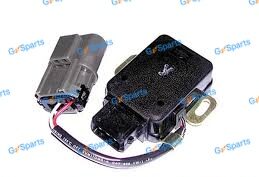
Ultimate Nissan TPS Sensor 22620-40P02 for 300ZX 1993–1996 – Crisp Throttle, Smooth Idle, OEM-Grade Reliability
OEM Throttle Position Sensor for Nissan 300ZX (1993–1996).
Did you like this product? Add to favorites now and follow the product.

(+86) 180 07 12 47 38 WhatsApp, Telegram, WeChat
Description
The Nissan TPS Sensor 22620-40P02 is built for 300ZX models (1993–1996). This electric 3-wire OEM sensor provides accurate throttle angle data for enhanced fuel injection and ignition timing. Supported by aftermarket brands such as Duralast, Hitachi, and Standard Motor Products. Perfect direct-fit replacement, ensuring consistent performance. VIN confirmation is recommended before purchase.
Why Throttle Position Data Decides How the 300ZX Feels
A VG-powered 300ZX only feels “right” when throttle angle data is clean, linear, and predictable, because the ECU uses that signal to shape transient fueling, spark advance, and torque targets.Restoring a trustworthy reference turns vague tip-in into confident acceleration, calms idle with accessories on, and makes decel fuel cut behave politely around town. The fastest, most reliable route to that outcome is specifying Nissan TPS Sensor 22620-40P02 for 300ZX, validating its sweep with a slow pedal log, and archiving before/after plots. Technicians who standardize on Nissan TPS Sensor 22620-40P02 for 300ZX see fewer comebacks, tighter trims, and a car that simply drives like it should.
How the ECU Interprets Angle and Translates It to Torque
Every small pedal change triggers a tight feedback loop: predicted airflow meets measured angle, then the ECU adjusts injector pulse width and ignition to deliver torque without hesitation or surge. When the trace is smooth and monotonic, the controller runs narrow correction bands, so the car feels composed in traffic and decisive on ramps. If the sweep shows flat spots or spikes, the loop widens, softening response and wasting fuel. Installing Nissan TPS Sensor 22620-40P02 for 300ZX re-centers that loop around a stable reference the calibration expects. The difference shows up first in data—clean slopes and no dropouts—then on the road as a throttle that finally feels connected to your right foot.
Symptoms That Point to Position-Signal Drift
Owners often report subtle issues long before a code sets: a hiccup while parking, lazy throttle on a mild hill, cruise that hunts at feathered input, or idle that twitches when the A/C clutch engages. Graphing a slow pedal sweep reveals the truth—stair-steps, jitter, or sudden voltage drops where there should be one smooth line. Replacing a tired unit with Nissan TPS Sensor 22620-40P02 for 300ZX stops the noise at its source, letting adaptives settle and trims return near center. The seat-of-the-pants result is obvious: predictable tip-in, steadier creeping in traffic, and fewer “what was that?” moments during gentle driving.
Diagnostic Context Before You Touch the Sensor
Great diagnostics respect sequence. Verify fuel pressure and delivery volume, scope ignition under load, and smoke-test for vacuum leaks so you’re not masking root causes with a new part. Clean the MAF if film is visible, then run a slow sweep and a warm-cruise log to see whether angle truth matches airflow and trims. When fundamentals are green and the sweep is still jagged, Nissan TPS Sensor 22620-40P02 for 300ZX becomes the logical, defensible fix. Finish by repeating the same route post-install; identical conditions turn “feels better” into evidence you can file with the work order.
Fitment Verification and Part Authenticity Checklist
Before opening the bag, confirm connector keying and throttle-body style, then compare ear thickness and mold lines to your reference photos to avoid counterfeit headaches. Photograph labels for traceability and match the spec to your VIN build period. A genuine Nissan TPS Sensor 22620-40P02 for 300ZX will align perfectly with shaft indexing and present the plug at the factory clock, keeping the harness relaxed. Authentic packaging, clear logo depth, and crisp terminal plating are quick tells. With provenance established, you’re set up for a first-pass result that makes Nissan TPS Sensor 22620-40P02 for 300ZX the quiet hero behind calm, linear angle data.
Preparation: Access, Cleaning, and Safety That Save Time
Disconnect the battery, remove intake ducting for clean sightlines, and wipe the throttle plate with a sensor-safe cleaner so varnish doesn’t mimic stickiness. Inspect the harness for brittle sections and confirm routing clips are intact. Stage a torque-limited driver, a fine marker for index lines, and contact-safe cleaner for the connector. Dry-fit to feel spline engagement without preload. With prep complete, installing Nissan TPS Sensor 22620-40P02 for 300ZX becomes a predictable, low-drama task that ends with a satisfying lock-click and a sweep trace that already looks calmer on the scan tool.
Indexing, Clocking, and Torque Without Preload
TPS ears warp easily; over-tightening shifts base angle and invites phantom idle errors. Hand-start both screws, align to your scribed mark, and confirm the sensor seats flush before bringing hardware to spec. The connector should point exactly as the original did, giving the loom slack for engine rock and avoiding sharp heat shields. A properly indexed Nissan TPS Sensor 22620-40P02 for 300ZX delivers a believable closed-throttle voltage and a linear rise to WOT with zero “steps.” That tidy mechanical foundation makes the coming relearn and validation feel routine instead of experimental.
Base Voltage, Idle Switch (If Equipped), and Relearn
Controllers cache closed-throttle voltage and airflow relationships, so you must perform the specified relearn. Some 300ZX setups need an idle switch verification; others only require a key-on sequence and a short drive. Warm fully, confirm credible closed-angle, and watch trims stabilize at cruise. If they don’t, revisit grounds, plate cleanliness, and intake leaks before condemning the new part. When the sweep from your fresh Nissan TPS Sensor 22620-40P02 for 300ZX is monotonic and trims sit near center, you’ve proven the loop has regained authority—and your documentation will read like a lab report, not a guess.
Post-Install Validation Loop You Can Repeat Anytime
Build a five-minute route you can clone for every car: warm idle for a minute, steady cruise at 60–80 km/h, a few gentle accelerations, and one long decel to fuel cut. Save plots with ambient temp and fuel brand noted. A healthy trace after Nissan TPS Sensor 22620-40P02 for 300ZX shows a smooth sweep, calm cruise trims, and clean decel behavior without blips. The beauty of a repeatable loop is simple: when the customer returns months later, you can overlay traces and prove the system is still “boringly perfect,” or spot drift early—before it becomes a complaint.
Transmission Behavior and Converter Lockup Feel
Shift scheduling and converter logic rely on believable torque requests, which begin with angle honesty. Jittery inputs make automatics hunt or lock/unlock on rolling terrain. A clean reference yields decisive, silky shifts and stable lockup that resists small wind or grade changes. Manuals also benefit: throttle blips match exactly what your foot asks for, smoothing downshifts. Installing Nissan TPS Sensor 22620-40P02 for 300ZX restores that proportionality so the driveline stops amplifying tiny pedal moves and starts responding like a well-tuned instrument again.
Fuel Economy, Emissions Readiness, and Catalyst Protection
When angle data is noisy, the ECU enriches “just in case,” cooking catalysts during warm-up and delaying readiness monitors. Tight, linear inputs let the controller stay near stoichiometry and complete tests promptly, easing thermal load on substrates and bringing MPG back where it belongs. After fitting Nissan TPS Sensor 22620-40P02 for 300ZX, clear monitors, run your route, and note how quickly systems set green. That’s the practical, measurable dividend of getting the smallest signal right: a cooler catalyst, a calmer dash, and fewer surprises on inspection day.
Everyday Drivability: Parking Lots to On-Ramps
Real proof lives in low-speed finesse. With a stable sweep, creeping in traffic becomes glassy, A/C engagement stops nudging RPM, and rolling hills no longer induce “yo-yo” throttle. On-ramps feel decisive—no hesitation, no lurch—just proportional torque that builds with pedal travel. These changes are subtle and constant, which is why owners fall back in love with the car. They’re also exactly what you expect when Nissan TPS Sensor 22620-40P02 for 300ZX feeds the ECU a believable, repeatable angle story every time you drive.
Electrical Hygiene: Grounds, Loom, and Connectors
Old grounds, corroded pins, and over-tight looms create intermittent faults that mimic bad sensors. Wire-brush eyelets, verify torque, clean contacts with approved spray, and ensure proper strain relief at factory clip points. A gentle tug test exposes broken strands at stress risers. This hygiene ensures the clean output from Nissan TPS Sensor 22620-40P02 for 300ZX survives the trip to the ECU without interference, keeping your plots steady and your diagnoses boring—in the very best way.
Harness Routing, Heat, and Vibration Defense
The right part fails if the harness rubs against a sharp shield or bakes beside a manifold. Route with slack for engine movement, add high-temp loom where needed, and avoid tight bends near the connector. After your final check, rock the engine by hand to confirm clearance under motion. Protecting the environment around Nissan TPS Sensor 22620-40P02 for 300ZX is cheap insurance against the kind of intermittent noise that burns diagnostic hours and customer patience alike.
Common Installation Mistakes and How to Avoid Them
Three errors cause most comebacks: misalignment that preloads the wiper, skipping the relearn so the ECU “interprets” new voltages through old assumptions, and failing to seat the connector until the lock snaps. Slow down, index to the mark, torque gently, click the plug, and run the exact procedure. Then validate with your saved route. This simple discipline keeps the fix fixed and lets Nissan TPS Sensor 22620-40P02 for 300ZX do exactly what it’s designed to do—deliver linear angle truth the controller trusts.
Tuning, Mild Bolt-Ons, and Part-Throttle Polish
Freer intake or exhaust can make transient tables more sensitive, exposing jitter that stock maps once masked. Start with a proven sweep so any calibration edits chase intent rather than noise. With Nissan TPS Sensor 22620-40P02 for 300ZX providing repeatable linearity, you’ll see quieter decel fuel cut, fewer oscillations in steady cruise, and less time rewriting the same small cells. That frees you to shape personality—lively but civil—where owners spend most of their time.
Track-Day and Heat-Soak Considerations
Spirited driving stresses weak signals: high vibration, heat soak, and rapid pedal transitions reveal lag and dropout instantly. Validate your sweep after a heat cycle and again post-session; compare slopes for drift. If your overlays look identical, the system isn’t guessing, and your calibration scales gracefully to harsher duty. Many builders make Nissan TPS Sensor 22620-40P02 for 300ZX standard before touching maps because trust in the reference unlocks progress everywhere else.
Counterfeit Avoidance, Packaging, and Proof of Origin
Critical signals attract copycats that look convincing but drift early. Protect outcomes with tamper-evident seals, scannable batch codes, and a quick unboxing checklist—logo depth, pin finish, and connector mold lines. Photograph the label and the installed orientation for the work order. Genuine Nissan TPS Sensor 22620-40P02 for 300ZX parts behave predictably, which is why evidence-led policies resolve support tickets quickly and fairly.
Buyer’s Guide: Tools, Tips, and DIY Success
DIYers win with clarity. Publish a compact tool list—torque-limited driver, marker, contact-safe cleaner, scanner—plus two key photos: correct clocking and the unmistakable connector “click.” Provide torque values, the relearn sequence, and a mini validation route with sample plots. This packaging turns installs into predictable Saturday projects and lowers RMAs. Featuring Nissan TPS Sensor 22620-40P02 for 300ZX in a kit with loom and clips raises first-pass success even further.
Product Page Content and Schema for Higher Conversions
Education sells. Stack micro-guides above the fold: fitment notes, torque, indexing, relearn, and validation. Add HowTo and FAQ schema so search surfaces your answers directly. A small “what good looks like” graph sets expectations and deters unnecessary returns. When content matches real outcomes after installing Nissan TPS Sensor 22620-40P02 for 300ZX, shoppers feel safe, conversions rise, and support volume falls.
Evidence-First Warranty Support That’s Fast and Fair
Ask for three things to green-light claims quickly: a slow-sweep screenshot, a warm-cruise trims plot, and a routing photo. With objective proof, you can approve or guide next steps—ground cleaning, throttle-bore service, or relearn—in minutes. This respectful posture builds loyalty and makes your team more efficient. It also pairs perfectly with the predictable behavior of Nissan TPS Sensor 22620-40P02 for 300ZX, whose calm sweep makes “good vs. bad” distinctions crystal clear.
Preventative Maintenance for Aging Chassis
Heat, time, and vibration harden plastics and loosen grounds. Fold a quick electrical check into seasonal service: inspect loom, refresh clips, re-torque grounds, and clean the throttle plate. Archive a fresh validation plot each visit. These small habits keep the signal from Nissan TPS Sensor 22620-40P02 for 300ZX clean year-round, preventing slow creep back into vague drivability and late readiness.
Owner Handover That Builds Long-Term Trust
Give drivers a one-page summary: what changed, why it matters, relearn steps performed, and two tiny graphs—before and after. Add three simple tips: fix intake leaks early, keep filters fresh, and return with a short log if a lamp appears. That clarity transforms a technical repair into understandable value and turns calm plots into five-star reviews—especially when the fix centered on Nissan TPS Sensor 22620-40P02 for 300ZX and the road test confirmed the new, composed character.
Advanced Troubleshooting Scenarios and Edge-Case Diagnostics
Some drivability complaints persist even after baseline checks and a textbook sweep—typically when multiple small issues stack. In these cases, widen your lens: correlate throttle angle with MAP/MAF rates, compare commanded versus delivered spark during micro-transients, and watch short-term trims through gear changes to find timing mismatches. Use a chassis-ground voltage drop test under accessory load to expose hidden electrical resistance that only appears in real use. When the trace cleans up and trims center during steady cruise, you’ve isolated the weak link. Lock in the fix with Nissan TPS Sensor 22620-40P02 for 300ZX, then archive plots so the next technician starts from truth, not hunches.
Content, Training Assets, and Storefront Consistency That Sells
Turn your best practices into scalable assets that help buyers succeed the first time. Build a single-page micro-guide with torque specs, indexing photos, relearn steps, and the validation loop, and embed it beside the add-to-cart button. Record a 90-second video showing the connector “click,” shaft alignment, and a live slow-sweep graph after installation. Mirror those visuals in your marketplace listings, reseller kits, and post-purchase emails so messaging is identical everywhere. This uniform clarity reduces RMAs and elevates perceived quality because the car behaves exactly like the demo. When your kit centers on Nissan TPS Sensor 22620-40P02 for 300ZX, the content aligns with outcomes—steady plots, smoother tip-in, faster readiness—turning technical confidence into higher conversion and happier long-term customers.
Fleet and Collection Playbooks for Predictable Results
Across multiple cars, tiny inefficiencies grow into costs and complaints. Standardize parts, steps, and a shared validation route so first-pass fixes become normal. Archive plots by VIN to spot trends and train new techs faster. Procurement teams that choose Nissan TPS Sensor 22620-40P02 for 300ZX as their reference see quieter phones, smoother inspection timing, and logs that read like clockwork because the angle story is always trustworthy.
Final Recommendations and Next Steps for a Calm, Confident Drive
Turn intent into results: baseline trims and a slow sweep, fix leaks and grounds, install with careful indexing and gentle torque, run the relearn, and validate on your five-minute route. Save the plots to close the loop with facts, not feelings. If the sweep is smooth and trims sit near center, you’ve solved the cause—not the symptom. For an OEM-aligned, data-proven outcome you can feel on every drive, specify Nissan TPS Sensor 22620-40P02 for 300ZX and keep that validation template handy for future visits.
External Resources (Standards & Technical References)
- ISO 26262 — Road Vehicles Functional Safety
- ISO 11898 — Controller Area Network (CAN)
- ISO 14229 — Unified Diagnostic Services (UDS)
- SAE J1979 — OBD-II Diagnostic Test Modes
- AEC-Q100 — Stress Test for Automotive ICs
Related Internal Links
Related products



G-SPARTS – Leading Auto Parts Supplier Since 2009
Trusted by 1000+ Clients Worldwide | Chinese (BYD, Geely, Chery, …), Japanese (Toyota, Honda, Nissan, …), European (BMW, Mercedes, VW, …) & American (Ford, Chevrolet, Tesla, …) Car Spares | Best Prices & OEM Quality | 15+ Years Expertise | Professional Team, Fast Global Shipping
Copyright 2025 © G-Sparts All Rights Reserved. | Premium Chinese Auto Parts Supplier – Worldwide Shipping | Best Prices on OEM & Aftermarket Spares

Reviews
There are no reviews yet.