
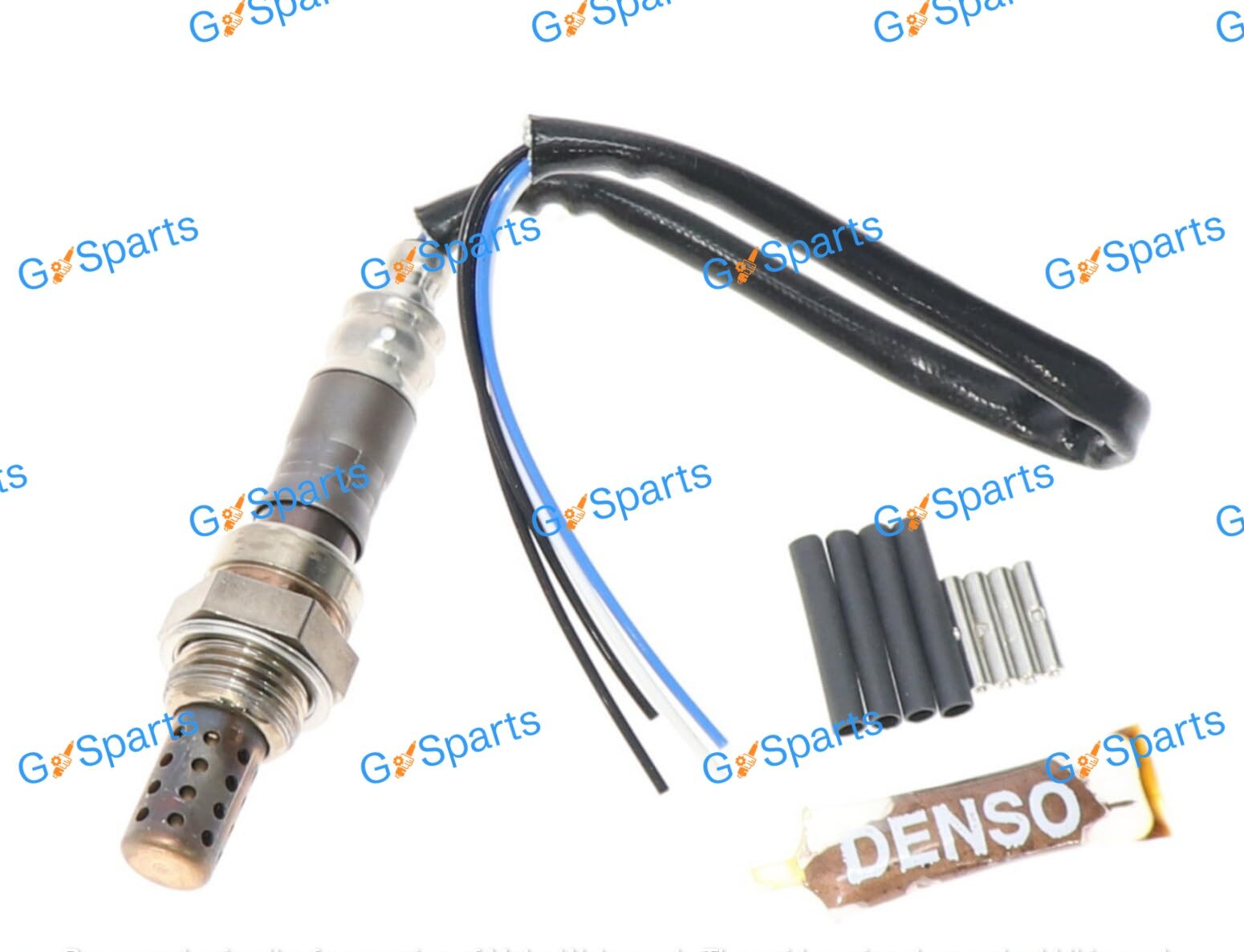
Ultimate OEM Guide: Mazda Oxygen O2 Sensor Denso 234-4142/234-4209/234-4210 — Cleaner Emissions & Stable Trims
O₂ sensor for Mazda2/3/6/CX‑3/CX‑5/CX‑9/MX‑5 (engine/year dependent) – Upstream or downstream (cross list). Specs: Most are 4‑wire heated; wire & harness length per SKU — match to OE.
Did you like this product? Add to favorites now and follow the product.

(+86) 180 07 12 47 38 WhatsApp, Telegram, WeChat
Description
OE‑style oxygen (lambda) sensor listing covering: Mazda2/3/6/CX‑3/CX‑5/CX‑9/MX‑5 (engine/year dependent). OEM/reference(s): Denso 234‑4142 / 234‑4209 / 234‑4210 (examples). Position: Upstream or downstream (cross list). Typical specification: Most are 4‑wire heated; wire & harness length per SKU — match to OE. Brands/cross‑refs: Denso OE line (234‑4xxx series). Fitment: Start from OEM part number, then match to the correct Denso cross. Source: FinditParts.
Why This Upstream Sensor Matters
Closed-loop fueling rises and falls with upstream signal quality, so the Mazda Oxygen O2 Sensor Denso 234-4142/234-4209/234-4210 is a high-leverage component. When the element grows sluggish, the ECU turns defensive—short-term trims pin, long-term trims drift, idle jitters with A/C, and economy slides. Replace the upstream with an OE-mapped unit and the heater profile, response curve, and sample depth snap back to what the calibration expects. That shortens open-loop after cold starts, smooths tip-in, steadies timing at cruise, and protects the catalyst on long grades. You’ll feel quieter operation and fewer sulfur odors, while the Mazda Oxygen O2 Sensor Denso 234-4142/234-4209/234-4210 helps readiness set predictably.
Upstream vs. Downstream—Different Jobs
The upstream sensor steers mixture in real time; downstream audits catalyst efficiency. Mixing roles or adding a universal with mismatched heater current invites monitor delays and nuisance codes. Specifying the Mazda Oxygen O2 Sensor Denso 234-4142/234-4209/234-4210 for the upstream restores brisk switching near lambda at light load so injector pulse trims precisely and ignition stays decisive. When the converter is healthy, downstream traces remain comparatively calm. That division of labor only holds if the upstream truth source is credible, which is why the Mazda Oxygen O2 Sensor Denso 234-4142/234-4209/234-4210 is the smart, first-time-right choice.
Fitment Variables That Decide Success
Threads alone don’t guarantee success. Heater wattage, response curve, connector keying, lead length, and tip depth inside the stream matter. The Mazda Oxygen O2 Sensor Denso 234-4142/234-4209/234-4210 matches these expectations so the sensor seats flat, latches decisively, and routes along factory clips without strain. Correct geometry places the ceramic in Mazda’s designed sample zone—away from eddies that dilute oxygen and fake lean. Electrical equivalence means the ECU’s heater tests and switching thresholds pass immediately. With the Mazda Oxygen O2 Sensor Denso 234-4142/234-4209/234-4210, you avoid “almost right” installs that behave on the lift but misfire after the first hot soak.
Cold-Start Behavior You Can Feel
Cold starts shape emissions and driver feel. Under-powered heaters prolong open-loop; over-powered ones overshoot temperature and stress ceramics. Inside the Mazda Oxygen O2 Sensor Denso 234-4142/234-4209/234-4210, the heater ramp brings the cell to temperature quickly and predictably, shrinking that first minute of wobble while idle stays composed as fans or A/C engage. Early, crisp switching keeps enrichment brief, helping the catalyst light off without drama. Over winter commutes, the Mazda Oxygen O2 Sensor Denso 234-4142/234-4209/234-4210 consistently shortens warm-up penalties and calms downstream traces sooner—small wins that compound across thousands of short trips.
Symptoms of a Tired Upstream
Owners describe hesitation leaving lights, cruise surging, sulfur smell after hills, or a MIL for slow response. Logs reveal lazy cross-counts, stuck rich/lean, or angle/MAF disagreement at steady pedal. Replacing the upstream with a Mazda Oxygen O2 Sensor Denso 234-4142/234-4209/234-4210 returns a lively, centered waveform; short-term trims oscillate modestly near zero, long-term trims drift toward center, and idle dips as accessories kick in largely disappear. The biggest change is subtle: with the Mazda Oxygen O2 Sensor Denso 234-4142/234-4209/234-4210 installed, the powertrain stops second-guessing and simply behaves.
Diagnostics First: Replace Once, Not Twice
Parts cannons waste money. Smoke-test the intake and pre-cat exhaust, validate grounds and reference voltages, and confirm fuel pressure before condemning the element. If plumbing and wiring pass while the upstream remains dull, the Mazda Oxygen O2 Sensor Denso 234-4142/234-4209/234-4210 is warranted. After installation, repeat the exact captures—warm idle, steady 2,300 rpm cruise, three gentle tip-ins, one clean decel. Expect brisk switching and centered trims. Those before/after screenshots prove the Mazda Oxygen O2 Sensor Denso 234-4142/234-4209/234-4210 restored loop integrity and turn future diagnostics into quick compare-and-contrast.
Tools, Access, and Safety
Exhaust work rewards patience. Let the system cool, wear eye protection, and support sections if leverage is needed. Essentials: penetrant, quality O2 socket, nylon brush for the bung, and a torque wrench. Hand-start the Mazda Oxygen O2 Sensor Denso 234-4142/234-4209/234-4210 to prevent cross-threading; tighten to spec so the crush ring seals without shell distortion. Keep anti-seize off the tip and avoid oils or silicone sprays that poison ceramics. Good technique ensures the Mazda Oxygen O2 Sensor Denso 234-4142/234-4209/234-4210 delivers clean data month after month.
Removal, Seating, and Harness Discipline
Break the old unit free without twisting the harness, clean threads, and inspect the seat. Align and hand-start the Mazda Oxygen O2 Sensor Denso 234-4142/234-4209/234-4210, then torque evenly. Dress the loom in factory clips—away from hot shields and moving linkages—and tug-test the connector so half-latches don’t become intermittent faults after heat-soak. A careful install lets the Mazda Oxygen O2 Sensor Denso 234-4142/234-4209/234-4210 produce a stable ramp beyond the first perfect road test, protecting your time and the customer’s confidence.
Leak Integrity: Five Minutes That Save Hours
Micro-leaks upstream of the sensor pull in fresh air and fake lean, driving trims up and confusing diagnosis. After fitting the Mazda Oxygen O2 Sensor Denso 234-4142/234-4209/234-4210, listen for tick-like leaks at the bung, then smoke the joint. If trims wander despite a crisp waveform, suspect injector imbalance, marginal fuel pressure, or unmetered air downstream of the MAF. The point of the Mazda Oxygen O2 Sensor Denso 234-4142/234-4209/234-4210 is truth; when feedback is honest, the real constraint becomes obvious.
Live-Data: What “Good” Looks Like
At warm idle and light cruise, a healthy upstream shows rapid oscillation near stoichiometric; STFT moves modestly around zero; LTFT hovers near center. Add three clean tip-ins—enrichment should be brief and proportional. Seeing that pattern after installing a Mazda Oxygen O2 Sensor Denso 234-4142/234-4209/234-4210 proves the controller trusts its feedback again. Save screenshots tied to the VIN; six-month overlays should look tidy if the loop remains healthy with the Mazda Oxygen O2 Sensor Denso 234-4142/234-4209/234-4210 anchoring control.
Drive Cycle & Readiness Without Drama
Platforms vary, but most want a warm idle, steady suburban cruise, and one or two engine-brake decels. If trims were far off, clear codes to speed adaptation. After installing the Mazda Oxygen O2 Sensor Denso 234-4142/234-4209/234-4210, expect brisk upstream switching at light load, centered trims, and a calming downstream trace as the converter lights. Clean readiness is your sign-off that plumbing, heater mapping, and the Mazda Oxygen O2 Sensor Denso 234-4142/234-4209/234-4210 are behaving as calibrated.
Catalyst Protection: Chemistry in the Window
Rich operation overheats substrates; lean spikes raise NOx. Accurate feedback limits both, preserving converter efficiency through hills, towing, and stop-and-go. By restoring crisp upstream control with the Mazda Oxygen O2 Sensor Denso 234-4142/234-4209/234-4210, you keep converter chemistry in the design window and extend service life—especially on routes with frequent grade changes. The calmer downstream you’ll see after a Mazda Oxygen O2 Sensor Denso 234-4142/234-4209/234-4210 install is your proof.
OBD-II Code Interpretation & Freeze-Frame Triage
When a MIL appears after installation, start with code families and freeze-frame context rather than assumptions. Slow-response (P0133/P0153) suggests switching latency; heater faults (P0030–P0038) implicate circuit, fuse, or relay; stuck rich/lean (P2195/P2197) often points to leaks or fuel/ignition imbalance. With Mazda Oxygen O2 Sensor Denso 234-4142/234-4209/234-4210 upstream, compare freeze-frame load, RPM, ECT, trims, and sensor voltage to live data during a repeat of the same conditions. If the upstream waveform is crisp yet trims skew, re-smoke the intake/pre-cat, verify fuel pressure under load, and check misfire counters. Use a short validation script—warm idle, steady 2,300 rpm, three tip-ins, one engine-brake decel—to confirm behavior is consistent, predictable, and emissions-ready.
Thermal Management, Loom Protection & Sensor Service Life
Upstream placement lives in a harsh thermal gradient; treat heat as a controlled variable. After fitting Mazda Oxygen O2 Sensor Denso 234-4142/234-4209/234-4210, inspect shields for gaps, replace missing clip anchors, and route the loom along factory paths with slack for engine rock so pins don’t fret. Avoid silicone aerosols and zinc sprays near the intake—volatile contaminants poison ceramics. If headers or turbo hardware raise bay temps, add reflective sleeve where the harness passes within two finger-widths of hot surfaces. During oil services, do a 60-second warm-idle snapshot: upstream waveform brisk, STFT modest, LTFT near center, downstream calmer as the cat lights. This quick check preserves signal integrity and extends service life.
Fuel Economy: Quiet, Bankable Gains
Small loop improvements compound. With consistent feedback from the Mazda Oxygen O2 Sensor Denso 234-4142/234-4209/234-4210, the ECU trims unnecessary enrichment, steadies cruise speeds, and prevents plug sooting. Drivers notice quieter operation and fewer hesitation complaints; inspectors see predictably clean numbers. In practice, the Mazda Oxygen O2 Sensor Denso 234-4142/234-4209/234-4210 turns “almost fine” into “reliably right,” saving fuel while protecting expensive hardware downstream.
Start-Stop and Short Heat-Soak Behavior
Frequent restarts can expose marginal feedback loops. Rough re-lights, brief shudder, or a rich whiff after long signals often trace to slow lighting or leaky plumbing. With a Mazda Oxygen O2 Sensor Denso 234-4142/234-4209/234-4210 installed, the ECU re-enters closed loop quickly and idle remains steady as fans or compressors load the engine. Pair the Mazda Oxygen O2 Sensor Denso 234-4142/234-4209/234-4210 with a healthy thermostat and sealed intake to keep ECT and airflow within spec so start-stop feels seamless.
Modified Vehicles: Heat, Routing, Repeatability
Mild intake or exhaust changes can coexist with stable feedback if heat and routing are managed. Shield nearby looms, maintain sample depth, and keep the bung at designed angles so the Mazda Oxygen O2 Sensor Denso 234-4142/234-4209/234-4210 switches crisply in hotter bays. Tuners benefit because the Mazda Oxygen O2 Sensor Denso 234-4142/234-4209/234-4210 provides a stable reference: maps target truth, not lag, yielding repeatable pulls and civilized street manners.
EVAP & Catalyst Monitors: Realistic Expectations
After an upstream swap, owners sometimes worry when EVAP or catalyst monitors lag while others set. That’s normal—EVAP needs fuel level and ambient ranges; catalyst tests require steady upstream switching during warm cruise. With a Mazda Oxygen O2 Sensor Denso 234-4142/234-4209/234-4210 feeding crisp data, focus on the right conditions: ¼–¾ tank, steady 60–80 km/h, one clean decel. If readiness hangs, check for micro-leaks or a cool thermostat; the Mazda Oxygen O2 Sensor Denso 234-4142/234-4209/234-4210 is doing its job if the waveform is lively.
Product Page Clarity Prevents Misorders
Great e-commerce reduces friction: connector macro photos, lead length, seat depth, bank/position callouts, and emissions family coverage. Include torque spec, a short install guide, and a drive-cycle primer so DIY buyers move from checkout to proof. Shops want batch codes and packaging photos. Presented clearly, the Mazda Oxygen O2 Sensor Denso 234-4142/234-4209/234-4210 becomes a first-try success with fewer returns and faster monitor set times.
Authenticity & Receiving Inspection
Copycat parts often skimp on electrode loading, sealing, or heater calibration. Source the Mazda Oxygen O2 Sensor Denso 234-4142/234-4209/234-4210 from vendors who post connector close-ups, batch codes, and moisture-controlled packaging. On arrival, check housing flatness, tip protection, and latch tension before the car hits the lift. Five minutes of receiving checks prevents “weird drivability” later and preserves the reputation of the Mazda Oxygen O2 Sensor Denso 234-4142/234-4209/234-4210 you intended to install.
Owner Validation Without Shop Tools
A Bluetooth OBD adapter plus a reliable app is enough to verify success. After installing the Mazda Oxygen O2 Sensor Denso 234-4142/234-4209/234-4210, log warm idle, steady 2,300 rpm cruise, three gentle tip-ins, and one engine-brake decel. Healthy results show brisk upstream switching, modest STFT oscillation, LTFT near center, and a downstream trace that calms as the converter lights. Save screenshots under your VIN; tidy overlays confirm the Mazda Oxygen O2 Sensor Denso 234-4142/234-4209/234-4210 is aging gracefully.
Fleet & Shop SOP: Variance Is the Enemy
Standardization lowers chaos. Stocking the Mazda Oxygen O2 Sensor Denso 234-4142/234-4209/234-4210 for eligible Mazdas gives technicians one connector feel, one routing plan, and a predictable waveform signature. Add an acceptance checklist—torque noted, bung photo, upstream/downstream screenshots—and comebacks plummet. Monitor set times shrink, retest fees fall, and warranty conversations are shorter because the Mazda Oxygen O2 Sensor Denso 234-4142/234-4209/234-4210 is paired with evidence baked into every work order.
Troubleshooting If Trims Still Wander
If trims remain unreasonable after fitting a Mazda Oxygen O2 Sensor Denso 234-4142/234-4209/234-4210, re-smoke the intake and pre-cat exhaust, validate fuel pressure, and scope ignition for random misfires. Confirm ground integrity and reference voltage under accessory loads. When the Mazda Oxygen O2 Sensor Denso 234-4142/234-4209/234-4210 shows a crisp waveform but trims drift, the bottleneck is likely airflow measurement, injector balance, or a subtle leak—not the new upstream.
Case Study: Urban Stop-Start Confidence Restored
A commuter arrived with hesitation and idle shake when A/C engaged. Pre-install logs showed sluggish switching and pinned trims at tip-in. After installing a Mazda Oxygen O2 Sensor Denso 234-4142/234-4209/234-4210, warm-idle oscillation turned brisk, trims re-centered, and the downstream trace calmed as the converter lit. The driver reported smoother creep and cleaner shifts that same day. This quiet transformation is typical when a Mazda Oxygen O2 Sensor Denso 234-4142/234-4209/234-4210 restores upstream truth.
Warranty, Returns & Data-Backed Confidence
Protect your budget with simple documentation. Photograph the connector latch, harness routing, and bung condition; save before/after screenshots tied to the VIN. Keep packaging and batch codes for the Mazda Oxygen O2 Sensor Denso 234-4142/234-4209/234-4210 so any warranty claim is painless. If readiness lags, your baseline speeds root-cause work: re-smoke for micro-leaks, check heater continuity, and compare live data against day-one traces produced by the Mazda Oxygen O2 Sensor Denso 234-4142/234-4209/234-4210.
Seasonal Fuels, Altitude, and Long Grades
Oxygenated winter blends, dense cold air, and mountain drives stress control loops. With a Mazda Oxygen O2 Sensor Denso 234-4142/234-4209/234-4210 providing stable upstream truth, adaptation stays modest and predictable. Expect fewer cold-tip-in bogs, steadier hill climbs, and less odor after long descents. Because the ECU trusts feedback from the Mazda Oxygen O2 Sensor Denso 234-4142/234-4209/234-4210, it avoids fuel-heavy crutches that protect hardware but waste money.
DIY Guidance: Pro Results at Home
You can achieve professional outcomes with patience. Let the exhaust cool, use the proper socket, and never twist the harness to break a stuck unit. With a Mazda Oxygen O2 Sensor Denso 234-4142/234-4209/234-4210 on the bench, practice the latch until the click is unmistakable. Keep anti-seize away from the tip, avoid silicone near intakes, and route the loom away from heat and edges. Post-install, run your validation script; consistent overlays confirm the Mazda Oxygen O2 Sensor Denso 234-4142/234-4209/234-4210 is performing perfectly.
Pre-Inspection Fast-Track
Before the lane, aim for ¼–¾ tank, confirm ECT at full temperature, and check for no pending misfire or heater codes after installing the Mazda Oxygen O2 Sensor Denso 234-4142/234-4209/234-4210. Drive 5–7 minutes at a steady 60–80 km/h, then perform one engine-brake decel from ~3000 to ~1500 rpm. On your OBD app, look for brisk upstream switching, centered trims, and a calmer downstream trace as the converter lights. If EVAP lags, it’s conditions—not the Mazda Oxygen O2 Sensor Denso 234-4142/234-4209/234-4210.
Conclusion: Back to Factory Rhythm
Precision parts plus disciplined process create the feel drivers notice: smooth idle, linear throttle, steady cruise, and a quiet dashboard. Choose the Mazda Oxygen O2 Sensor Denso 234-4142/234-4209/234-4210, install carefully, validate with live data, and document the outcome. That playbook turns a small replacement into durable gains in drivability, compliance, and cost control. When the upstream truth source is credible—thanks to a Mazda Oxygen O2 Sensor Denso 234-4142/234-4209/234-4210—everything downstream becomes easier: tunes behave, inspections pass, and trips feel effortless.
External Resources (Standards & Technical References)
- SAE J1979 — OBD-II Diagnostic Test Modes
- ISO 15031 — Road Vehicles/Scan Tool Communication
- US EPA — Basic Information on OBD-II
- NGK/NTK — Oxygen (Lambda) Sensors Overview
- Bosch Mobility — Oxygen Sensor Technology
Related Internal Links
Additional information
| OEM / Reference | Denso 234‑4142 / 234‑4209 / 234‑4210 (examples) |
|---|---|
| Brands / Cross | Denso OE line (234‑4xxx series) |
| Models | Mazda2/3/6/CX‑3/CX‑5/CX‑9/MX‑5 (engine/year dependent) |
| Position | Upstream or downstream (cross list) |
| Specifications | Most are 4‑wire heated; wire & harness length per SKU — match to OE |
| Fitment note | Start from OEM part number, then match to the correct Denso cross. |
| Source | FinditParts |
Related products



G-SPARTS – Leading Auto Parts Supplier Since 2009
Trusted by 1000+ Clients Worldwide | Chinese (BYD, Geely, Chery, …), Japanese (Toyota, Honda, Nissan, …), European (BMW, Mercedes, VW, …) & American (Ford, Chevrolet, Tesla, …) Car Spares | Best Prices & OEM Quality | 15+ Years Expertise | Professional Team, Fast Global Shipping
Copyright 2025 © G-Sparts All Rights Reserved. | Premium Chinese Auto Parts Supplier – Worldwide Shipping | Best Prices on OEM & Aftermarket Spares

Reviews
There are no reviews yet.