
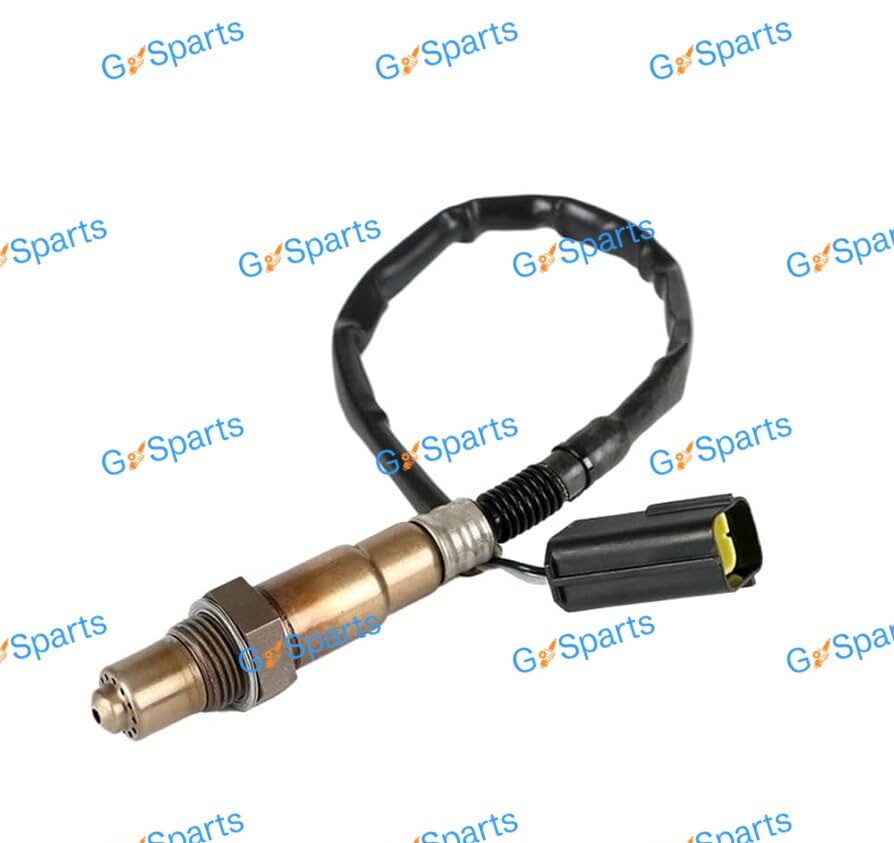
Toyota Oxygen O2 Sensor Examples 0 258 006 – Ultimate Picks, Clean Emissions, OEM-Grade Confidence
O₂ sensor for Toyota 4Runner, Tundra, Tacoma (V6/V8; ~1994–2004+) – Upstream / downstream (engine dependent). Specs: Most are 4‑wire heated; probe length/thread depend on manifold/cat design. Cross: Denso 234-4161 / 234-4162 etc..
Did you like this product? Add to favorites now and follow the product.

(+86) 180 07 12 47 38 WhatsApp, Telegram, WeChat
Description
OE‑style oxygen (lambda) sensor covering: Toyota 4Runner, Tundra, Tacoma (V6/V8; ~1994–2004+). OEM reference(s): Examples vary (e.g., 0 258 006 xxx). Position: Upstream / downstream (engine dependent). Typical specification: Most are 4‑wire heated; probe length/thread depend on manifold/cat design. Manufacturer/cross‑ref: Denso 234-4161 / 234-4162 etc.. Match OEM number to Bosch/Denso cross by VIN/engine code before ordering. Source: YotaShop.
Introduction to purpose and value
Across modern Toyota platforms, precise lambda feedback determines how quickly the ECU reaches stoichiometry, how smoothly trims stay centered, and how reliably catalysts meet legal thresholds. The first step to dependable control is selecting the correct upstream and downstream units, installing with disciplined torque and routing, and validating with a short, data-driven road loop. That process eliminates guesswork and prevents costly parts-darting. For shoppers comparing references and part families, Toyota Oxygen O2 Sensor Examples 0 258 006 xxx provide a practical lens on specification discipline, heater profiles, and connector indexing that align with calibration intent.
Closed-loop control fundamentals for everyday driving
Closed-loop fueling is a continuous negotiation between measured oxygen, injector pulse width, and predicted load. When the upstream waveform switches quickly and consistently, the controller trims with confidence, keeping torque delivery natural and emissions low through stop-and-go, light cruise, and hill work. If switching lags, enrichment overshoots, MPG falls, and catalytic temperatures creep upward. Using Toyota Oxygen O2 Sensor Examples 0 258 006 xxx as a reference framework helps teams match heater wattage, element response, and thread reach to the ECU’s expectations. After install, a clean validation loop should show rhythmic upstream oscillations, calm downstream confirmation, and trims converging near zero—signatures you want to see replicated when applying Toyota Oxygen O2 Sensor Examples 0 258 006 xxx.
Upstream versus downstream roles and signals
Upstream sensors inform moment-to-moment mixture correction, while downstream sensors audit catalyst storage capacity and overall conversion efficiency once the substrate is lit. Healthy vehicles show lively upstream switching around stoichiometry and comparatively stable downstream traces at cruise. Mixing locations, using generic splices, or installing mismatched heater profiles confuses this choreography and inflates diagnostic time. Reviewing Toyota Oxygen O2 Sensor Examples 0 258 006 xxx clarifies how connector keying, harness length, and tip geometry preserve the intended separation of duties. With those details right, waveforms look textbook again, allowing technicians to distinguish fuel-control issues from after-treatment behavior by comparing plots against Toyota Oxygen O2 Sensor Examples 0 258 006 xxx.
Fitment precision, thread reach, and sealing
Even the best element fails if the mechanics are wrong. Correct thread reach positions the tip in the gas stream, not shadowed by the bung; the crush washer must seal to avoid ambient dilution; and connector indexing must prevent pin stress and moisture ingress. Field-ready checklists built from Toyota Oxygen O2 Sensor Examples 0 258 006 xxx emphasize hand-starting threads, applying O2-safe anti-seize away from the tip, torquing to spec, and routing with slack to accommodate engine rock. That discipline prevents cross-threading, cracked shells, and rubbed leads—faults that otherwise masquerade as random drivability gremlins months after installation guided by Toyota Oxygen O2 Sensor Examples 0 258 006 xxx.
Recognizing symptoms of degraded feedback
Small inefficiencies add up: MPG slides a little, cold starts feel rougher, sulfur odor appears after a hard pull, cruise hunts on gentle grades, and idle wanders with A/C load. On a scan tool, lazy upstream switching and unexpected downstream activity betray slow elements or weak heaters. Before replacing injectors or coils, establish a clean baseline and address the reference. When you apply lessons from Toyota Oxygen O2 Sensor Examples 0 258 006 xxx, you’ll restore crisp switching, faster closed-loop entry, and calmer downstream oversight. Drivers then notice steadier take-off and more predictable pedal feel aligned with insights from Toyota Oxygen O2 Sensor Examples 0 258 006 xxx.
Codes, freeze-frames, and interpreting plots
Range/performance, slow response, heater circuit faults, and catalyst efficiency codes dominate oxygen-related diagnostics. Freeze-frames capture RPM, load, coolant temperature, and sensor values at the moment of failure, helping separate cold-start heater issues from hot-cruise sluggishness. A disciplined test routine graphs idle, steady cruise, and long decel so “normal” is obvious. Using Toyota Oxygen O2 Sensor Examples 0 258 006 xxx, compare your waveforms: healthy traces show tight upstream oscillations and serene downstream lines once the catalyst is lit. After repairs, reproduce the same conditions and verify that plots now mirror Toyota Oxygen O2 Sensor Examples 0 258 006 xxx.
Heater design, warm-up timing, and durability
Planar zirconia elements rely on robust heaters to reach and maintain operating temperature rapidly during cold starts and short trips. Weak heaters delay closed-loop entry, encourage rich protection modes, and stress catalysts thermally. Venting and sealing must prevent condensation shock that cracks ceramics. The practical patterns summarized in Toyota Oxygen O2 Sensor Examples 0 258 006 xxx show how heater wattage, ramp rate, and insulation interact with ECU warm-up expectations. When those parameters align, idle stabilizes sooner, enrichment tails off quickly, and inspections complete without drama—predictable outcomes that mirror Toyota Oxygen O2 Sensor Examples 0 258 006 xxx.
Preparation checklist that saves bay time
Success begins before a wrench turns: confirm VIN coverage, bank/position, and connector keying; inspect harness condition; stage an O2 socket, penetrant, torque reference, and high-temp retainers; and map tool paths to avoid rounding. Document baseline trims and waveforms so improvement is measurable. These preparation habits distilled from Toyota Oxygen O2 Sensor Examples 0 258 006 xxx consistently compress cycle time and protect margins. With clear photos and notes, you’ll reproduce alignment and routing on future visits, and your after plots will predictably resemble Toyota Oxygen O2 Sensor Examples 0 258 006 xxx.
Threading technique, torque accuracy, and routing
Hand-start every thread to prevent cross-thread damage; use O2-safe anti-seize sparingly and never on the tip; and torque with the correct socket or a crow’s-foot set at ninety degrees. Route the lead away from hot edges, allow slack for engine movement, and clip at factory points. A quick visual on engine rock confirms clearance. These steps, echoed by Toyota Oxygen O2 Sensor Examples 0 258 006 xxx, prevent intermittent heater opens and chafed conductors that otherwise reappear as mysterious faults. A tidy harness is insurance that your plots will continue to match Toyota Oxygen O2 Sensor Examples 0 258 006 xxx.
Post-install validation and readiness
Warm the engine fully, confirm closed-loop entry, and observe short-term trims oscillating near center at steady cruise. Long decelerations should show appropriate fuel cut with stable downstream oversight. After a reset, monitors should complete within a documented route. If plots are noisy, recheck grounds, pre-sensor leaks, or MAF contamination. When your procedure mirrors Toyota Oxygen O2 Sensor Examples 0 258 006 xxx, you’ll see rhythmic upstream switching, calm downstream lines, and readiness that sets quickly—objective evidence the system behaves exactly like Toyota Oxygen O2 Sensor Examples 0 258 006 xxx.
Emissions compliance and catalyst protection
Stable lambda control reduces over-rich transients that overheat substrates and trip efficiency codes. Downstream honesty verifies conversion under load, protecting compliance margins. By following the fitment and verification cues in Toyota Oxygen O2 Sensor Examples 0 258 006 xxx, shops report faster monitor completion, fewer retests, and cooler catalyst temperatures during loaded testing. Over time, that translates into lower ownership cost and fewer escalations—practical proof that installations inspired by Toyota Oxygen O2 Sensor Examples 0 258 006 xxx keep vehicles efficient and inspection-ready.
Fuel economy, drivability, and cost of ownership
When the reference is crisp, the ECU trims precisely instead of enriching “just in case,” reclaiming MPG while restoring light-footed response in traffic. Owners feel smoother tip-in, calmer idle under accessory load, and confident passing. Technicians see centered trims and clean graphs. The operational recipe distilled from Toyota Oxygen O2 Sensor Examples 0 258 006 xxx delivers these outcomes repeatedly: choose the correct unit, install methodically, validate with data, and archive results. That archive proves to customers that their vehicle now behaves like Toyota Oxygen O2 Sensor Examples 0 258 006 xxx.
Tuning Impacts and Part-Throttle Refinement
Mild intake or exhaust changes tighten transient fueling, which makes any noise in lambda feedback painfully obvious at everyday throttle openings. The goal with street-oriented calibration isn’t peak power; it’s calm, predictable response where the vehicle actually lives—merging, cruising, and rolling hills. Start by verifying baseline waveforms, then adjust transient tables only after the reference signal proves repeatable. A clean upstream trace reduces the trial-and-error common in driveway tuning sessions and shortens the path to a “lively yet civil” feel. When you’re assembling a comparison set to guide these choices, Toyota Oxygen O2 Sensor Examples 0 258 006 xxx offer a helpful yardstick for heater behavior, element exposure, and connector geometry that preserves factory assumptions.
Environmental Robustness and Seasonal Stability
Daily drivers see sub-zero mornings, summer heat soaks, coastal humidity, and dust from job sites—all of which stress ceramics, crimps, seals, and harness jackets. Moisture during cool-down can fracture elements if venting is poor, while salt mist accelerates connector corrosion and intermittent faults. Build your playbook around prevention: correct routing clear of radiant hotspots, high-temp retainers, and periodic inspections where the harness flexes. Data-wise, look for seasonal changes in switching speed or downstream steadiness that hint at thermal fatigue. As you evaluate components that stay linear across abuse, Toyota Oxygen O2 Sensor Examples 0 258 006 xxx help illustrate why stable warm-up profiles and durable shells keep graphs boring—in the best, most reliable sense.
Fleet Operations and Repeatable Outcomes
Across dozens of vehicles, tiny errors add up to line-item costs: fuel spend, failed inspections, and driver complaints that soak technician hours. Standardize parts, checklists, and validation routes so first-pass fixes become the norm rather than the exception. Archive plots by VIN to spot trends, coach drivers with objective data, and plan service windows before symptoms escalate. Consistency also simplifies stocking and training—new techs learn one proven routine instead of improvising. If you’re creating an internal reference kit to lock in this predictability, Toyota Oxygen O2 Sensor Examples 0 258 006 xxx demonstrate the specifications and behaviors that make uniform drivability and quick readiness completion a repeatable, measurable result.
Buyer’s Guide and Fitment Confidence
High-intent buyers convert quickly when uncertainty disappears. Present a concise compatibility matrix, bank/position callouts, connector close-ups, and thread reach notes alongside tool lists and torque specs. Add a mini “what success looks like” graph so DIY installers can compare their post-install trace to a normal pattern. Address common fears—cross-threading, lead routing, anti-seize contamination—before they happen. Finally, include a short returns policy that ties acceptance to data (photo of routing, quick log screenshot) so support stays objective. For shoppers comparing families and suffixes, Toyota Oxygen O2 Sensor Examples 0 258 006 xxx clarify how small differences in heaters, tips, and plugs translate into big differences in calibration harmony.
Installation Pitfalls and How to Avoid Them
Four mistakes drive most comebacks: cross-threading hot bungs, getting anti-seize on the tip, over-torquing thin shells, and routing leads against sharp heat shields. A fifth is mixing upstream and downstream connectors after the harness has been twisted during removal. Prevent them by cooling first, warming the bung slightly for release, hand-starting threads, and confirming a 90-degree crow’s-foot alignment for torque accuracy. Do a final clearance check with the engine rocked on its mounts. Close with a scan of closed-loop entry and a slow sweep plot. If you’re building a technician checklist, the routing and torque cues drawn from Toyota Oxygen O2 Sensor Examples 0 258 006 xxx make the difference between luck and certainty.
Data-Driven Sign-Off and Archiving Practices
Objective proof ends guesswork. After installation, log upstream at idle and steady cruise, confirm crisp, centered switching, and overlay trims to verify authority. Downstream should quiet once the catalyst is hot; long decels should show fuel cut with stable post-cat feedback. Save PDFs with route, ambient temperature, fuel type, and screenshots of routing for future comparisons. A small, consistent template helps every tech create court-ready documentation in minutes. When you’re curating example plots to train the team on “healthy,” Toyota Oxygen O2 Sensor Examples 0 258 006 xxx provide a clean, repeatable reference for heater ramp timing and waveform rhythm across common driving segments.
Service Handover, Education, and Trust
Customers don’t need a lecture; they need clarity. Provide a one-page summary: what was replaced, why it matters, and two small graphs—before and after—showing trims and upstream switching at warm cruise. Add three bullet tips: avoid exhaust leaks ahead of the sensor, keep intake filtration fresh, and return if the MIL appears with a photo of the dash plus a short driving log. This package turns technical work into understandable value and lowers callbacks. If your content team wants visual aids that match the story, Toyota Oxygen O2 Sensor Examples 0 258 006 xxx can anchor illustrations of correct connector indexing, harness routing, and normal waveform patterns.
Emissions Strategy and Catalyst Longevity
Catalysts live long when lambda control holds close to stoichiometry and transients are clipped swiftly. Chronic richness cooks substrates; chronic leanness risks NOx spikes and misfire-like sensations. The fastest path to protective control authority is a clean upstream reference and honest downstream oversight, validated under a realistic route with warm restarts and mild grades. Keep an eye on catalyst temperature estimates and efficiency tests during inspection-like loads. For internal training modules that explain why seemingly “small” sensors protect the most expensive piece of the exhaust, Toyota Oxygen O2 Sensor Examples 0 258 006 xxx visualize how stable feedback keeps temperatures sane and monitors green.
Troubleshooting Playbook and Sequencing
Resist parts darting by enforcing a sequence: fuel pressure verified, ignition scoped, intake smoked, then oxygen feedback analyzed in graphing mode. If upstream is jagged or slow while fundamentals are good, fix the reference first; if downstream is active during steady cruise, inspect the catalyst and check for post-combustion oxygen sources. Re-run the same route after repair to confirm closure. Posting this flow on the shop wall prevents “just try a sensor” habits. When you need neutral examples that show what good traces look like at each step, Toyota Oxygen O2 Sensor Examples 0 258 006 xxx supply the baseline signatures techs should expect to replicate.
Content That Converts on Product Pages
Education sells. Pair listings with micro-guides: a tool checklist, torque table, anti-seize cautions, routing photos, and a five-step drive cycle most ECUs accept. Add a compact FAQ covering upstream vs. downstream roles, readiness timing, and whether short-trip driving changes expectations. Include a small troubleshooting tree with waveforms so DIY customers can self-validate success. This reduces RMAs and elevates your brand from box shipper to trusted technical partner. If you need a consistent visual style for these assets, Toyota Oxygen O2 Sensor Examples 0 258 006 xxx help standardize screenshots and captions that make “normal” instantly recognizable.
Warranty Policy and Counterfeit Avoidance
Make support transparent and fast. Use tamper-evident packaging, scannable serials tied to orders, and a simple claim path that requests two screenshots: warm idle and steady-cruise traces plus a photo of routing. Define coverage for heater opens versus physical damage, and link to a short video on connector keying to prevent forced mating. Clear policies deter abuse and reassure honest buyers that you stand behind critical emissions components. To help customers spot red flags before purchase, comparative photos based on Toyota Oxygen O2 Sensor Examples 0 258 006 xxx show correct plug bodies, clocking, and shell markings at a glance.
Final Action Plan and Next Steps
Turn today’s research into results. First, verify bank/position and harness condition, then schedule the installation with the right tools staged and a short validation route mapped. Second, baseline your current trims and waveforms to make the improvement measurable. Third, install methodically—hand-start threads, torque to spec, route with slack, and lock the connector—then run the drive cycle and archive plots. Finally, attach the graphs to the work order and your product review to help the next owner choose confidently. If you want a printable checklist and graph template modeled after Toyota Oxygen O2 Sensor Examples 0 258 006 xxx, say the word and I’ll generate a ready-to-use pack.
External Resources (Standards & Technical References)
- SAE J1979 — OBD-II Diagnostic Test Modes
- ISO 15031 — Road Vehicles/Scan Tool Communication
- US EPA — Basic Information on OBD-II
- NGK/NTK — Oxygen (Lambda) Sensors Overview
- Bosch Mobility — Oxygen Sensor Technology
Related Internal Links
Additional information
| OEM / Reference | 0 258 006 xxx), Examples vary (e.g. |
|---|---|
| Cross reference | Denso 234-4161 / 234-4162 etc. |
| Models | Tacoma (V6/V8; ~1994–2004+), Toyota 4Runner, Tundra |
| Position | Upstream / downstream (engine dependent) |
| Specifications | Most are 4‑wire heated; probe length/thread depend on manifold/cat design |
| Source | YotaShop |
Related products


Genuine Toyota Front Brake Pad Kit 04465-0E010 – Highlander (2010–2019) / Sienna (2011–2020) | Quiet Confidence, OE Fit, Long-Life Value
Original price was: $88.00.$75.00Current price is: $75.00.
G-SPARTS – Leading Auto Parts Supplier Since 2009
Trusted by 1000+ Clients Worldwide | Chinese (BYD, Geely, Chery, …), Japanese (Toyota, Honda, Nissan, …), European (BMW, Mercedes, VW, …) & American (Ford, Chevrolet, Tesla, …) Car Spares | Best Prices & OEM Quality | 15+ Years Expertise | Professional Team, Fast Global Shipping
Copyright 2025 © G-Sparts All Rights Reserved. | Premium Chinese Auto Parts Supplier – Worldwide Shipping | Best Prices on OEM & Aftermarket Spares

Reviews
There are no reviews yet.