
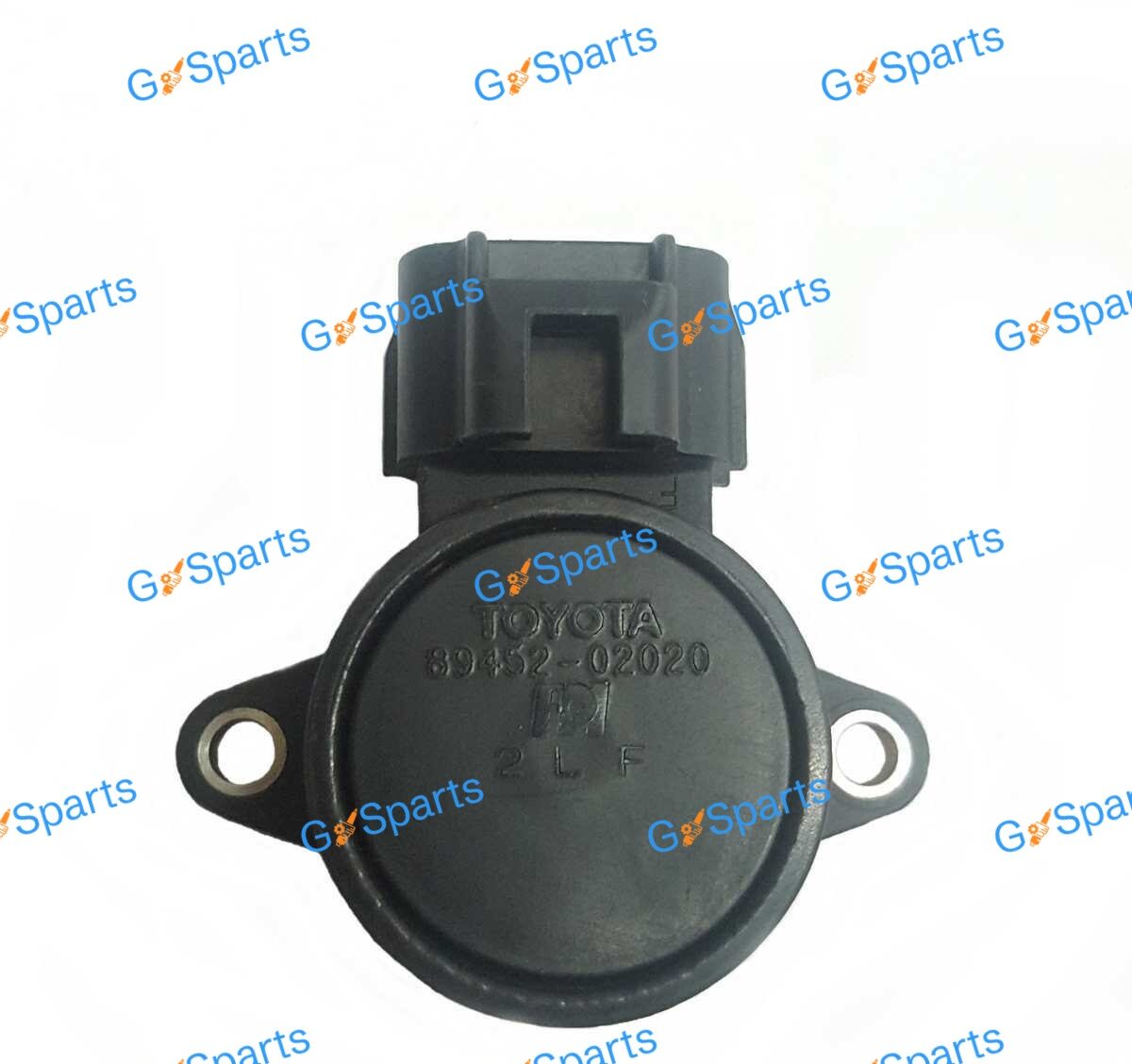
Ultimate Toyota TPS Sensor 89452-02020 for Camry/Avalon/Sienna (1996–2006) Smooth Performance
OEM-style **Throttle Position Sensor** for Toyota Camry, Avalon, and Sienna (1996–2006). Electric, 3‑wire. Verify fitment by VIN before purchase.
Did you like this product? Add to favorites now and follow the product.

(+86) 180 07 12 47 38 WhatsApp, Telegram, WeChat
Description
Direct-fit Toyota throttle position sensor (TPS) for select front‑wheel‑drive models.
- OEM Part No.: 89452-02020
- Compatibility: Camry / Avalon / Sienna (1996–2006; trim/engine dependent)
- Specs: Electric, 3‑wire TPS
- Aftermarket brands: Denso, Bosch, Standard Motor Products
- Fitment notes: Always confirm by VIN/engine code.
Introduction to Purpose and Value
When drivers notice erratic idling, sluggish acceleration, or hesitation during gear shifts, the throttle position signal is often the hidden culprit. The throttle position sensor translates the angle of your throttle plate into an electrical signal the ECU can understand, enabling precise fueling and ignition timing. In modern Toyota platforms, accuracy here directly impacts drivability, emissions, and fuel economy. Choosing the correct part number eliminates guesswork and protects downstream systems like catalytic converters. The right component should be durable, signal-stable, and plug-compatible with your harness. That’s where Toyota TPS Sensor 89452-02020 proves its value for consistent throttle mapping, clean transitions off idle, and predictable pedal response in daily driving and demanding conditions alike.
How a Throttle Position Sensor Interfaces with the ECU
A throttle position sensor converts mechanical rotation of the throttle shaft into a voltage (or digital signal) that scales from closed to wide open. The ECU tracks this in real time, cross-checking with MAF/MAP, RPM, and coolant temperature to compute load, fuel pulse width, and spark advance. Quality sensors maintain linearity across the sweep, preventing flat spots that cause stumble or surging. Poor linearity sends conflicting data, forcing the ECU to oscillate fuel trims. With Toyota TPS Sensor 89452-02020 installed, you achieve cleaner transfer characteristics that stabilize short- and long-term fuel trims, reduce transient enrichment mistakes, and cut emissions. For vehicles that must pass inspection or meet fleet compliance targets, Toyota TPS Sensor 89452-02020 is a foundational choice.
OEM Fitment Advantages and Harness Compatibility
Even tiny dimensional differences—tab thickness, connector clocking, mounting boss height—can disrupt sensor alignment and skew output. An OEM-spec solution ensures the sensor sits precisely on the throttle body so the electrical zero matches the mechanical closed-throttle stop. That’s how you avoid repeatedly resetting idle learn or chasing spurious codes. The right indexed connector also prevents pin stress and water ingress. Toyota TPS Sensor 89452-02020 aligns with OEM harness geometry and seal compression, supporting stable contact resistance over vibration and heat cycles. With the proper o-ring compression, you also reduce condensation and corrosion risk at the interface. In short, select Toyota TPS Sensor 89452-02020 to eliminate fitment uncertainties that compromise long-term performance.
Symptoms That Indicate a Degraded TPS
Classic symptoms include hunting idle, tip-in hesitation, delayed downshifts on automatics, and unpredictable throttle sensitivity. On scan tools, you may observe noisy throttle position percentages, intermittent dropouts, or a mismatch between requested and delivered torque. Fuel economy often declines as the ECU leans on conservative maps to protect components. Drivers sometimes mistake these issues for ignition coil or injector faults, but a noisy TPS can trigger a cascade of compensations. Installing Toyota TPS Sensor 89452-02020 is a targeted intervention: it restores linear, low-noise output so adaptive strategies settle quickly. With the stabilized signal from Toyota TPS Sensor 89452-02020, idle air control routines and transmission shift logic regain their intended smoothness.
Related Diagnostic Trouble Codes and Data Clues
Codes frequently connected to throttle position faults include those for low/high input, correlation errors with accelerator position, and performance ranges. Freeze-frame data captures load, RPM, and throttle angle at the moment of failure; oscillating throttle values at steady pedal are suspicious. Watching live data, a healthy trace should sweep smoothly without spikes when you roll the pedal. If you log jitter at specific angles, film residue or worn tracks might be at fault. Replacing with Toyota TPS Sensor 89452-02020 provides a clean, reliable reference signal the ECU can trust. After installing Toyota TPS Sensor 89452-02020, clear codes, perform an idle relearn if applicable, and validate by plotting angle versus time under light and moderate loads.
Materials, Sealing, and Long-Term Stability
Heat, vibration, and engine bay contaminants attack sensors over time, degrading tracks and seals. A robust housing, stable resistive or Hall-effect elements, and tight sealing keep signal drift low across seasons. Connector gaskets and potting compounds matter as much as the sensing element because moisture creates intermittent faults. Toyota TPS Sensor 89452-02020 is designed for dimensional stability and interface sealing, maintaining calibration through thermal cycles. For vehicles operating in dusty regions or enduring frequent washdowns, the extra moisture resistance pays dividends. That’s why technicians favor Toyota TPS Sensor 89452-02020 during preventative maintenance on high-mileage platforms where reliability and low comeback risk are priorities.
Installation Preparation and Safety Considerations
Before swapping parts, disconnect the battery to protect control modules and avoid accidental shorts. Inspect the throttle body for varnish; cleaning it ensures the new sensor isn’t forced to interpret sticky transitions. Cross-reference your VIN, throttle body variant, and harness connector to prevent mix-ups. A torque-limiting screwdriver prevents overtightening, which can distort mounting ears and deform the sensor base. Mark the original sensor’s index position as a guide, then seat the replacement evenly. Once Toyota TPS Sensor 89452-02020 is secured, reconnect the harness until the lock audibly clicks. With Toyota TPS Sensor 89452-02020 properly installed, proceed to calibration or idle relearn per your service manual.
Calibration, Idle Relearn, and Baseline Checks
Many vehicles need an idle relearn after TPS replacement so the ECU can re-establish closed-throttle voltage and airflow targets. Some procedures require key-on engine-off waits, others use scan tool triggers. Always verify base idle, throttle angle at rest, and that the sensor reads zero at the mechanical stop. After installing Toyota TPS Sensor 89452-02020, warm the engine to operating temperature and confirm the angle increases smoothly with pedal input. Drive in varied conditions—light cruise, hill climbs, deceleration fuel cut—to re-populate fuel trims. If trims settle within normal bounds, Toyota TPS Sensor 89452-02020 is communicating perfectly and the engine controller is comfortable with the new baseline.
Performance and Drivability Benefits You Can Feel
A precise throttle signal sharpens tip-in, reduces off-idle stumble, and makes downshifts feel intentional rather than abrupt. Transmission logic, especially on electronically controlled automatics, depends on predictable torque requests. The payoff is smoother part-throttle cruising and cleaner transitions in stop-and-go traffic. With Toyota TPS Sensor 89452-02020, you’ll often notice steadier idle with the A/C on, fewer RPM flares during parking maneuvers, and crisper throttle when merging. For vehicles that tow or operate under load, a stable signal helps maintain consistent engine braking and throttle modulation. Drivers report renewed confidence once Toyota TPS Sensor 89452-02020 replaces a drifting or noisy unit.
Common Installation Mistakes to Avoid
Misalignment on the throttle shaft can preload the sensor and skew the closed-throttle reading, causing high idle or throttle correlation codes. Another mistake is reusing a compromised harness clip that fails to lock, leading to intermittent contact. Technicians sometimes forget to clear learned values, leaving the ECU to interpret new voltages with old assumptions. The solution is careful seating, verified connector engagement, and a complete relearn. Selecting Toyota TPS Sensor 89452-02020 removes uncertainty about pin mapping and indexing. After fitting Toyota TPS Sensor 89452-02020, double-check with a scan tool that the angle at rest is consistent and increases linearly as you depress the pedal.
Maintenance Intervals and Preventative Strategy
Although TPS components are not typically listed as routine maintenance items, strategic replacement alongside throttle body service can prevent drivability complaints. If your platform shows elevated failure rates around certain mileages, preemptive action during a scheduled tune-up keeps the vehicle stable and customers satisfied. Environmental exposure, frequent thermal cycling, and stop-start usage accelerate wear. Choosing Toyota TPS Sensor 89452-02020 allows you to synchronize maintenance with other intake tasks like PCV service and gasket refreshes. Building a preventative plan around Toyota TPS Sensor 89452-02020 reduces diagnostic time later and supports consistent fuel economy over the long term.
Compatibility with Emissions and Inspection Standards
Throttle irregularities often manifest as readiness monitor delays or excess HC/CO during transient tests. A jittery signal introduces enrichment errors during speed ramps, jeopardizing compliance. After replacement, confirm that all readiness monitors complete; this assures regulators that the engine and controls are stable. Toyota TPS Sensor 89452-02020 supplies a clean, predictable input that helps the ECU maintain stoichiometry during quick pedal movements, reducing over-fueling and backfires. If your region uses dynamometer testing or OBD-only checks, the stabilized response from Toyota TPS Sensor 89452-02020 will support rapid readiness completion and smoother certification cycles for fleet operators and private owners alike.
Interactions with Idle Air Control and Drive-By-Wire
On cable throttles, the TPS works alongside an idle air control valve, while on electronic throttle bodies, angle and motor control integrate tightly. In both cases, the ECU’s state estimation requires a solid reference. A weak reference forces controllers to widen tolerances, degrading idle stability and pedal feel. The robust signal quality of Toyota TPS Sensor 89452-02020 allows narrow control bands for better precision. If your platform uses adaptive throttle strategies, replacing with Toyota TPS Sensor 89452-02020 helps the controller converge faster on true mechanical limits, improving response during cold starts, accessory loads, and altitude changes.
Choosing Between Aftermarket and OEM-Spec Designs
All sensors may look similar, but internal construction varies widely. Elements, wipers, bearings, and potting materials determine longevity and noise. Inexpensive options often trade stability for cost, causing early drift or poor sweep linearity. Considering the diagnostic time and the inconvenience of repeat visits, the total cost of ownership favors a strong OEM-spec pick. Toyota TPS Sensor 89452-02020 balances value and reliability, minimizing rework risk for workshops and do-it-yourself owners. When you select Toyota TPS Sensor 89452-02020, you’re investing in predictable results and safeguarding surrounding components—from intake cleanliness to catalyst health—by ensuring accurate load signaling.
Step-By-Step Replacement Workflow
Begin by disconnecting the battery and removing the intake duct for access. Photograph the original orientation to replicate alignment. Release the harness lock, then remove mounting screws while supporting the sensor body. Compare the new and old units, confirming indexing tabs and connector shape match. Lightly seat the new sensor, rotate to align with the throttle shaft, and torque to specification. Reconnect the harness and reinstall the intake duct. Power up, perform the relearn routine, and verify operation with live data logging. When this workflow uses Toyota TPS Sensor 89452-02020, technicians report fewer comebacks and faster validation. Toyota TPS Sensor 89452-02020 streamlines quality control.
Verifying Success with Live Data and Road Tests
Data doesn’t lie. Plot throttle angle versus time and look for smooth, monotonic curves with no discontinuities. Observe correlation with accelerator position where applicable; discrepancies indicate linkage or pedal concerns. Watch fuel trims; stabilized trims near nominal suggest healthy integration. On the road, perform gentle and firm tip-ins, steady-state cruising, and decelerations to force closed-throttle transitions. Installing Toyota TPS Sensor 89452-02020 should produce consistent response free of surging or flat spots. If anomalies persist, check grounds, vacuum leaks, and throttle plate cleanliness. With Toyota TPS Sensor 89452-02020 verified, close the loop by clearing historical codes and confirming readiness.
Effects on Automatic Transmission Logic
Modern automatics rely heavily on calculated engine torque for shift scheduling and line pressure control. Erratic throttle input corrupts torque estimates, leading to harsh or delayed shifts. Replacing the sensor stabilizes the torque model, allowing the transmission control logic to deliver crisp, repeatable gear changes. Toyota TPS Sensor 89452-02020 helps restore coordinated downshifts during passing and prevents gear hunting on grades. For vehicles with adaptive shift learning, a correct throttle signal accelerates relearning after battery disconnects. Customers frequently report a more “connected” feel after switching to Toyota TPS Sensor 89452-02020, reflecting the improved synchronization between engine and transmission controls.
Considerations for High-Mileage and Fleet Vehicles
High-duty cycles amplify small control errors into measurable fuel and maintenance costs. Fleets prioritize predictable operation and minimized downtime. Proactive TPS replacement during scheduled service prevents roadside incidents tied to limp modes or unstable idle. Toyota TPS Sensor 89452-02020 aligns with those goals by offering consistent calibration, sturdy construction, and reliable sealing. Documentation of parts standardization also simplifies inventory management for service depots. Deploying Toyota TPS Sensor 89452-02020 across a fleet produces uniform drivability, easing driver training and reducing subjective complaints that consume diagnostic resources without clear fault codes.
Environmental and Operating Condition Robustness
Extreme temperatures, altitude changes, and humidity swings challenge sensors. In cold starts, condensation can stress connectors; in heat, plastic creep or outgassing affects alignment. Dust and oil mist add surface contamination. A well-sealed unit with stable internal architecture maintains output fidelity across these variables. Toyota TPS Sensor 89452-02020 is specified for robust operation, preserving signal integrity in harsh cycles. If your route includes mountain passes or desert heat, the consistent behavior of Toyota TPS Sensor 89452-02020 supports smooth pedal response, reliable cruise control engagement, and stable idle despite environmental shocks that expose lesser designs.
Addressing Misdiagnosis and Avoiding Parts Darts
Intermittent throttle faults can masquerade as fuel pump issues, coil misfires, or transmission slip because symptoms overlap. Good process distinguishes causes: verify fuel pressure, scope ignition, smoke-test for leaks, and evaluate sensor sweeps. When evidence points to throttle signal instability, replacing with Toyota TPS Sensor 89452-02020 resolves root cause rather than treating symptoms. Educating customers on the diagnostic path builds trust and reduces pressure to shotgun parts. Toyota TPS Sensor 89452-02020 becomes the logical, data-backed solution that aligns with best practices and keeps your reputation for accurate fixes intact.
Integration with Aftermarket ECUs and Mild Performance Builds
Mild builds—intake upgrades, freer-flowing exhausts, or ECU calibrations—still depend on clean throttle data. Tuners often tighten transient fueling for responsiveness, making sensor noise more noticeable. A dependable reference stabilizes these advanced maps. Toyota TPS Sensor 89452-02020 provides the repeatable voltage (or digital) sweep tuners expect, so tip-in enrichment and decel fuel cut behave consistently. If you’re balancing drivability with sharper response, baselining with Toyota TPS Sensor 89452-02020 minimizes variables and speeds calibration. The result is a car that feels lively yet controllable in everyday use.
Quality Assurance and Supplier Reliability
Beyond specs, supplier processes—traceability, batch testing, and connector QC—determine field results. Documentation and consistent manufacturing reduce variance between units. Toyota TPS Sensor 89452-02020 benefits from rigorous process control, aligning each unit with published characteristics. For workshops, that reliability shortens test-drive validation and reduces warranty overhead. Owners gain the peace of mind that a critical control input won’t degrade prematurely. When measured by comeback rates and customer satisfaction, Toyota TPS Sensor 89452-02020 is a smart selection grounded in quality systems rather than marketing claims.
Cost, Warranty, and Total Value Perspective
While unit price matters, consider diagnostic labor, return visits, inspection failures, and customer inconvenience. An initially cheaper sensor can become expensive if it triggers repeated adjustments or fails early. Toyota TPS Sensor 89452-02020 strikes a balance, limiting lifecycle costs by delivering dependable performance from day one. Paired with a clear warranty and accurate documentation, it simplifies service orders and protects margins. For DIY owners, fewer variables mean a faster, more rewarding fix. For shops, Toyota TPS Sensor 89452-02020 supports predictable scheduling and sustained customer trust.
Practical Buying Checklist Before You Order
Confirm your VIN compatibility, throttle body variant, and connector keying; inspect your harness for prior heat damage; and inventory the correct tools and torque specs. Plan for a throttle body clean, gasket checks, and an idle relearn window. If you rely on the vehicle for work, schedule installation when you can complete validation drives. With Toyota TPS Sensor 89452-02020 selected, you’ll have a part that installs cleanly and supports fast confirmation on the scan tool. Keeping Toyota TPS Sensor 89452-02020 in your service kit also prepares you for future maintenance windows without re-researching parts.
Final Recommendations and Next Steps
Throttle data quality underpins everything from fuel economy to shift quality. When symptoms point to throttle signal instability, resolve the root with a reliable, OEM-spec component. Prioritize proper installation, thorough relearn procedures, and data-driven validation to lock in results. For owners and shops seeking durable, predictable outcomes, Toyota TPS Sensor 89452-02020 is the clear recommendation. By choosing Toyota TPS Sensor 89452-02020 and following the practical guidance outlined here—clean interfaces, correct indexing, careful torque, and live-data confirmation—you’ll restore the precise, confident driving character Toyota engineering intended.
External Resources (Standards & Technical References)
- ISO 26262 — Road Vehicles Functional Safety
- ISO 11898 — Controller Area Network (CAN)
- ISO 14229 — Unified Diagnostic Services (UDS)
- SAE J1979 — OBD-II Diagnostic Test Modes
- AEC-Q100 — Stress Test for Automotive ICs
Related Internal Links
Additional information
| Brand | Denso | Bosch | Standard Motor Products |
|---|---|
| OEM Part Number | 89452-02020 |
| Models & Years | Camry (1996–2006), Avalon (1996–2006), Sienna (1996–2006) |
| Specifications | Electric, 3-wire |
Related products


Genuine Toyota Front Brake Pad Kit 04465-0E010 – Highlander (2010–2019) / Sienna (2011–2020) | Quiet Confidence, OE Fit, Long-Life Value
Original price was: $88.00.$75.00Current price is: $75.00.

Recently Viewed Products


G-SPARTS – Leading Auto Parts Supplier Since 2009
Trusted by 1000+ Clients Worldwide | Chinese (BYD, Geely, Chery, …), Japanese (Toyota, Honda, Nissan, …), European (BMW, Mercedes, VW, …) & American (Ford, Chevrolet, Tesla, …) Car Spares | Best Prices & OEM Quality | 15+ Years Expertise | Professional Team, Fast Global Shipping
Copyright 2025 © G-Sparts All Rights Reserved. | Premium Chinese Auto Parts Supplier – Worldwide Shipping | Best Prices on OEM & Aftermarket Spares

Reviews
There are no reviews yet.